
Macklemore & Ryan Lewis
They reached number one with no label, and they used that number one for something
By Rebobinados · Published on September 23, 2026
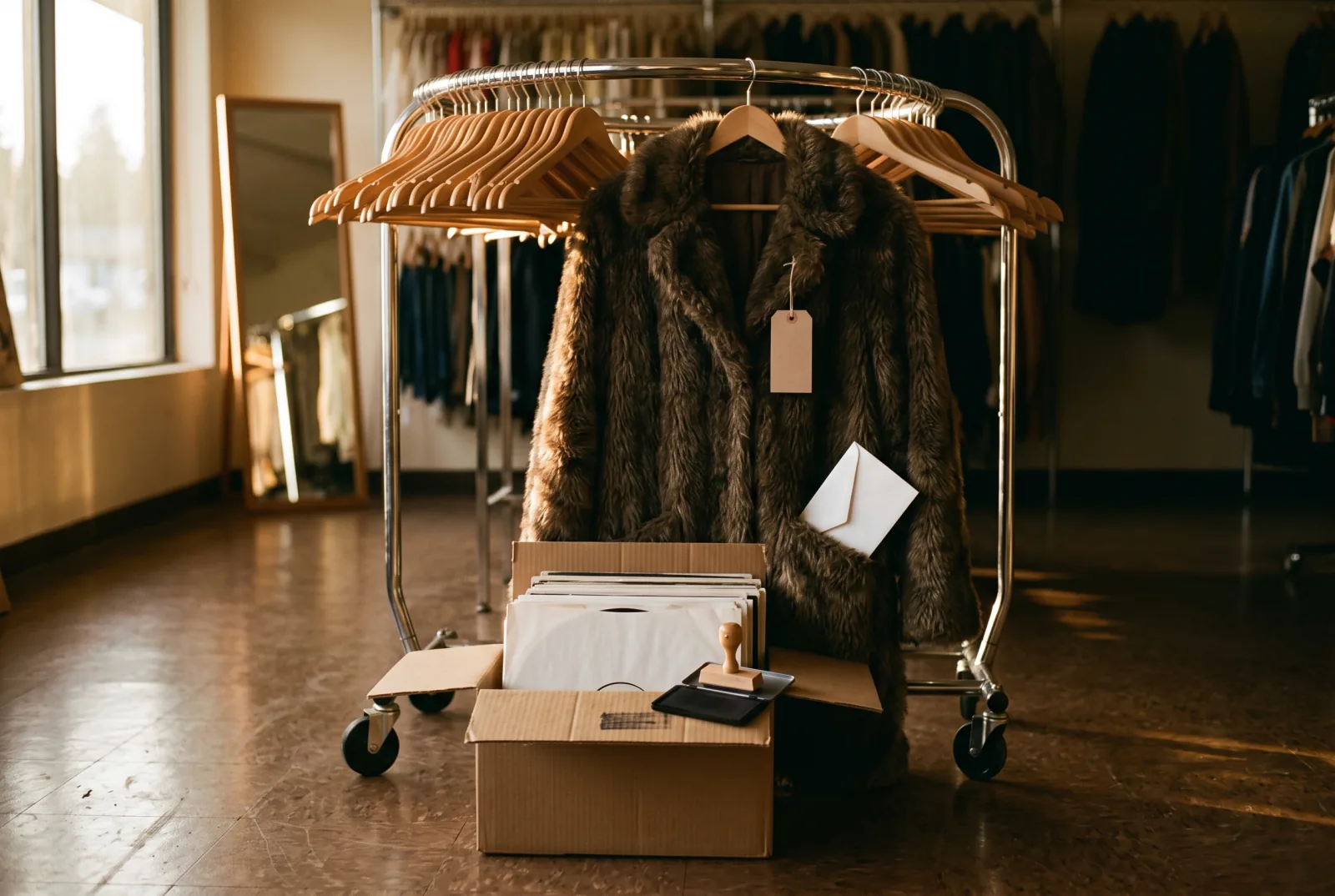
Ilustración: Rebobinados
In early 2013, a song from 2012 about buying used clothes in second-hand stores became the number one record in the United States. "Thrift Shop", by Macklemore & Ryan Lewis, a rapper and a producer from Seattle, was funny, catchy and absurd. But the truly remarkable thing was not the song: it was how it had got there. Macklemore and Ryan Lewis had no record company. No big label behind them, no industry machinery pushing them. They did it alone, independently, and still went to number one in the country. In an industry built on gatekeepers and contracts, two guys on their own proved to everyone that you could come in through the window.
The independents' number one
For an artist without a label to reach the top of the charts is extremely rare, almost a statistical miracle. For decades the music industry has worked with the major labels as a compulsory filter: they decide who gets played, who gets a budget, who reaches the radio. Macklemore and Ryan Lewis skipped all of that. They built their audience from the bottom up, with the internet, with touring, with work, and when they broke through, they broke through without owing anyone anything.
That, in itself, is a story of greatness and of an era: the story of a new way of doing things, where talent and a direct connection with people counted for more than the blessing of the executives. "Can't Hold Us", another number one, confirmed that it was no fluke. And at the Grammys they took home several awards, including best rap album, an enormous recognition for two independents.
The song that mattered
But what makes them bigger is not "Thrift Shop". It is "Same Love". At the height of their fame, when they could have gone on making easy, entertaining songs, Macklemore and Ryan Lewis recorded a track in defence of marriage equality, of the right of same-sex couples to marry and love each other freely. They released it at a moment when the issue was being put to a vote in their state, when taking a stand carried real weight and was not a comfortable trend.
Using the peak of your fame, the moment when everyone is listening to you, to defend the rights of a minority still fighting to be treated with dignity is a decision that says a great deal. "Same Love" became an anthem for a huge number of people who needed to hear, on the radio, that their love was as valid as anyone else's. Not every artist at the top risks something for a cause. They did.
What to remember
Macklemore & Ryan Lewis reached number one in the United States as independents, with no major record company behind them, proving that you could succeed by going around the industry's gatekeepers. And they used that fame to record "Same Love", an anthem for marriage equality, at a time when taking that position had real consequences.
Remember it this way: they did something difficult twice. First, reaching the very top on their own, without anyone's permission. And then, using that hard-won place to defend others instead of merely enjoying it. Independence gave them the number one; conscience gave them something that lasts longer.
Sources
Macklemore (Ben Haggerty) and Ryan Lewis, American hip hop duo from Seattle, Washington, made up of rapper Macklemore and producer Ryan Lewis. They achieved great success independently, without the backing of a major record company: "Thrift Shop" (2012) reached number one on the Billboard Hot 100, as did "Can't Hold Us". Their song "Same Love" (2012), in defence of marriage equality, was released in the context of a vote on the matter in the state of Washington. At the 2014 Grammy Awards they won four prizes, including best rap album for "The Heist"; Macklemore publicly acknowledged the merits of Kendrick Lamar, a competitor in that category. Profile compiled for Rebobinados with fact-checking; interpretations of the meaning of the work are offered as the author's reading. No song lyrics are reproduced, for copyright reasons. Information drawn from Wikipedia, Biography, Grammy.com and other coverage.
Keep rewinding
90s
hip hop
Coolio
The number one that was really a lament
The biggest rap hit of 1995 was, deep down, a funeral: over the funereal strings of Stevie Wonder's "Pastime Paradise", a young man looks at his short, dead-end life. It won the Grammy and half the world sang it without listening closely to the words.
90s
hip hop
The Notorious B.I.G.
The greatest storyteller rap ever produced, silenced at 24
He could fit an entire life into a verse: rap lost its finest narrator at twenty-four, in a drive-by shooting nobody ever solved. He left two albums, and the second came out two weeks after the funeral with a title he had chosen beforehand.

00s
hip hop
50 Cent
He was shot nine times, survived, and turned that into an empire
He survived a point-blank attack in Queens in the year 2000 and put that story at the center of his persona. Then he did the rarest thing in rap: turning fame into capital, with a drinks brand that Coca-Cola ended up buying and television series of his own.
Rewind with us
Comments · 0
No one has commented yet. Open the conversation.