
Norah Jones
The quietest album of the year swept the Grammys
By Rebobinados · Published on September 18, 2026

Ilustración: Rebobinados
In 2002, while the charts were boiling with loud pop, hip hop and heavy rock, out came an album that did exactly the opposite: it spoke softly. "Come Away with Me", by an almost unknown young woman named Norah Jones, was a handful of gentle, jazzy songs, quiet piano and a velvet voice, music to listen to in dim light with a cup of tea. It had none of what was supposedly needed to succeed in that era. And at the Grammy ceremony in 2003 it won eight awards, including the biggest ones: album, record and song of the year, and best new artist. The quietest album of the year beat everyone who was shouting.
Calm as a force
What Norah Jones did was prove that there is always an enormous audience for beauty without stridency. "Don't Know Why", that song of sweet melancholy, didn't need to turn up the volume to move you. Her voice, somewhere between jazz and country and soul, had a warmth that made every listener feel she was singing to them alone. And it worked on a colossal scale: the album sold tens of millions of copies, in the homes of teenagers and grandparents alike. Few people bring together audiences so different; she did it with whispers.
In an industry obsessed with the loudest, the fastest, the flashiest, Norah Jones reminded us of something that often gets forgotten: that calm sells too, that delicacy is also powerful, that sometimes what people most need is music that lets them breathe. She won by playing softly when everyone else was betting on noise.
The surname she didn't use
There's a detail that makes her even bigger. Norah Jones is the daughter of Ravi Shankar, the legendary master of the Indian sitar, the figure who brought India's classical music to the West and a friend of the Beatles. She could have used that illustrious surname as a springboard, as a calling card. She didn't. She built her career under her own name, on her own talent, without leaning on her father's enormous shadow.
That says a great deal about her. She chose to be judged by her music and nothing else, to earn her place without inheritances. When she swept the Grammys, she did it as Norah Jones, not as "the daughter of". Making a name of your own when a famous surname is within reach, and choosing the harder road, is a quiet form of integrity, very much in keeping with her music.
What to remember
In 2002 Norah Jones released a soft, jazzy, quiet album, "Come Away with Me", which against all the logic of its era swept the 2003 Grammys with eight awards and sold tens of millions of copies. She proved that calm and delicacy can win over an enormous and diverse audience. And she did it under her own name, without leaning on the illustrious surname of her father, Ravi Shankar.
Remember it this way: in a world that rewards whoever shouts loudest, she won by speaking softly. Hers is the proof that quiet beauty is not weakness: it is another way, rarer and harder, of being unbeatable.
Sources
Norah Jones (Geethali Norah Jones Shankar), American singer, songwriter and pianist born on 30 March 1979 in New York; living. She is the daughter of the Indian musician Ravi Shankar and the half-sister of the sitar player Anoushka Shankar. Her debut album, "Come Away with Me" (2002), with the song "Don't Know Why", sold tens of millions of copies and won eight Grammy Awards at the 2003 ceremony, including album, record and song of the year and best new artist. Profile compiled for Rebobinados with fact-checking; interpretations of the meaning of the work are offered as the author's reading. No song lyrics are reproduced, for copyright reasons. Information drawn from Wikipedia, Grammy.com, Rolling Stone, TIME and other coverage.
Keep rewinding

10s
pop
Bruno Mars
Eleven names in the credits
"Uptown Funk" came out on 10 November 2014 with six writers and today it has eleven. In February 2015 The Gap Band's publisher filed a claim over "Oops Up Side Your Head" in YouTube's copyright system —there was never a lawsuit— and on 28 April five names were added, with 17 % of the publishing. It happened weeks after the "Blurred Lines" verdict, and the song had been fourteen weeks at number one.

00s
pop
André Rieu
It was not from the jazz suite
The waltz with which André Rieu reached half the world is not from Shostakovich's Suite for Jazz Orchestra No. 2: it is from the Suite for Variety Orchestra, which the composer did not assemble, and it was born in 1956 as music for a Soviet film about settlers in Kazakhstan. The error comes from a misprint in volume 10 of the complete works (Muzyka, Moscow, 1984), corrected only in 2001. And the title "The Second Waltz" was invented by his wife, because the real one did not sell.
90s
pop
Daniela Mercury
She took the neighbourhood out of the song
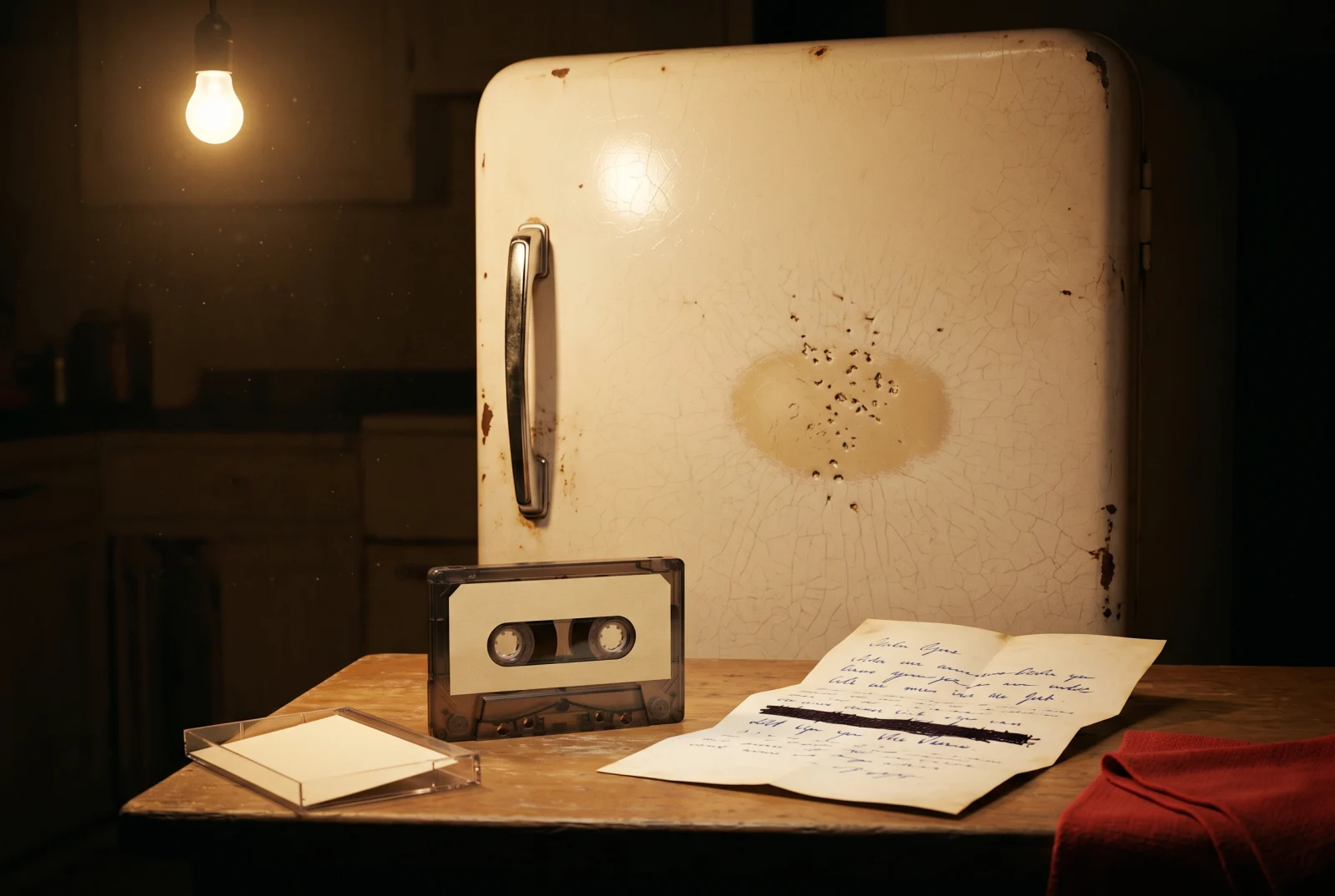
"O Canto da Cidade" was written by Tote Gira, a composer from Nordeste de Amaralina who recorded the demo on a borrowed cassette, marking the beat on the door of a refrigerator; Mercury's team almost threw the tape away. She shares the credit because she deleted the references to the Pelourinho so that the song would serve all of Brazil. The album, from 20 September 1992, sold more than 2 million copies and nationalised axé. But she did not invent it: the name was a journalist's insult in 1987.
Rewind with us
Comments · 0
No one has commented yet. Open the conversation.