
Decade 70s · Rhythm progresivo
Roger Waters
The man who divides, pleading for empathy
By Rebobinados · Published on September 12, 2026
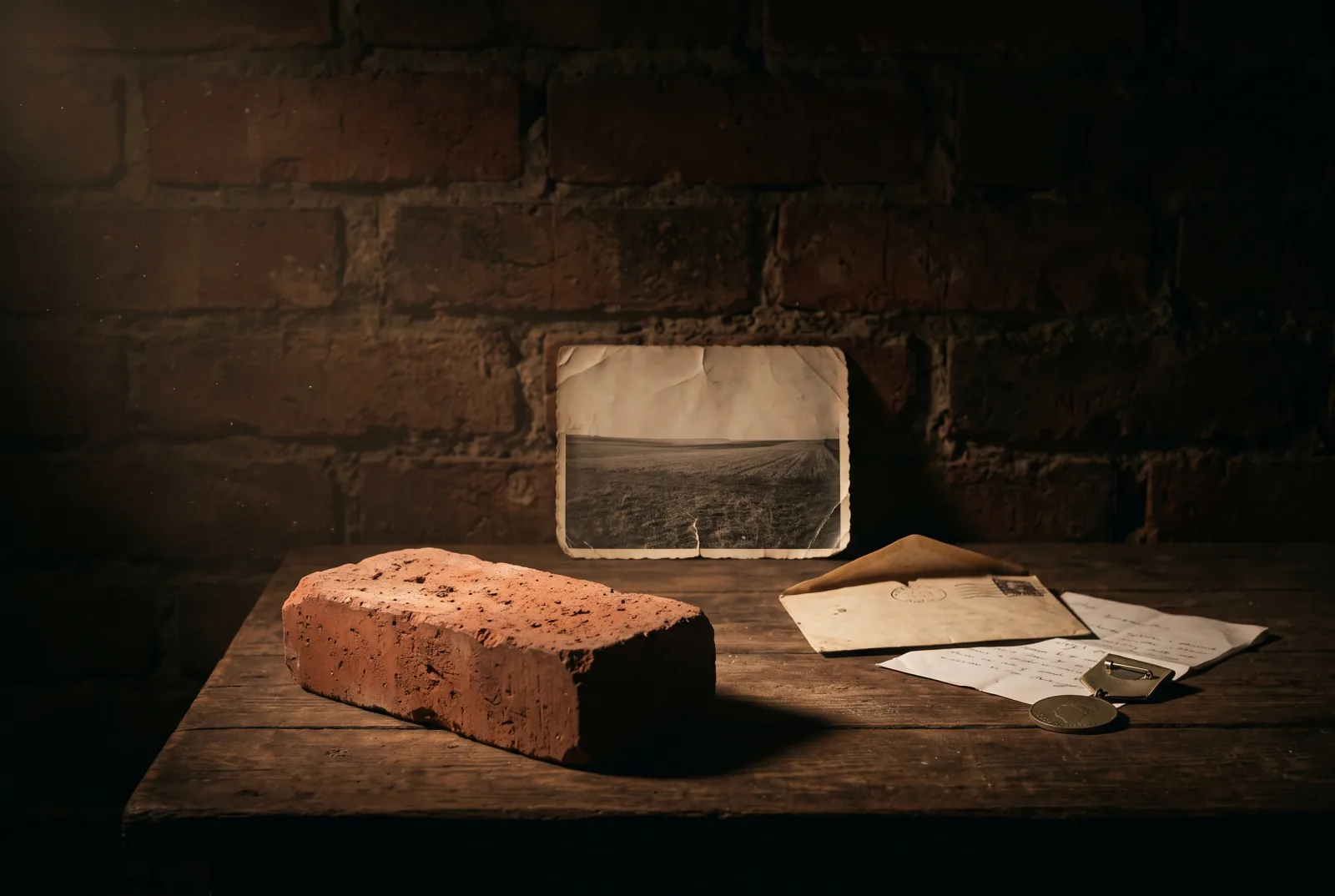
Ilustración: Rebobinados
On 18 February 1944, at Aprilia, near Anzio, a British second lieutenant named Eric Fletcher Waters was killed. His son Roger was five months old. He is commemorated at the Cassino war cemetery. Roger's grandfather had already died in the First World War: two generations swallowed by war before the boy could meet either of them.
Everything Roger Waters made comes out of that. And so, probably, does the paradox that defines him today.
The father who changed his mind
There is a detail in Eric Waters's story worth not skipping. He was a schoolteacher, a man of the left, and he began the war as a conscientious objector: he refused to fight and drove an ambulance during the bombing of London. Then he changed his mind about pacifism, joined the Territorial Army and was commissioned as a second lieutenant. Which is to say: he was not a convinced soldier, he was a pacifist who decided that this particular thing did have to be fought. And that decision killed him.
His widow raised Roger alone in Cambridge. Waters has said that what his parents taught him was to feel empathy for other human beings. Hold on to that word, empathy, because it carries everything that follows and it is also what makes the ending uncomfortable.
The man who turned the album into a building
Waters co-founded Pink Floyd in 1965. When Syd Barrett, the band's original genius, was lost, Waters became its conceptual head, and with that he pushed an idea that was in the air at the time: that an album could be a single complete work rather than a collection of songs. It is the same ambition that defined progressive rock, even though Pink Floyd hardly ever sounded like their shelf neighbours.
The Dark Side of the Moon, from 1973, on time, money, madness and death. Wish You Were Here, from 1975, on absence and on Barrett. Animals, from 1977, an Orwellian X-ray of a cruel society. And The Wall, from 1979, the near-autobiographical epic about how a person — the dead father, the suffocating mother, the cruelty of school, the loneliness of fame — builds a wall around himself until he ends up mad and alone.
That was his great idea, and it worked because it was not only his. We all build something like it. Waters gave an image to a mechanism anybody recognises: the brick you lay every time something hurts.
The wall that did come down
In July 1990, with the Berlin Wall freshly torn down, Waters staged The Wall on the waste ground left between Potsdamer Platz and the Brandenburg Gate. Some two hundred thousand people were there — some say twice that — and around a billion watched on television, with guests including Joni Mitchell and Bryan Adams.
It is probably the most complete gesture of his career: one man's private metaphor turned, for once, into a public celebration of walls coming down.
And the walls he built himself
But the man who preached connection was, close up, difficult. His creative control over Pink Floyd became, according to his own bandmates, a tyranny. He clashed with everyone and above all with David Gilmour. He left in 1985 and in October 1986 took the band to the High Court to dissolve the partnership, arguing that Pink Floyd was "a spent force creatively". There was no verdict: they settled out of court in December 1987, and Waters kept the rights to the concept of The Wall and to the inflatable pig. The others kept using the name. The fight with Gilmour has never healed.
The man who wrote about walls built a few of his own, with the people closest to him. It is not a cheap irony: it is the material The Wall is made of.
The uncomfortable part
And it has to be said, because it is part of who he is now. Roger Waters is one of the most divisive figures in rock. An activist since his student days, he champions the Palestinian cause among other banners, and opposes the far right. To those who admire him, he is one of the few artists who risks his standing for what he believes. To his critics — the State of Israel among them — his activism crosses into antisemitism.
Waters rejects that accusation outright. He argues that it deliberately conflates anti-Zionism with antisemitism, calls it a "diversionary tactic", insists that his criticism is aimed at the policy of the State of Israel and not at Jewish people, and describes himself as the target of a cancellation campaign.
Rebobinados is not here to settle that argument, and it would be dishonest to pretend we could. Where you land on Waters the activist depends a good deal on where you were standing beforehand. What can be said without taking sides is the other thing: that the man who wrote the great anthem against walls is himself, today, someone who splits a room in two.
The five-month-old boy
Behind the giant and the lightning rod there is a man marked by an absence he could never fill. He was once asked to sum up his life and answered that he had cried a lot, loved a lot, made many mistakes and had just about the right amount of joy.
He is alive, still touring, still building shows the size of a cathedral. And whatever you think of his politics, the work is a monument. He took the worst thing that ever happened to him — a father erased by war before he could meet him — and turned it into music that asks an entire planet to pull its walls down.
If you ever sat in the dark listening to The Dark Side of the Moon, or "Wish You Were Here" named an absence of your own, or you understood, listening to The Wall, the bricks you had been laying, Waters has already reached you. Go and listen again with the paradox on top: the man who divides, pleading for empathy. Both things are true, and neither cancels the other.
Sources
George Roger Waters was born on 6 September 1943 in Great Bookham, Surrey, England. His father, Eric Fletcher Waters, a schoolteacher and left-wing activist, was a conscientious objector who drove an ambulance during the bombing of London; he later changed his pacifist position, joined the Territorial Army and was commissioned as a second lieutenant. He was killed on 18 February 1944 at Aprilia, Italy, during the Battle of Anzio, when Roger was five months old; he is commemorated at the Cassino war cemetery. Waters's grandfather died in the First World War. Waters co-founded Pink Floyd in 1965 and, after Syd Barrett's crisis, became the band's conceptual force: "The Dark Side of the Moon" (1973), "Wish You Were Here" (1975), "Animals" (1977) and "The Wall" (1979). He left Pink Floyd in 1985 and began High Court proceedings in October 1986 to dissolve the partnership, calling the band "a spent force creatively"; the case was settled out of court in December 1987, and Waters retained the rights to the concept of "The Wall" and to the inflatable pig. His conflict with David Gilmour has persisted. In July 1990 he staged "The Wall" on the ground between Potsdamer Platz and the Brandenburg Gate in Berlin, after the fall of the Wall, before some 200,000 people — some sources estimate twice that — and around a billion television viewers, with guests including Joni Mitchell and Bryan Adams. Waters is a long-standing activist; his political positions, particularly on the Israeli-Palestinian conflict, generate intense controversy: sections of public opinion and the State of Israel have accused him of antisemitism. Waters rejects the accusation, argues that it deliberately conflates anti-Zionism with antisemitism, describes it as a "diversionary tactic" and states that his criticism is directed at the policy of the State of Israel and not at the Jewish people. This text presents that controversy without taking a position. He remains active. Interpretations of the meaning of his work are offered as the author's reading. No song lyrics are reproduced, for copyright reasons. Information drawn from Wikipedia and press coverage.
Keep rewinding

70s
progresivo
Jean-Michel Jarre
Twenty-five times in his whole life
His father was Maurice Jarre, three Oscars for "Lawrence of Arabia", "Doctor Zhivago" and "A Passage to India", and he left home when the son was 5: "we saw each other twenty or twenty-five times in our whole lives". *Oxygène* came out in December 1976, recorded in the former kitchen of his flat with a broken Mellotron, and sold some 18 million. Of his father's inheritance he received nothing: the European Court of Human Rights dismissed the case on 15 February 2024.

70s
progresivo
Roger Hodgson
The two wrists and the broken pact
"Dreamer" and "Breakfast in America" are his, written at nineteen, even though they are attributed to Rick Davies. In 1983 he left Supertramp with a verbal pact that Davies broke five years later, and in 1987 he fell from a loft and broke both wrists: he was told he would never play again. Davies died on 6 September 2025, at the age of 81.

70s
progresivo
Yes
The cathedrals and the borrowed name
The only American number one credited to Yes, "Owner of a Lonely Heart", was strictly speaking recorded by a different band: Chris Squire, Alan White, Tony Kaye and guitarist Trevor Rabin had put together a group called Cinema, and in June 1983 Atlantic executives suggested they call it Yes. Jon Anderson joined once the album was well under way.
Rewind with us
Comments · 0
No one has commented yet. Open the conversation.