
Chapter 01 — Today in music
On a day like today July 29
1966
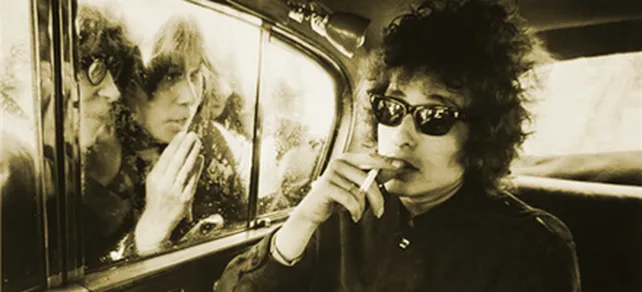
Dylan's motorcycle crash: the sudden stop that saved him from himself
On July 29, 1966, Bob Dylan crashed his Triumph motorcycle near Woodstock, New York. The crash's true severity remains a mystery, but its consequences do not: Dylan cancelled everything, vanished from touring for eight years and took refuge in family life and home recordings with The Band. The accident pulled him out of a velocity that would probably have killed him.
Bob Dylan
Listen
Via YouTube
1965
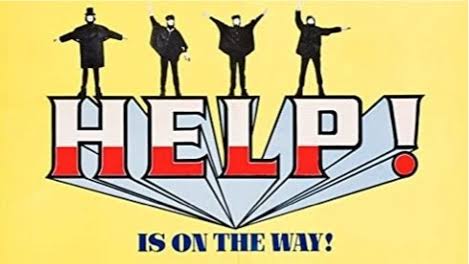
'Help!' premieres in London with ten thousand fans and a princess
On July 29, 1965, the London Pavilion in Piccadilly Circus hosted the world premiere of 'Help!', the Beatles' second film. Ten thousand fans surrounded the cinema to watch the quartet arrive in a black Rolls-Royce, while Princess Margaret and Lord Snowdon waited inside. Richard Lester's color comedy confirmed that Beatlemania had conquered the movies too, and its shoot incidentally planted the seed of 'Yesterday'. The band celebrated afterwards at the Dorchester Hotel, at the exact peak of their pop madness.
The Beatles
Listen
Via YouTube
1966
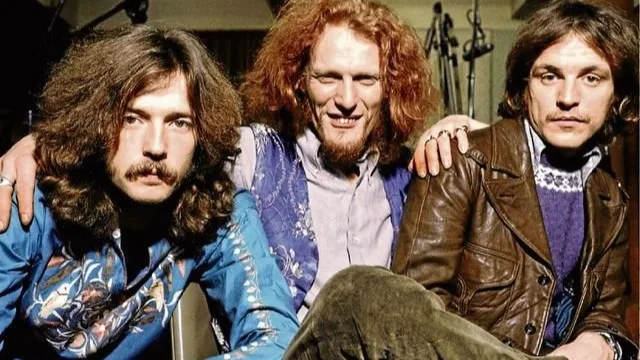
The first supergroup debuts to a half-empty room and runs out of songs
On July 29, 1966, Cream played their first show at Manchester's Twisted Wheel. They went on as an unannounced last-minute addition, the club nearly empty and rain outside. Clapton, Bruce and Baker had been together barely two weeks: they played three blues numbers — 'Spoonful', 'Crossroads', 'I'm So Glad' — and announced there were no more, because they literally didn't have any. Two nights later they tore up the Windsor festival and the press coined a word for them: supergroup.
Cream
Eric Clapton
Jack Bruce
Ginger Baker
Listen
Via YouTube
1967
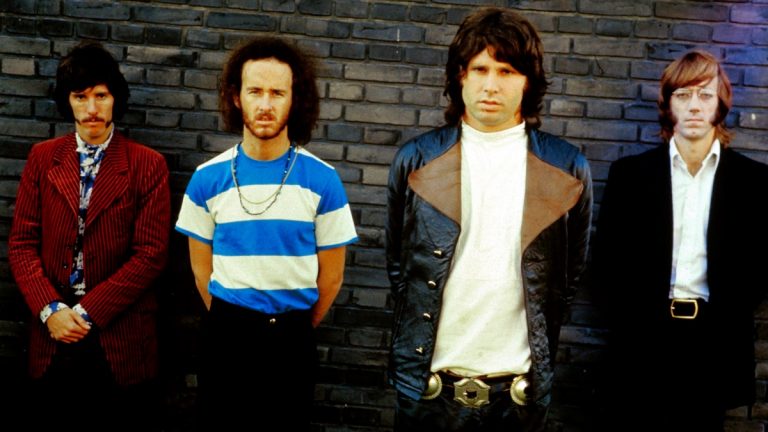
'Light My Fire' hits number one with half the song amputated
On July 29, 1967, 'Light My Fire' settled in at number one on the Billboard Hot 100 for three weeks. It was The Doors' first chart-topper, and it arrived mutilated: the album version ran past seven minutes, so radio imposed a three-minute edit that swallowed almost the whole instrumental interlude. Guitarist Robby Krieger wrote it, not Morrison. And it stands as a portrait of the deal psychedelia had to sign to get on the radio: you could be strange, as long as you fit in three minutes.
The Doors
Listen
Via YouTube
1974
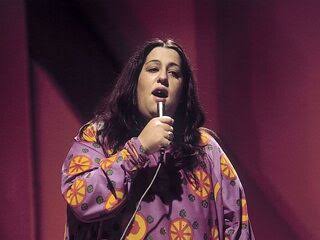
Mama Cass dies at 32, with London at her feet
On July 29, 1974, Cass Elliot — the warmest voice of The Mamas & the Papas — died in London after two triumphant solo nights at the Palladium. She was 32, and a heart attack took her at her professional peak. The cruel, false urban legend about the sandwich overshadowed for decades what matters: she was one of the great voices of her generation.
Cass Elliot
The Mamas & the Papas
Listen
Via YouTube
1953
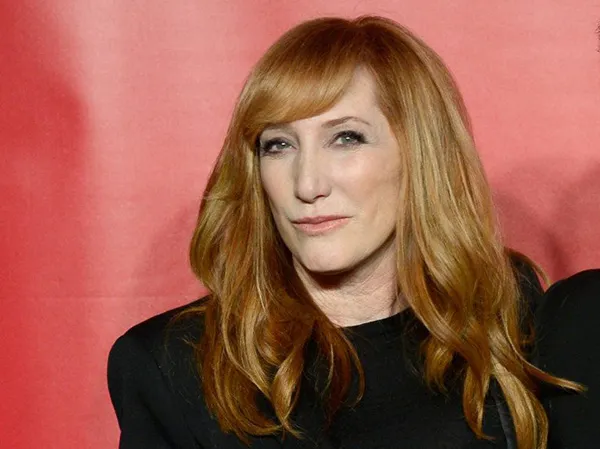
Patti Scialfa is born, the redhead who completed the E Street Band
On July 29, 1953, Patti Scialfa, a singer and guitarist seasoned in the same Jersey Shore bars that raised Springsteen, was born in New Jersey. In 1984, days before the 'Born in the U.S.A.' tour kicked off, she joined the E Street Band as the group's first woman. Over the years she also became a songwriter with albums of her own and the Boss's wife, marrying him in 1991. In 2014 she entered the Rock and Roll Hall of Fame as part of the band she helped redefine.
Patti Scialfa
E Street Band
Listen
Via YouTube
1953
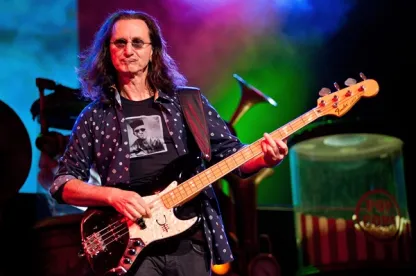
Geddy Lee is born, three musicians in a single body
On July 29, 1953, Gary Lee Weinrib, son of Holocaust survivors, was born in Toronto — known to the world as Geddy Lee. Recruited in 1968 by his childhood friend Alex Lifeson, he became Rush's high-pitched voice, virtuoso bass and keyboards, all at once and live on stage. His onstage juggling act let a trio sound like a progressive orchestra on albums like '2112' and 'Moving Pictures'. Generations of bassists cite him as the musician who made the instrument a protagonist.
Geddy Lee
Rush
Listen
Via YouTube
1966
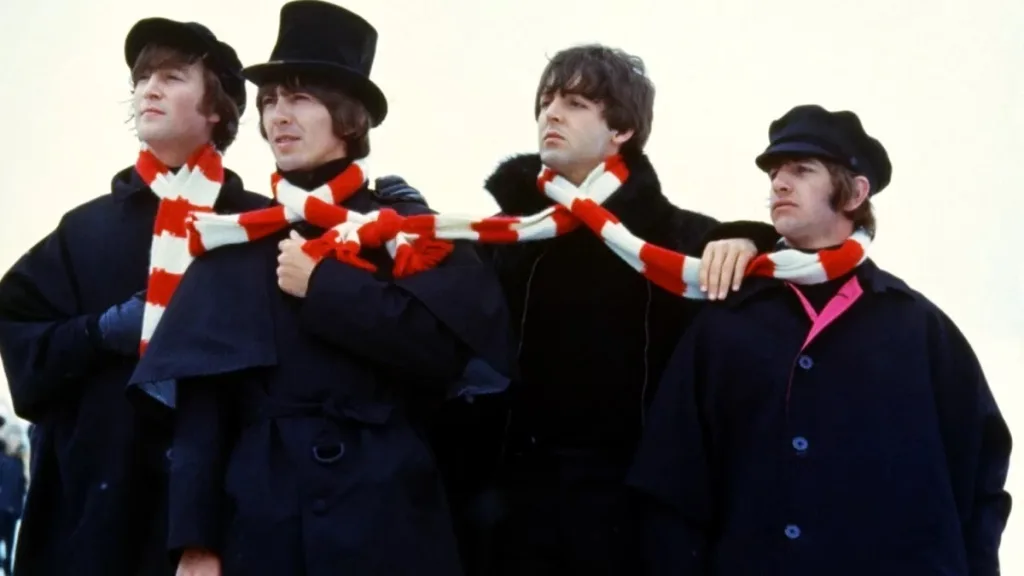
A teen magazine reprints Lennon and lights the bonfires
On July 29, 1966, the American magazine Datebook reprinted remarks Lennon had made months earlier to Britain's Evening Standard, where he observed that the Beatles were by now more popular than Jesus. In England they had passed almost unnoticed. Datebook put them on the cover, and in the United States they caught fire: stations banning their records, bonfires of vinyl, death threats. The same sentence, said twice, did not mean the same thing depending on where and how it was printed.
The Beatles
John Lennon
Listen
Via YouTube
1974
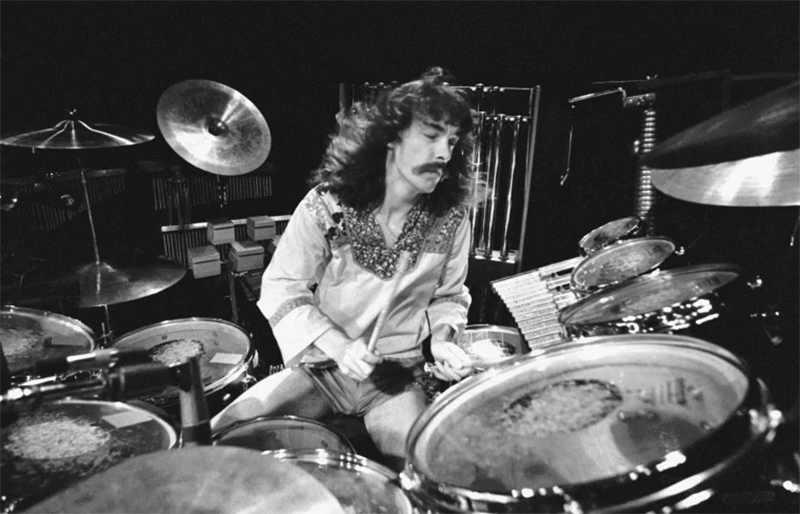
A drummer turns up with his kit in dustbins and stays for fourteen albums
On July 29, 1974, Neil Peart joined Rush. He had arrived at the audition in his mother's Ford Pinto with his drums stuffed into dustbins, and Alex Lifeson took one look and assumed it wasn't going to work. Then Peart started playing as if Keith Moon and John Bonham were sharing the same stool, and the argument was over. He was replacing John Rutsey, who was leaving over his health, and he would end up writing nearly all of the band's lyrics.
Rush
Neil Peart
Listen
Via YouTube
1991
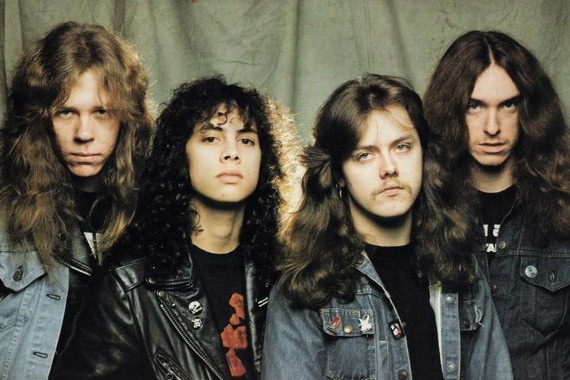
'Enter Sandman': the riff that took metal into every house
On July 29, 1991, 'Enter Sandman' was released as the first single from Metallica's black album. Produced by Bob Rock, it was slower, cleaner and shorter than almost anything the band had done before, and that was precisely the purists' complaint and the reason for its reach. It got to number 16 in the United States — a modest figure that hides the real story — and dragged the album to tens of millions of copies. Metal stopped being a club.
Metallica
Listen
Via YouTube
One ephemeris a day, one editorial a week. Zero spam, pure archive.