
Barbra Streisand
She changed nothing, and she won everything
By Rebobinados · Published on September 24, 2026
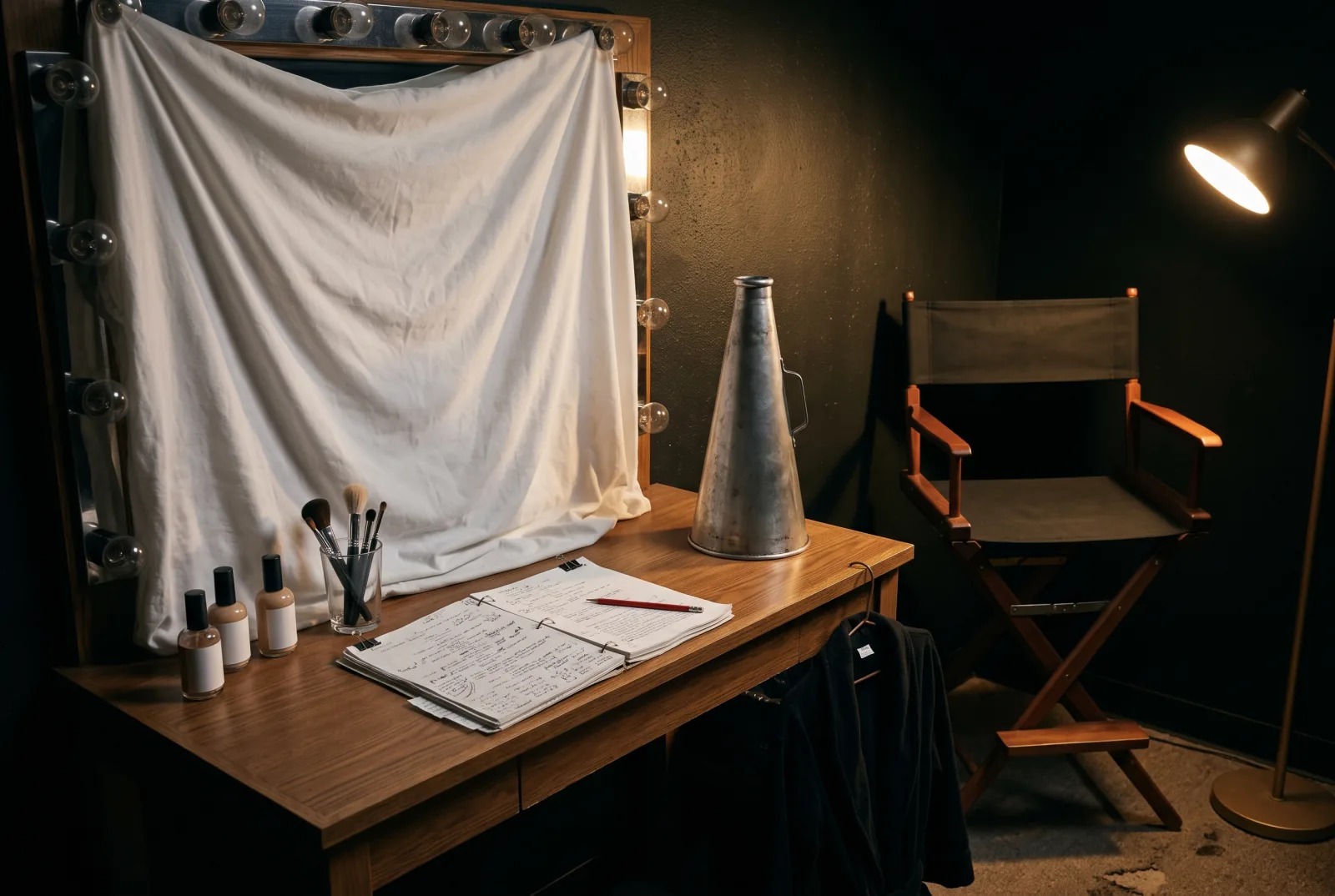
Ilustración: Rebobinados
Early in her career, Barbra Streisand was told everything an industry tells a woman in order to mould her: that she should change her surname, too Jewish; that she should have her nose done, too big; that she should soften her character, too strong; that she should be, in short, a more marketable person. She said no to all of it. She did not touch her nose, she did not change her name, she did not lower her head. And she became one of the most awarded and successful artists in history. The lesson is in the order of those two statements: she changed nothing, and she won everything.
The voice
Before anything else there is the voice, and it is one of the greatest the century produced. An instrument with a range, a pitch and an emotional control that put her in a category of very few. Barbra Streisand can hold a note until you find yourself holding your breath, she can go from a whisper to an explosion without a seam, she can act out an entire song with the smallest gesture. "People", "The Way We Were", "Evergreen", "Woman in Love": these are not just hits, they are master classes in how a song is performed.
Her perfectionism is legendary, and that is another form of her greatness. She let nothing slide, she controlled every detail, she demanded until everyone was exhausted. At a time when women were asked to be docile, she made demands. They called her difficult; in a man they would have called it exacting. That stubbornness about quality is the reason her work still sounds impeccable decades later.
More than a voice
And she did not stop at singing. Streisand was one of the very few artists able to shine at everything: she won two Academy Awards —one as an actress for "Funny Girl", the other as a songwriter for "Evergreen"— plus multiple Grammys and Emmys, and an honorary Tony, a collection of prizes almost nobody assembles. She acted, sang, composed, produced and directed.
With "Yentl", in 1983, she did something no woman had done at a major Hollywood studio: she produced, directed, co-wrote and starred in the same film. She sat in the director's chair when that chair was almost exclusively a man's. She did not ask permission; she took it. Every barrier put in front of her for being a woman, for being Jewish, for not fitting the mould, she used as a springboard.
What to remember
Barbra Streisand was asked to change her name, her nose, her character, and she refused all of it. She has one of the greatest voices of the century and a perfectionism that made her work unbeatable. She won Oscars, Grammys and Emmys, she directed and produced when women were not allowed to, and she became one of the most successful artists in history without giving up an inch of who she was.
Remember it this way: the entire industry told her that to succeed she had to stop being herself. She did the opposite, stubbornly, for more than sixty years, and succeeded more than almost everyone who gave her the advice. She changed nothing. She won everything. In that order, and it is no coincidence.
Sources
Barbra Streisand, American singer, actress, songwriter, producer and director born on 24 April 1942 in Brooklyn, New York; she is alive. She is one of the best-selling and most awarded artists in history: she won two Academy Awards —best actress for "Funny Girl" (1969, tied with Katharine Hepburn) and best original song for "Evergreen" (1977)—, multiple Grammy and Emmy awards, and an honorary Tony Award. Her recordings include "People", "The Way We Were", "Evergreen" and "Woman in Love". Early in her career she refused pressure to change her surname and her appearance. With "Yentl" (1983) she became the first woman to produce, direct, co-write and star in a film for a major Hollywood studio. Profile compiled for Rebobinados with fact-checking; interpretations of the meaning of the work are offered as the author's reading. No song lyrics are reproduced, for copyright reasons. Information drawn from Britannica, Oscars.org, Kennedy Center and other coverage.
Keep rewinding

10s
pop
Bruno Mars
Eleven names in the credits
"Uptown Funk" came out on 10 November 2014 with six writers and today it has eleven. In February 2015 The Gap Band's publisher filed a claim over "Oops Up Side Your Head" in YouTube's copyright system —there was never a lawsuit— and on 28 April five names were added, with 17 % of the publishing. It happened weeks after the "Blurred Lines" verdict, and the song had been fourteen weeks at number one.

00s
pop
André Rieu
It was not from the jazz suite
The waltz with which André Rieu reached half the world is not from Shostakovich's Suite for Jazz Orchestra No. 2: it is from the Suite for Variety Orchestra, which the composer did not assemble, and it was born in 1956 as music for a Soviet film about settlers in Kazakhstan. The error comes from a misprint in volume 10 of the complete works (Muzyka, Moscow, 1984), corrected only in 2001. And the title "The Second Waltz" was invented by his wife, because the real one did not sell.

90s
pop
Daniela Mercury
She took the neighbourhood out of the song
"O Canto da Cidade" was written by Tote Gira, a composer from Nordeste de Amaralina who recorded the demo on a borrowed cassette, marking the beat on the door of a refrigerator; Mercury's team almost threw the tape away. She shares the credit because she deleted the references to the Pelourinho so that the song would serve all of Brazil. The album, from 20 September 1992, sold more than 2 million copies and nationalised axé. But she did not invent it: the name was a journalist's insult in 1987.
Rewind with us
Comments · 0
No one has commented yet. Open the conversation.