
Bryan Adams
The other half he made with a camera
By Rebobinados · Published on September 26, 2026
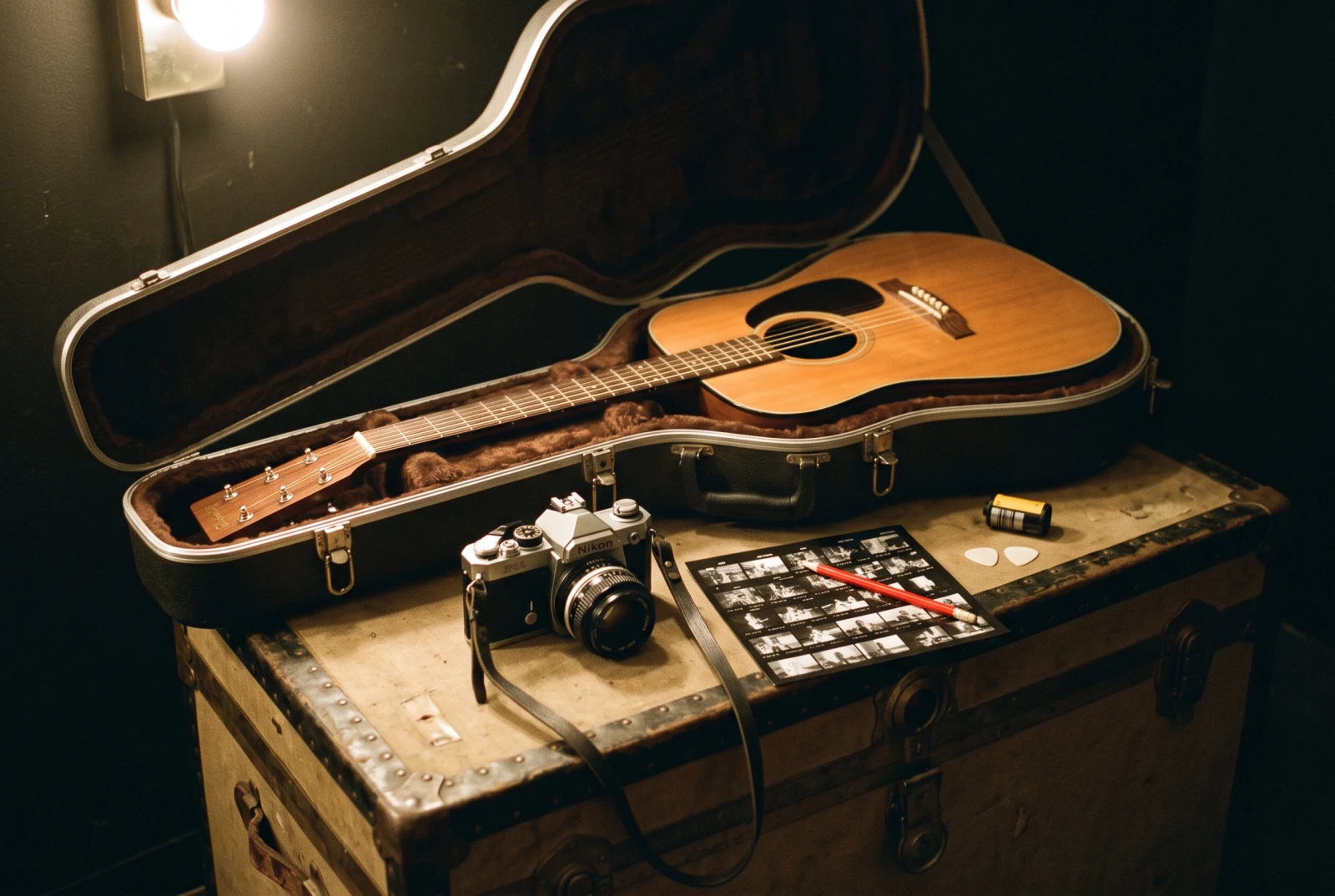
Ilustración: Rebobinados
Bryan Adams was never a star of poses. No extravagant costumes, no characters, no mystery: jeans, a T-shirt, a raspy voice you recognise in two seconds and a handful of songs written to accompany other people's lives. That simplicity was his method. What is almost never told is that half of his adult work is not listened to: it is looked at. Adams has spent more than thirty years working as a photographer, and not as a decoration.
Canada, a sandpaper voice and a partner
He was born on 5 November 1959 in Kingston, Ontario, into a diplomatic family that moved often, and from very early on he was clear that music was his thing. The voice — rough, worn, warm — was a perfect fit for the stadium rock with a heart that he began to make at the start of the eighties. The other half of the sound was supplied by Jim Vallance, his co-writer for years, the partner who put together the structure while he provided the throat.
Here a fact repeated everywhere has to be corrected. "Cuts Like a Knife" is not on Reckless: it is the title track of the previous album, from 1983. The mistake comes from the two songs always being played one after the other, but they are different records and a whole year apart.
Reckless, in 1984, was something else. Out of it came "Run to You", "Heaven", "Summer of '69", "Somebody", "One Night Love Affair" and "It's Only Love", the duet with Tina Turner. Six singles, and all six reached the top 20 of the Billboard Hot 100. "Summer of '69" is that ode to the first band and to the summers that do not come back which half the world believes it lived through, even without having been there.
The ballad, and the record told properly
In 1991, for Robin Hood: Prince of Thieves, Adams recorded "(Everything I Do) I Do It for You", written with Michael Kamen and Robert John "Mutt" Lange. What happened next was disproportionate even for him: sixteen consecutive weeks at number one in Britain.
Two things are said about that record and both are wrong. The first is that it is an absolute record: it is not, it is the record for consecutive weeks. The record for total weeks at number one was held for decades by "I Believe", by Frankie Laine, with eighteen in 1953, and since 31 July 2026 it has been held by Sam Fender and Olivia Dean with "Rein Me In", with twenty-three. The second is that nobody came close to him for decades: Wet Wet Wet reached fifteen consecutive weeks in 1994, barely three years later.
What does hold up, and it is no small thing, is this: those sixteen consecutive weeks are still the record in 2026 and nobody has matched them. Thirty-five years and it is still standing. Put that way, with the criterion in plain sight, the fact is just as impressive and it is also true. Then came "All for Love", with Rod Stewart and Sting, and "Have You Ever Really Loved a Woman?": Adams became a reliable supplier of film ballads, a trade that sounds minor and is not.
He made the other half with a camera
Photography is not the hobby of a famous man with time on his hands. Adams is a published portraitist, with exhibitions and with commissions from magazines, and in 2004 he co-founded Zoo Magazine, a fashion and art publication he has photographed for over the years.
Two pieces of work are enough to measure the reach. In 2002 he photographed Elizabeth II for the Golden Jubilee — queen of the United Kingdom and also of Canada, which is his country, something the cliché of "the Queen of England" erases — and one of those images ended up on a Canadian postage stamp. And in 2013 he published Wounded: The Legacy of War, a series of portraits of British soldiers maimed in combat, made in collaboration with them and exhibited in London.
That second series is the one that best explains the man. A musician with his catalogue did not need to spend years photographing wounded bodies and publishing them in an uncomfortable book. He did it anyway. The image of a friendly, unpretentious rocker is true, and it is also an image: underneath there is someone considerably more curious and considerably more stubborn.
What to remember
Bryan Adams showed that you do not have to be strange or mysterious to last; sometimes well-made songs and a voice you cannot mistake for any other are enough. He put a soundtrack to the nostalgia of youth with "Summer of '69" and signed the film ballad that spent sixteen consecutive weeks at the top in the United Kingdom, a mark nobody has matched since.
And while that was happening he built an entire second career with a camera, one that includes a head of state and maimed soldiers on the same CV. The next time he turns up on a list of "simple rockers", it is worth remembering that the man has photography books and that one of them is not easy to look at.
Sources
Bryan Guy Adams was born on 5 November 1959 in Kingston, Ontario, Canada. He is a singer, songwriter, guitarist and photographer. His regular co-writer during the eighties was Jim Vallance. "Cuts Like a Knife" is the title track of his 1983 album, not of "Reckless". "Reckless" was released in 1984 and included "Run to You", "Heaven", "Summer of '69", "Somebody", "One Night Love Affair" and "It's Only Love", a duet with Tina Turner; all six singles taken from the album reached the top 20 of the Billboard Hot 100. "(Everything I Do) I Do It for You", written with Michael Kamen and Robert John "Mutt" Lange for the film "Robin Hood: Prince of Thieves" (1991), stayed sixteen consecutive weeks at number one on the British singles chart, a mark for consecutive weeks that had not been matched as of 2026. The record for total weeks at number one in Britain belonged to "I Believe", by Frankie Laine, with eighteen weeks in 1953, and since 31 July 2026 it has been held by Sam Fender and Olivia Dean with "Rein Me In", with twenty-three weeks. Wet Wet Wet reached fifteen consecutive weeks in 1994 with "Love Is All Around". Adams also wrote "All for Love" (1993), together with Rod Stewart and Sting, and "Have You Ever Really Loved a Woman?" (1995). As a photographer he has exhibited and published portraits in international magazines and in 2004 he co-founded the publication "Zoo Magazine". In 2002 he photographed Elizabeth II, queen of the United Kingdom and of Canada, on the occasion of the Golden Jubilee; one of the images was used on a Canadian postage stamp issued in 2004. In 2013 he published "Wounded: The Legacy of War", a series of portraits of British soldiers who were maimed in combat. Profile compiled for Rebobinados with fact-checking; interpretations of the meaning of the work are offered as the author's reading. No song lyrics are reproduced, for copyright reasons. Information drawn from the Official Charts Company, Billboard, BBC News, The Guardian, Wikipedia and other coverage.
Keep rewinding

10s
pop
Bruno Mars
Eleven names in the credits
"Uptown Funk" came out on 10 November 2014 with six writers and today it has eleven. In February 2015 The Gap Band's publisher filed a claim over "Oops Up Side Your Head" in YouTube's copyright system —there was never a lawsuit— and on 28 April five names were added, with 17 % of the publishing. It happened weeks after the "Blurred Lines" verdict, and the song had been fourteen weeks at number one.
00s
pop
André Rieu
It was not from the jazz suite
The waltz with which André Rieu reached half the world is not from Shostakovich's Suite for Jazz Orchestra No. 2: it is from the Suite for Variety Orchestra, which the composer did not assemble, and it was born in 1956 as music for a Soviet film about settlers in Kazakhstan. The error comes from a misprint in volume 10 of the complete works (Muzyka, Moscow, 1984), corrected only in 2001. And the title "The Second Waltz" was invented by his wife, because the real one did not sell.
90s
pop
Daniela Mercury
She took the neighbourhood out of the song
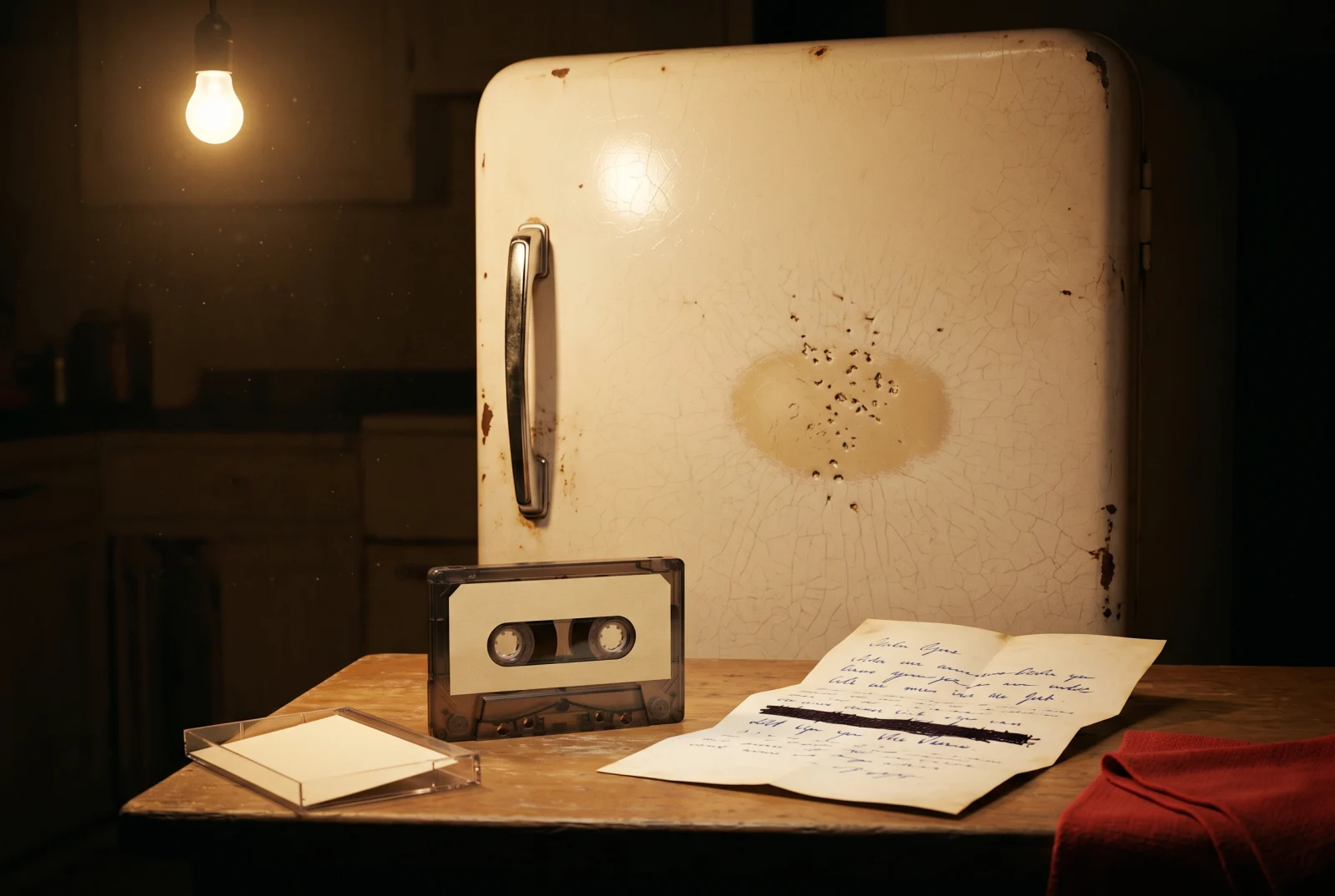
"O Canto da Cidade" was written by Tote Gira, a composer from Nordeste de Amaralina who recorded the demo on a borrowed cassette, marking the beat on the door of a refrigerator; Mercury's team almost threw the tape away. She shares the credit because she deleted the references to the Pelourinho so that the song would serve all of Brazil. The album, from 20 September 1992, sold more than 2 million copies and nationalised axé. But she did not invent it: the name was a journalist's insult in 1987.
Rewind with us
Comments · 0
No one has commented yet. Open the conversation.