
Eagle-Eye Cherry
The son's four chords
By Rebobinados · Published on September 27, 2026
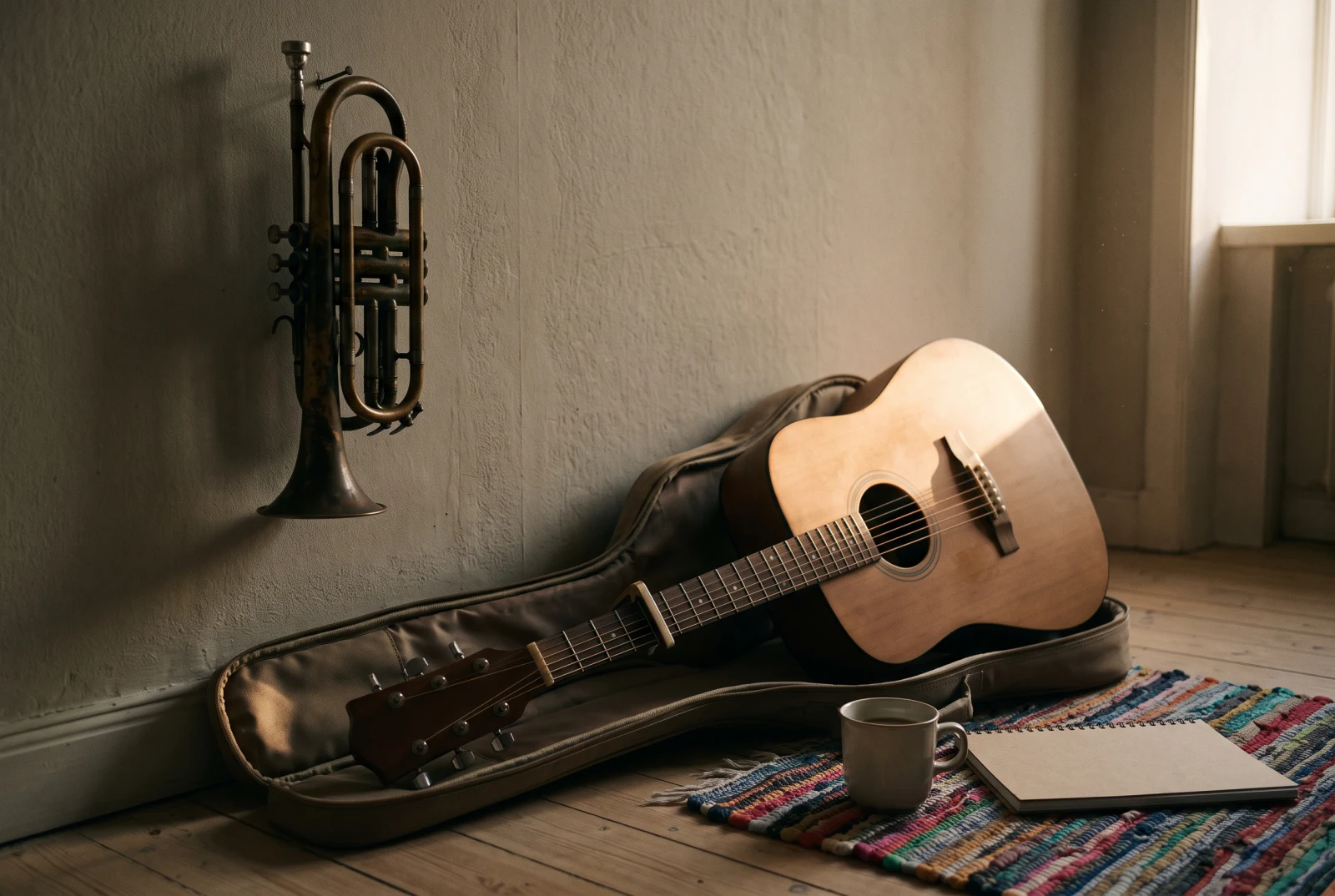
Ilustración: Rebobinados
Between 1998 and 1999 there was a song you could not dodge on any radio station in the world, and it was made out of the simplest thing there is: an acoustic guitar, four chords going round and a warm voice. "Save Tonight" was disarming in its plainness, the kind of song anyone can play at a campfire without having studied anything. What almost nobody knew was that the man singing it came from one of the most avant-garde families in twentieth-century music, and that before being a musician he had earned his living as an actor.
The surname, read carefully
Eagle-Eye Cherry was born in Stockholm on 7 May 1968. His mother was the Swedish visual artist Moki Cherry and his father, Don Cherry, the American trumpeter who was one of the central figures of free jazz, a fellow traveller of Ornette Coleman. In that house they did not listen to easy music: you breathed experimentation, a mixing of cultures and risk.
His half-sister is Neneh Cherry, the singer who at the end of the eighties shook up pop with "Buffalo Stance", crossing hip hop, dance and attitude. And here there is a nuance that the broad-brush phrase — "a father who reinvented jazz, a sister who reinvented pop" — makes disappear. Neneh is his half-sister by blood on the maternal side: both of them Moki's. Don Cherry was not Neneh's biological father, but her stepfather. The jazz lineage attributed to her because of the surname strictly speaking does not exist.
It is worth saying because the comfortable account turns this family into a dynasty and it is not one. It is something more interesting: a house in which music was a way of living, not a blood inheritance.
He was an actor first
The part the profiles tend to skip is that Eagle-Eye did not come to music by elimination or all at once. He studied at the High School of Performing Arts in New York, the city's performing arts school, and worked as an actor for years.
He appeared in Born on the Fourth of July, Oliver Stone's 1989 film, and in 1993 he was part of the cast of the series South Beach. In other words: at the moment he recorded his first album he was not a kid with a guitar in his bedroom. He was a professional in another trade who decided to switch.
The bedroom album
The change has a date and a cause. Don Cherry died on 19 October 1995 in Málaga, of liver cancer. His son went back to Stockholm, gave up acting and devoted himself to music full time. That biographical causality is documented and he has told it.
What does have to be taken apart, because it has been repeated until it became an article of faith, is the reading that "Save Tonight" carries the mourning for his father. There is not a single statement of his to that effect. The song is about a break-up: he has said that it was inspired by watching his then girlfriend leave on a train. The urgency it has is that of a goodbye on a platform, not that of a funeral. Attributing the mourning to it sounds more profound and is, quite simply, made up.
Desireless he recorded in the studio he put together in his bedroom, with an acoustic guitar, and there lies the explanation of how it sounds. "Save Tonight" reached number five on the Billboard Hot 100 — the number six quoted everywhere is the British position, another crossing of charts between countries — and sold millions of copies around the world. Afterwards he went on releasing albums and touring for decades, without trying to compete with his father's avant-garde or with his sister's constant reinvention.
The success, moreover, was neither immediate nor orderly. The album came out first in Sweden, in 1997, and the worldwide phenomenon arrived with the year's delay that the usual account erases: it was between 1998 and 1999 that the song settled into radio stations all over the planet. Opening the story in 1997 brings forward by a year what actually happened slowly, country by country, until it became what it still is: a song people play from memory without knowing who wrote it.
What to remember
Eagle-Eye Cherry is the proof that an enormous surname does not oblige you to anything. Born into a family where music was risk and experiment, he chose four chords, an acoustic guitar and a melody that gets in on the first attempt, and with that he made a song that still sounds fresh almost thirty years later. That simplicity was a decision, not a limit.
The biography does have a real twist, and it is not in the lyrics. It is that a thirty-year-old actor, after burying his father, went back to Stockholm and set about making music seriously, in a room in his house. What changed was not the meaning of a song: it was a man's trade.
Sources
Eagle-Eye Lanoo Cherry was born on 7 May 1968 in Stockholm, Sweden, the son of the Swedish artist Moki Cherry and the American trumpeter Don Cherry, a central figure of free jazz and a collaborator of Ornette Coleman. The singer Neneh Cherry is his half-sister on the maternal side; Don Cherry was Neneh's stepfather, not her biological father. Eagle-Eye Cherry studied at the High School of Performing Arts in New York and worked as an actor: he took part in the film "Born on the Fourth of July" (1989) and in the television series "South Beach" (1993). Don Cherry died on 19 October 1995 in Málaga, Spain, of liver cancer; after his death, Eagle-Eye Cherry returned to Stockholm, gave up acting and devoted himself to music full time. He recorded his debut album, "Desireless", in a studio set up in his bedroom, with an acoustic guitar. The single "Save Tonight" reached number five on the Billboard Hot 100 and number six on the British chart, and sold several million copies around the world; its international success took place between 1998 and 1999. Cherry himself has stated that the song is about a romantic break-up, inspired by the departure of his partner at the time, and there is no statement of his linking it to his father's death. He went on releasing albums and touring in the following decades. Profile compiled for Rebobinados with fact-checking; interpretations of the meaning of the work are offered as the author's reading. No song lyrics are reproduced, for copyright reasons. Information drawn from Billboard, Official Charts Company, The Guardian, Sveriges Radio, Wikipedia and other coverage.
Keep rewinding
10s
pop
Bruno Mars
Eleven names in the credits
"Uptown Funk" came out on 10 November 2014 with six writers and today it has eleven. In February 2015 The Gap Band's publisher filed a claim over "Oops Up Side Your Head" in YouTube's copyright system —there was never a lawsuit— and on 28 April five names were added, with 17 % of the publishing. It happened weeks after the "Blurred Lines" verdict, and the song had been fourteen weeks at number one.
00s
pop
André Rieu
It was not from the jazz suite
The waltz with which André Rieu reached half the world is not from Shostakovich's Suite for Jazz Orchestra No. 2: it is from the Suite for Variety Orchestra, which the composer did not assemble, and it was born in 1956 as music for a Soviet film about settlers in Kazakhstan. The error comes from a misprint in volume 10 of the complete works (Muzyka, Moscow, 1984), corrected only in 2001. And the title "The Second Waltz" was invented by his wife, because the real one did not sell.
90s
pop
Daniela Mercury
She took the neighbourhood out of the song
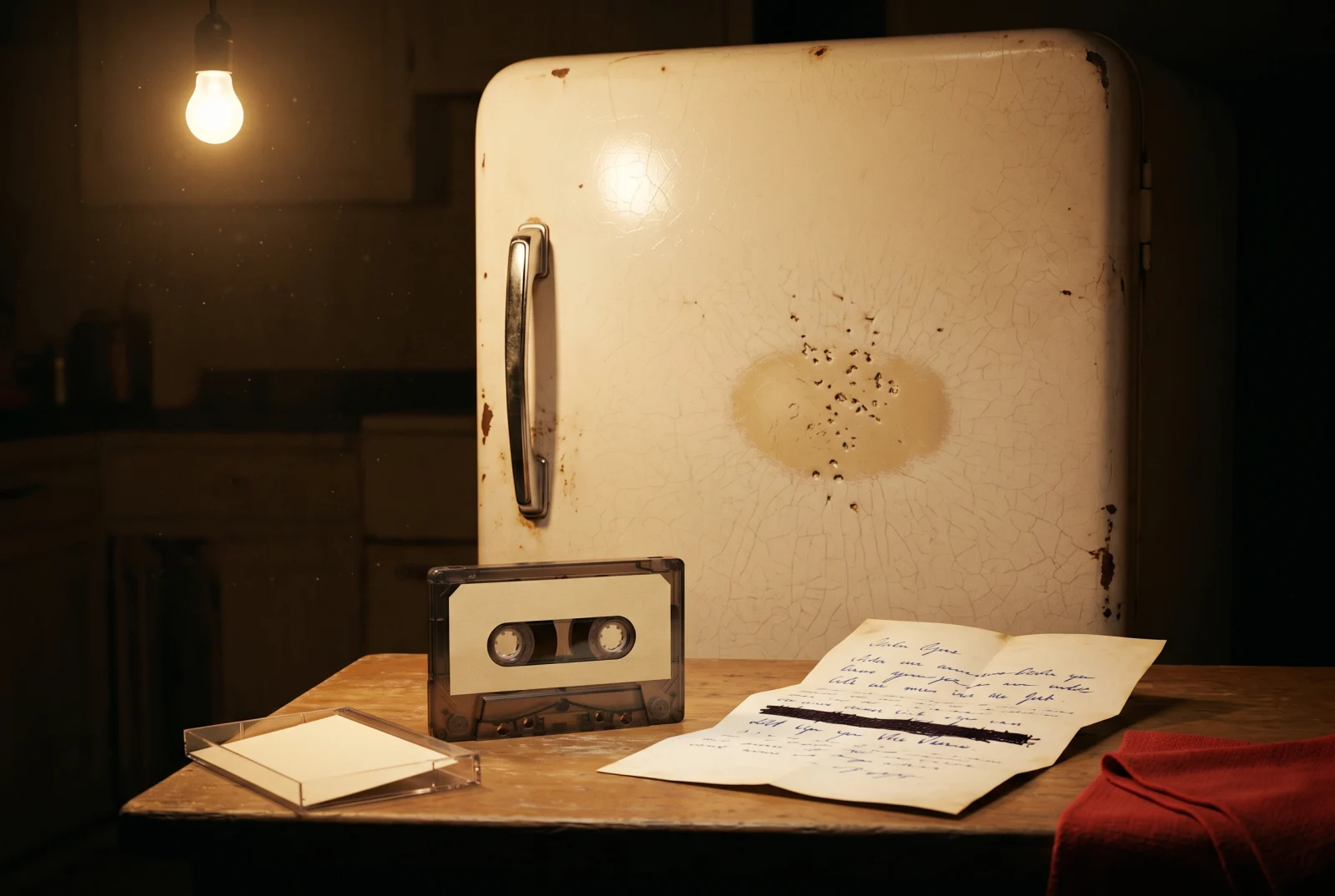
"O Canto da Cidade" was written by Tote Gira, a composer from Nordeste de Amaralina who recorded the demo on a borrowed cassette, marking the beat on the door of a refrigerator; Mercury's team almost threw the tape away. She shares the credit because she deleted the references to the Pelourinho so that the song would serve all of Brazil. The album, from 20 September 1992, sold more than 2 million copies and nationalised axé. But she did not invent it: the name was a journalist's insult in 1987.
Rewind with us
Comments · 0
No one has commented yet. Open the conversation.