
Gilbert O'Sullivan
The softest balladeer in pop changed the rules for all of music
By Rebobinados · Published on September 26, 2026
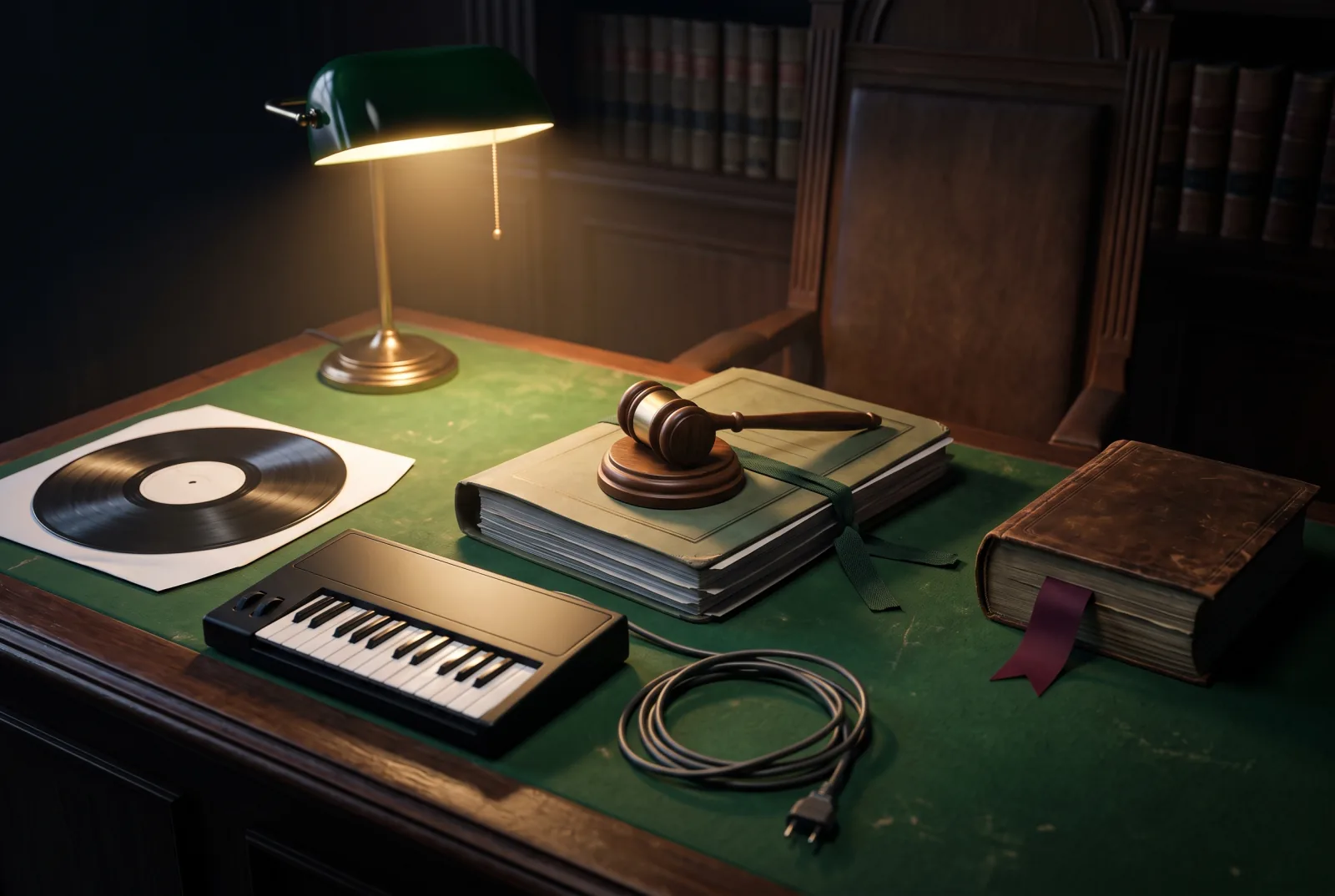
Ilustración: Rebobinados
There is a song from the early seventies, "Alone Again (Naturally)", that is one of the most melancholy and beautiful pop ever produced: a song about loneliness and loss, sung with disarming sweetness by a shy-looking Irishman with gentle manners called Gilbert O'Sullivan. Nobody, looking at him, would have said that this man was going to be at the centre of one of the most important legal battles in the history of music, or that his decision was going to rewrite the rules of hip hop and of all recorded music. But that is what happened. The softest man landed the biggest blow.
The man of sad songs
Gilbert O'Sullivan hit hard in the early seventies with a handful of songs of a sensitivity rare for the time: "Alone Again (Naturally)", which was number one in the United States, "Clair", "Get Down". He had a gift for restrained melodrama, for melodies that seem simple and stay stuck with you forever. "Alone Again" in particular is one of those songs that hurt beautifully, a portrait of loneliness so honest that it is still moving half a century later.
He was, to all appearances, as far from a revolutionary as you can get: a delicate songwriter, low-profile, closer to the melodic song than to furious rock. And yet his name is carved into history for something that has nothing to do with any melody.
The trial that changed everything
In 1991, the rapper Biz Markie used a piece of "Alone Again (Naturally)" in a song of his own, without authorisation or payment. In those years that was normal: hip hop had been built, to a large extent, by taking fragments of other people's records without much fuss. You sampled and that was that. Nobody asked.
Gilbert O'Sullivan said no. He sued. And the case, known as Grand Upright Music versus Warner Bros., ended with a ruling that shook the entire industry. The judge sided with O'Sullivan and opened his ruling, famously, with a biblical commandment: "Thou shalt not steal". With that it was established, for the first time and with the force of law, that sampling without authorisation is stealing, and that every borrowed fragment had to be licensed and paid for.
That ruling, from 1991, changed forever how music is made. Overnight, putting in a sample stopped being free and became expensive and complicated; producers had to start asking permission, paying, or replacing samples by playing the music again themselves. The entire way hip hop and much of pop has been built ever since is born, at bottom, from this Irish balladeer's lawsuit. The man of sad songs put a price on sampling for the whole world.
What to remember
Gilbert O'Sullivan was an Irish songwriter of uncommon sweetness, author of "Alone Again (Naturally)", one of the most melancholy and perfect songs of the seventies. And without seeking it, he became a central figure in the legal history of music: his 1991 lawsuit over an unauthorised use of that song established that sampling without permission is stealing, and rewrote the rules of the industry forever.
Remember it this way: the softest guy in pop, the one with the ballads that make you cry, turned out to be the one who changed the rules for everybody. Sometimes the hardest blow is landed by the gentlest hand.
This text mentions a song whose lyrics deal with loss and dark thoughts. If you are going through a difficult time, in Chile you can call *4141, the suicide prevention line of the Ministry of Health, available 24 hours a day.
Sources
Gilbert O'Sullivan (Raymond Edward O'Sullivan), Irish singer-songwriter born on 1 December 1946 in Waterford, Ireland; he is alive. In the early seventies he had hits such as "Alone Again (Naturally)" (number one on the American Billboard Hot 100 in 1972), "Clair" and "Get Down". In 1991, his lawsuit over the unauthorised use of a sample of "Alone Again (Naturally)" in a song by the rapper Biz Markie led to the ruling Grand Upright Music, Ltd. v. Warner Bros. Records Inc., issued on 17 December 1991 by Judge Kevin Thomas Duffy, whose decision began with the phrase "Thou shalt not steal"; the defendant had requested a licence for the song before releasing the record and, having failed to obtain it, released it anyway, which the court assessed as deliberate infringement. The ruling established that sampling without authorisation constitutes copyright infringement and transformed the practice of sampling in hip hop and the music industry, requiring every borrowed fragment to be licensed and paid for. Profile compiled for Rebobinados with fact-checking; interpretations of the meaning of the work are offered as the author's reading. No song lyrics are reproduced, for copyright reasons. Information drawn from Wikipedia, GWU Music Copyright Infringement Resource, NPR and other coverage.
Keep rewinding

10s
pop
Bruno Mars
Eleven names in the credits
"Uptown Funk" came out on 10 November 2014 with six writers and today it has eleven. In February 2015 The Gap Band's publisher filed a claim over "Oops Up Side Your Head" in YouTube's copyright system —there was never a lawsuit— and on 28 April five names were added, with 17 % of the publishing. It happened weeks after the "Blurred Lines" verdict, and the song had been fourteen weeks at number one.

00s
pop
André Rieu
It was not from the jazz suite
The waltz with which André Rieu reached half the world is not from Shostakovich's Suite for Jazz Orchestra No. 2: it is from the Suite for Variety Orchestra, which the composer did not assemble, and it was born in 1956 as music for a Soviet film about settlers in Kazakhstan. The error comes from a misprint in volume 10 of the complete works (Muzyka, Moscow, 1984), corrected only in 2001. And the title "The Second Waltz" was invented by his wife, because the real one did not sell.

90s
pop
Daniela Mercury
She took the neighbourhood out of the song
"O Canto da Cidade" was written by Tote Gira, a composer from Nordeste de Amaralina who recorded the demo on a borrowed cassette, marking the beat on the door of a refrigerator; Mercury's team almost threw the tape away. She shares the credit because she deleted the references to the Pelourinho so that the song would serve all of Brazil. The album, from 20 September 1992, sold more than 2 million copies and nationalised axé. But she did not invent it: the name was a journalist's insult in 1987.
Rewind with us
Comments · 0
No one has commented yet. Open the conversation.