
Los Tres
The cueca plugged in
By Rebobinados · Published on September 22, 2026
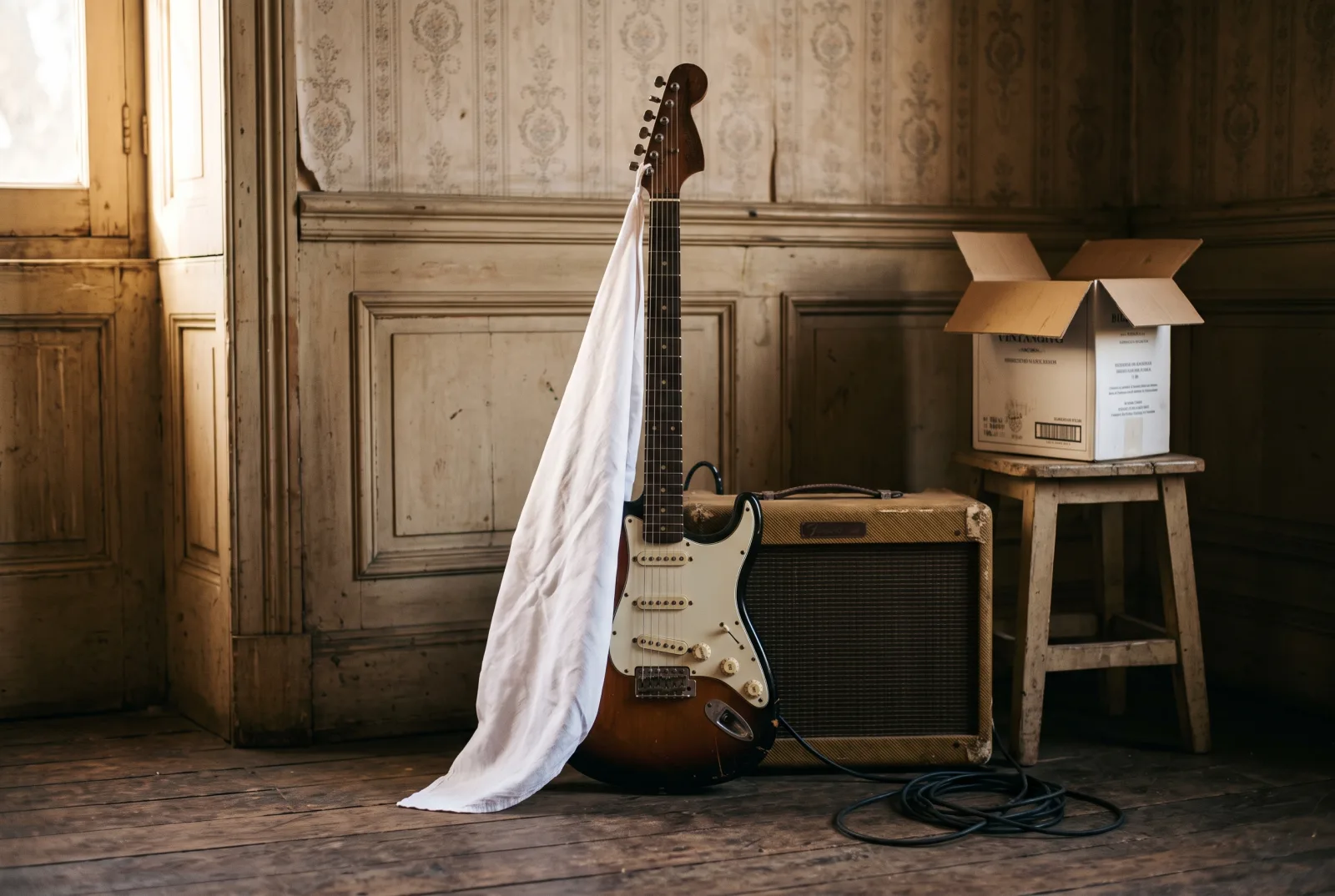
Ilustración: Rebobinados
Los Tres are one of the most important bands in the history of Chilean music, and for many the most beloved.
They came out of Concepción and became the face of Chilean rock in the nineties, and a symbol for a whole generation.
But their greatness is not only in the songs, which are many and enormous. It is in something deeper and braver: at the height of the fashion for Anglo rock, when sounding modern meant sounding American, Los Tres did the opposite. They put la cueca and Chile's musical heritage inside rock, and with that they gave a whole country back its pride in what was its own.
From the Dick Stones to Los Tres
The story begins in 1982 in Concepción, when three friends from the Colegio Charles de Gaulle —Álvaro Henríquez, Roberto "Titae" Lindl and Francisco "Pancho" Molina— put together a band to play covers of Elvis Presley, Chuck Berry and Gene Vincent.
They were called the Dick Stones.
In March 1987, before a concert at the Lord Cochrane gymnasium in Concepción, they renamed themselves Los Tres. Then they moved to Santiago to try their luck, and there a key fourth member joined them: the guitarist Ángel Parra, from Santiago, who brought jazz and an exquisite technique.
Even though there were now four of them, they kept the name.
With their 1991 debut album, and above all with the ones that came after, they exploded: "Déjate caer", "La torre de Babel", "Amor violento", "Tírate", "Hojas de té". Songs the whole of Chile knows by heart, with the witty and sometimes melancholy lyrics of Henríquez, one of the best songwriters the country has produced.
"La espada & la pared", from March 1995, was their most successful record: gold in twenty-five days and platinum in under two months. Gustavo Cerati told Henríquez it was the masterpiece of Los Tres.
A Parra in the band, and a Parra outside it
There are two facts that hold the key to Los Tres, and both run through the same family.
The first: the guitarist, Ángel Parra, is not just any Parra. He belongs to the Parra dynasty, the most important family in Chilean culture. He is the grandson of Violeta Parra, who wrote "Gracias a la vida", and the son of the singer-songwriter Ángel Parra. Nicanor Parra, the antipoet, was his great-uncle.
Which means that inside the most popular rock band of the nineties there beat, through the blood of its guitarist, the very lineage of Chilean folklore and poetry.
The second fact is the one that matters most, and it is usually told vaguely.
Los Tres rescued la cueca —Chile's traditional dance and music, which many young people looked down on as something old, or as a compulsory chore for the national holidays—, put it into their rock and plugged it in.
But that did not come out of nowhere. It came from one specific man: Roberto Parra, Violeta's brother and Ángel's great-uncle. Henríquez met him in the late eighties, playing guitar in the stage production "La Negra Ester", and from him he learned la cueca chora and el jazz guachaca.
Roberto Parra died in April 1995. Months later, Los Tres paid tribute to him by including three of his pieces in their Unplugged, and with that they made his legacy popular across the continent.
They gave dignity and modernity back to the most Chilean thing in Chile, and taught a whole generation to love its own roots.
And in 1996 they went further still with "La Yein Fonda", the national-holiday party they staged by bringing cueca players, cumbia players and rockers onto the same stage.
The Unplugged
In September 1995, Los Tres recorded an acoustic concert for MTV, an "Unplugged", which came out the following year.
There they showed everything: rock, jazz, la cueca, bolero, melancholy and humour, all together, played with an elegance that made it clear they were real musicians and not a passing fashion.
It was the first Unplugged by a Chilean band and it broke sales records across Latin America.
They were also one of the Chilean bands that in the nineties began to open a path in Mexico, alongside La Ley, Lucybell and others. The adventure was not easy for them —their rock demanded more explaining, more interviews and more television than they were willing to give—, and the wear and tear of that effort contributed to the break-up inside the band.
A symbol, with its storms
Los Tres did not always have it easy.
They split up in the year 2000, at the top, and their leader, Álvaro Henríquez, went through difficult years, with personal and health problems that were public and painful.
They came back in 2006, with line-up changes, and in October 2023 they made the return of the four original members official. That same month they played at the opening ceremony of the Santiago Pan American Games, at the Estadio Nacional, closing the night and opening with "Déjate caer".
In July 2025 they recorded at Abbey Road, and in April 2026 they released "XCLNT": their first studio album with the classic line-up in twenty-seven years.
Henríquez, besides, was tied to the history of Latin American music by his marriage to the Mexican singer Julieta Venegas, between 1998 and 2000.
What to remember
Los Tres are the proof that you can be modern without ceasing to belong to your own land, and that roots, far from holding you back, can be the newest thing you have to offer.
If you put on "Déjate caer", "Amor violento", "La torre de Babel" or any of their cuecas, you are going to hear Chilean rock at its best: witty, elegant, melancholy and proud of where it comes from.
Three friends from Concepción and a guitarist with a legendary surname, who started out imitating Elvis and ended up teaching Chile to love its own cueca.
For several generations of Chileans, Los Tres are not a band: they are part of the memory, of the parties, of youth, of the country.
Put them on, and you will understand why they are loved so much in Chile.
Sources
Los Tres, Chilean rock band from Concepción. Álvaro Henríquez, Roberto "Titae" Lindl and Francisco "Pancho" Molina, schoolmates at the Colegio Charles de Gaulle, played rock and roll covers as the Dick Stones from 1982; in March 1987, before a concert at the Lord Cochrane gymnasium in Concepción, they adopted the name Los Tres, and later moved to Santiago, where they were joined by the guitarist Ángel Cereceda Orrego, "Ángel Parra Orrego" (Santiago, 22 May 1966), son of the singer-songwriter Ángel Parra, grandson of Violeta Parra and great-nephew of Nicanor Parra; sources disagree about the year he joined, between 1988 and 1990. They are considered the most important Chilean rock band of the nineties. Among their best-known songs: "Déjate caer", "La torre de Babel", "Amor violento", "Tírate" and "Hojas de té". "La espada & la pared" (17 March 1995) went gold in 25 days and platinum in under two months. Their championing of la cueca comes in good part from Roberto Parra (1921-1995), Violeta's brother and Ángel's great-uncle, whom Álvaro Henríquez met in the late eighties during the stage production "La Negra Ester" and from whom he learned la cueca chora and el jazz guachaca; after Parra's death in April 1995, Los Tres included three of his pieces in their "MTV Unplugged", recorded on 14 September 1995 at Post Edge Studios, Miami, and released on 15 April 1996. It was the first Unplugged by a Chilean band and broke sales records in Latin America. In 1996 they organised "La Yein Fonda", a national-holiday party that brought together cueca players, cumbia players and rockers. They were one of the Chilean bands that in the nineties opened a path into the Mexican market, alongside La Ley, Lucybell and others; the Chilean press has described their attempt to establish themselves there as draining and not entirely successful, and as a factor in the group's break-up. The claim that they opened that market for Los Bunkers does not hold up chronologically: Los Bunkers settled in Mexico in 2008, in a later wave. They announced an indefinite hiatus in April 2000, returned in March 2006 with line-up changes and on 10 October 2023 made the reunion of the original line-up official; on 20 October 2023 they performed at the opening ceremony of the Santiago 2023 Pan American Games, at the Estadio Nacional. In July 2025 they recorded at Abbey Road Studios and on 10 April 2026 they released "XCLNT", their first studio album with the classic line-up in 27 years. Álvaro Henríquez was married to the Mexican singer Julieta Venegas between 1998 and 2000. Externally authored text, edited and verified for Rebobinados. Interpretations of the meaning of their work are offered as the author's reading. No song lyrics are reproduced, for copyright reasons. Information drawn from Memoria Chilena, MusicaPopular.cl, Wikipedia, Cooperativa, La Tercera and other press coverage.
Keep rewinding

10s
pop
Bruno Mars
Eleven names in the credits
"Uptown Funk" came out on 10 November 2014 with six writers and today it has eleven. In February 2015 The Gap Band's publisher filed a claim over "Oops Up Side Your Head" in YouTube's copyright system —there was never a lawsuit— and on 28 April five names were added, with 17 % of the publishing. It happened weeks after the "Blurred Lines" verdict, and the song had been fourteen weeks at number one.

00s
pop
André Rieu
It was not from the jazz suite
The waltz with which André Rieu reached half the world is not from Shostakovich's Suite for Jazz Orchestra No. 2: it is from the Suite for Variety Orchestra, which the composer did not assemble, and it was born in 1956 as music for a Soviet film about settlers in Kazakhstan. The error comes from a misprint in volume 10 of the complete works (Muzyka, Moscow, 1984), corrected only in 2001. And the title "The Second Waltz" was invented by his wife, because the real one did not sell.

90s
pop
Daniela Mercury
She took the neighbourhood out of the song
"O Canto da Cidade" was written by Tote Gira, a composer from Nordeste de Amaralina who recorded the demo on a borrowed cassette, marking the beat on the door of a refrigerator; Mercury's team almost threw the tape away. She shares the credit because she deleted the references to the Pelourinho so that the song would serve all of Brazil. The album, from 20 September 1992, sold more than 2 million copies and nationalised axé. But she did not invent it: the name was a journalist's insult in 1987.
Rewind with us
Comments · 0
No one has commented yet. Open the conversation.