
Metallica
The card that chose
By Rebobinados · Published on September 26, 2026
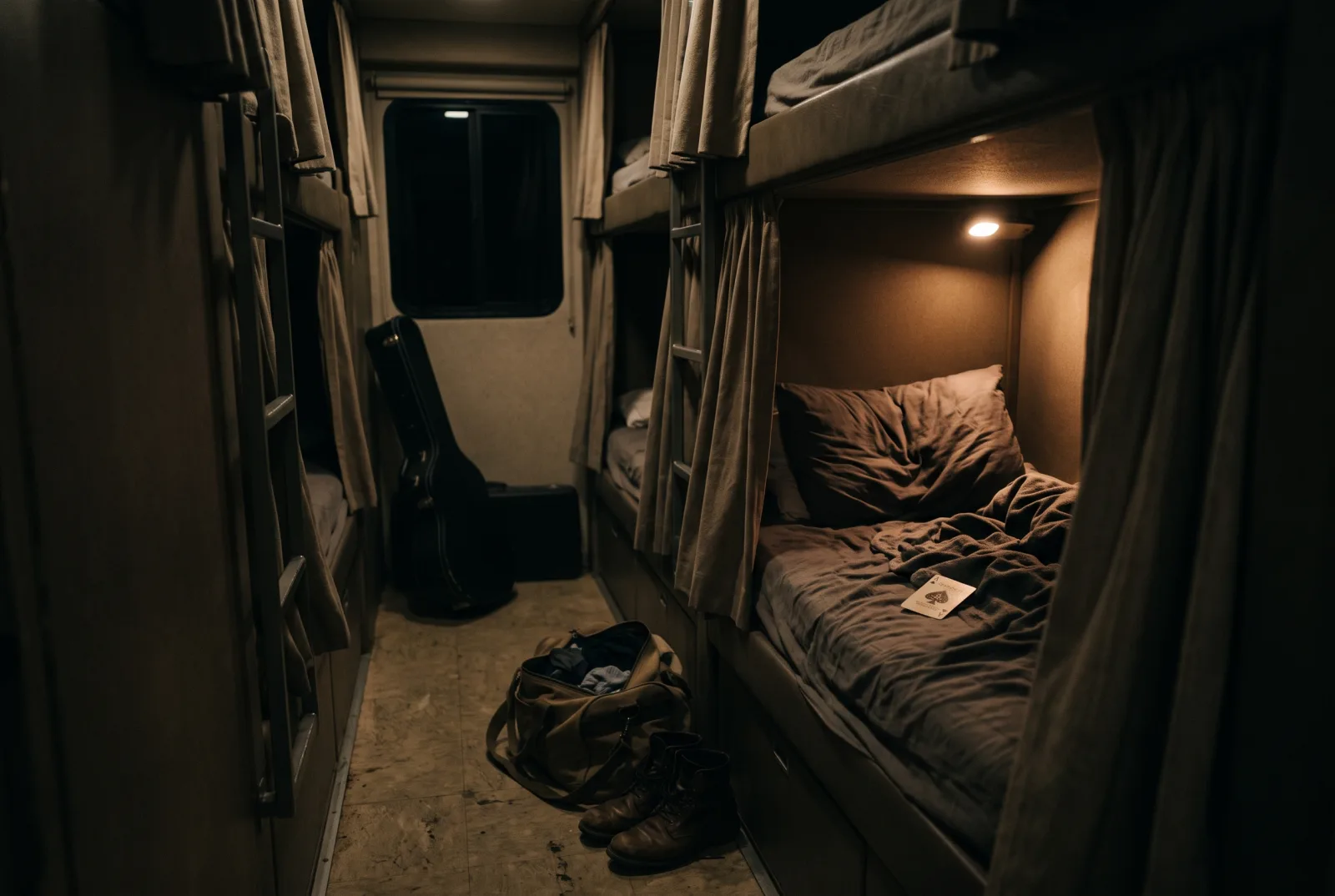
Ilustración: Rebobinados
Metallica is the band that pulled heavy metal out of the underground and took it to stadiums all over the world.
Born in California at the start of the eighties, it took metal, sped it up to the limit and made it heavier, more complex and more furious than ever. That was thrash.
Their story is one of enormous triumph, but also of tragedy and of brutal honesty about their own failings.
Speed and fury
Metallica formed in 1981, when the Danish drummer Lars Ulrich placed a classified ad in The Recycler, the Los Angeles free-ads weekly, looking for musicians.
A guitarist and singer named James Hetfield answered him. Those two — the hyperactive Dane and the American with the rough voice and the hard childhood — would be the engine for ever.
With the guitarist Kirk Hammett and the bassist Cliff Burton they completed the classic line-up.
What they did sounded like nothing else: they took British heavy metal and punk and melted them into something dizzying, technical and crushing. "Kill 'Em All", "Ride the Lightning" and above all "Master of Puppets", from March 1986, are considered peaks of the genre.
The card that chose
And here is the most harrowing story of the band.
In September 1986, Metallica were on tour in Europe, at the height of their rise, travelling by night on a bus between Stockholm and Copenhagen. The musicians slept in bunks.
That night the band argued over who got which one, and they settled it the way these things are settled among friends: by drawing cards from a deck.
Cliff Burton — a genius on his instrument, the most cultured and melodic of the four, regarded as the musical soul of the group — drew the ace of spades. He won first pick, looked at Kirk Hammett and told him he wanted his bed. He went off to sleep there.
Shortly before seven in the morning, near Dörarp, some twenty kilometres north of Ljungby, the bus ran off the road and overturned. Burton was thrown through a window and the bus landed on top of him. He was twenty-four years old.
The bed he had won with that card was, exactly, the place where he was to die. Hammett, who had given up his bunk without knowing it, survived.
It is worth saying where the account comes from: Hammett told it, and it is the dominant version. Lars Ulrich has said at times that it was not a deck of cards but straws, and that Burton drew the long one. The cause of the crash also remained disputed: the driver claimed black ice and was cleared, but Hetfield later said he had driven that road without finding any ice.
What is not in doubt is the draw, and that a coincidence decided which of the two friends would live.
Carrying on, and becoming giants
Burton's death almost finished the band. But they decided to go on — he would have wanted that, they thought — brought in Jason Newsted, and kept going with their friend's shadow over them.
And then, in 1991, they made the record that changed their size: the so-called Black Album, with "Enter Sandman" and "Nothing Else Matters".
They slowed down a little, made the songs more direct, and conquered the whole world, far beyond metal fans. In the United States alone it went past twenty million copies: in May 2025 the RIAA certified it 20× platinum, double diamond, the best-selling record in the country since sales began to be counted by scanner.
Metal, which two decades earlier had been born as niche music with Black Sabbath, was now filling the biggest stadiums on the planet.
The cracks in plain sight
And unlike almost every other band, Metallica let the world see their failings.
In 2000 they got into a war with their own fans that cost them dearly: they sued Napster, the platform that let people download music for free, for piracy. They were legally right, but they came across as greedy rich men denying music to kids.
And what cost them the fans was not the lawsuit in the abstract. They handed over a sixty-thousand-page list with the names of 335,000 users who were sharing their songs, and more than three hundred thousand of them were thrown off the platform.
They won the case, too. In March 2001 judge Marilyn Hall Patel ordered Napster to filter the material within 72 hours or shut down; it shut down on 11 July 2001 and settled with Metallica and Dr. Dre the following day. Soon afterwards it went bankrupt.
And in December 2012, Lars Ulrich walked on stage alongside Sean Parker, the co-founder of Napster, to announce that the band's catalogue was going on Spotify.
Worse still: in 2004 they released a documentary, "Some Kind of Monster", which showed the band on the verge of falling apart, fighting, with Hetfield going into rehab for alcoholism, and all of them sitting in group therapy with Phil Towle.
Towle was not a psychologist or a psychiatrist: he presented himself as a performance enhancement coach, the management had hired him, and much of the documentary's discomfort is watching him end up wanting to stay inside the band.
No band that big had shown itself to be so unheroic since the Beatles let their own break-up be filmed in "Let It Be", released in 1970 a month after McCartney announced the split and attended by none of the four. It was uncomfortable, and it was also brave: they taught us that behind the fury there were fragile men who hurt one another like anyone else.
What is worth remembering
Metallica is the proof that metal — that music so many dismiss as pure violence — can have the ambition, the technique and the depth of any great art.
Put on "Master of Puppets", "One", "Enter Sandman" or "Nothing Else Matters", and you will hear heavy music of the highest order: speed, power, complexity, and also melancholy and beauty.
Behind it you will find a very human story: four guys who loved this, who lost a brother to a card drawn at random, who carried on until they became the biggest of all, and who had the rare courage to show their own cracks.
They did not pretend to be invulnerable gods. And that, in a genre of pure hard front, is their most valuable truth.
Sources
Metallica, an American heavy and thrash metal band formed in Los Angeles on 28 October 1981 by the Danish drummer Lars Ulrich, who placed a classified ad in the free-ads weekly The Recycler, and the singer and rhythm guitarist James Hetfield; the classic line-up was completed by the guitarist Kirk Hammett and the bassist Cliff Burton, after the departure of Dave Mustaine, who would go on to found Megadeth. They are the most successful band in metal and pioneers of thrash alongside Slayer, Megadeth and Anthrax. "Kill 'Em All" (1983), "Ride the Lightning" (1984) and "Master of Puppets" (3 March 1986) are considered peaks of the genre. Cliff Burton (born 10 February 1962) died on 27 September 1986, aged 24, in a tour bus crash near Dörarp, some twenty kilometres north of Ljungby, on the European route E4, travelling from Stockholm to Copenhagen shortly before seven in the morning: he was thrown through a window and the vehicle landed on top of him. According to Kirk Hammett's account, the band had drawn cards from a deck for the bunks, Burton drew the ace of spades and claimed Hammett's bed, which turned out to be the place where he died; Lars Ulrich has given a different version, according to which the draw was made with straws. The cause of the crash remained disputed: the driver claimed black ice and was cleared in court, while Hetfield said he found no ice when he later drove that road. Burton was replaced by Jason Newsted and later by Robert Trujillo. The "Black Album" (Metallica, 1991), with "Enter Sandman" and "Nothing Else Matters", passed twenty million copies in the United States alone —the RIAA certified it 20× platinum, double diamond, in May 2025, the best-selling album in the country since sales have been counted by scanner— and turned them into a worldwide phenomenon. In 2000 they sued Napster for piracy, which drew a backlash from part of their following; the documentary "Some Kind of Monster" (2004) showed internal tensions, group therapy and Hetfield's rehabilitation. Externally authored text, edited and verified for Rebobinados. Interpretations of the meaning of their work are offered as the author's reading. No song lyrics are reproduced, for copyright reasons. Information drawn from Britannica, Wikipedia, Ultimate Classic Rock and other coverage.
Keep rewinding

10s
metal
Bring Me the Horizon
Twenty years to get back to the scream
Bring Me the Horizon started in 2006 with a deathcore record and their turn did not happen in 2013: the leap to metalcore was in September 2008 and the synthesisers and clean vocals arrived in October 2010. Jordan Fish, eleven years in the band, was the one who put in the electronics. On 10 July 2026 they re-recorded that first record for its twentieth anniversary, with Oli Sykes back on the guttural scream.
00s
metal
Staind
The sleeve that nearly cost them everything
In October 1997, Fred Durst tried to pull Staind off the bill at the Webster Theatre in Hartford over the sleeve of their home-made record; then he listened to them and signed them. In 2001, Break the Cycle debuted at number one on the Billboard 200 and "It's Been Awhile" spent sixteen weeks at number one on the Modern Rock. Jon Wysocki, founding drummer, died on 18 May 2024.

90s
metal
Marilyn Manson
The lawsuit he withdrew while paying
The triad of Antichrist Superstar, Mechanical Animals and Holy Wood, and a file that is still open: two out-of-court settlements, one sworn retraction, the prosecutor's office that ruled out charges in January 2025 on statute-of-limitations grounds, the defamation suit he withdrew while paying 327,000 dollars and a jury trial set for November 2027.
Rewind with us
Comments · 0
No one has commented yet. Open the conversation.