
Neil Sedaka
The half somebody else signed
By Rebobinados · Published on September 9, 2026
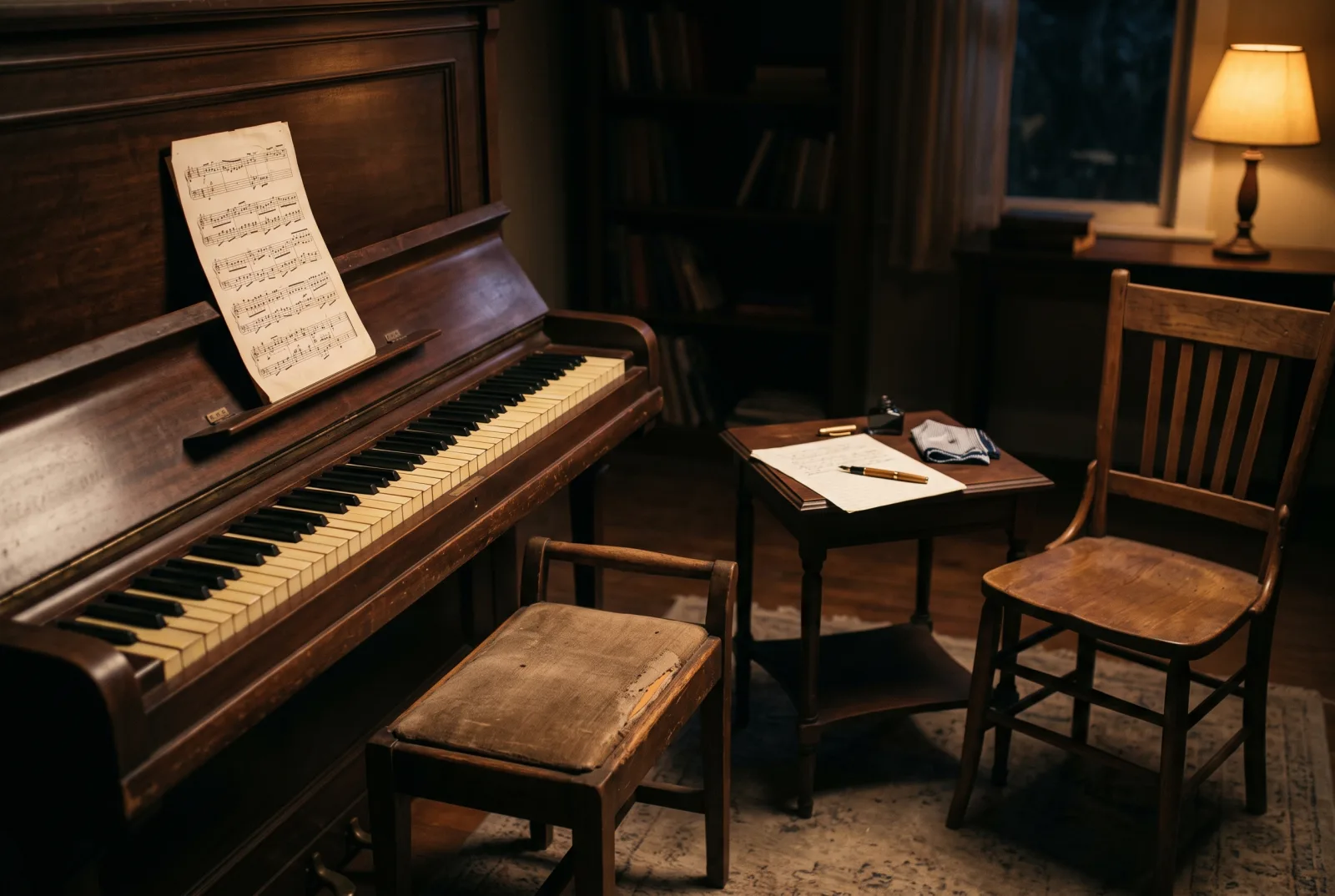
Ilustración: Rebobinados
Neil Sedaka died on 27 February 2026, at the age of 86.
Almost every obituary called him the man behind "Breaking Up Is Hard to Do". That is true and unfair at the same time, because the song has two names in the credits and the second one had been dead for twenty-five years.
Sedaka wrote the music. The words were Howard Greenfield's.
The neighbour upstairs
They met in Brighton Beach, in Brooklyn. Sedaka was thirteen and Greenfield sixteen, and he lived right above him.
Greenfield's mother came downstairs one day to tell the boy who played the piano that her son wrote poems. Out of that came a partnership that lasted from 1952 until the early seventies.
"Stupid Cupid" and "Where the Boys Are", sung by Connie Francis. "Oh! Carol". "Calendar Girl". "Happy Birthday Sweet Sixteen". "Breaking Up Is Hard to Do", number one in 1962.
All of them with the same division of labour: one man's melody, the other man's words.
And "Oh! Carol", from 1959, was dedicated to a classmate at Abraham Lincoln High School named Carole Klein, who recorded an answer song called "Oh! Neil" and who a few years later, by then signing as Carole King, would become one of the great songwriters of the century.
The conservatory story is true, but not the way it is told
The biography keeps repeating that Sedaka studied at Juilliard. It is worth being precise about what that means.
He entered the Preparatory Division for Children at the age of eight, and it ran on Saturdays. He was not a full-time concert pianist in training: he was a boy with an enormous talent spending his weekends in the best possible place.
At sixteen, Arthur Rubinstein picked him as one of the best high-school pianists in New York and put him on the radio.
That training shows in everything he wrote afterwards. Sedaka's songs sound simple and are not: they have modulations, key changes, piano lines an ordinary pop writer would never have written.
The fall, and a comeback that started far from home
The Beatles arrived and his style was old overnight. By the mid-sixties he had stopped having hits in the United States and spent years playing small rooms.
The comeback was not a stroke of luck. It was a plan, and it started in the United Kingdom.
Between 1972 and 1974 he recorded three albums there — "Solitaire", "The Tra-La Days Are Over" and "Laughter in the Rain" — with British musicians, and became a star again in a country that had not buried him.
Only then did Elton John sign him to his label, Rocket, and put him back into the American market. The album was called, with no attempt at subtlety, "Sedaka's Back".
For that second life he was no longer writing with Greenfield but with Phil Cody. "Laughter in the Rain" and "Bad Blood" come from that new partnership. On "Bad Blood", the backing vocals are Elton's own.
The year he was at number one twice
1975 is the year that sums up his trade better than any other.
In February he reached number one with "Laughter in the Rain", singing it himself.
And that same year another song of his sat at the top without him appearing anywhere near it: "Love Will Keep Us Together", written with Greenfield years earlier, in the voice of Captain & Tennille. It was the number one song of all 1975 in Billboard's year-end count.
A singer at the top and a songwriter at the top, the same year, the same person. Almost nobody has done that.
Afterwards he re-recorded "Breaking Up Is Hard to Do", this time slow, like a sad ballad. The cheerful song of 1962 turned out to work just as well told in earnest, and it went back into the top ten.
The name that was not on the sleeve
Howard Greenfield died in 1986, of an AIDS-related illness. He was gay, in an industry and at a time that did not make it easy.
He was never the face of anything. He did not sing, he was not on television, he signed no autographs.
But half the lines people know by heart when they hum Sedaka are his. And that is the part of the business the public almost never sees: behind an idol with one person's name there are usually two people.
What to remember
Sedaka is proof that fame rewards the one who sings and forgets the one who writes, even when they are the same record.
Put on "Breaking Up Is Hard to Do" in either of its two versions, or "Oh! Carol", or "Laughter in the Rain", and you will hear perfectly built pop made by someone who as a child spent his Saturdays at Juilliard.
He fell off the map when the fashion changed and took almost ten years to come back, and he came back by starting over in another country because at home nobody would open the door any more.
Remember him like this: not as the cheerful boy of the birthday songs, but as a serious musician who wrote the music, and who for twenty years had beside him a man who wrote everything else.
Sources
Neil Sedaka, born in Brooklyn, New York, on 13 March 1939, and died on 27 February 2026 at the age of 86. American singer, pianist and songwriter. He entered the Preparatory Division for Children at the Juilliard School at the age of eight, a programme held on Saturdays, and at sixteen he was selected by Arthur Rubinstein among the best high-school pianists in New York. His songwriting partnership with the lyricist Howard Greenfield, his neighbour in Brighton Beach, began in 1952: Sedaka composed the music and Greenfield wrote the lyrics. That partnership produced "Stupid Cupid" and "Where the Boys Are" for Connie Francis, "Oh! Carol" (1959), "Calendar Girl" (1961), "Happy Birthday Sweet Sixteen" (1961) and "Breaking Up Is Hard to Do", number one in 1962. "Oh! Carol" was dedicated to his high-school classmate Carole Klein, later known as Carole King, who recorded the answer song "Oh! Neil". The British Invasion sank his American career in the mid-sixties. His comeback began in the United Kingdom with three albums recorded between 1972 and 1974 — "Solitaire", "The Tra-La Days Are Over" and "Laughter in the Rain" — and only afterwards did Elton John sign him to his label Rocket Records, which released "Sedaka's Back" (1974) in the United States. In that period he wrote with the lyricist Phil Cody: "Laughter in the Rain", number one in February 1975, and "Bad Blood", number one in October 1975, with backing vocals by Elton John. In 1975 "Love Will Keep Us Together", written by Sedaka and Greenfield and performed by Captain & Tennille, was the number one song of Billboard's year-end count, so that Sedaka topped the charts that year both as a performer and as a songwriter. His new slow version of "Breaking Up Is Hard to Do" returned to the top ten at the end of 1975. Howard Greenfield died in 1986 of an AIDS-related illness. Elton John, Paul Anka and Buddy Holly have profiles of their own in this series. Externally authored text, edited and verified for Rebobinados. Interpretations of the meaning of his work are offered as the author's reading. No song lyrics are reproduced, for copyright reasons. Information drawn from Variety, NBC News, Billboard, Wikipedia, Britannica and other coverage.
Keep rewinding

10s
pop
Bruno Mars
Eleven names in the credits
"Uptown Funk" came out on 10 November 2014 with six writers and today it has eleven. In February 2015 The Gap Band's publisher filed a claim over "Oops Up Side Your Head" in YouTube's copyright system —there was never a lawsuit— and on 28 April five names were added, with 17 % of the publishing. It happened weeks after the "Blurred Lines" verdict, and the song had been fourteen weeks at number one.

00s
pop
André Rieu
It was not from the jazz suite
The waltz with which André Rieu reached half the world is not from Shostakovich's Suite for Jazz Orchestra No. 2: it is from the Suite for Variety Orchestra, which the composer did not assemble, and it was born in 1956 as music for a Soviet film about settlers in Kazakhstan. The error comes from a misprint in volume 10 of the complete works (Muzyka, Moscow, 1984), corrected only in 2001. And the title "The Second Waltz" was invented by his wife, because the real one did not sell.

90s
pop
Daniela Mercury
She took the neighbourhood out of the song
"O Canto da Cidade" was written by Tote Gira, a composer from Nordeste de Amaralina who recorded the demo on a borrowed cassette, marking the beat on the door of a refrigerator; Mercury's team almost threw the tape away. She shares the credit because she deleted the references to the Pelourinho so that the song would serve all of Brazil. The album, from 20 September 1992, sold more than 2 million copies and nationalised axé. But she did not invent it: the name was a journalist's insult in 1987.
Rewind with us
Comments · 0
No one has commented yet. Open the conversation.