
Ritchie Valens
The first thing he ever won
By Rebobinados · Published on September 1, 2026
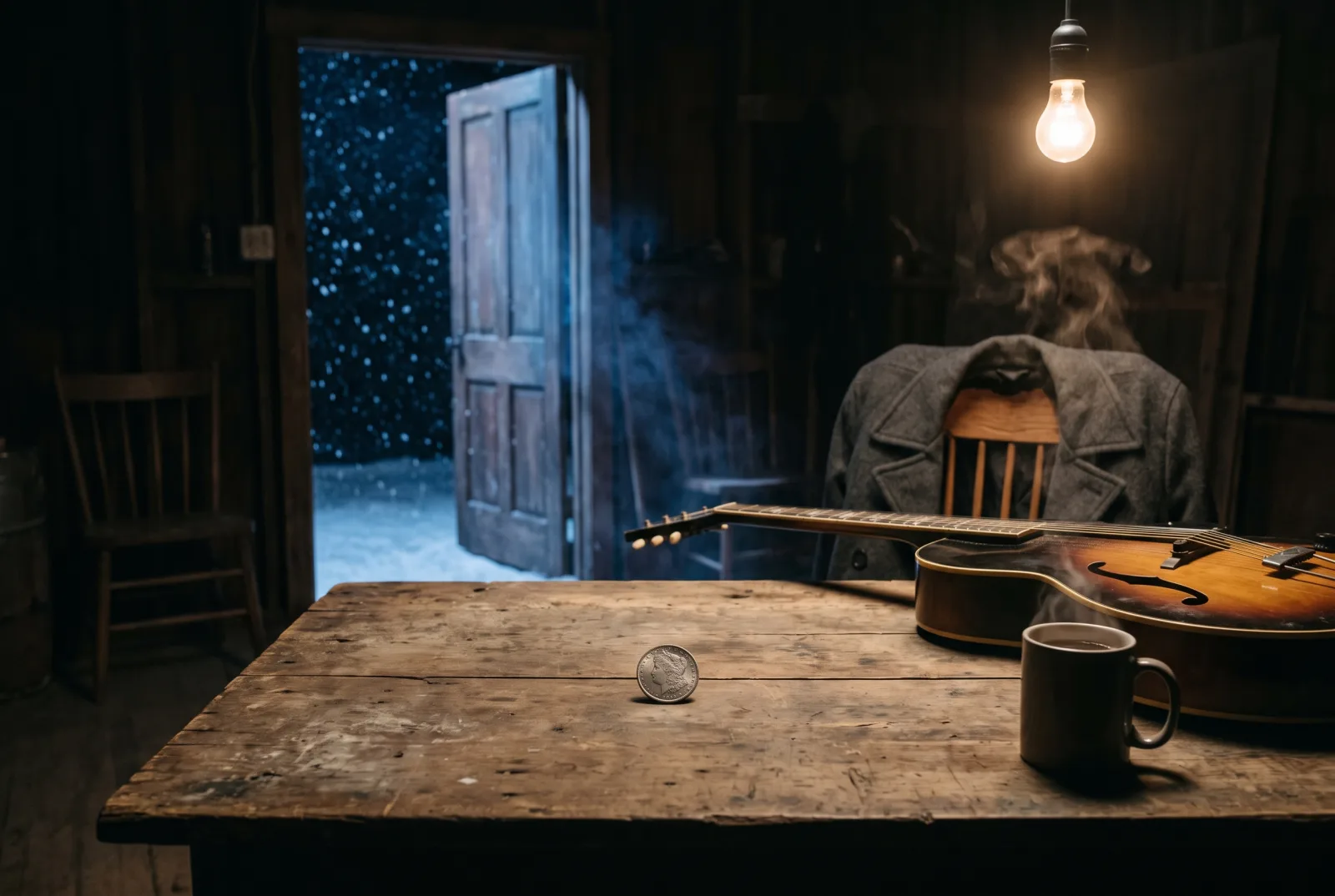
Ilustración: Rebobinados
Ritchie Valens had a recording career of eight months.
Eight months. In that instant he made history: he was the first Latino star of rock and roll, the one who opened the genre's door to those who came after.
And with a single song, "La Bamba", he did something that in 1958 was almost unthinkable: he put rock sung in Spanish into the American hit charts.
He died at seventeen.
A boy from Pacoima
Richard Steven Valenzuela was born on 13 May 1941 in Pacoima, a neighbourhood in the San Fernando Valley, in California, into a poor Mexican-American family.
He grew up between two worlds: the traditional Mexican music that played in his house, and the rock and roll and rhythm and blues exploding on the radio.
He taught himself guitar, by ear, and as a teenager he was already known in his area as "the Little Richard of the Valley".
Bob Keane, owner of the Del-Fi label, saw him at a matinee in San Fernando and signed him on 14 May 1958, the day after his seventeenth birthday. He shortened his surname from Valenzuela to Valens to broaden his commercial appeal on the radio of the time.
The hits came immediately: "Come On, Let's Go", "Donna" — a ballad dedicated to his real girlfriend, which reached number two — and on the B-side of that record, "La Bamba", which reached twenty-two.
He learned it phonetically
Here is the detail that makes "La Bamba" so special.
It was not a new song: it was a traditional Mexican son jarocho, very old, one of those sung at parties. What Valens did was an act of daring: he sped it up, put a rock and roll guitar on it, electrified it, and kept the lyric entirely in Spanish.
In 1958, in the United States of segregation, putting a song in Spanish onto rock radio was going against the whole current. And it worked.
But here is the moving part. Ritchie Valens, raised in California, spoke English; English was spoken in his house, and he did not have a command of Spanish.
He did not know the lyric. He had to learn it phonetically, with the help of his aunt Ernestine Reyes, who was also the one who convinced him to record it.
The first great anthem of rock in Spanish was sung by a boy who barely spoke Spanish, repeating his grandparents' words from memory. There is something beautiful and sad in that: a kid reconnecting with a root that life in the United States had almost erased for him, and in the attempt, opening the way for millions.
The coin toss
Before the plane there is something else to tell, which happened two years earlier.
On 31 January 1957 two aircraft collided in mid-air over Pacoima and came down on the playground of Pacoima Junior High. Pupils of the school were killed.
Valens was fifteen and went there. That day he was absent: he was at his grandfather's funeral.
The nightmares stayed with him, and so did a fear of flying.
In January 1959, Valens was on tour in the freezing Midwest, on a multi-artist tour alongside Buddy Holly, already a star, and J.P. "The Big Bopper" Richardson.
The conditions were brutal: they travelled in a frozen bus, with no heating, from city to city.
After the concert at the Surf Ballroom in Clear Lake, Iowa, Buddy Holly chartered a small plane so as not to get back on the bus. There were few seats.
Ritchie Valens's was decided on the toss of a coin with Tommy Allsup, Holly's guitarist. Valens won the toss.
Legend attributes to him a line that chills the blood — that it was the first time he had ever won anything in his life — although nobody has been able to document it first-hand: it circulates by way of a radio announcer who said he had flipped the coin, and Allsup always maintained that this man was not even present.
The plane took off from Mason City municipal airport, some fifteen kilometres from Clear Lake, in the early hours of 3 February 1959, in bad weather and snow. It crashed minutes later in a cornfield, some eight kilometres to the north-west. The official investigation attributed the crash to the pilot's disorientation.
The three musicians died, and the pilot, Roger Peterson. Ritchie Valens was seventeen years old.
The seat he had won was the seat of death.
What is worth remembering
Ritchie Valens is the proof that a life is not measured in years but in what it leaves behind.
In eight months of career, this seventeen-year-old boy became the first Latino hero of rock and opened the genre's door, for ever, to those who spoke his language. From Santana to Los Lobos to Los Lonely Boys, they all pass through there.
Put on "La Bamba", "Donna" or "Come On, Let's Go", and you will hear pure rock and roll, full of life, made by a teenager who never even got to be an adult.
In 1987 a film about his life and the version by Los Lobos took "La Bamba" to the American number one for the first time — no longer in his voice — and introduced him to a new generation. He himself never got there: the highest he reached in his own country was number two, with "Donna".
His story is one of the saddest for what was cut short. But also one of the brightest, because in that little while he did something that lasts to this day.
And that early morning in the cornfield would be immortalised twelve years later in one of the most famous songs in history, "American Pie", as the day the music died. About that, and about who wrote it, we talk next.
Sources
Ritchie Valens, real name Richard Steven Valenzuela (Pacoima, California, 13 May 1941 – near Clear Lake, Iowa, 3 February 1959), an American singer, songwriter and guitarist of Mexican descent, considered the first Latino star of rock and roll and a pioneer of Chicano rock and of rock sung in Spanish. Bob Keane, owner of the Del-Fi label, discovered him at a matinee in San Fernando, signed him on 14 May 1958 and shortened his surname to broaden his commercial appeal. His recording career lasted some eight months, from May 1958. "Donna" reached number two on the Hot 100, "La Bamba" number twenty-two and "Come On, Let's Go" number forty-two. "La Bamba" is a rock adaptation of a traditional Mexican son jarocho, sung entirely in Spanish; Valens, raised in an English-speaking home, did not have a command of the language and learned the lyric phonetically with the help of his aunt Ernestine Reyes, who also encouraged him to record it, as is recorded even in the Library of Congress's National Recording Registry entry. He died at 17 in a light aircraft crash alongside Buddy Holly, J.P. "The Big Bopper" Richardson and the pilot Roger Peterson; he obtained his seat after winning a coin toss against Tommy Allsup, Holly's guitarist. The line attributed to him — that it was the first time he had ever won anything in his life — is not documented first-hand: it comes from the account of the announcer Bob Hale, who claimed to have flipped the coin, a point Allsup always denied. The plane took off from Mason City municipal airport, some fifteen kilometres from the Surf Ballroom in Clear Lake where the concert had been held, and crashed some eight kilometres to the north-west; the official investigation attributed the crash to the pilot's spatial disorientation in deteriorating weather conditions. The date was immortalised as "the day the music died" in Don McLean's "American Pie" (1971). The film "La Bamba" (1987) and the version by Los Lobos took the song to the American number one, a position Valens never reached in his lifetime. He entered the Rock and Roll Hall of Fame in 2001. Don McLean has a profile of his own in this series. Externally authored text, edited and verified for Rebobinados. Interpretations of the meaning of his work are offered as the author's reading. No song lyrics are reproduced, for copyright reasons. Information drawn from Biography, AllMusic, Wikipedia, Library of Congress and other coverage.
Keep rewinding

10s
pop
Bruno Mars
Eleven names in the credits
"Uptown Funk" came out on 10 November 2014 with six writers and today it has eleven. In February 2015 The Gap Band's publisher filed a claim over "Oops Up Side Your Head" in YouTube's copyright system —there was never a lawsuit— and on 28 April five names were added, with 17 % of the publishing. It happened weeks after the "Blurred Lines" verdict, and the song had been fourteen weeks at number one.

00s
pop
André Rieu
It was not from the jazz suite
The waltz with which André Rieu reached half the world is not from Shostakovich's Suite for Jazz Orchestra No. 2: it is from the Suite for Variety Orchestra, which the composer did not assemble, and it was born in 1956 as music for a Soviet film about settlers in Kazakhstan. The error comes from a misprint in volume 10 of the complete works (Muzyka, Moscow, 1984), corrected only in 2001. And the title "The Second Waltz" was invented by his wife, because the real one did not sell.

90s
pop
Daniela Mercury
She took the neighbourhood out of the song
"O Canto da Cidade" was written by Tote Gira, a composer from Nordeste de Amaralina who recorded the demo on a borrowed cassette, marking the beat on the door of a refrigerator; Mercury's team almost threw the tape away. She shares the credit because she deleted the references to the Pelourinho so that the song would serve all of Brazil. The album, from 20 September 1992, sold more than 2 million copies and nationalised axé. But she did not invent it: the name was a journalist's insult in 1987.
Rewind with us
Comments · 0
No one has commented yet. Open the conversation.