
Don McLean
The paper boy
By Rebobinados · Published on September 1, 2026
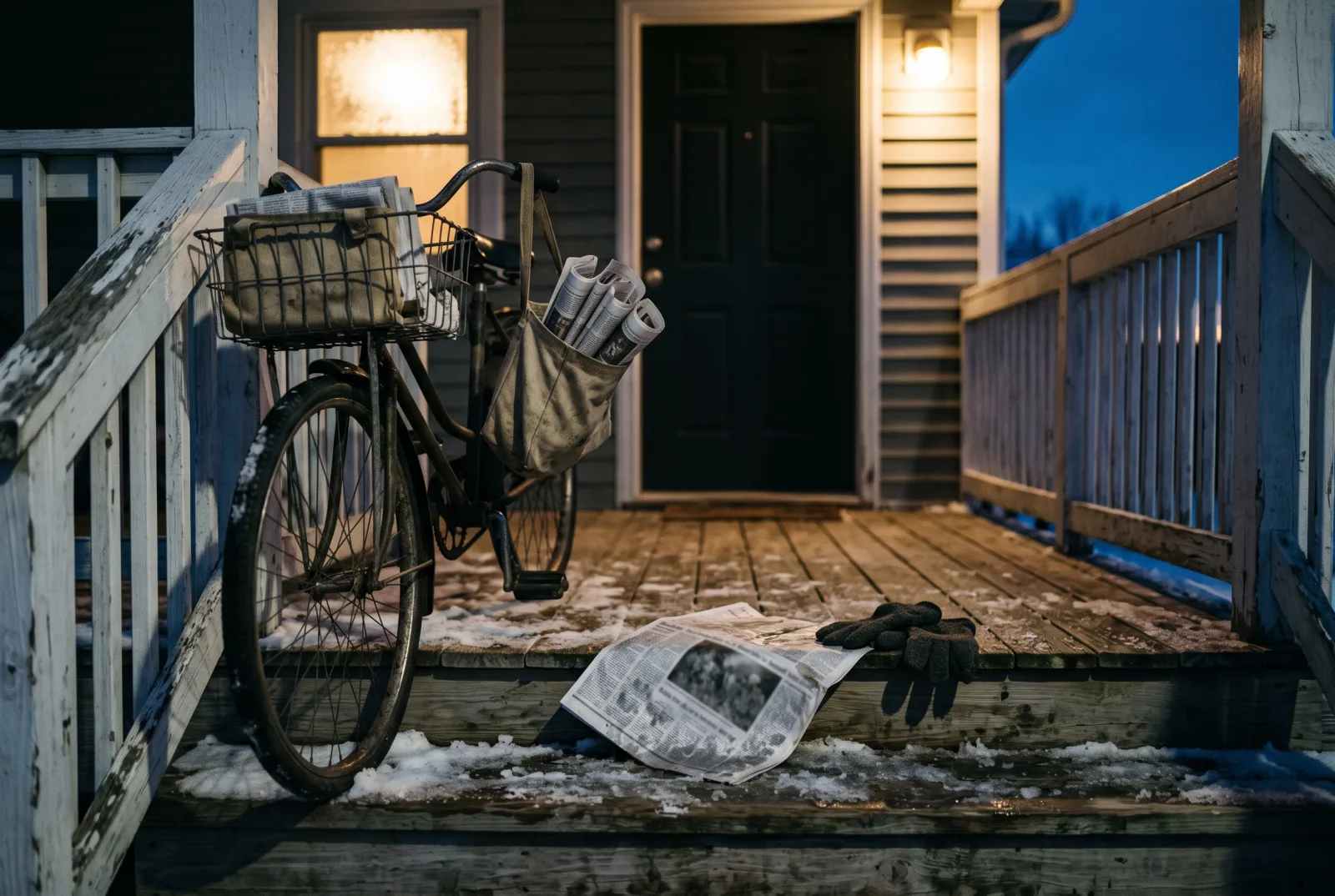
Ilustración: Rebobinados
Don McLean wrote one of the most famous, the longest and the most mysterious songs in the history of popular music.
"American Pie" runs eight minutes and forty-two seconds, and it is a torrent of cryptic images that the whole world sings along to without ever agreeing on what they mean.
It is one of those songs that outgrow their author: plenty of people sing it without knowing who made it.
And at its heart there is a real tragedy, the same one Rebobinados has just told from the other side: the death of Ritchie Valens, Buddy Holly and The Big Bopper.
The boy with the newspapers
The origin of "American Pie" lies in a precise memory from McLean's childhood, and it is worth telling it the way he tells it, because the embellished version going around is less powerful than the real one.
In February 1959, McLean was a thirteen-year-old delivering newspapers in New Rochelle, New York, before dawn.
That morning he was carrying the bundle of copies of the local Standard-Star, tied with string. He cut the string with a knife to start his round.
And there it was, on the front page: a light plane had crashed and three rock and roll musicians had died, among them Buddy Holly, whom he idolised.
That blow — a boy of thirteen learning of his idol's death at the very instant he opened the bundle — stayed with him forever.
Twelve years later it became the heart of "American Pie". The phrase "the day the music died" is, exactly, that 3 February 1959.
He was the one who named that day, forever, with those words.
The mystery he never solved
What made "American Pie" legendary, beyond the tragedy, was its mystery.
The lyrics seem to tell the story of rock and of the United States between 1959 and the seventies: there are lines people read as references to the Beatles, to the Rolling Stones, to Bob Dylan, to Janis Joplin, to the end of the innocence of the sixties.
From the moment it came out, in 1971, it set off a national obsession with interpretation. And McLean did something brilliant: for years he refused to break it down line by line.
When he was asked, he answered with humour that it meant he would never have to work again, if he didn't want to. Or he simply kept what he called a dignified silence: songwriters, he said, make their statement and move on.
He understood that the mystery was part of the song's power. By not giving the answer, he let every listener find their own.
In 2015, when he sold the original manuscript at Christie's in New York for 1.2 million dollars, he wrote in the catalogue note the closest thing to an explanation he has ever given: that things were heading in the wrong direction and that it was, in a sense, a song about morality.
He did not break down a single line. He still has not.
All he has done is rule things out. In the 2022 documentary The Day the Music Died he denied outright the three readings everyone took for granted: Elvis is not the king, Dylan is not the jester and Janis Joplin is not the girl who sang the blues.
Half a century of interpretations, and the only thing the author has said is what the song does not mean.
More than one song
It would be unfair to reduce him to "American Pie", because he wrote another jewel that many love even more: "Vincent", known for its opening line about a starry night.
It is a delicate, heartbreaking elegy dedicated to Vincent van Gogh, to his misunderstood genius and to his suffering.
The spark was not the painting either, but a book: McLean was on the porch one morning reading a biography of the painter, and suddenly he knew he had to write a song arguing that Van Gogh was not mad. Afterwards he sat down with a print of "The Starry Night" in front of him and wrote the lyrics on a paper bag.
That the same man wrote the monumental enigma of "American Pie" and the intimate tenderness of "Vincent" speaks of a songwriter of enormous range.
Madonna, Garth Brooks and Josh Groban have recorded songs of his; Madonna's version of "American Pie", in 2000, was number one in the United Kingdom and other countries, although in the United States it only reached twenty-nine.
His later life has a chapter it would not be right to skip. On 18 January 2016 he was arrested in Camden, Maine, after a complaint by his then wife, Patrisha McLean.
On 20 July he pleaded guilty and was convicted of domestic violence threatening, criminal restraint and criminal mischief. He paid 3,660 dollars in fines and did not go to jail; the assault charge was dropped as part of the deal.
Patrisha McLean has since run an organisation devoted to coercive control.
What to remember
Don McLean is proof that a song can become something greater than its author, almost the collective property of a people.
Put on "American Pie" or "Vincent", and you will hear two faces of the same talent: the mysterious epic an entire country sings without fully deciphering it, and the delicate elegy to a painter who suffered.
And at the centre of his most famous work there is something deeply human: a thirteen-year-old boy, before dawn, cutting the string on a bundle of newspapers and finding out that his idols had died. He carried that pain for twelve years until he turned it into art.
Rebobinados told the death of Ritchie Valens from the inside, that of the boy who boarded the plane. Don McLean sang it from the outside, that of the boy who read the news.
Both are the same tragedy, and together they show something beautiful: that a pain, if someone sings it well, can bring together millions of people who were never there.
This text mentions gender-based violence. If you or someone you know is going through something like this, help is available. In Chile, the SernamEG Gender Violence Helpline is 1455, from 08:00 to 00:00 every day, with a silent WhatsApp service at +56 9 9700 7000. For emergencies during the night there are Carabineros' 149, plus 133 and 134. Seeking support is an act of strength.
Sources
Don McLean (New Rochelle, New York, 2 October 1945), American singer-songwriter. His song "American Pie" (1971), eight minutes and forty-two seconds long, was number one in the United States for four weeks from 15 January 1972, ranks fifth on the Songs of the Century list drawn up by the RIAA together with the National Endowment for the Arts, and entered the National Recording Registry of the Library of Congress in 2017. The phrase "the day the music died" refers to the plane crash of 3 February 1959 in which Buddy Holly, Ritchie Valens and J.P. "The Big Bopper" Richardson were killed. McLean, then 13, learned of it while delivering newspapers in New Rochelle; by his own account, he was carrying the bundle of copies of the Standard-Star tied with string and saw the news on the front page as he cut it open with a knife. The lyrics, famous for their cryptic character and their supposed allusions to the Beatles, the Rolling Stones, Bob Dylan and Janis Joplin, were the object of intense speculation; McLean avoided breaking them down for years, answering that the song meant he would never have to work again, if he didn't want to, and claiming a "dignified silence". His original manuscript was auctioned at Christie's in New York on 7 April 2015 for 1.2 million dollars, an occasion on which he offered a general explanation about the end of an idyllic era. He is also the author of "Vincent (Starry, Starry Night)", dedicated to Vincent van Gogh: by his own account, he wrote it after reading a biography of the painter and then composed the lyrics with a print of "The Starry Night" in front of him. Madonna covered "American Pie" in 2000, reaching number one in the United Kingdom and other countries, though only twenty-nine on the Billboard Hot 100. He entered the Songwriters Hall of Fame in 2004 and remains active. Ritchie Valens has his own profile in this series. Externally authored text, edited and verified for Rebobinados. Interpretations of the meaning of his work are offered as the author's reading. No song lyrics are reproduced, for copyright reasons. Information drawn from donmclean.com, Wikipedia, Christie's, CBC and other coverage.
Keep rewinding
70s
folk
Florcita Motuda
Forty-nine years without a reissue
With "Brevemente… geeente" he won the best Chilean performer prize at Viña 1977, and he won it in the international competition because the folk one was not held that year. The album that contains it, released in 1977 on APRI —Antonio Prieto's label—, spent 49 years without a reissue: never on CD or streaming until it came back on vinyl in April 2026 and on digital on 11 July, the day he returned to the stage. The record for the longest title at the OTI is his, but it is from 1978 and not 1998.
00s
folk
Natalia Lafourcade
Where it said pumpkin she put flowers
The story says she rescued the son jarocho with reverence on *Un Canto por México*, but "La Bruja" is not on that record: she recorded it on *Cancionera*, on 24 April 2025, and rewrote the lyric. Where the son turns the man into a pumpkin, she sings that she filled him with flowers: "a cancionera is a kind of sorceress". Twenty Latin Grammys, a house rebuilt in Jáltipan and a harpsichordist father who left Chile two days after the coup.
70s
folk
Piero
The old man wasn't his
Piero sang "Mi viejo" in 1969, but the words are José Tcherkaski's and the father it portrays was his own: Mario Tcherkaski, a Russian street hawker who died at 52, eight years before the song. CBS released it with Father's Day in mind after several labels turned it down, and the first pressing passed 600,000 copies. Piero died on 7 October 2026, aged 81.
Rewind with us
Comments · 0
No one has commented yet. Open the conversation.