
Decade 60s · Rhythm blues rock
Janis Joplin
The hole where her voice should have gone
By Rebobinados · Published on September 13, 2026

Ilustración: Rebobinados
On 14 August 1970, the most famous woman in rock went to her high school reunion in Port Arthur, Texas. She was asked whether she had been popular at school. She answered that her classmates had "laughed me out of class, out of town and out of the state".
Seven weeks later she was dead.
The town that did not want her
Janis Lyn Joplin was born on 19 January 1943 in Port Arthur, an oil town in Texas, and she did not fit from childhood. The rough voice, the temperament, the refusal to be the pretty quiet girl expected of her: all of it left her outside, and the town made her pay for it with ridicule.
She found her place somewhere she had no birthright to: the blues, the music of Black America, the music of pain and survival. She went into it like someone finally finding a language in which things can be said. And then she did the only sensible thing: she left. San Francisco, to look for the freedom Port Arthur was never going to give her.
That the blues became the refuge of a white girl from Texas is not a small detail. That music had plugged itself in twenty years earlier to shout the same old thing louder, and in the sixties it became the vehicle for everyone with nowhere to put what they felt. Joplin did not imitate it: she used it.
Monterey
In 1966 she joined Big Brother and the Holding Company, and at the Monterey festival in 1967 the thing happened that happens once in a while: a band almost nobody knew became the centre of everything because of one person. It was the year psychedelia changed everything, and she came out of it turned into something else.
Her voice sounded like nobody's. Power and fragility in the same breath, cavernous, wounded and ecstatic at once, without a single pose. She did not sing a song: she wore it out. Cheap Thrills, in 1968, went to number one on the American chart. Then came Woodstock. Then the Kozmic Blues Band, and then the Full Tilt Boogie Band, the one she ended with.
And along the way she did something nobody had done: she became the first woman to be a rock star on her own harsh terms. Not decorative, not sweet, not the pretty singer in a band of men. As loud, free and untameable as anyone else on that stage. Every woman who later stood at the front of a band walked through a door Joplin had kicked open — and many of the fights that followed, like Annie Lennox's with a man's suit fifteen years later, are variations on the same fight.
Three days in October
And here it is worth taking the myth apart, because the easy story says Janis Joplin was falling to pieces. That is not what the record of that October shows.
She was recording in Los Angeles with Full Tilt Boogie and the sessions were going well. Her producer, Paul Rothchild, said she was "a producer's dream". The nine songs she got to sing were approved and arranged by her. On Thursday 1 October she recorded "Mercedes Benz" a cappella, with not a single instrument behind her, and that was the last song she put down.
Three days later, on 4 October 1970, she died of a heroin overdose in a Los Angeles motel room. She was twenty-seven. A little over two weeks earlier Jimi Hendrix had died, at the same age.
There is nothing to beautify there. The addiction added nothing to her music; it took away everything else.
The hole
One thing remains, and to me it is the most eloquent part of this whole story.
When they finished the album there was a song called "Buried Alive in the Blues", by Nick Gravenites, with the backing track recorded and ready. She was going to put the vocal on it the next day. Gravenites was offered the chance to sing it himself and said no.
So Pearl came out with that song on it, as an instrumental. Three minutes of a band playing around a silence. It is the closest thing there is to a portrait of what was lost: not a tribute, not a footnote, but literally the hole where her voice should have gone, left there to be heard.
The album came out on 11 January 1971, three months after her death. It was number one for nine weeks. "Me and Bobby McGee", her version of a Kris Kristofferson song, reached number one that March. It was the only number one of her life and she never got to know it.
In three years of career she made four albums and rewrote what a woman could be on a stage.
Let us listen to her
Janis Joplin has been gone for over fifty years and her voice has not aged a day. It still sounds like somebody giving everything they have and keeping nothing back, which is exactly what she did and exactly what wore her out.
If you ever heard her sing "Piece of My Heart" and felt the floor go — that raw, undefended, all-or-nothing thing — you already know her. And if you want to understand her completely, put on the whole of Pearl and do not skip the instrumental. Listen to the three minutes where she should be. That hole is the best explanation there is of what we lost, and she left it recorded without meaning to.
Sources
Janis Lyn Joplin was born on 19 January 1943 in Port Arthur, Texas, and died on 4 October 1970 in Los Angeles, aged 27, of a heroin overdose. She attended her high school reunion on 14 August 1970, an unhappy occasion; asked whether she had been popular at school, she replied that her classmates had "laughed me out of class, out of town and out of the state". She joined Big Brother and the Holding Company in 1966 and rose to fame after the Monterey International Pop Festival (1967); the album "Cheap Thrills" (1968) reached number one on the Billboard 200 and includes "Piece of My Heart" and "Ball and Chain". She performed at Woodstock (1969). She later led the Kozmic Blues Band and the Full Tilt Boogie Band, her final line-up. Her producer, Paul A. Rothchild, described her as "a producer's dream"; the nine songs she sang for "Pearl" were approved and arranged by her. Her last recording session was on Thursday 1 October 1970, when she recorded "Mercedes Benz" a cappella. "Buried Alive in the Blues", by Nick Gravenites, remained an instrumental on the album: Joplin was to record the vocal the day after her death, and Gravenites declined the offer to sing it. Jimi Hendrix had died on 18 September 1970, also aged 27. "Pearl" was released on 11 January 1971 and reached number one on the Billboard 200 for nine weeks; "Me and Bobby McGee", a version of a Kris Kristofferson song, reached number one in March 1971, posthumously. The line often attributed to her about making love to twenty-five thousand people and going home alone circulates widely but could not be verified in reference sources, and is therefore not reproduced here. Interpretations of the meaning of her work are offered as the author's reading. No song lyrics are reproduced, for copyright reasons. Information drawn from Wikipedia and press coverage.
Keep rewinding
50s
blues rock
Jerry Lee Lewis
He married his bass player's daughter
He married on 12 December 1957 in Hernando, Mississippi, Myra Gale Brown, aged 13, the daughter of J.W. Brown, his first cousin and bass player; he was 22 and still married to another woman, and the ceremony had to be repeated on 4 June 1958. The scandal did not break then, but on 22 May 1958 at Heathrow. And his two anthems are not his: "Great Balls of Fire" is credited to Otis Blackwell and Jack Hammer, and "Whole Lotta Shakin' Goin' On" was recorded first by Big Maybelle in 1955.

90s
blues rock
Gary Moore
A German court took his blues away
On 3 December 2008 a Munich court ruled that the solo in "Still Got the Blues" was too close to "Nordrach", a 1974 track by the German group Jud's Gallery. The 1990 album had been his rebirth: no. 13 in the United Kingdom, no. 83 on the Billboard 200 and the only single of his entire career on the Hot 100. Before that he had joined and left Thin Lizzy three times and walked off the tour in Oakland, on 4 July 1979.
70s
blues rock
Keith Richards
The sentence was to play for the blind
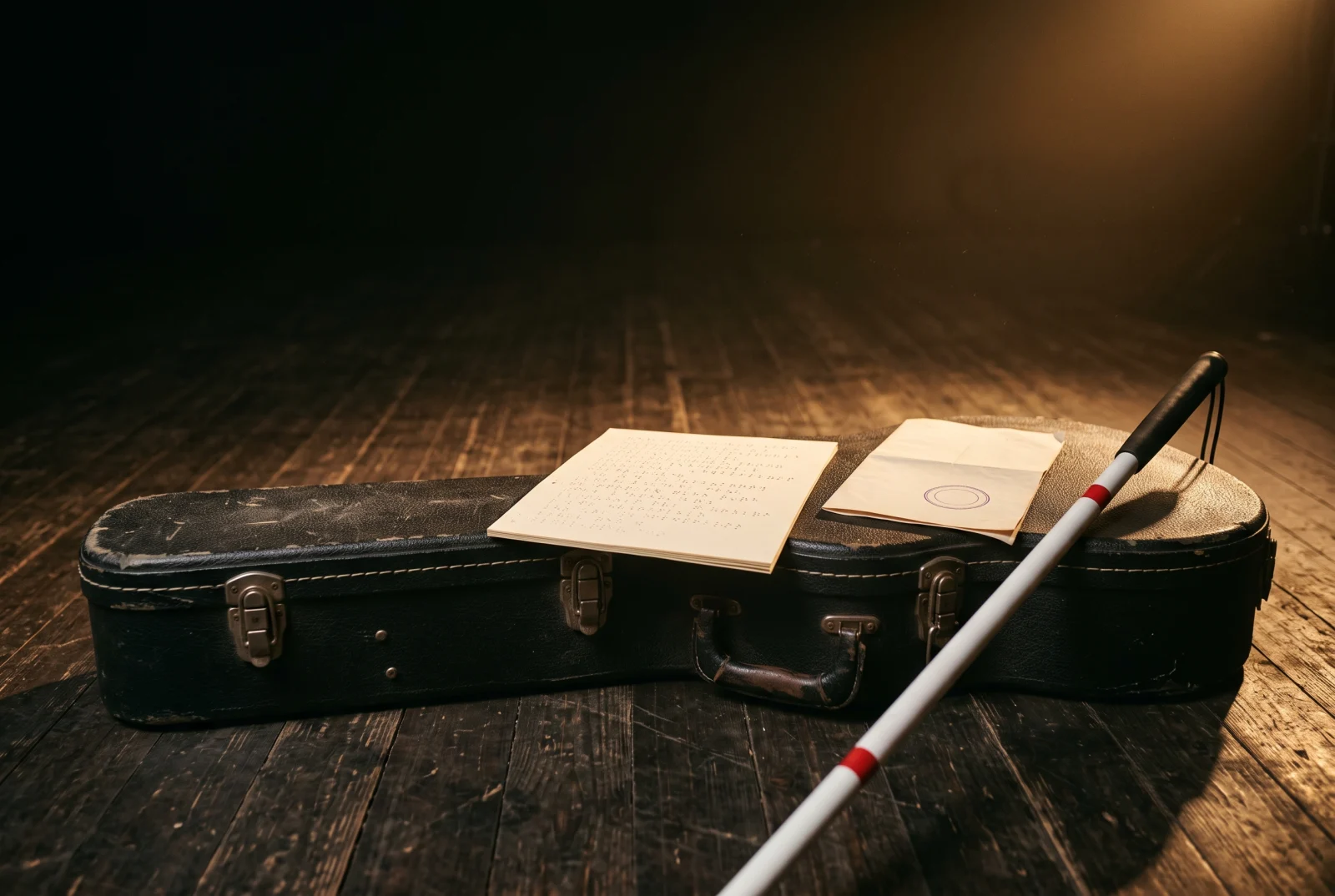
The Royal Canadian Mounted Police found 22 grams of heroin in his Toronto suite on 27 February 1977, on a trafficking charge that carried exposure to a life sentence. On 24 October 1978 Judge Lloyd Graburn kept him out of prison with an extraordinary condition: a benefit concert for the Canadian National Institute for the Blind. He complied on 22 April 1979 in Oshawa, with two shows that some 1,400 blind people got into free.
Rewind with us
Comments · 0
No one has commented yet. Open the conversation.