
Decade 60s · Rhythm psicodelia
Psychedelia 1967: The Year That Changed Everything
By Rebobinados · Published on June 12, 2026
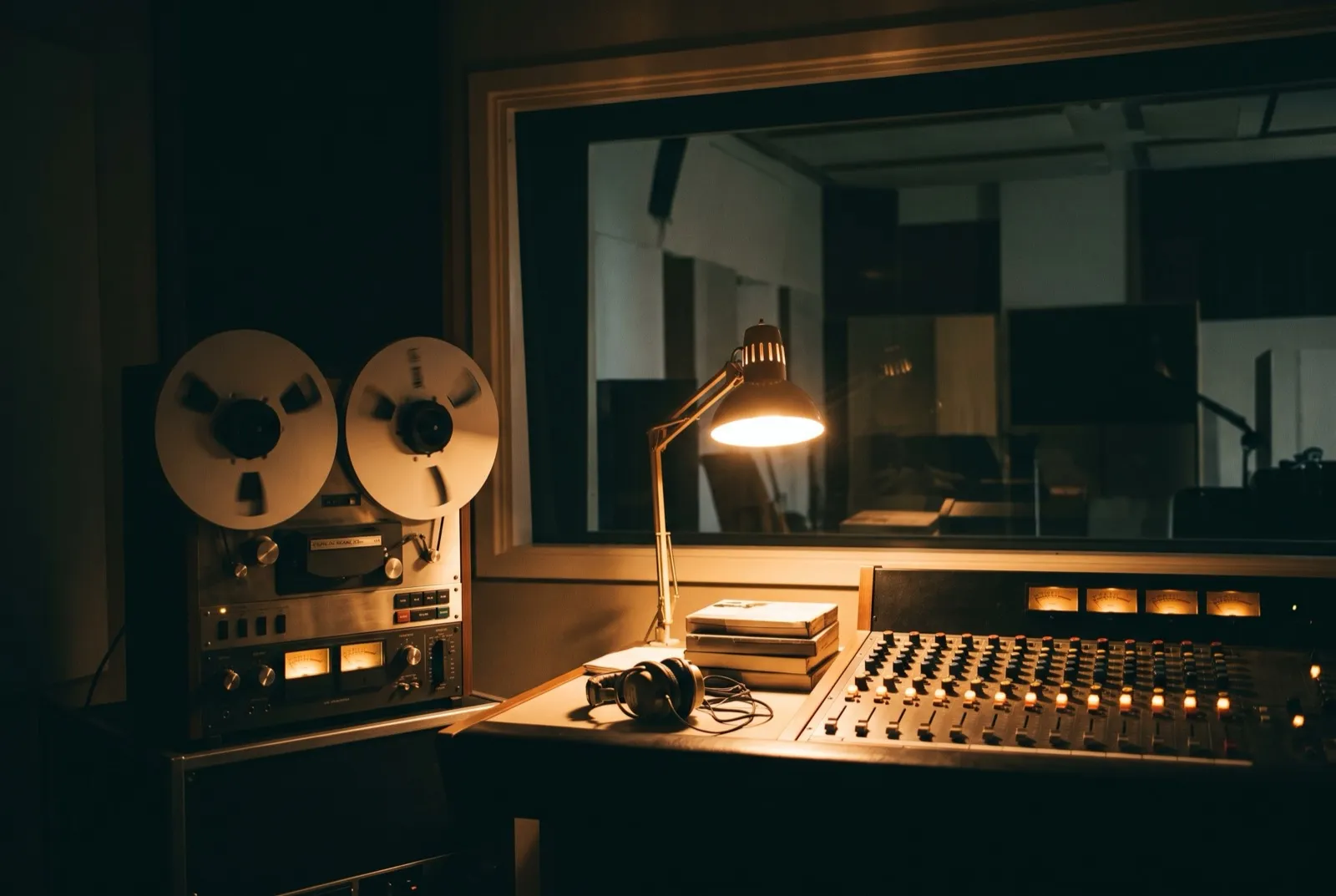
Ilustración: Rebobinados
There are good years, bad years, and then there is 1967. In twelve months, popular music leapt further than in the previous two decades combined. At Rebobinados we'll say it without fear of hyperbole: no other year packed so much invention into a square metre of vinyl. Let's rewind.
January: the doors open
The year began with a warning. On 4 January, a Los Angeles quartet released its first record: The Doors. Jim Morrison recited Rimbaud over Ray Manzarek's hypnotic organ, and "Light My Fire" proved a pop song could contain a seven-minute journey.
The telling detail came afterwards. When radio refused to play seven minutes of anything, the label cut the song down to three and amputated almost the entire instrumental interlude. In that mutilated form it reached number one in July. It's the year's best postcard: psychedelia got into people's homes, but it had to leave half of itself at the door.
A month later, Jefferson Airplane released Surrealistic Pillow out of San Francisco: "White Rabbit" turned Lewis Carroll into a generational anthem and Grace Slick into the voice of an entire scene. The bay city was boiling. In the Haight-Ashbury neighbourhood, what the press would christen the Summer of Love was taking shape: thousands of young people arriving at an improvised utopia with flowers in their hair and records under their arms.
June: the week that redefined the album
And then came June. On the 1st the Beatles released Sgt. Pepper's Lonely Hearts Club Band — though British shops had put it on sale six days earlier, jumping ahead of its own official date. It's worth pausing on what it meant: the most famous band in the world had stopped playing live in order to shut itself in Abbey Road for five months and treat the studio as an instrument. Processed orchestras, tapes run backwards, a final piano chord that lasts almost a minute.
That wasn't only ambition: it was a limitation turned into a method. Abbey Road recorded on four tracks, so fitting a whole orchestra alongside the band meant mixing down what was already recorded onto a single track, losing quality with no way back. Every decision was irreversible. Out of that narrowness came the record that taught the industry an album could be a work rather than a collection of singles.
Two weeks later, the Monterey festival introduced Jimi Hendrix — who set his guitar on fire, literally — and Janis Joplin. That week rock discovered it could be art and mass spectacle at the same time. It never again settled for just one of the two.
August: English psychedelia looks into the abyss
While California celebrated, London was exploring darker ground. In August, Pink Floyd released The Piper at the Gates of Dawn, recorded at Abbey Road at the same time as Sgt. Pepper's, in the studio next door. Syd Barrett's record is psychedelia as a twisted children's story: scarecrows, gnomes, and "Interstellar Overdrive", nine minutes of improvisation aimed at outer space.
Barrett would also be the magic year's first illustrious casualty. His decline was fast and public: by 1968 the band simply stopped picking him up on the way to gigs. He lived another forty years apart from everything. It's worth remembering, because psychedelia carried a real cost that the hippie postcard tends to leave out.
What remained when the tide went out
Our position is clear: 1967 matters not for the folklore — the flowers, the colours, the packaged nostalgia — but for a structural change. That year rock won three freedoms it never gave back: freedom of length (goodbye to the three-minute corset), freedom of the studio (recording as creation, not documentation) and freedom of subject (a song could be about anything at all).
Everything we celebrate on this blog descends from those victories. Progressive rock took the first two to their furthest conclusions, until by the mid-seventies the building weighed too much. And punk arrived nine years later to demolish the lot, without noticing that its right to record whatever it liked also came from here.
There was, besides, a fourth and less celebrated legacy: the studio stopped being a place where you documented what the band already knew how to play. From 1967 on you could invent music that was impossible to perform live, and that gap between record and concert is still open today.
Was the Summer of Love a naive utopia? Probably. By December, Haight-Ashbury was saturated, the innocence exhausted, and the same newspapers that had sold paradise were starting to run overdose stories. But the records didn't age. Put on "A Day in the Life" today, at generous volume, and tell us whether some of that outsized ambition doesn't still sound like the future.
Keep rewinding
60s
psicodelia
Jim Morrison
The poet and the carrier
He wanted to be a poet and the world made him a rock god. And the story of his father in the Gulf of Tonkin is always told wrong: what lies underneath is stranger and better.
60s
hard rock
Steppenwolf
The motorcycle was a Ford Falcon
The century's biker anthem was not written by the band that sings it, and it was not about a motorcycle: Mars Bonfire wrote "Born to Be Wild" as a folk ballad about his battered Ford Falcon, and he had left the group in June 1967, before the name Steppenwolf existed. "The Pusher" is Hoyt Axton's, Easy Rider dropped it in as a temporary track, and the single stalled at no. 2 on the Hot 100 in 1968.
60s
pop
Charles Aznavour
They told him his voice was no good
The French press dismissed him as "a small man, a small singer". He stood five foot three, had an odd voice, and wrote more than a thousand songs. Even the "artist of the century" title attributed to him deserves a clarification.
Rewind with us
Comments · 0
No one has commented yet. Open the conversation.