
Decade 50s · Rhythm blues rock
The Day the Blues Went Electric
By Rebobinados · Published on June 3, 2026
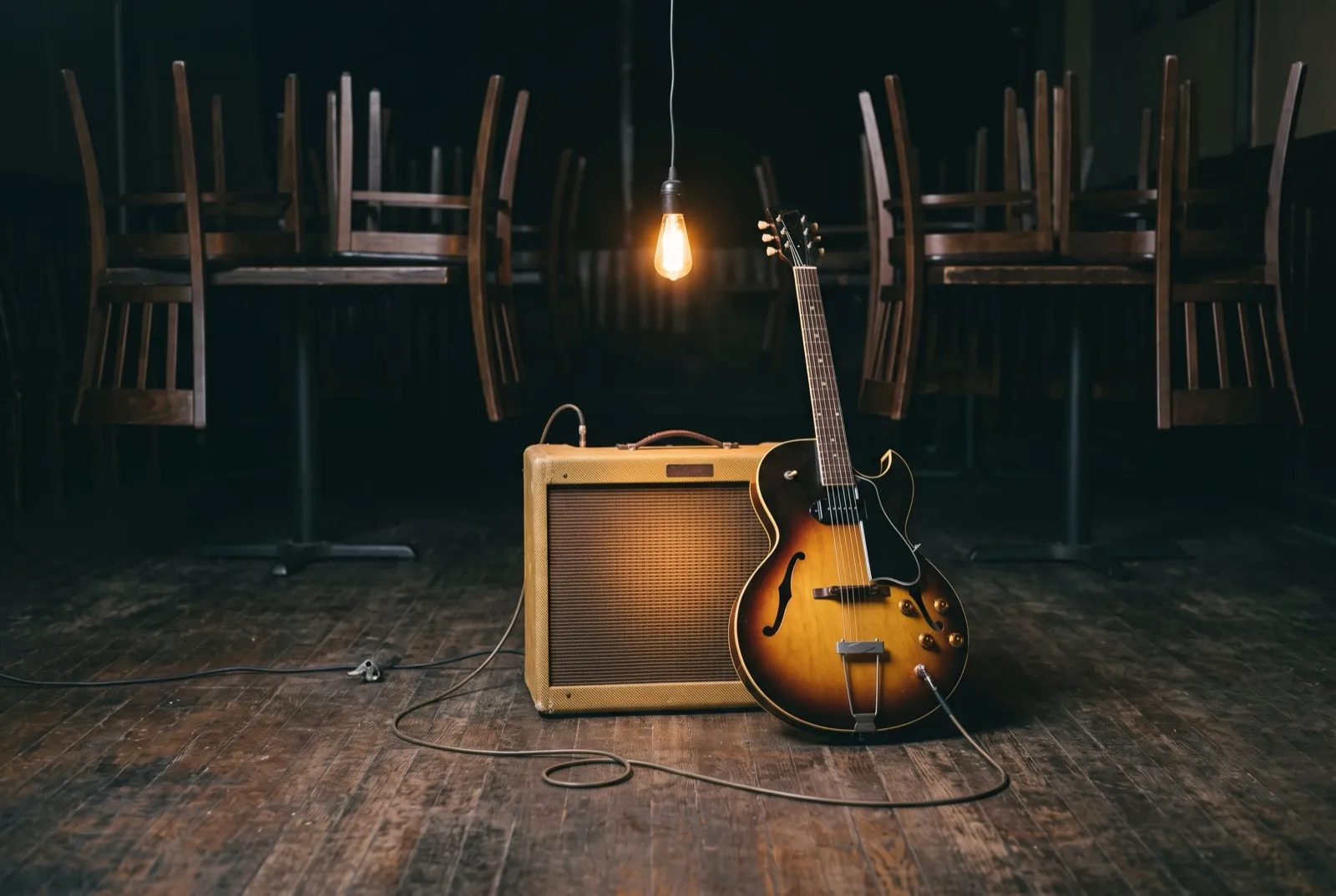
Ilustración: Rebobinados
Some dates never make it into the history books and change the world anyway. One of them happened in Chicago in the early 1950s, when a man named McKinley Morganfield — the world would know him as Muddy Waters — plugged his guitar into an amplifier so he could be heard over the racket of the South Side bars. At Rebobinados we believe that gesture, so practical and so unceremonious, is rock's real big bang.
From cotton to asphalt
Muddy Waters wasn't trying to invent anything. He had arrived in Chicago in 1943, one more among the hundreds of thousands of Black Americans who left the rural South during the Great Migration. He brought the blues of the Mississippi Delta with him: acoustic music, intimate, made for porches and plantations.
But Chicago was not the Delta. The clubs were loud, the city was electric in every sense, and an acoustic guitar stood no chance against the din. The solution was technological before it was artistic: amplification. And with it, without anyone planning it, a new sound was born.
It's worth pausing on what electricity did to that music, because it wasn't simply a matter of volume. An amplified string sustains a note far longer than an acoustic one, and that duration changed how people played: where you once had to fill the silence with notes, now you could leave a single one hanging in the air. An amplifier pushed past its limit began to distort, and that dirt — strictly speaking a technical fault — became expression. The guitar stopped accompanying the voice and started arguing with it. The entire vocabulary rock would take for granted twenty years later is already there, invented out of necessity in rooms full of smoke.
Chess Records: the factory of the future
Two Polish immigrants, Leonard and Phil Chess, understood what was happening before anyone else. Their label, Chess Records, became the house of electric blues: Muddy Waters, Howlin' Wolf, Little Walter, Willie Dixon. Through the fifties those studios — first on Cottage Grove, and from 1957 at 2120 South Michigan Avenue, the address the Rolling Stones would turn into a song title — produced the complete vocabulary of the rock that was coming.
Listen to Muddy Waters' "Rollin' Stone" (1950). An English band would take its name from that song, and so would a magazine and, according to Bob Dylan, something else besides. Listen to Howlin' Wolf roar through "Smokestack Lightnin'". It's all there: the urgency, the menace, the promise.
Behind a good many of those songs stands a name that rarely makes the cover: Willie Dixon, double bassist, producer and author of the catalogue the genre rests on. "Hoochie Coochie Man", "I Just Want to Make Love to You", "Little Red Rooster", "Spoonful". If anyone wrote the language half of British rock would later speak, it was him.
The British detour
History then took one of its loveliest turns. While white America largely ignored this music, Chess records crossed the Atlantic in the suitcases of sailors and collectors. In London, Liverpool and Newcastle, pale teenagers named Mick Jagger, Keith Richards, Eric Clapton and Jimmy Page listened to them like scripture.
When Muddy Waters visited England in 1958 with his electric guitar, he scandalised the folk purists who were expecting an "authentic", acoustic bluesman. The irony is perfect: the English had to learn that the real blues was already electric. A few years later those same teenagers handed the music back to the United States, and the industry called it the British Invasion. It was, in fact, Chicago blues coming home with a London accent.
That round trip didn't end there. When American teenagers heard the Stones, they formed their own bands in garages across the country and returned the blow a third time; we tell that story in What Is Garage Rock?. And electric blues remained the raw material of the genres that followed: without it there is no hard rock and, later, no metal.
The debt nobody settled
At Rebobinados we hold an uncomfortable position: much of rock's official history is a story of appropriation, badly told. Muddy Waters died in 1983 with recognition, but never with the fortunes of his disciples.
The most flagrant case is Big Mama Thornton's. Her "Hound Dog" spent fourteen weeks on the rhythm and blues charts, seven of them at number one, and sold over half a million copies. She received, by her own account, a single cheque for five hundred dollars. Four years later Elvis Presley recorded the same song and turned it into one of the biggest hits in history.
Before her, Sister Rosetta Tharpe was already playing distorted electric guitar from gospel stages more than a decade before the word rock existed; it took until 2018 for the Hall of Fame to recognise her. These musicians weren't forgotten through carelessness: the market that copied them was organised so as not to pay them.
Remembering the day the blues went electric isn't nostalgia — it's justice. Every time a distorted guitar sounds in a stadium, in a garage or through a phone, it is the echo of that South Side amplifier. Music's living memory starts there, in a cable plugged in out of necessity that ended up lighting the whole century.
Rock wasn't born in a London studio or at a California festival. It was born when a man from Mississippi decided his music deserved to be heard above the noise. Everything else is consequence.
Keep rewinding
50s
blues rock
Jerry Lee Lewis
He married his bass player's daughter
He married on 12 December 1957 in Hernando, Mississippi, Myra Gale Brown, aged 13, the daughter of J.W. Brown, his first cousin and bass player; he was 22 and still married to another woman, and the ceremony had to be repeated on 4 June 1958. The scandal did not break then, but on 22 May 1958 at Heathrow. And his two anthems are not his: "Great Balls of Fire" is credited to Otis Blackwell and Jack Hammer, and "Whole Lotta Shakin' Goin' On" was recorded first by Big Maybelle in 1955.
90s
blues rock
Gary Moore
A German court took his blues away
On 3 December 2008 a Munich court ruled that the solo in "Still Got the Blues" was too close to "Nordrach", a 1974 track by the German group Jud's Gallery. The 1990 album had been his rebirth: no. 13 in the United Kingdom, no. 83 on the Billboard 200 and the only single of his entire career on the Hot 100. Before that he had joined and left Thin Lizzy three times and walked off the tour in Oakland, on 4 July 1979.
70s
blues rock
Keith Richards
The sentence was to play for the blind
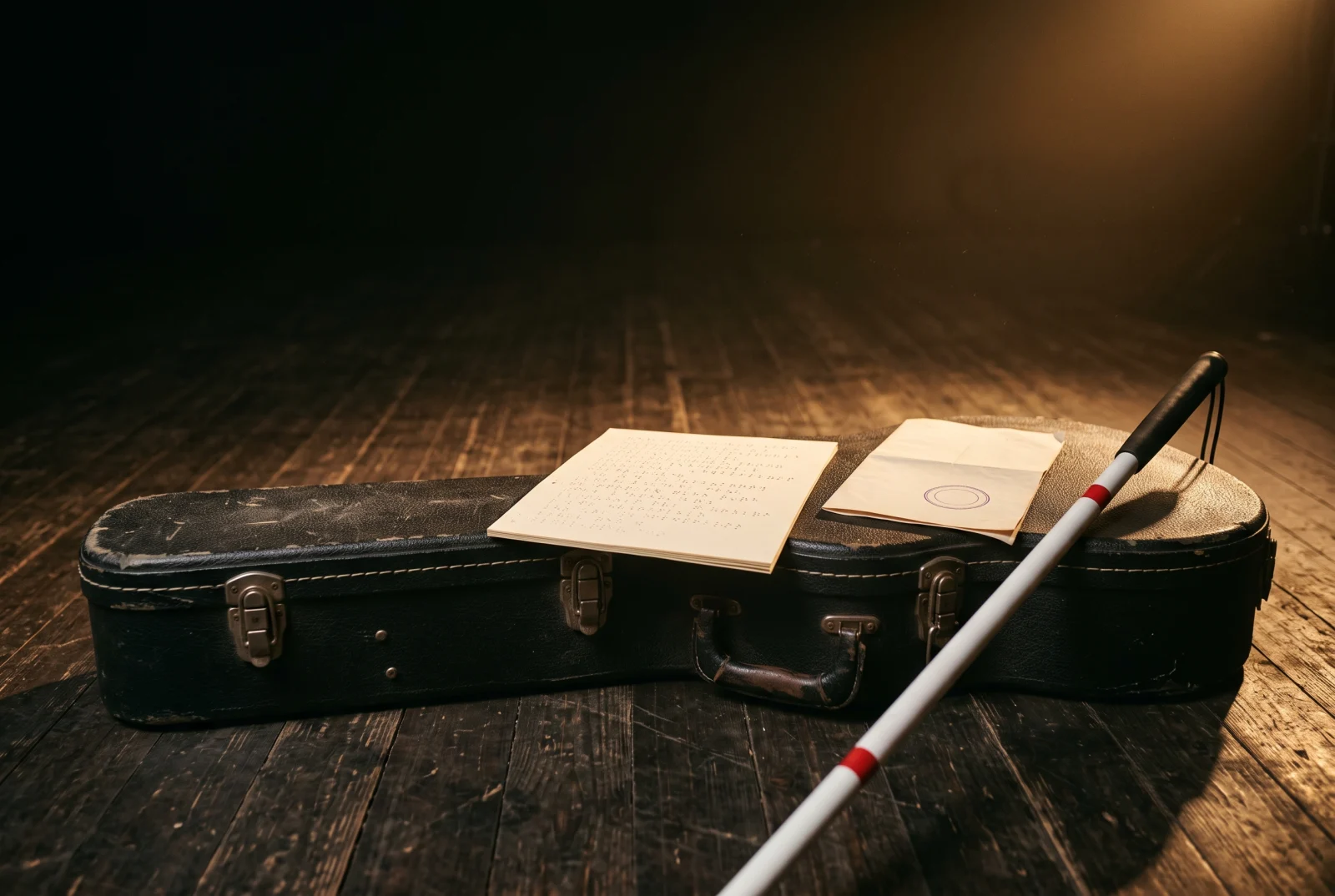
The Royal Canadian Mounted Police found 22 grams of heroin in his Toronto suite on 27 February 1977, on a trafficking charge that carried exposure to a life sentence. On 24 October 1978 Judge Lloyd Graburn kept him out of prison with an extraordinary condition: a benefit concert for the Canadian National Institute for the Blind. He complied on 22 April 1979 in Oshawa, with two shows that some 1,400 blind people got into free.
Rewind with us
Comments · 0
No one has commented yet. Open the conversation.