
Metal: From the Underground to the Stadium
By Rebobinados · Published on June 5, 2026
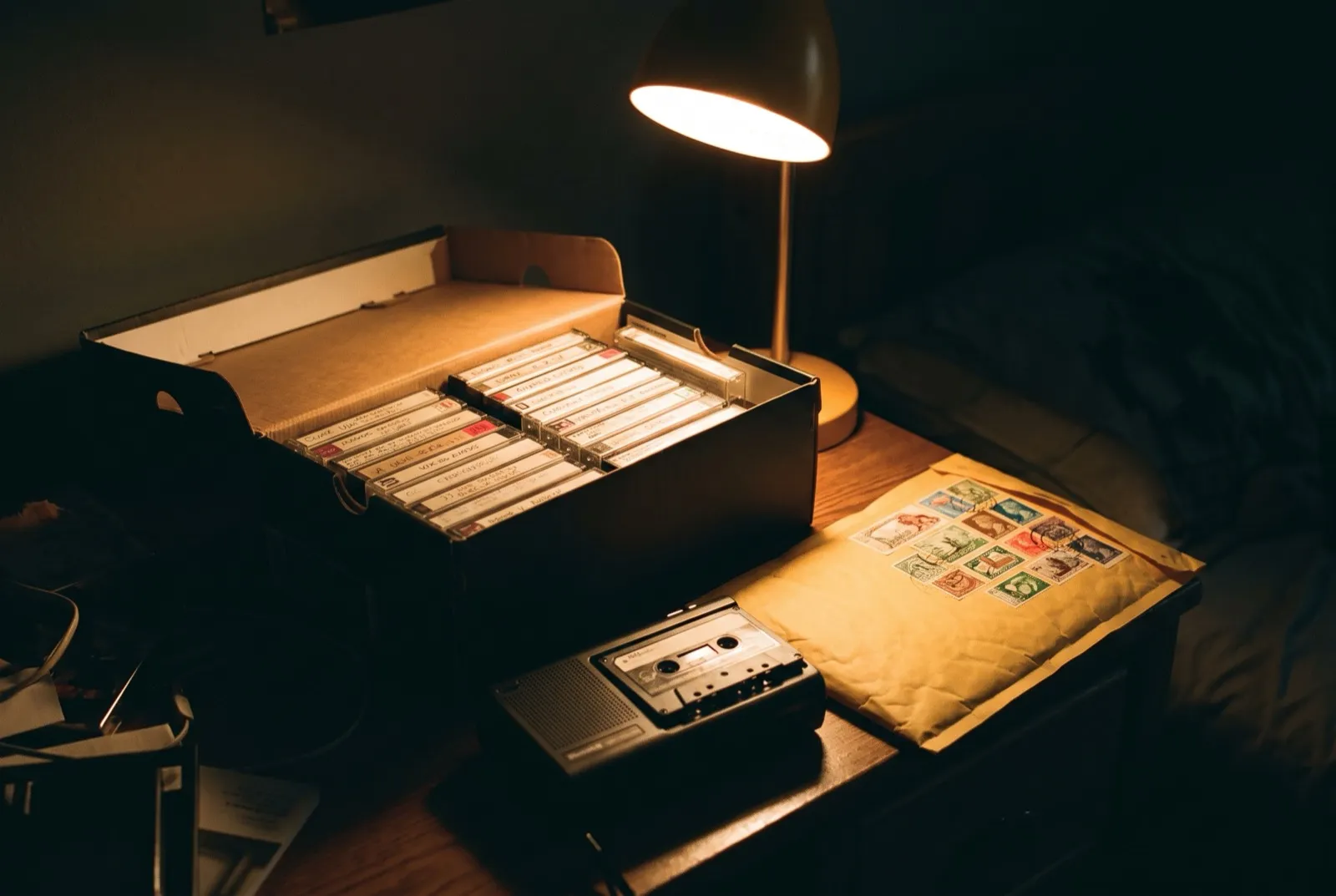
Ilustración: Rebobinados
There's a mental snapshot that sums up metal's eighties: a kid trading cassettes by post in 1982 and, nine years later, an uncountable crowd in front of a stage in Moscow. Between those two images lies the story of how a genre despised by radio built, brick by brick, its own empire.
The new wave that lit the fuse
It all started in Britain. The New Wave of British Heavy Metal — NWOBHM to the initiated — took punk's urgency and put it at the service of the riff. In 1980, Iron Maiden released their debut and Judas Priest sharpened the sound with British Steel. Saxon, Diamond Head and dozens of lesser bands filled fanzines and self-released singles.
They came from a double inheritance: the power of seventies hard rock and the speed and do-it-yourself ethic of punk — two camps that loathed each other and which here, without asking either for permission, fused.
None of it was on commercial radio. It didn't need to be. The scene invented its own channels: photocopied fanzines, specialist shops and, above all, tape trading, that postal network of recorded cassettes that worked like an analogue internet.
It's worth understanding how it worked, because it explains the rest. A kid in Los Angeles would write to another in Sheffield whose address he'd seen in a fanzine, send a blank tape and a stamped envelope, and receive by return of post a third-generation copy of a demo that would never reach a shop. The sound was terrible. It didn't matter: it circulated. Nobody charged, nobody controlled it, and a demo recorded in a garage could be known across three continents without having sold a single copy.
America answers with speed
On the other side of the Atlantic, some Californian teenagers were listening to those cassettes and decided to go faster. Metallica recorded Kill 'Em All in 1983 for Megaforce, an independent label born almost for the occasion. Slayer, Megadeth and Anthrax completed what would later be called the Big Four of thrash.
The decisive moment came in 1986. Master of Puppets went gold with no singles, no videos and no radio support: just touring and word of mouth. That same year, Slayer condensed aggression into the twenty-nine minutes of Reign in Blood. The underground had proved it could sell without asking permission.
It was also the year of the tragedy: on 27 September 1986, Metallica's tour bus overturned in Sweden and Cliff Burton, the bassist who gave thrash its musical ambition, was killed.
Meanwhile, on MTV
The decade's other face glittered with hairspray and floodlights. Mötley Crüe, Ratt and Bon Jovi turned glam metal into MTV's soundtrack, with millions in sales and full stadiums. Purists despised it, but let's say it plainly: glam opened commercial doors the whole genre later walked through.
Institutionalisation had its ridiculous stumbles. In 1989, the Grammys launched a metal category and gave it to Jethro Tull over Metallica. The industry still didn't understand what it was rewarding; Tull's own label ran an advert joking that the flute was a heavy instrument.
Moscow, 1991: the end of the journey
The Monsters of Rock festival, born at Donington in 1980, became the genre's thermometer. And on 28 September 1991, its Moscow edition took AC/DC, Metallica and Pantera to Tushino airfield, before a Soviet Union that was falling apart.
How many people were there is one of rock's great arguments. Time Warner's official figure was 150,000; later accounts speak of half a million, and some go as high as 1.6 million. It was free and there was no admission control, so nobody counted anything: anyone giving an exact number is inventing it. What's beyond dispute is the rest — it was the first large open-air Western rock festival in Soviet history.
Think about it for a second: music that ten years earlier circulated on hand-copied cassettes was playing, without any radio station's permission, in the country that had spent forty years banning it.
What the decade taught us
The lesson of the eighties isn't that metal got big. It's how it did it: by building community before market. Its own labels, its own press, its own circuits. When the industry finally knocked, the genre already had a house.
That's the story worth rewinding, because every independent scene growing on the internet today is repeating, without knowing it, the manual metal wrote by hand in the eighties. With one uncomfortable difference: that system took weeks to move a tape and today everything is instant, but the algorithm decides what circulates. The postal service, for all its slowness, had no owner.
Keep rewinding
10s
metal
Bring Me the Horizon
Twenty years to get back to the scream
Bring Me the Horizon started in 2006 with a deathcore record and their turn did not happen in 2013: the leap to metalcore was in September 2008 and the synthesisers and clean vocals arrived in October 2010. Jordan Fish, eleven years in the band, was the one who put in the electronics. On 10 July 2026 they re-recorded that first record for its twentieth anniversary, with Oli Sykes back on the guttural scream.
00s
metal
Staind
The sleeve that nearly cost them everything
In October 1997, Fred Durst tried to pull Staind off the bill at the Webster Theatre in Hartford over the sleeve of their home-made record; then he listened to them and signed them. In 2001, Break the Cycle debuted at number one on the Billboard 200 and "It's Been Awhile" spent sixteen weeks at number one on the Modern Rock. Jon Wysocki, founding drummer, died on 18 May 2024.

90s
metal
Marilyn Manson
The lawsuit he withdrew while paying
The triad of Antichrist Superstar, Mechanical Animals and Holy Wood, and a file that is still open: two out-of-court settlements, one sworn retraction, the prosecutor's office that ruled out charges in January 2025 on statute-of-limitations grounds, the defamation suit he withdrew while paying 327,000 dollars and a jury trial set for November 2027.
Rewind with us
Comments · 0
No one has commented yet. Open the conversation.