
Seal
The song that embarrassed him, and the scars he never hid
By Rebobinados · Published on September 24, 2026
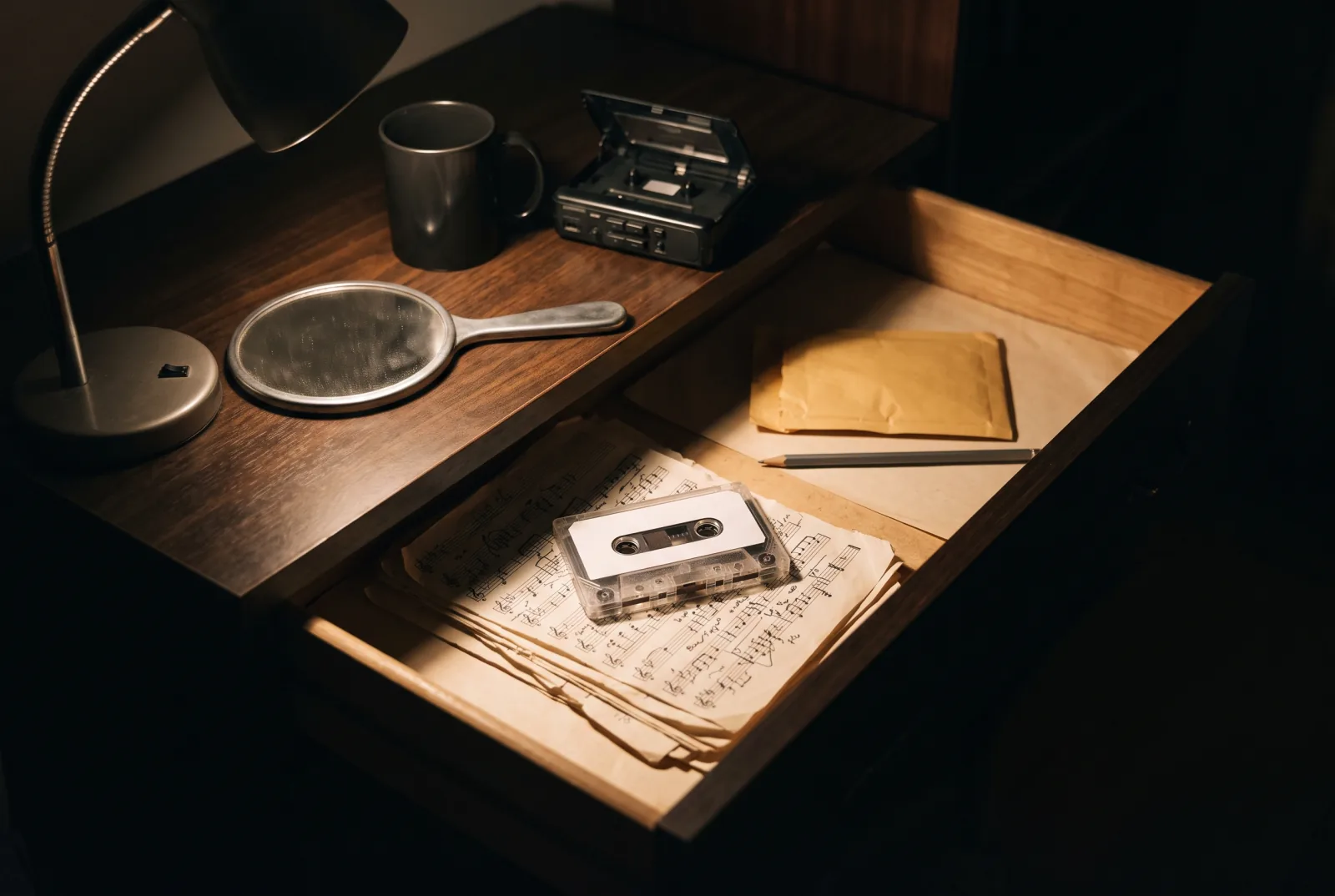
Ilustración: Rebobinados
There is a velvet voice, deep and soft at the same time, that in the nineties made one of the most beautiful love songs of the decade: "Kiss from a Rose". It played in the Batman film, it went to number one, it won the Grammy for record of the year. And here's the incredible part: the man who sang it, Seal, didn't want to release it. He thought it was bad, it embarrassed him, he had kept it in a drawer for years convinced it was worth nothing. They had to insist. The song he almost threw in the bin ended up being the biggest of his career and one of the most loved of its time.
He didn't know what he had
The story is a lesson in how little an artist sometimes knows about his own work. Seal had written "Kiss from a Rose" much earlier, with a strange melody, almost like an old waltz, and it embarrassed him so much that he didn't show it to anyone. His producer rescued it. When they put it in the Batman film, it exploded. Years later, Seal himself admitted, with humour, that only then did he start to like it.
Think about it: one of the most awarded and best-selling songs of the nineties came close to not existing because its author considered it a failure. Greatness sometimes hides exactly where you least see it, even in yourself. Thank goodness someone trusted that song more than the very man who had written it.
The marks that became his face
And there is another thing about Seal, impossible not to notice, that makes him great in a different way: the scars on his face. They are the consequence of an illness called discoid lupus, which he suffered as a young man and which left deep marks on his face. Seal never hid them. He didn't cover them with make-up, he didn't hide them in photographs, he didn't ask for them to be retouched. On the contrary: they became an inseparable part of his image, as recognisable as his voice.
In an industry obsessed with physical perfection, with flawless, retouched faces, Seal stood his ground with his marked face and turned it into identity, into a beauty of his own. That is a form of enormous courage and dignity: taking what the world might see as a flaw and carrying it so naturally that it ends up being a hallmark, something that makes him more himself and not less. He taught, without speeches, that the marks of what you have been through are not something to hide.
What to remember
Seal has one of the warmest voices in pop, and his biggest song, "Kiss from a Rose", came close to not existing because he himself thought it was bad. He won the Grammy for record of the year with a song he had put away out of embarrassment. And he always carried, never hiding them, the scars an illness left on his face, turning them into part of his identity.
Remember it this way: you don't always know what you have, either in your art or on your face. Seal nearly buried his best song, and he showed the world, without fear, marks that others would have hidden. Both things teach the same lesson: what you think is your flaw may in fact be the best of you.
Sources
Seal (Henry Olusegun Adeola Samuel), British singer and songwriter born on 19 February 1963 in London, of Nigerian and Brazilian descent; living. "Kiss from a Rose", originally released in 1994 and re-released in 1995 for the soundtrack of "Batman Forever", reached number one on the Billboard Hot 100 and won three Grammy Awards, including record of the year in 1996; Seal has stated that he initially did not want to release it because he considered it poor. The scars on his face are a consequence of discoid lupus, an illness he suffered in his youth, and which he has never hidden. He worked with the producer Trevor Horn and had other hits such as "Crazy". Profile compiled for Rebobinados with fact-checking; interpretations of the meaning of the work are offered as the author's reading. No song lyrics are reproduced, for copyright reasons. Information drawn from Wikipedia, Stereogum and other coverage.
Keep rewinding
00s
soul
Duffy
She told it first
Rockferry (2008) was the best-selling album of the year in the United Kingdom, with 1,685,000 copies, three BRITs in 2009 and the Grammy for Best Pop Vocal Album. In 2020 Duffy told it herself, before anybody else, that she was drugged, held captive and raped. And it is not an epilogue: a new song in 2024, a Disney+ documentary announced in 2025 and a signing with TaP Management in 2026.

80s
soul
Hall & Oates
The craft they called a guilty pleasure
Daryl Hall and John Oates put six songs at number one in the United States, and Billboard named them the most successful duo in Hot 100 history — a measure of chart performance, not of records sold. They met in Philadelphia in 1967 and ended up in a Nashville court in 2023, over the sale of the company that held their name and royalties.

80s
soul
Dionne Warwick
The voice at the centre of a family and of a cause
The voice that made the impossible songs of Bacharach and David sound easy, and also the one that called on Elton John, Stevie Wonder and Gladys Knight to raise money against AIDS in 1985, when almost nobody wanted to talk about it. Her cousin was Whitney Houston.
Rewind with us
Comments · 0
No one has commented yet. Open the conversation.