
Shocking Blue
The Dutchmen who got there first
By Rebobinados · Published on September 21, 2026
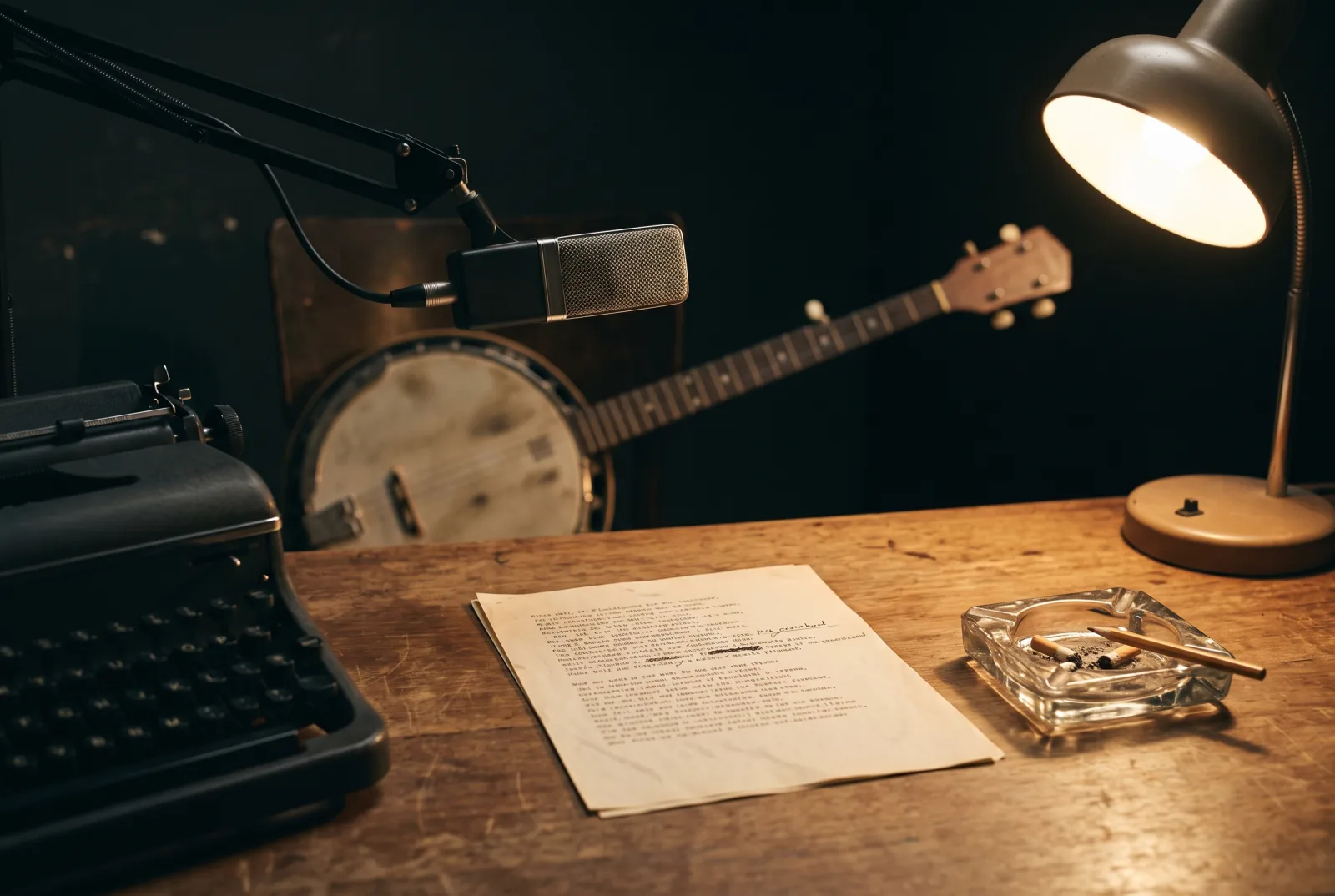
Ilustración: Rebobinados
Before any band from the Netherlands had reached the top of anything in the United States, there were four Dutch musicians and a three-chord song called "Venus". In February 1970, "Venus" hit number one on the American Billboard chart, and with that Shocking Blue became the first Dutch band to head the most important chart in the world. A country that didn't even appear on the pop map was suddenly at the very top, with a riff anybody still recognises in two seconds.
The voice in charge
The face and the voice of Shocking Blue was Mariska Veres, a singer with a commanding presence — very long black hair, a fixed stare, a confidence on stage that was not common for a woman fronting a rock band in 1969. At a time when rock was almost entirely a men's business, she stood out front and took charge. "Venus" works largely because of that: because of a voice that doesn't ask permission, it declares.
The writer was Robbie van Leeuwen, the guitarist, the brain behind the sound. And "Venus" has an amusing family tree, like so many classics: van Leeuwen built the song on top of an earlier American folk tune, "The Banjo Song", which was itself a rereading of "Oh! Susanna", the old Stephen Foster song from the nineteenth century. Which means that the anthem of Dutch pop has, buried underneath it, an American folk melody almost two hundred years old. Music never comes out of nowhere; it keeps rewriting itself across the centuries.
The mistake that was recorded forever
And here is the detail that makes you smile. The original lyric sheet had a typo: where it should have said "goddess" it ended up written "godness", which means nothing at all. Mariska Veres, who at the time had no real command of English, sang it exactly as it was written, without noticing. And that is how it stayed, forever, on the recording the whole world heard. A spelling mistake, sung with all the conviction on the planet, in the number one song in the United States. Perfection sometimes includes its own flaws and nobody notices.
The song that went to number one twice
What proves "Venus" was no accident of its era is what happened sixteen years later. In 1986 the British trio Bananarama recorded their own version, carried it onto the dance floors of a new decade, and put it back at number one in the United States. The same song, topping the chart, twice, sixteen years apart, with two different generations singing it.
Few songs manage that. It means the structure van Leeuwen put together in 1969 was so solid that it survived a complete change of era, of sound and of performers, and kept working just as well. The Dutchmen didn't have a hit; they wrote one of those songs music keeps recycling because it simply never fails.
What to remember
Shocking Blue were the first Dutch band to reach number one in the United States, with "Venus", in 1970. They had Mariska Veres out front, a voice that took charge in an era that didn't expect it from a woman. They built their anthem on an old American folk melody, and even ended up with a spelling mistake recorded forever. And the song was so good that it went back to number one sixteen years later, in another voice.
Remember it this way: the Dutch got there first, with three chords, a misspelled goddess and a voice that asked nobody's permission. Sometimes making history takes only one song that refuses to grow old.
Sources
Shocking Blue, Dutch band formed in The Hague in 1967, with Mariska Veres (vocals) and Robbie van Leeuwen (guitar, sitar and songwriting). "Venus", released in 1969, reached number one on the American Billboard Hot 100 in the week of 7 February 1970, becoming the first song by a Dutch band to top that chart. Van Leeuwen wrote the track on the basis of "The Banjo Song" (Tim Rose and The Big 3), itself derived from "Oh! Susanna" by Stephen Foster. The original lyric contained the typo "godness" instead of "goddess", which Veres — who at the time had no command of English — sang exactly as written on the recording. In 1986 the version by the British trio Bananarama also reached number one in the United States and other countries. Profile compiled for Rebobinados with fact-checking; interpretations of the meaning of the work are offered as the author's reading. No song lyrics are reproduced, for copyright reasons. Information drawn from Wikipedia, Songfacts, Best Classic Bands and other coverage.
Keep rewinding

00s
garage
The White Stripes
The surname was the drummer's
They said they were brother and sister: Jack repeated it in interviews as "the two youngest of ten". In fact they had married on 21 September 1996 and divorced in March 2000, and when the press exposed it in 2001 they carried on insisting. And the surname was hers: Jack was born John Anthony Gillis and took Meg's when they married.
60s
garage
The Velvet Underground
Thirty thousand bands
Almost nobody bought them, and half the rock that followed came out of them. Brian Eno's line sums it up, even if the figure he quotes is not quite right.

00s
garage
The Strokes
A small amplifier
In 2001 they sounded revolutionary by sounding old. They recorded the vocals through a cheap practice amp on purpose, leaving the good gear unused.
Rewind with us
Comments · 0
No one has commented yet. Open the conversation.