
The Strokes
A small amplifier
By Rebobinados · Published on September 26, 2026
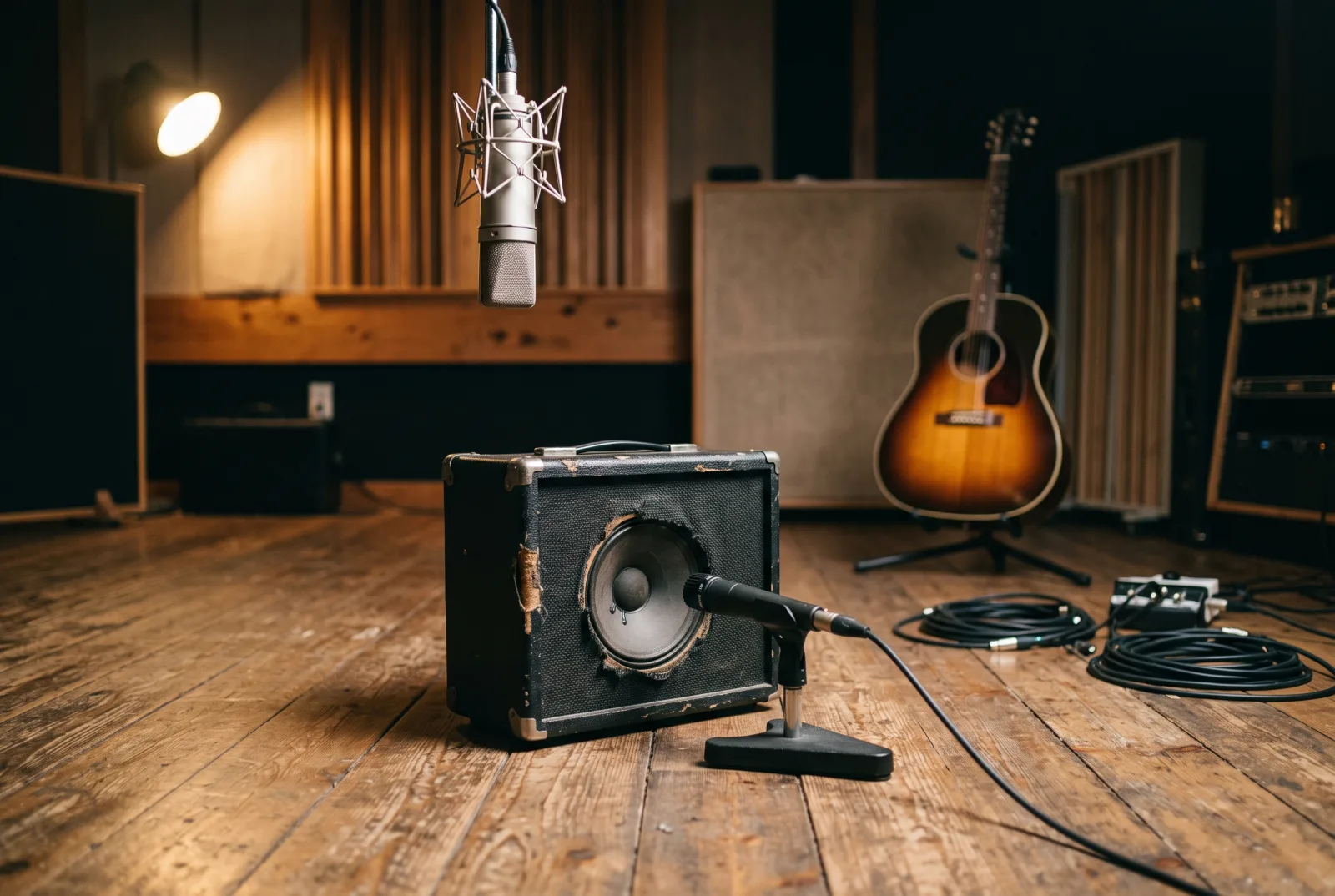
Ilustración: Rebobinados
At the start of the two thousands, guitar rock looked to be in retreat.
The rock that played loud was nu-metal: Limp Bizkit, Linkin Park and Staind took fifth, sixth and seventh place among the year's best-selling albums in the United States. The singles charts, meanwhile, were ruled by pop and R&B.
The idea of five guys with guitars, bass and drums playing direct songs sounded like a thing of the past.
And then, in 2001, "Is This It" appeared.
A small amplifier
The brilliant thing about The Strokes was a paradox: they sounded revolutionary precisely because they sounded old.
At a time when bands were chasing sounds that were heavier, more produced, more digital, they looked backwards: to the garage rock of the sixties, to the rawness of The Velvet Underground, to the elegant punk of the New Yorkers of the seventies.
And there is a recording detail that tells the whole story. Julian Casablancas's voice sounds distorted and compressed, as if he were singing through an old, cheap amplifier.
That is because he literally was. He sang into a practice amplifier some twenty centimetres high, close-miked, in a studio that had far better gear sitting unused.
His producer, Gordon Raphael, summed it up perfectly: they wanted it ugly, but not too ugly.
The guitars interlock economically, with no grandiose solos. The songs are short, direct, with no fat on them. In the middle of so much excess, that simplicity sounded like an open window.
The Strokes proved that sometimes the way forward is to go back to the essentials.
Where they really came from
They tend to be presented as five lifelong New Yorkers, and it is worth being precise about it, because the romantic portrait does not quite fit.
The band formed in New York in 1998, yes. Casablancas, Nick Valensi and Fabrizio Moretti met at the Dwight School in Manhattan; Nikolai Fraiture was a childhood friend of Casablancas, from the Lycée Français.
But Moretti was born in Rio de Janeiro. And Albert Hammond Jr., the last to join, was born in Los Angeles and met Casablancas at the Institut Le Rosey, a boarding school in Switzerland.
They were not five kids from the neighbourhood. They were five kids who found each other at expensive schools in three countries, and who made New York sound like the coolest place on the planet.
The British press crowned them the saviours of rock. In June 2001, before the album, the NME gave them the cover on the strength of a three-song EP alone.
Their success came alongside a whole wave of garage rock revival bands. It is best not to overstate the genealogy: the White Stripes did not come afterwards, they came in parallel —"White Blood Cells" was released almost a month before "Is This It"—. But Franz Ferdinand and Arctic Monkeys do owe them something, and Alex Turner has said so.
And there is a detail that separates the two editions of the album. The American one came out without "New York City Cops" — replaced by "When It Started" — in recognition of the police after 11 September, and with a different cover: particle tracks in a bubble chamber, instead of Colin Lane's photograph.
The American vinyl, shipped on 11 September itself, did keep the original track listing.
The weight of starting that high
There is something bittersweet in their story, and it is the problem of bands that debut with a masterpiece.
"Is This It" was so celebrated that it became a shadow they found hard to step out of themselves. Their following albums were good, but the world always measured them against that debut.
They had tensions, long pauses, projects on the side. It is the paradox of reaching the summit on the first attempt: everything that comes afterwards is measured against that flash of lightning.
Even so they keep going, with the same original line-up, more than two decades later. In rock that is extremely rare.
What to remember
The Strokes are proof that sometimes saving something is not about inventing what is new, but about remembering what was essential in the old.
Put on "Last Nite", "Someday", "Hard to Explain" or the whole album, and you are going to hear guitar rock in its most addictive form: short songs, with a hook, played without poses of grandeur.
At a moment when rock seemed tired, five young men reminded the world why it had fallen in love with it.
They did not reinvent the wheel. They cleaned it, set it spinning again, and it sounded box-fresh.
Sometimes the future is simply someone who remembers what used to work, and plays it again with appetite.
Sources
The Strokes, American band formed in New York in 1998, with a stable line-up ever since: Julian Casablancas (vocals, main songwriter), Nick Valensi and Albert Hammond Jr. (guitars), Nikolai Fraiture (bass) and Fabrizio Moretti (drums). It is worth being precise about where they come from, which tends to be simplified: Casablancas, Valensi and Moretti met at the Dwight School in Manhattan, Fraiture was a childhood friend of Casablancas from the Lycée Français, and Hammond Jr. met Casablancas at the Institut Le Rosey, a Swiss boarding school; Moretti was born in Rio de Janeiro and Hammond Jr. in Los Angeles. They were a central figure of the garage rock revival and the post-punk revival of the early two thousands. Their debut album, "Is This It" (2001), influenced by sixties garage, The Velvet Underground and seventies art-rock, was acclaimed by critics; it reached number two in the United Kingdom and number thirty-three on the Billboard 200, and the NME named it the best album of the decade. Casablancas's voice was recorded through a small practice amplifier that was miked up, deliberately seeking a dirty texture; the producer Gordon Raphael described it by saying that they wanted it bad, but not too bad. The album included "Last Nite", "Hard to Explain" and "Someday"; "Reptilia" belongs to "Room on Fire" (2003). On the context: in 2001 nu-metal dominated rock albums —Limp Bizkit, Linkin Park and Staind took fifth, sixth and seventh place among the year's best-sellers in the United States— while the singles charts were headed by pop and R&B. As for their influence, it is best not to reverse the chronology: The White Stripes formed in 1997 and "White Blood Cells" was released in July 2001, before "Is This It", so they were contemporaries and not a consequence; Franz Ferdinand and Arctic Monkeys did come afterwards, and Alex Turner has acknowledged their influence. The Velvet Underground has its own profile in this series. Externally authored text, edited and verified for Rebobinados. Interpretations of the meaning of their work are offered as the author's reading. No song lyrics are reproduced, for copyright reasons. Information drawn from Sound on Sound, Grammy.com, Wikipedia, NME and other coverage.
Keep rewinding
00s
garage
The White Stripes
The surname was the drummer's
They said they were brother and sister: Jack repeated it in interviews as "the two youngest of ten". In fact they had married on 21 September 1996 and divorced in March 2000, and when the press exposed it in 2001 they carried on insisting. And the surname was hers: Jack was born John Anthony Gillis and took Meg's when they married.
60s
garage
The Velvet Underground
Thirty thousand bands
Almost nobody bought them, and half the rock that followed came out of them. Brian Eno's line sums it up, even if the figure he quotes is not quite right.
70s
garage
The Guess Who
The Canadians who put an anti-United States song at number one in the United States
The riff was improvised one night in Ontario and exists only because somebody in the crowd had a home tape recorder. With that song, awkward for the country it pointed at, a band from Winnipeg reached the American summit before anyone else.
Rewind with us
Comments · 0
No one has commented yet. Open the conversation.