
Decade 70s · Rhythm progresivo
Supertramp
Two voices taking turns
By Rebobinados · Published on September 4, 2026
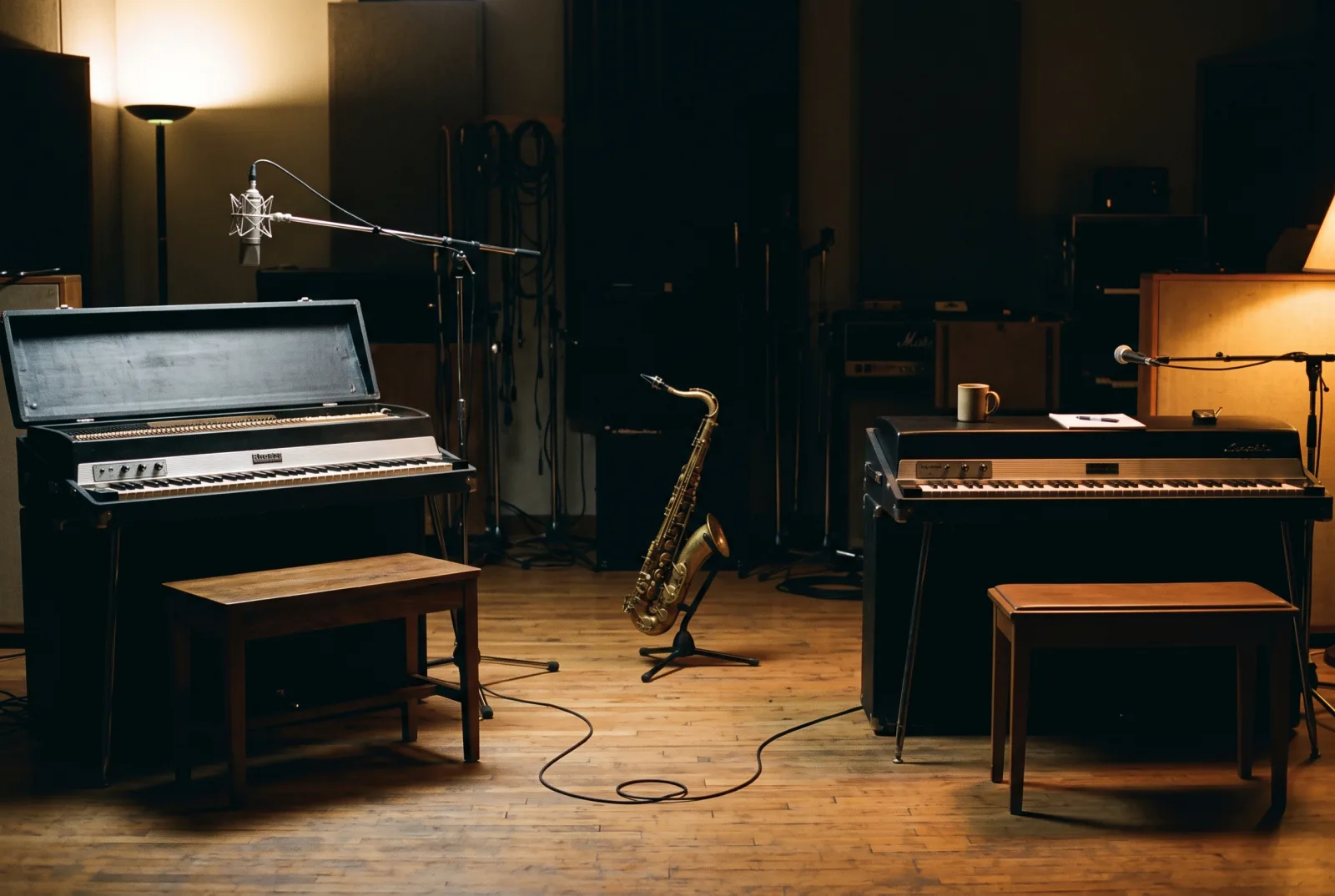
Ilustración: Rebobinados
Supertramp were one of the most singular and successful bands of the seventies, and one of the hardest to pigeonhole.
They made sophisticated, melodic, intelligent rock, halfway between pop and prog, with lyrics that thought and arrangements of uncommon elegance: the electric piano, the saxophone, the harmonies.
"Breakfast in America", from 1979, was a worldwide phenomenon that defined the sound of an era.
But the heart of the band, and its secret tension, was something else.
Two voices taking turns
What almost nobody notices listening to Supertramp is that their songs come from two opposing minds that almost never wrote together.
On one side was Roger Hodgson, with a high, almost angelic voice, author of the dreamier, more melodic songs: "The Logical Song", "Give a Little Bit", "Breakfast in America", "Dreamer", "Take the Long Way Home".
On the other, Rick Davies, with a deep voice and an equally deep temperament, more earthbound, bluesy and ironic: "Goodbye Stranger", "Bloody Well Right".
The two wrote separately, each his own songs, and each sang his own. But they signed them jointly by agreement, even though they barely collaborated: the album credits say, invariably, words and music by Roger Hodgson and Rick Davies.
Listening to a Supertramp record is, in fact, listening to two authors alternating. The high, luminous voice, the low, sardonic voice, taking turns song by song.
It is worth pointing out a difference from the easy comparisons. The great partnerships of rock — Lennon and McCartney, or Morrissey and Marr — are remembered for what they did together in the same room. Hodgson and Davies practically never co-wrote.
That tension between two opposing sensibilities — the dreamer and the realist, heaven and earth — is what gave the band its richness. And it is also what ended up breaking it.
Breakfast in America
In 1979 everything fell into place.
It is one of those records where nothing is surplus: song after song of perfect pop-rock, intelligent and catchy at the same time. And with that iconic cover of a giant waitress posing as the Statue of Liberty — the actress Kate Murtagh — over a Manhattan skyline made of crockery, seen through the window of an aeroplane.
It sold more than twenty million copies worldwide and spent six weeks at number one on the Billboard 200. It won two Grammys in 1980.
"The Logical Song" — which Hodgson has explained as a criticism of how education turns curious children into conforming adults, a theme that resonates with Rebobinados — "Take the Long Way Home", "Goodbye Stranger" and the title track were enormous hits.
It was sophisticated music that sounded easy, ambitious music that sounded accessible. For a moment, Supertramp were one of the biggest bands in the world.
The deal, and what happened to the deal
And then, as tends to happen with duos of two geniuses, the thing broke.
Hodgson left the band in 1983, after the "...Famous Last Words..." tour. He had moved to northern California while the rest stayed in Los Angeles, and he felt constrained in the group.
On splitting up they made a verbal deal: Hodgson kept his songs, Davies the name.
Here something that gets repeated wrongly everywhere needs correcting. It is often said that Hodgson cannot play his own songs. It is the other way round: he has always played them, at every one of his solo concerts. What he cannot use is the name Supertramp.
And the real reproach runs in the opposite direction to the one usually told. It is Hodgson who accuses Davies of having broken the pact, by touring as Supertramp from the late eighties playing the songs he had written. He went as far as saying, with more astonishment than anger, that he was playing songs he did not even like.
There was also a lawsuit over royalties, but not between the two of them. The ones who sued, in 2021, were the other three — Dougie Thomson, John Helliwell and Bob Siebenberg — over a 1977 agreement that gave them a share of the songwriting royalties and that Davies and Hodgson stopped paying in 2018.
Davies settled out of court in 2023. Hodgson went to trial, won before the jury in February 2024 and lost on appeal before the Ninth Circuit on 20 August 2025.
They never got back together. And it was not an even falling-out: when the band announced its fortieth anniversary tour, Hodgson was not invited.
And now they never will. Rick Davies died on 6 September 2025, at eighty-one, in East Hampton, New York, of complications from multiple myeloma. His last performance had been in June 2022.
The reunion that fans asked for over forty years has, since then, a definitive answer.
What to remember
Supertramp are proof that sometimes the best music is born of the tension between two opposing ways of seeing the world.
Put on "The Logical Song", "Breakfast in America", "Goodbye Stranger", "Dreamer" or "Give a Little Bit", and you will hear pop-rock with an elegance and an intelligence almost nobody reached in their time: perfect melodies, lyrics that think, rich arrangements of piano and sax.
And that contrast between Hodgson's high, dreaming voice and Davies's deep, earthbound one.
Behind that perfection there were two authors who barely collaborated, two opposed sensibilities that balanced each other like the two pans of a scale.
When they split up, each of them on his own carried on being good, but neither ever again reached the magic of when they were two opposing forces pulling at the same band.
Listen to them and you will hear, on the same record, heaven and earth taking turns at the microphone. That was their secret formula, and also their doom.
Sources
Supertramp, British band formed in London in 1969, whose creative core were Roger Hodgson (high voice, keyboards, guitar) and Rick Davies (deep voice, keyboards), joined by John Helliwell (sax), Dougie Thomson (bass) and Bob Siebenberg (drums) in the classic line-up, that of "Crime of the Century" (1974) onwards. Hodgson and Davies composed separately — each his own songs, which each sang — and signed them jointly by agreement: the credits read invariably "Words and Music by Roger Hodgson & Rick Davies". The real attribution is as follows: Hodgson wrote and sang "The Logical Song", "Give a Little Bit", "Breakfast in America", "Dreamer" and "Take the Long Way Home"; Davies, "Goodbye Stranger" and "Bloody Well Right". Their album "Breakfast in America" (1979) sold more than twenty million copies worldwide, topped the Billboard 200 for six weeks and won two Grammy awards in 1980; its cover, with the actress Kate Murtagh as a giant waitress posing as the Statue of Liberty over a lower Manhattan skyline built out of crockery, is one of the most celebrated of the era. Hodgson left the band in 1983, after the "...Famous Last Words..." tour; he had moved to northern California and has said that he felt constrained in the group. On splitting up they agreed verbally that Hodgson would keep his songs and Davies the name. A widely circulated version needs correcting: Hodgson has always been able to play his own songs, and does so at his solo concerts; what he cannot use is the name Supertramp. It is he who maintains that Davies broke the agreement by touring as Supertramp performing songs of his authorship from the late eighties. The royalties litigation did not pit Davies against Hodgson: in 2021 they were both sued by the other three members of the classic line-up — Dougie Thomson, John Helliwell and Bob Siebenberg — over a 1977 agreement granting them a share of the songwriting royalties, payments on which ceased in 2018; Davies settled out of court in 2023, Hodgson went to trial and won a jury verdict in February 2024, and lost on appeal before the Ninth Circuit on 20 August 2025. They never got back together: when the band announced its fortieth anniversary tour, Hodgson was not invited. Rick Davies died on 6 September 2025, at 81, in East Hampton, New York, of complications from multiple myeloma; his last performance had been in June 2022. Externally authored text, edited and verified for Rebobinados. Interpretations of the meaning of their work are offered as the author's reading. No song lyrics are reproduced, for copyright reasons. Information drawn from Wikipedia, AllMusic, Louder Sound, Courthouse News and other coverage.
Keep rewinding
70s
progresivo
Jean-Michel Jarre
Twenty-five times in his whole life
His father was Maurice Jarre, three Oscars for "Lawrence of Arabia", "Doctor Zhivago" and "A Passage to India", and he left home when the son was 5: "we saw each other twenty or twenty-five times in our whole lives". *Oxygène* came out in December 1976, recorded in the former kitchen of his flat with a broken Mellotron, and sold some 18 million. Of his father's inheritance he received nothing: the European Court of Human Rights dismissed the case on 15 February 2024.

70s
progresivo
Roger Hodgson
The two wrists and the broken pact
"Dreamer" and "Breakfast in America" are his, written at nineteen, even though they are attributed to Rick Davies. In 1983 he left Supertramp with a verbal pact that Davies broke five years later, and in 1987 he fell from a loft and broke both wrists: he was told he would never play again. Davies died on 6 September 2025, at the age of 81.

70s
progresivo
Yes
The cathedrals and the borrowed name
The only American number one credited to Yes, "Owner of a Lonely Heart", was strictly speaking recorded by a different band: Chris Squire, Alan White, Tony Kaye and guitarist Trevor Rabin had put together a group called Cinema, and in June 1983 Atlantic executives suggested they call it Yes. Jon Anderson joined once the album was well under way.
Rewind with us
Comments · 0
No one has commented yet. Open the conversation.