
The Smiths
The other half of the genius
By Rebobinados · Published on September 26, 2026
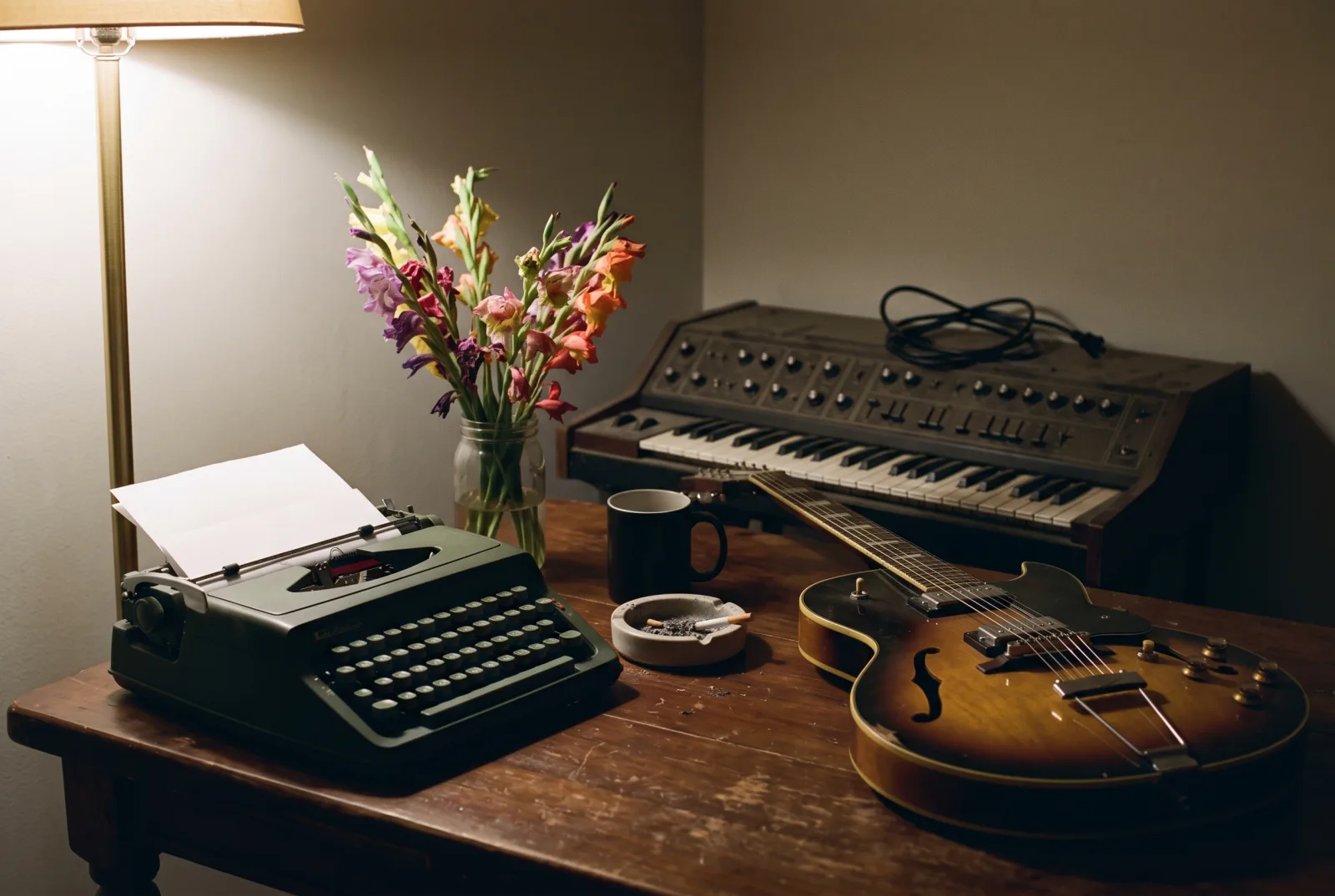
Ilustración: Rebobinados
The Smiths lasted five years, between 1982 and 1987, and in that stretch became the most beloved band British independent music ever produced.
We already covered Morrissey in his own profile, with his poetic genius and his controversies.
But The Smiths was not only Morrissey. It was, above all, a partnership.
Marr, the other half
Reducing The Smiths to the figure of Morrissey is an injustice to the man who supplied the music.
Johnny Marr was eighteen when he turned up at Morrissey's house, in May 1982, to propose that they put something together. He was already a prodigious guitarist.
His playing defined the band's sound as much as the lyrics defined its soul: bright, chiming, melodic, a direct heir of that "jangle" sound George Harrison unveiled with his twelve-string Rickenbacker and that the Byrds turned into a school. On that base he wove layer upon layer of intricate melodies that made the band sound far bigger than it was.
And there is the heart of the matter. While Morrissey sang about sadness, loneliness and heartbreak, Marr wrapped those dark words in luminous, skipping music.
Melancholy lyrics over bright music. That contrast is the Smiths sound.
The partnership was so fertile that critics placed it alongside Lennon and McCartney: two people who were good apart and who together made something neither could manage alone.
Guitars against synthesisers
You have to understand the moment to measure what they did.
In the early eighties British music was dominated by synth-pop: keyboards, drum machines, gloss and modernity. In the middle of all that gleaming plastic, The Smiths turned up doing the opposite.
Guitar, bass and drums. The old-fashioned way. Almost an act of rebellion.
And it worked: they gave the guitar back its leading role in British pop and opened the way for indie, alternative rock and Britpop as a whole. Without them there is no understanding Oasis or Blur.
And the other two must be named, always underrated: the bassist Andy Rourke, whose melodic lines were far more important than is acknowledged, and the drummer Mike Joyce.
There was no contract
The Smiths split up in 1987, at their peak, because of the tensions between Morrissey and Marr. What came next was the opposite of an elegant ending.
And here is the detail that is almost always told wrong. It is usually said that the band's contract recognised only the two famous ones as full members, leaving the rhythm section with the crumbs.
There was no contract. That is exactly the point.
The split — forty per cent for Morrissey, forty for Marr, ten for each of the other two — had been agreed verbally and was never put in writing.
When Joyce sued, in 1989, the court found itself with no paper to apply. So it applied something else: a partnership act from 1890. And since no different agreement was on record, it declared the four of them equal partners.
In December 1996 Judge John Weeks ruled in Joyce's favour: twenty-five per cent of the recording and performance royalties, plus close to a million pounds in arrears. Of Morrissey he wrote that he was "devious, truculent and unreliable" where his own interests were at stake.
Andy Rourke, in debt, had settled out of court earlier for eighty-three thousand pounds.
Nor was the ruling the end of it. Marr paid his share. Morrissey appealed, lost before the Court of Appeal on 6 November 1998 and did not pay: he moved to Los Angeles.
Joyce had to collect by seizure — the English bank account, the Smiths royalties held at Warner, Morrissey's own from PRS and PPL — and by around November 2005 he had recovered some seven hundred thousand pounds.
The irony is perfect and it is the opposite of the one usually told: it was not a rapacious contract that harmed the rhythm section, but the absence of a contract that ended up giving Joyce far more than the verbal pact granted him.
Marr would later say he regretted not having signed legal documents from day one.
For that reason, unlike so many bands that reunite for money decades later, The Smiths never got back together. Andy Rourke died in 2023, of pancreatic cancer, closing the door further still.
What to remember
The Smiths is proof that sometimes greatness lies not in lasting, but in the perfection of an encounter.
Put on "This Charming Man", "There Is a Light That Never Goes Out", "How Soon Is Now?" or "Bigmouth Strikes Again", and you will hear one of the most complete creative partnerships in rock: Morrissey's lyrics, which gave a voice to every lonely person, over Marr's luminous guitars, which made them unforgettable.
In five years they left behind a body of work that still sounds fresh, and they opened the way for almost all the British guitar rock that came after.
They never reunited, and perhaps that is as it should be. Some encounters are so perfect that they are best remembered intact.
Sources
The Smiths, English band formed in Manchester in May 1982 and made up of Morrissey (vocals), Johnny Marr (guitar), Andy Rourke (bass) and Mike Joyce (drums). Marr, born on 31 October 1963, was eighteen when he turned up at Morrissey's house to propose forming the group. The Morrissey-Marr songwriting partnership has been compared by critics to that of Lennon and McCartney. They released four studio albums with the Rough Trade label between 1984 and 1987 and are considered the most influential band of the British independent scene of the eighties; Marr's "jangle" guitar style, an heir of the Byrds' sound, combined with Morrissey's literary and melancholy lyrics, defined their sound in contrast with the dominant synth-pop. The band split up in 1987 after Marr's departure. On the subsequent litigation, one point that is often told wrong should be made precise: there was no written contract between the members. The split of recording and performance royalties — 40% Morrissey, 40% Marr, 10% Joyce, 10% Rourke — had been agreed verbally, and with no document in existence the court applied the Partnership Act of 1890 and declared the four equal partners. Mike Joyce sued in 1989 and in December 1996 Judge John Weeks ruled in his favour, granting him 25% of those royalties and around a million pounds in arrears, and describing Morrissey as "devious, truculent and unreliable" where his own interests were at stake; Morrissey appealed without success. Andy Rourke had earlier reached an out-of-court settlement for 83,000 pounds plus 10% of royalties, and died on 19 May 2023, aged 59, of pancreatic cancer. The band has never reunited. Morrissey, Oasis and Blur have their own profiles in this series. Externally authored text, edited and verified for Rebobinados. Interpretations of the meaning of their work are offered as the author's reading. No song lyrics are reproduced, for copyright reasons. Information drawn from Wikipedia, Rolling Stone, Classic Pop, Spin and other coverage.
Keep rewinding
90s
indie
Portishead
A short film got them the record deal
Before the record they shot *To Kill a Dead Man*, eleven minutes of film noir written by the three of them: Geoff Barrow plays a sniper and Beth Gibbons a widow. That soundtrack got them the record deal, and the cover of *Dummy* is a still from the short. The rest is told wrong too: *Dummy* sold 3,600,000 copies and won the 1995 Mercury ahead of Oasis, Tricky and PJ Harvey. Three records in fourteen years, and eighteen without a fourth.
00s
indie
Peter Bjorn and John
The whistle was provisional
Björn Yttling whistled the melody of "Young Folks" as a placeholder, only so as not to forget it, and they decided to keep it. The single came out on 7 August 2006, with Victoria Bergsman as guest, and it was not no. 1 anywhere: no. 13 in the United Kingdom, no. 9 in Finland. Live it is whistled by Peter Morén, and the trio never broke up: nine albums.
00s
indie
Florence + the Machine
The catharsis had a name
The band formed in London in 2007 and "the Machine" comes from the keyboard player Isabella Summers. Florence Welch has said that she stopped eating at seventeen and that she stopped drinking around 2014: the catharsis in her music has a concrete content. She has five British number ones, the last with Everybody Scream (31 October 2025), nominated for the 2026 Mercury.
Rewind with us
Comments · 0
No one has commented yet. Open the conversation.