
The Carpenters
The warmest voice in pop, and the drummer hidden behind it
By Rebobinados · Published on September 26, 2026
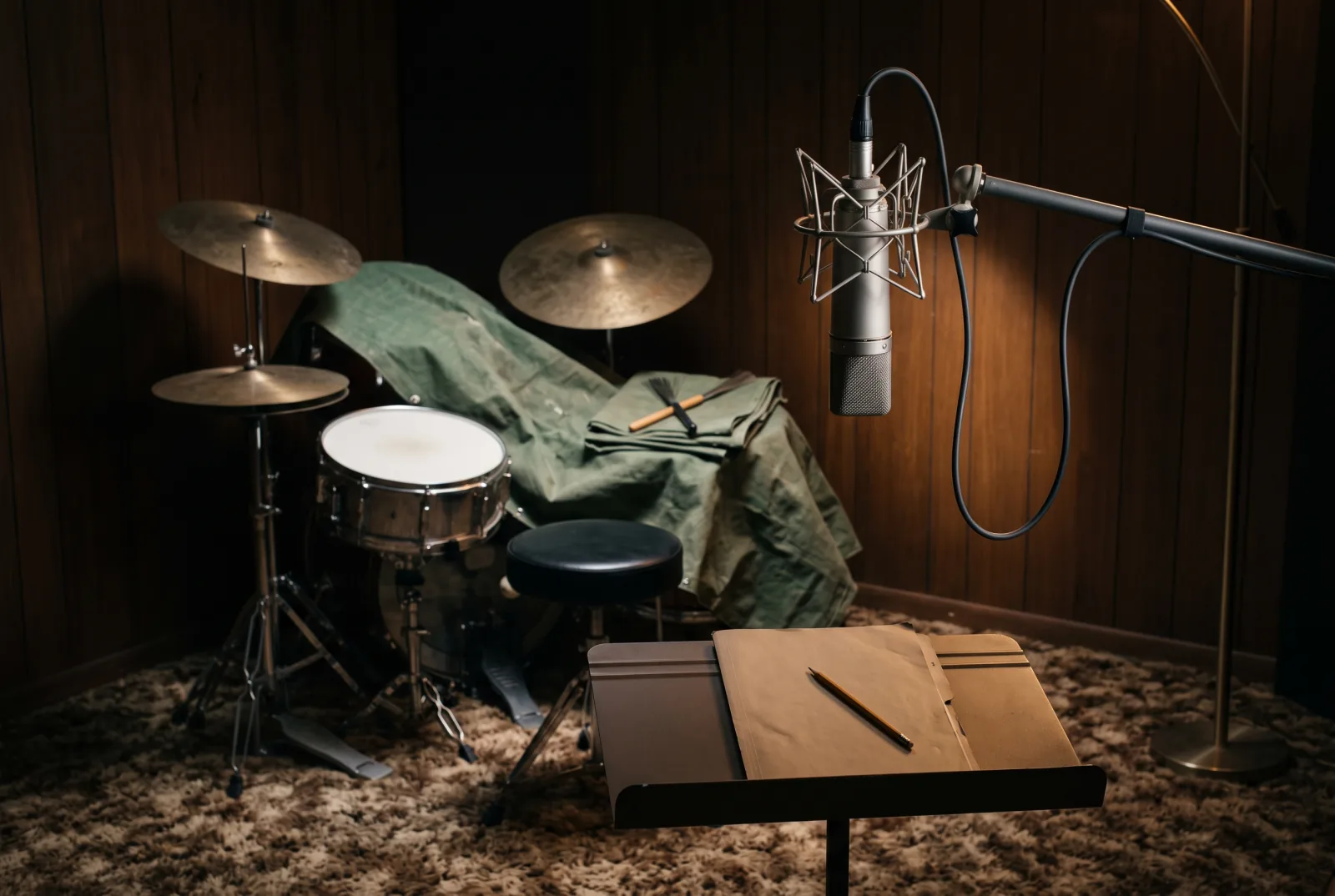
Ilustración: Rebobinados
There are voices that impress and there are voices that embrace. Karen Carpenter's was one of the second kind, and perhaps the warmest that pop has ever produced. A low contralto, velvety, close, that sounded as if it were singing to you alone, in your living room, softly. It didn't need to rise or to shout: it was enough for her to open her mouth for everything to turn intimate. The Carpenters sold millions of records for many reasons, but the main one fits in a single phrase: that voice.
Two siblings
The Carpenters were exactly that, two siblings: Karen and Richard Carpenter. Richard was the musical brain — he arranged, composed, produced, put together those Swiss-watch vocal harmonies; Karen supplied the voice and, at the start, something almost nobody remembers. Because Karen Carpenter did not start out as a singer. She started out as a drummer, and she was terrific.
That is the fact most often forgotten and the one that makes her biggest. The owner of one of the most famous voices in the world felt, deep down, like a drummer who also sang. She played with swing, with precision, with taste. The industry gradually moved her out from behind the drums to put her up front, because that voice could not stay hidden. But she missed the drums always. There was a bigger music inside her than the world ever got to see.
The songs that seemed simple and weren't
"(They Long to Be) Close to You", "We've Only Just Begun", "Rainy Days and Mondays", "Top of the World", "Yesterday Once More". At the time, The Carpenters were looked down on: too sweet, too clean, too tidy for an era that wanted dirty rock and rebellion. They were written off as soft.
Time vindicated them completely. Underneath that apparent simplicity there was a goldsmith's work: sophisticated arrangements, hugely complex harmonies all sung by the same two people, impeccable production. And above all, songs that have not aged a day. What sounded easy was extremely hard to do, and that is why nobody has done it the same way again. Making something so laboured sound so simple is one of the highest forms of the craft.
The ending, which has to be told with care
Karen Carpenter died in 1983, at the age of thirty-two, of heart failure brought on by the illness that was consuming her: an eating disorder. She went at the best moment of her voice, with a great deal still left to sing.
Her death, in the middle of the grief, had a consequence that goes beyond her: it was what put eating disorders into public conversation. Before Karen, almost nobody talked about them; it was a silent illness, with no name in the media, that many people suffered alone and in secret. The loss of such a beloved and visible figure forced the world to look squarely at something it preferred to ignore, and to understand that it was a serious illness, not a whim. Many people got help, in the years that followed, because Karen's story opened a door that had been closed. Her tragedy, without meaning to, saved lives.
What to remember
Karen Carpenter had the warmest voice in pop, and she was, before that, a great drummer whom the world barely let us see. With her brother Richard she made songs that seemed simple and were works of clockwork, songs critics scorned and time consecrated. She died far too young, and her death opened the public conversation about an illness that until then had been suffered in silence.
Remember it this way: it was enough for Karen Carpenter to open her mouth for the world to become a warmer place. That voice is still there, intact, embracing whoever listens to it. It is what remains, and it is enormous.
This text mentions an eating disorder. If you or someone you know is going through a difficult relationship with food or the body, help is available. In Chile, Salud Responde answers free of charge 24 hours a day on 600 360 7777, mental health option.
Sources
The Carpenters, American duo made up of siblings Karen Carpenter (voice and drums, born on 2 March 1950) and Richard Carpenter (keyboards, arrangements, composition and production, born on 15 October 1946), from Downey, California. They were one of the best-selling acts of the 1970s, with hits such as "(They Long to Be) Close to You", "We've Only Just Begun", "Rainy Days and Mondays", "Top of the World" and "Yesterday Once More". Karen Carpenter, also recognised as a drummer, died on 4 February 1983, at the age of thirty-two, of heart failure arising from complications of an eating disorder; her death contributed significantly to the public visibility of this kind of illness. Profile compiled for Rebobinados with fact-checking; interpretations of the meaning of the work are offered as the author's reading. This text does not detail aspects of the illness, out of respect and for prevention. No song lyrics are reproduced, for copyright reasons. Information drawn from Wikipedia and other coverage.
Keep rewinding

10s
pop
Bruno Mars
Eleven names in the credits
"Uptown Funk" came out on 10 November 2014 with six writers and today it has eleven. In February 2015 The Gap Band's publisher filed a claim over "Oops Up Side Your Head" in YouTube's copyright system —there was never a lawsuit— and on 28 April five names were added, with 17 % of the publishing. It happened weeks after the "Blurred Lines" verdict, and the song had been fourteen weeks at number one.

00s
pop
André Rieu
It was not from the jazz suite
The waltz with which André Rieu reached half the world is not from Shostakovich's Suite for Jazz Orchestra No. 2: it is from the Suite for Variety Orchestra, which the composer did not assemble, and it was born in 1956 as music for a Soviet film about settlers in Kazakhstan. The error comes from a misprint in volume 10 of the complete works (Muzyka, Moscow, 1984), corrected only in 2001. And the title "The Second Waltz" was invented by his wife, because the real one did not sell.

90s
pop
Daniela Mercury
She took the neighbourhood out of the song
"O Canto da Cidade" was written by Tote Gira, a composer from Nordeste de Amaralina who recorded the demo on a borrowed cassette, marking the beat on the door of a refrigerator; Mercury's team almost threw the tape away. She shares the credit because she deleted the references to the Pelourinho so that the song would serve all of Brazil. The album, from 20 September 1992, sold more than 2 million copies and nationalised axé. But she did not invent it: the name was a journalist's insult in 1987.
Rewind with us
Comments · 0
No one has commented yet. Open the conversation.