
Thirty Seconds to Mars
The seven-year law
By Rebobinados · Published on October 1, 2026
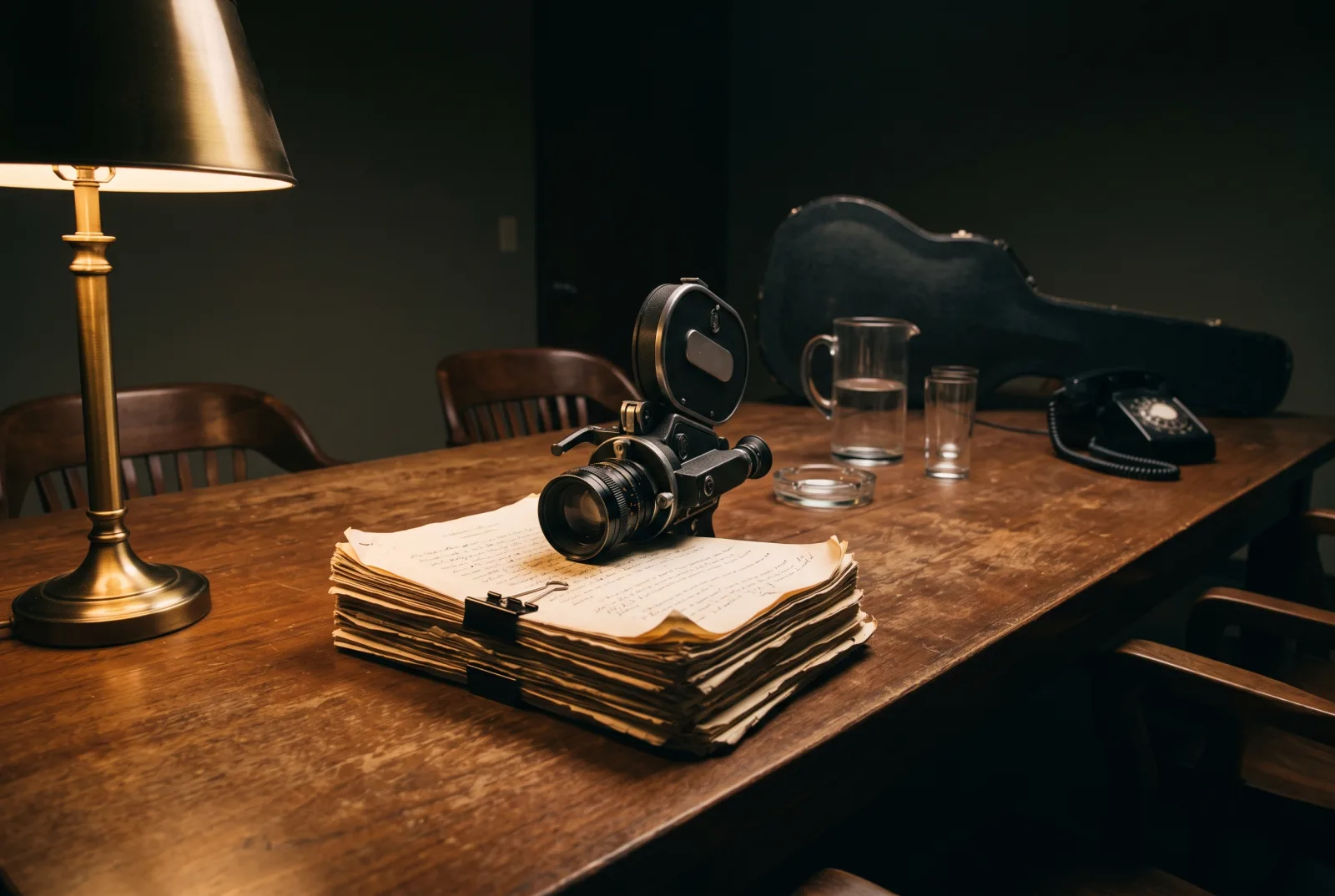
Ilustración: Rebobinados
In August 2008, Thirty Seconds to Mars were served with a thirty-million-dollar lawsuit. It was not filed by a rival or by a private individual: it was filed by EMI, the parent company of the label that released their records, for breaching a contract signed in 1999, when the band had not yet put out anything. That case, and not their singer's surname, is the story that explains this group: eight months of litigation, a Californian employment rule wielded as a shield, an out-of-court settlement and a documentary that won an audience award in Toronto by telling the court case from the inside. Along the way they did what they had wanted to do from the start, which was to write songs for an entire venue to shout, with the same ambition for a mass chorus that Coldplay were cultivating in those years and that Imagine Dragons would later inherit. And the Guinness record they ended up with is not the one people think it is.
Los Angeles, 1998, and a signature from 1999
Thirty Seconds to Mars formed in Los Angeles in 1998, with Jared Leto on vocals and guitar and his brother Shannon Leto on drums. In 1999 they signed a five-album contract with Immortal Records, the document that a decade later would end up on a courtroom table. Their first album, self-titled, came out in 2002.
It is worth undoing an established idea: during the years that matter they were not two brothers on their own. Solon Bixler played guitar between 2001 and 2003, Matt Wachter bass between 2001 and 2007, and Tomo Miličević was a full member between 2003 and 2018. Which is to say, Miličević is on A Beautiful Lie, on This Is War and on Love, Lust, Faith and Dreams: the three albums they are remembered for. The duo of brothers is the line-up after 2018, not the one of the anthems.
The method, on the other hand, really was always the same: songs with a rising structure, layers of keyboards and choruses written to be completed by a crowd. That explains why their career is measured more in concerts than in singles, and why their audience worked from early on as a community rather than as an audience.
Fifty weeks on a single chart
A Beautiful Lie was released in 2005 and is the album that put them on the map. It reached no. 38 on the US Billboard 200 and went platinum. Out of it came "The Kill", released as a single on 24 January 2006.
The fact that is almost always told wrong is the one about that song. "The Kill" was not number one of anything: its peak was no. 3 on Billboard's Alternative Songs chart, in the United States. What is remarkable is a different figure. It stayed more than fifty weeks on that chart and set the longevity record in its history there. A whole year without falling off says rather more about that band's relationship with its people than any adjective.
Thirty million dollars and the seven-year law
In August 2008, EMI — parent company of Virgin, the label that released them — sued them for thirty million dollars alleging breach of contract: according to the record company, the band owed it three of the five albums agreed in 1999 with Immortal Records.
The response was a legal counter-attack. Thirty Seconds to Mars invoked the so-called De Havilland Law, the Californian rule that carries the name of a Hollywood actress and according to which no personal services contract can bind anyone for more than seven years. They were nine years in. An artist's fight with their label is nothing new in this music — Prince waged his against Warner for most of the nineties — but rarely was the arithmetic so simple: the paper they had signed as unknowns had expired.
The ending is not the one the script calls for. On 28 April 2009 an out-of-court settlement was announced, and the band signed with EMI again. This Is War came out in December 2009 on Virgin/EMI, and they stayed on that label until Love, Lust, Faith and Dreams, from 2013; the move to Universal/Interscope came afterwards. They did not leave slamming the door: they negotiated and stayed in the same house.
Artifact and three hundred and nine concerts
A film came out of that court case. Artifact (2012) is a documentary directed by Jared Leto under the pseudonym Bartholomew Cubbins that tells the dispute from the inside, with the meetings, the lawyers and the recording of the album all happening at the same time. It won the People's Choice Documentary Award at the 2012 Toronto festival, which is the prize voted for by the festival's audience. As a document about how the record industry worked at the end of its era, it is worth more than any statement.
The other number from that period is a Guinness record, and it has to be stated with its exact category: "longest concert tour by a rock band", set at 309 concerts on 7 December 2011 at the Hammerstein Ballroom in New York. It is a record for the number of shows within a single album cycle — the This Is War tour had started on 11 November 2009 — not for box office or attendance. Said plainly, "tour record" sounds like ticket sales, and that would be false.
What to remember
Thirty Seconds to Mars are better explained by their work and by their court case than by anybody's biography. They signed a five-album contract as unknowns, spent eight months defending themselves against a thirty-million-dollar lawsuit, took shelter behind a Californian employment rule from the days of studio cinema and, with the settlement closed in April 2009, released on that same label the album with which they filled enormous venues. What remains is Artifact, "The Kill" holding on for more than fifty weeks on the alternative chart and 309 concerts in a row.
The epilogue is a kind one. Tomo Miličević, the guitarist of the three big albums, came back as a guest on 16 August 2025 at the Kia Forum, at the show for the twenty years of A Beautiful Lie, and in April 2026 the band announced the European and British tour "A Beautiful Lie vs This Is War" with him inside again. There is no new album announced. When "Kings and Queens" starts up and a stadium sings it all the way through, underneath there is something less epic and more concrete: a contract that had expired and a band that defended itself with the work.
Sources
Thirty Seconds to Mars, stylised 30 Seconds to Mars, is an American band formed in Los Angeles in 1998 by Jared Leto (vocals, guitar) and Shannon Leto (drums). In 1999 it signed a five-album contract with Immortal Records. Solon Bixler was guitarist between 2001 and 2003; Matt Wachter, bassist between 2001 and 2007; Tomo Miličević, a full member between 2003 and 2018. Their first album, "30 Seconds to Mars", was released in 2002. "A Beautiful Lie" (2005) reached no. 38 on the Billboard 200 and was certified platinum; its single "The Kill", released on 24 January 2006, reached no. 3 on Billboard's Alternative Songs chart and remained on it for more than fifty weeks, the longevity record for that chart. In August 2008 EMI, parent company of Virgin, sued the band for 30 million dollars for breach of contract, alleging that it owed three of the five albums agreed in 1999; the band counter-sued invoking California's De Havilland Law, according to which no personal services contract is enforceable for more than seven years. On 28 April 2009 an out-of-court settlement was announced and the band signed with EMI again. "This Is War" was released in December 2009 on Virgin/EMI and included "Kings and Queens"; the band remained on that label until "Love, Lust, Faith and Dreams" (2013) and moved afterwards to Universal/Interscope. "Artifact" (2012) is a documentary about the litigation directed by Jared Leto under the pseudonym Bartholomew Cubbins; it won the People's Choice Documentary Award at the 2012 Toronto International Film Festival. Guinness World Records recognised the band with the record for "longest concert tour by a rock band" with 309 concerts, set on 7 December 2011 at the Hammerstein Ballroom in New York, within the "This Is War" tour that began on 11 November 2009; it is a record for the number of concerts in an album cycle, not for box office or attendance. Jared Leto received the Academy Award for Best Supporting Actor on 2 March 2014 for "Dallas Buyers Club" (2013). The band carried out the Seasons Tour between 2024 and 2025; on 16 August 2025 it gave a one-off show at the Kia Forum for the twenty years of "A Beautiful Lie", with Tomo Miličević as a guest, and on 10 April 2026 it announced the European and British tour "A Beautiful Lie vs This Is War", with Miličević back in the line-up. There is no new album announced. Profile compiled for Rebobinados with fact-checking; interpretations of the meaning of the work are offered as the author's reading. No song lyrics are reproduced, for copyright reasons. Information drawn from Billboard, Guinness World Records, Wikipedia and other press coverage.
Keep rewinding
90s
hard rock
Lenny Kravitz
He doesn't play that guitar
The riff of "Are You Gonna Go My Way" (9 March 1993) is not played by him: the guitar is Craig Ross's, the song is co-written with him and the Academy nominated them both for Best Rock Song in 1994. "Always on the Run" was written by Slash for Guns N' Roses. And one of his four straight male rock Grammys, the one of 23 February 2000, he won with "American Woman", by The Guess Who, from which he removed the guitar solo.

60s
hard rock
Steppenwolf
The motorcycle was a Ford Falcon
The century's biker anthem was not written by the band that sings it, and it was not about a motorcycle: Mars Bonfire wrote "Born to Be Wild" as a folk ballad about his battered Ford Falcon, and he had left the group in June 1967, before the name Steppenwolf existed. "The Pusher" is Hoyt Axton's, Easy Rider dropped it in as a temporary track, and the single stalled at no. 2 on the Hot 100 in 1968.
00s
hard rock
Queens of the Stone Age
The desert went through Seattle
Kyuss broke up in 1995 and Josh Homme went to Seattle as touring guitarist for Screaming Trees: there he met Mark Lanegan, a full member of Queens of the Stone Age between 2001 and 2005 and the second voice of Songs for the Deaf (2002), the album Dave Grohl played on. Nick Oliveri, also from Kyuss, was sacked in 2004. The band has nine Grammy nominations and no statuette.
Rewind with us
Comments · 0
No one has commented yet. Open the conversation.