
Prince
The Vault Beneath the House
By Rebobinados · Published on September 2, 2026
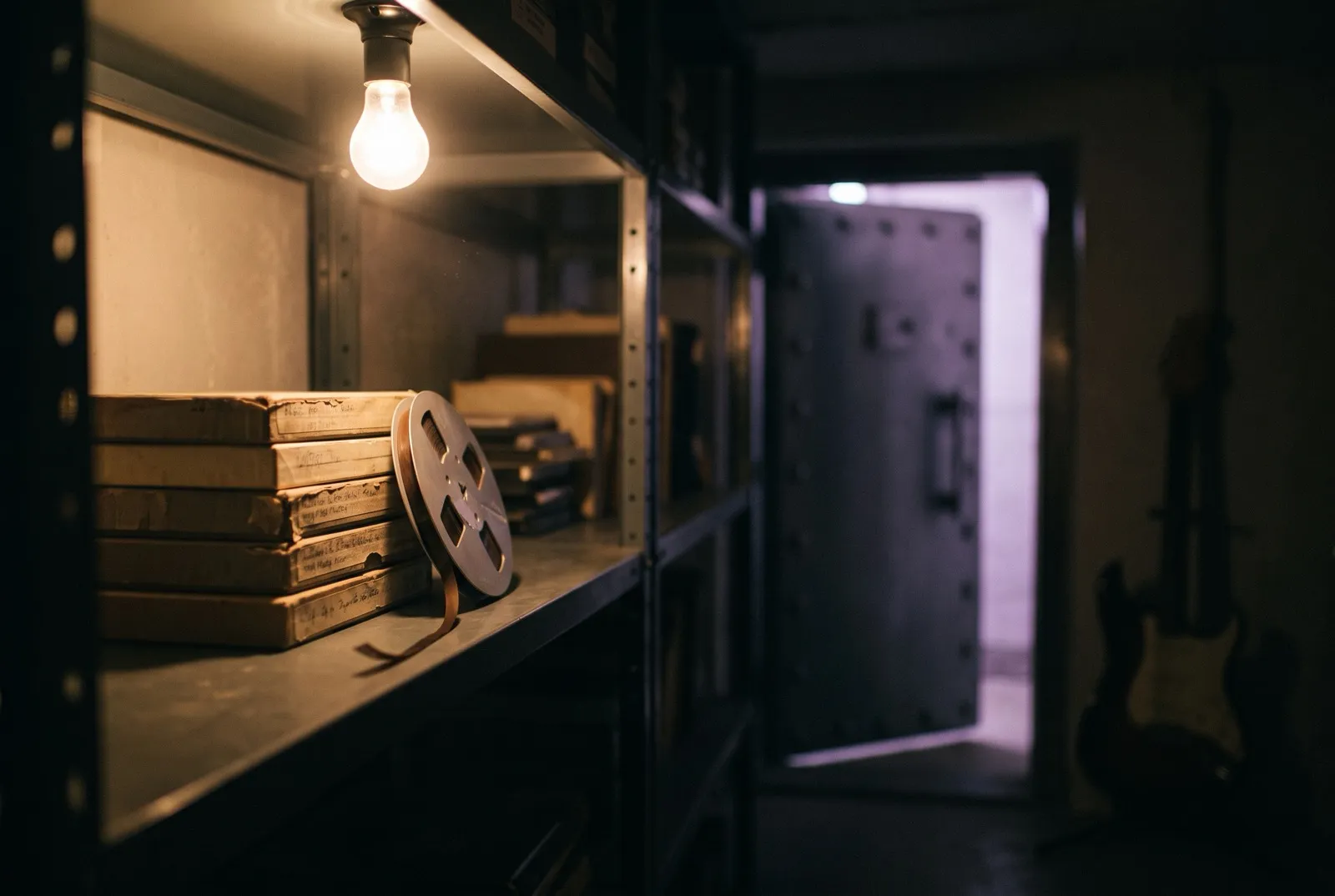
Ilustración: Rebobinados
When Prince died, in 2016, specialists had to be called in to open a vault he had built beneath his house. Inside there were, by most estimates, thousands of songs nobody had ever heard. Whole albums, dozens of videos, decades of work, locked away. That is the first thing to know about him: he made more music than the world was ever going to get to hear, and he kept it.
A one-man band
Prince Rogers Nelson was born in Minneapolis in 1958. He stood just over five feet tall, and he filled a stadium at that height. He was androgynous, extravagant, from another planet, with a voice that ran from a low growl to a screaming falsetto. And there was the thing that defines his genius, the thing that sets him apart from almost everyone: he was a one-man band. On most of his records he played all the instruments, or nearly all of them — guitar, bass, drums, keyboards, voice — and he wrote them, produced them, arranged them. He did not lead a band: he was a band.
The Minneapolis sound
He signed with Warner Bros. at nineteen, with a contract that gave him a degree of creative control almost unheard of for an unknown. He invented a sound, the so-called Minneapolis sound, mixing funk, rock, new wave, soul and synth-pop all at once. And then came the run that made him a legend: "1999", "Purple Rain" — the 1984 film and album with which he became the first artist to hold the number one album, single and film in the United States at the same time — and "Sign o' the Times", from 1987, his summit. He made so much music that it overflowed, and he gave songs away: "Nothing Compares 2 U", Sinéad O'Connor's enormous hit, was written by him.
The man with no name
In the nineties came the episode almost nobody forgot. Prince became entangled in a war with Warner Bros. over control of his own catalogue: the label did not want to release his music at the rate he made it, and he felt that even his name now belonged to the company. So he did something nobody had done: he changed his name to an unpronounceable symbol, a blend of the male and female signs, and began appearing with the word "slave" written on his cheek. He preferred having no name to letting a company own him. He fought for years, until he won his freedom and, in time, ownership of his recordings. Only then did he go back to being called Prince.
Paisley Park
He built his own kingdom: Paisley Park, a studio and home complex on the outskirts of Minneapolis, where he recorded without stopping, alone, at any hour, and where he stored everything he did not release in that vault. A genius shut inside his fortress, making more music than he was ever going to show.
The rain he asked to fall harder
And on a stage he was untouchable. Two of his moments still circulate, and people recognise them the instant they start. One is the 2007 Super Bowl, in Miami. Just before he went on, the producer called to warn him he would have to play through a storm, and Prince answered with a single question: could they make it rain harder. He walked out onto a stage shaped like his symbol and, in the middle of the downpour, closed by singing "Purple Rain" in actual rain, as though the weather had been ordered for the occasion. It is still considered the greatest half-time show in Super Bowl history.
The guitar that never came down
The other is from 2004, at the Rock and Roll Hall of Fame ceremony, when George Harrison was being honoured. A group of stars — Tom Petty, Jeff Lynne, Steve Winwood, Harrison's son — were playing "While My Guitar Gently Weeps", and Prince spent almost the whole song still, in the shadows. Until the closing solo reached him: he let go, fell backwards into the crowd while someone held him up, and played two minutes that stole the entire night. When he finished, he threw his guitar into the air, and the guitar simply never came down; nobody knew where it landed. More than a hundred million people have watched that video.
What stayed locked away
He died at fifty-seven. Decades of performing had wrecked his body, and he took painkillers, in secret, to keep getting on stage. He was found alone, in a lift at Paisley Park, dead of an accidental fentanyl overdose from counterfeit pills. It was a week after a concert on his last tour, a tour on which he had gone back to the barest possible setup: him and a piano, nothing else. The most complete musician of his generation, brought down by the pain of having given his body to the stage. And the vault, closed, waiting.
That is why Prince is a cult figure, and not because of a single song, though he has dozens. He is a cult figure because he was, perhaps, the most complete musician popular music has produced: a man who could do all of it, alone, and did, and kept doing it until it killed him, and left locked away more than most artists manage to show in a lifetime. Go and listen to him: "Purple Rain", "Sign o' the Times", "1999". You will hear one person being an entire band, an entire scene, an entire world. And somewhere beneath Paisley Park there are still thousands of songs he made and never let us hear.
Sources
Prince Rogers Nelson (Minneapolis, 7 June 1958 – Paisley Park, Chanhassen, 21 April 2016) was a singer, songwriter, producer and multi-instrumentalist, considered one of the finest musicians of his generation; he typically played all or nearly all the instruments on his recordings and produced his own albums, creating the so-called Minneapolis sound. He signed with Warner Bros. at 19. Key works include "1999" (1982), "Purple Rain" (1984, film and album: that year he became the first artist to simultaneously hold the number one album, single and film in the United States, with "When Doves Cry" the year's best-selling single) and "Sign o' the Times" (1987). He wrote "Nothing Compares 2 U", a hit for Sinéad O'Connor. Among his most remembered performances: the Super Bowl XLI half-time show (4 February 2007, Miami), played through a storm — warned about the rain, he asked whether they could make it rain harder — and widely regarded as one of the greatest ever; and his guitar solo on "While My Guitar Gently Weeps" at the 2004 Rock and Roll Hall of Fame ceremony, in the tribute to George Harrison alongside Tom Petty, Jeff Lynne, Steve Winwood and Dhani Harrison, after which he threw his guitar into the air. In 1993, in a dispute with Warner Bros. over control of his catalogue, he adopted an unpronounceable symbol as his name and appeared with the word "slave" written on his cheek; he resumed the name "Prince" in 2000, after his contract ended, and in 2014 regained control of his recordings. He released 39 albums in his lifetime and left a vast unreleased archive in a vault at his Paisley Park complex; estimates of its size vary and are usually put at several thousand songs. He died at 57 of an accidental fentanyl overdose from counterfeit pills, in the context of an opioid addiction linked to chronic pain; he died a week after a concert on his solo "Piano & A Microphone" tour. No song lyrics are reproduced, for copyright reasons. Sourced from Britannica, AllMusic, Wikipedia and other press coverage.
Keep rewinding
90s
funk
Jamiroquai
The floor was not moving
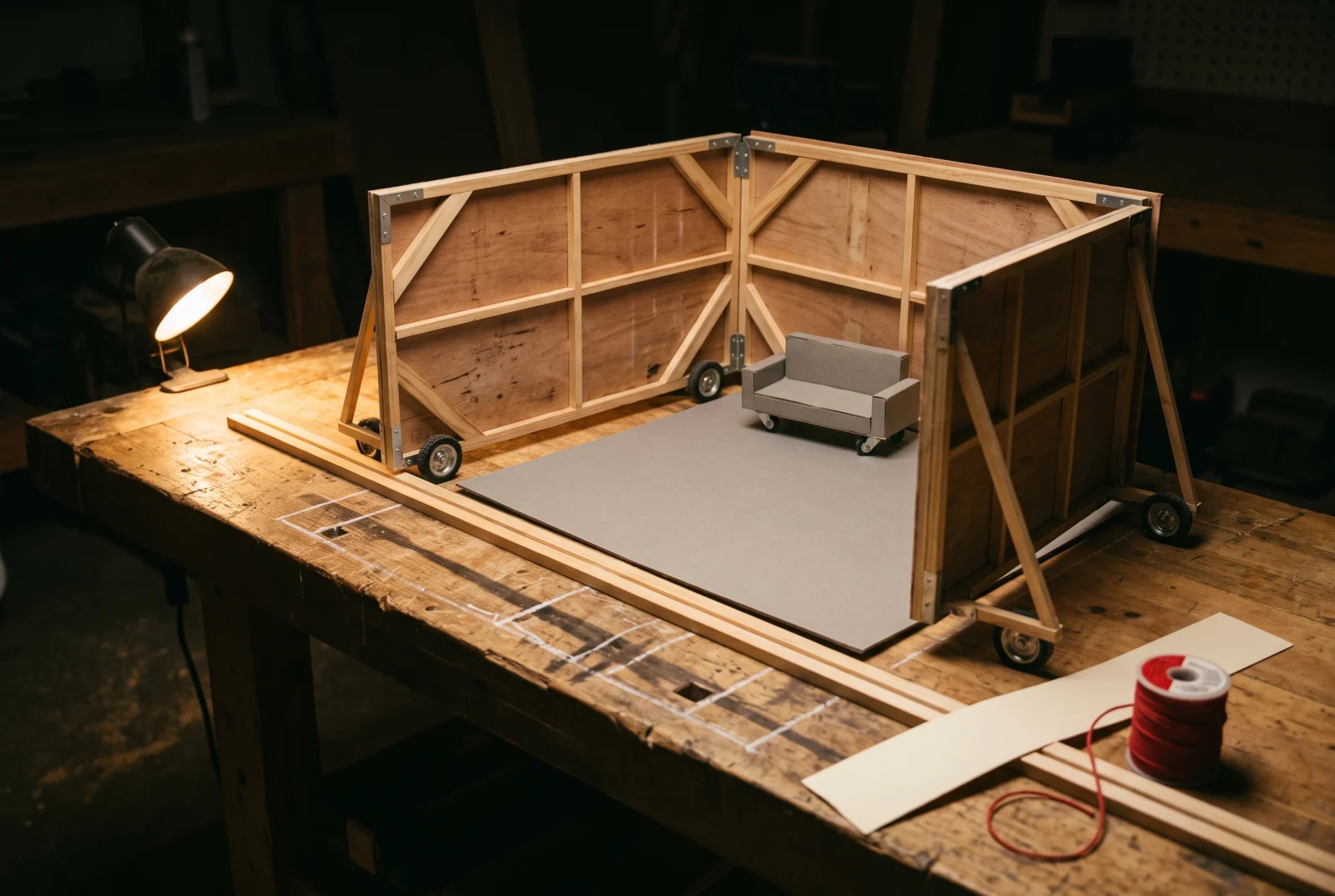
In "Virtual Insanity" the floor never moved: it was grey and smooth, and what turned was the whole set on wheels, pushed by stagehands with the camera bolted to one wall. Jonathan Glazer directed it on 12 August 1996 in four takes, for half the 280,000 pounds that moving the floor for real would have cost. It won four VMAs out of ten nominations, including Video of the Year.
80s
funk
Rick James
The Grammy came out of a lawsuit
The only Grammy of his life he won for a song he did not record: Best R&B Song on 20 February 1991 for "U Can't Touch This", after suing MC Hammer over the riff of "Super Freak" and settling out of court. Before all that he had a band in Toronto with Neil Young and Bruce Palmer, and Motown cancelled their single in 1966 on discovering that its singer was a fugitive from the Naval Reserve.
90s
funk
Red Hot Chili Peppers
The four from Fairfax High
Red Hot Chili Peppers formed in Los Angeles in 1982 with four classmates from Fairfax High: Kiedis, Flea, Hillel Slovak and Jack Irons. Slovak died of a heroin overdose on 25 June 1988, Irons left because of it and John Frusciante joined that same year, aged eighteen, to replace him. Then came his three spells, two departures and Josh Klinghoffer's ten years.
Rewind with us
Comments · 0
No one has commented yet. Open the conversation.