
Billy Ocean
From Trinidad to the world, with a velvet voice
By Rebobinados · Published on September 20, 2026
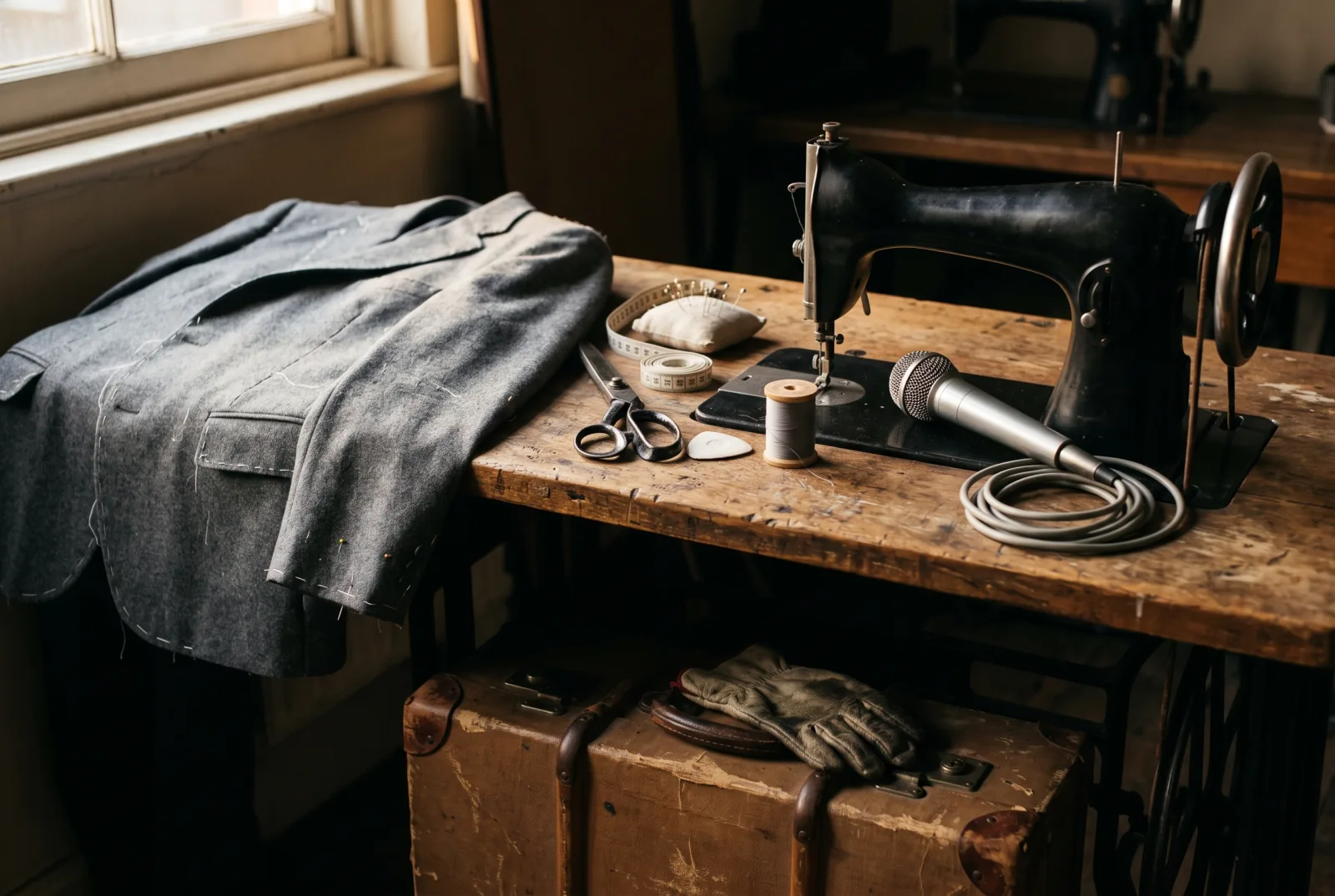
Ilustración: Rebobinados
He was born on a Caribbean island, grew up in east London, worked as a tailor and in a car factory before devoting himself to singing, and ended up as one of the greatest male voices in the pop of the eighties, with hits that played all over the planet. Billy Ocean's story is that of the son of immigrants who, on the strength of a voice as warm as few others and an enormous perseverance, made himself a place at the top of an industry that did not make things easy for somebody like him.
The long road
Billy Ocean —born Leslie Charles in Trinidad— arrived in England as a child, part of the Caribbean generation that crossed the Atlantic looking for another life. He landed his first hit in the mid-seventies with "Love Really Hurts Without You", but his big moment took a long time coming, and that wait matters. He was no instant phenomenon: he was a man who kept at it for years, who went on singing when nothing guaranteed it would work, until in the eighties the world finally surrendered to his voice.
And when it came, it came hard. "Caribbean Queen", in 1984, was number one in the United States and won him a Grammy. Then came "Suddenly", "When the Going Gets Tough, the Tough Get Going" —the perseverance anthem par excellence, almost an autobiography— and "Get Outta My Dreams, Get into My Car". A run of global hits that made him one of the most successful British artists of his time.
What it meant
What he achieved has to be measured properly. In the eighties, a Black British singer, born in the Caribbean, succeeding on a grand scale in the United States was not a common thing. Billy Ocean was one of those who opened that door: one of the most internationally successful Black British artists of his generation, at a time when the American market was a wall that was hard to cross for somebody of his background.
He did it without any fuss, with a velvet voice that conveyed warmth and decency, with songs about love and about not giving up. "When the Going Gets Tough" is not just a catchy chorus: read in the light of his life, it is the summary of his story. When the going gets tough, the tough get going. He got going for years before the world listened to him, and that is why that song sounded so true in his voice.
What to remember
Billy Ocean went from Trinidad to east London, from the factory to the stage, and on the strength of a warm voice and an enormous persistence he became one of the great voices of eighties pop. "Caribbean Queen" won him a Grammy and the number one spot in the United States; he was one of the Black British artists who crossed that wall when almost nobody did.
Remember him like this: he sang that when the going gets tough, the tough get going, and it was not a pose. It was his own biography set to music. That is why, in his voice, that line still sounds like the truth.
Sources
Billy Ocean, stage name of Leslie Sebastian Charles, British singer born on 21 January 1950 in Fyzabad, Trinidad and Tobago, and raised in east London; he is still alive. After his first hit "Love Really Hurts Without You" (1976), he reached his greatest international profile in the eighties: "Caribbean Queen (No More Love on the Run)" (1984) went to number one on the American Billboard Hot 100 and won the Grammy for best male R&B vocal performance; it was followed by "Suddenly", "When the Going Gets Tough, the Tough Get Going" (1985, theme of the film "The Jewel of the Nile" and number one in the United Kingdom) and "Get Outta My Dreams, Get into My Car" (1988, number one in the United States). He is considered one of the most internationally successful Black British artists of his generation. Profile compiled for Rebobinados with fact-checking; interpretations of the meaning of the work are offered as the author's reading. No song lyrics are reproduced, for copyright reasons. Information drawn from Wikipedia, Songfacts, Last.fm and other coverage.
Keep rewinding

00s
soul
Duffy
She told it first
Rockferry (2008) was the best-selling album of the year in the United Kingdom, with 1,685,000 copies, three BRITs in 2009 and the Grammy for Best Pop Vocal Album. In 2020 Duffy told it herself, before anybody else, that she was drugged, held captive and raped. And it is not an epilogue: a new song in 2024, a Disney+ documentary announced in 2025 and a signing with TaP Management in 2026.

80s
soul
Hall & Oates
The craft they called a guilty pleasure
Daryl Hall and John Oates put six songs at number one in the United States, and Billboard named them the most successful duo in Hot 100 history — a measure of chart performance, not of records sold. They met in Philadelphia in 1967 and ended up in a Nashville court in 2023, over the sale of the company that held their name and royalties.

90s
soul
Seal
The song that embarrassed him, and the scars he never hid
The song that won the Grammy for record of the year sat in a drawer for years because its author thought it was bad and was embarrassed to show it: it took a producer who believed in it more than he did. With the scars on his face he did the opposite: he never covered them.
Rewind with us
Comments · 0
No one has commented yet. Open the conversation.