
Duran Duran
Born with MTV
By Rebobinados · Published on September 22, 2026
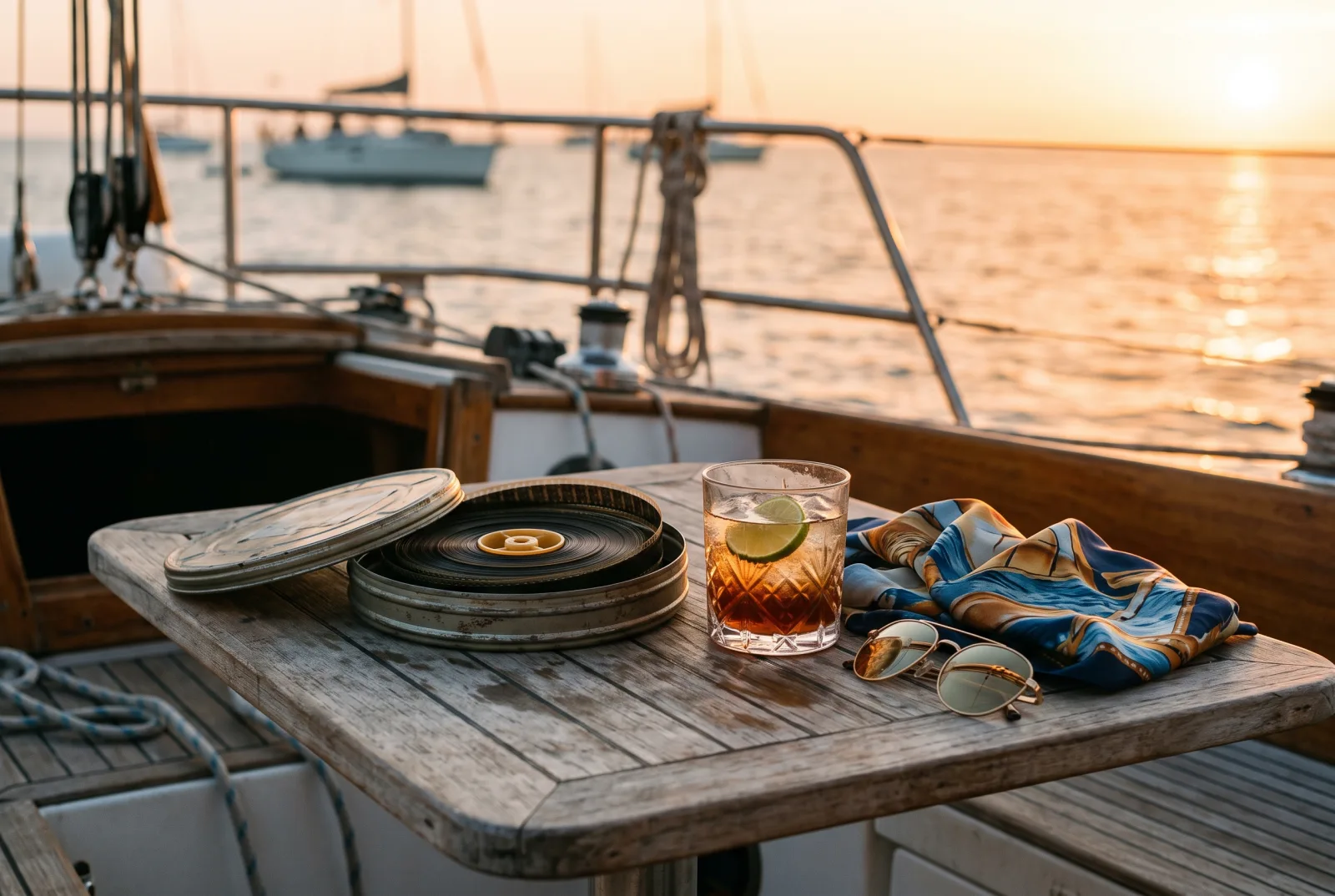
Ilustración: Rebobinados
Duran Duran ruled the first half of the eighties with a formula that looked unbeatable: irresistible electronic pop songs, glamour, impeccable clothes and an instinct that almost nobody else had at the time.
With "Rio", "Hungry Like the Wolf", "Girls on Film" and "The Reflex" they became a machine for danceable hits that sounded like the future: bright synthesizers, funky bass lines, melodies that stuck on the first try.
They were one of the most visible faces of the "new romantic" movement, that British fashion of enormous hairdos, makeup and colourful suits.
But their real genius was not only in the songs. It was in understanding, before almost everyone else, that music was about to change direction: from being heard to being watched.
They were born the same year as MTV
Here is the key to their whole story, and it is one of those perfect coincidences.
On 15 June 1981, Duran Duran released their first album. Six weeks later, on 1 August at 00:01, MTV was born, the channel that broadcast music videos twenty-four hours a day.
The two of them needed each other desperately. MTV was a new channel that needed eye-catching videos to fill its schedule. Duran Duran were a new band that needed a way to stand out.
And they fitted together like pieces of a puzzle.
While almost every band solved the video by playing their instruments in front of a camera, Duran Duran did the opposite: they went off to film in exotic places. In April 1982 they shot in Sri Lanka—"Hungry Like the Wolf", "Save a Prayer", "Lonely in Your Nightmare"—among jungles, beaches and temples. A month later, in Antigua, they filmed "Rio" and "Night Boat" in three days, sailing a yacht around the Caribbean.
They were little films with a plot, with the band as adventurers and spies. Nobody had seen videos like that.
MTV put them in permanent rotation, those videos made the band famous, and the band, in turn, helped turn MTV into a worldwide phenomenon.
Each one launched the other. Duran Duran did not just take advantage of the video era: they helped invent it.
And there is proof of how big that bet was: the video for "Girls on Film" was banned by the BBC.
The name comes from a strange film
A fact almost nobody knows: the name "Duran Duran" does not mean anything in itself.
They took it from a character in "Barbarella", the 1968 science fiction film starring Jane Fonda: there is an evil scientist and inventor in it called Durand Durand. They chose it the day after the BBC aired the film, in October 1978. They liked how it sounded, they dropped the final letters, and "Duran Duran" was left.
Another curious detail: three of the five members had the surname Taylor—John, Roger and Andy—and none of them was related to the others.
Pure chance.
The only Bond song that reached number one
And here is a record Duran Duran hold that nobody else does.
They had already reached the top in the United States in June 1984, with "The Reflex". But what came next is what went into the books.
In 1985 they were chosen to write the song for a James Bond film, "A View to a Kill", the last one with Roger Moore as 007. They worked with John Barry, the legendary composer of the saga's soundtracks, whom the band described as practically a sixth member during the recording.
And they pulled off something unique: "A View to a Kill" is, to this day, the only James Bond song in the whole history of the saga that reached number one on the United States charts. Two weeks at the top, from 13 July 1985.
Not Shirley Bassey, who got to number eight with "Goldfinger". Not Paul McCartney, who stalled at number two with "Live and Let Die". Not Adele, who won an Oscar with "Skyfall" but peaked at number eight.
Only Duran Duran. The band of the glamorous videos gave a voice to the most famous spy in cinema and set a record that still stands.
What to remember
The remarkable thing is that Duran Duran were not a passing eighties fad, like so many from their era that went out when the wind changed.
They kept recording for decades, they reinvented themselves—in the nineties they had another huge run with "Ordinary World"—and they still fill venues today, more than forty years later, with four of the five classic members.
Put on "Rio", "Hungry Like the Wolf" or "Ordinary World", and you will hear eighties pop in its most polished and most joyful form, made by a band that was far smarter than their pretty-boy image let on.
They understood, before anyone else, that music had also become something to look at.
And that is why, while many of their generation stayed frozen in an old photograph, they are still going.
Sources
Duran Duran, British band formed in Birmingham in 1978 by John Taylor and Nick Rhodes; the classic five-piece line-up, with Simon Le Bon, Andy Taylor and Roger Taylor, was completed in May 1980. A central figure of eighties electronic pop and one of the most visible faces of the "new romantic" movement, which in their case grew out of the Rum Runner club in Birmingham. Their name comes from the character Durand Durand, an evil scientist and inventor played by Milo O'Shea in the film "Barbarella" (1968), starring Jane Fonda; the band adopted it on 20 October 1978, the day after the BBC aired the film. Three of its members had the surname Taylor—John, Roger and Andy—without being related. Their self-titled debut album was released on 15 June 1981, six weeks before the birth of MTV, on 1 August 1981 at 00:01. Their videos, directed by Russell Mulcahy, were shot in exotic locations: Sri Lanka in April 1982 ("Hungry Like the Wolf", "Save a Prayer", "Lonely in Your Nightmare") and Antigua in May 1982 ("Rio", "Night Boat"), the latter aboard the yacht Eilean. The video for "Girls on Film" was banned by the BBC. Their first number one on the Billboard Hot 100 was "The Reflex", on 23 June 1984, for two weeks. "A View to a Kill", co-written with John Barry for the James Bond film of the same name, the last with Roger Moore as 007, reached number one on the Hot 100 on 13 July 1985 and stayed there two weeks: it is, to date, the only song from the Bond saga to have reached number one in the United States. Among those that did not: "Live and Let Die" by Paul McCartney & Wings and "Nobody Does It Better" by Carly Simon, both number two; "For Your Eyes Only" by Sheena Easton, number four; "Goldfinger" by Shirley Bassey and "Skyfall" by Adele, both number eight. In the United Kingdom "A View to a Kill" reached number two. "Ordinary World" (1993, from the album "The Wedding Album") reached number three in the United States and number six in the United Kingdom. The current line-up is made up of Simon Le Bon, Nick Rhodes, John Taylor and Roger Taylor: four of the five classic members. Andy Taylor left the band for good in 2006 and in 2022 made public that he has advanced prostate cancer. Externally authored text, edited and verified for Rebobinados. Interpretations of the meaning of their work are offered as the author's reading. No song lyrics are reproduced, for copyright reasons. Information drawn from Wikipedia, Britannica, Billboard, Rolling Stone, American Songwriter and other press coverage.
Keep rewinding

10s
pop
Bruno Mars
Eleven names in the credits
"Uptown Funk" came out on 10 November 2014 with six writers and today it has eleven. In February 2015 The Gap Band's publisher filed a claim over "Oops Up Side Your Head" in YouTube's copyright system —there was never a lawsuit— and on 28 April five names were added, with 17 % of the publishing. It happened weeks after the "Blurred Lines" verdict, and the song had been fourteen weeks at number one.

00s
pop
André Rieu
It was not from the jazz suite
The waltz with which André Rieu reached half the world is not from Shostakovich's Suite for Jazz Orchestra No. 2: it is from the Suite for Variety Orchestra, which the composer did not assemble, and it was born in 1956 as music for a Soviet film about settlers in Kazakhstan. The error comes from a misprint in volume 10 of the complete works (Muzyka, Moscow, 1984), corrected only in 2001. And the title "The Second Waltz" was invented by his wife, because the real one did not sell.

90s
pop
Daniela Mercury
She took the neighbourhood out of the song
"O Canto da Cidade" was written by Tote Gira, a composer from Nordeste de Amaralina who recorded the demo on a borrowed cassette, marking the beat on the door of a refrigerator; Mercury's team almost threw the tape away. She shares the credit because she deleted the references to the Pelourinho so that the song would serve all of Brazil. The album, from 20 September 1992, sold more than 2 million copies and nationalised axé. But she did not invent it: the name was a journalist's insult in 1987.
Rewind with us
Comments · 0
No one has commented yet. Open the conversation.