
Heart
They kicked the door open
By Rebobinados · Published on September 17, 2026
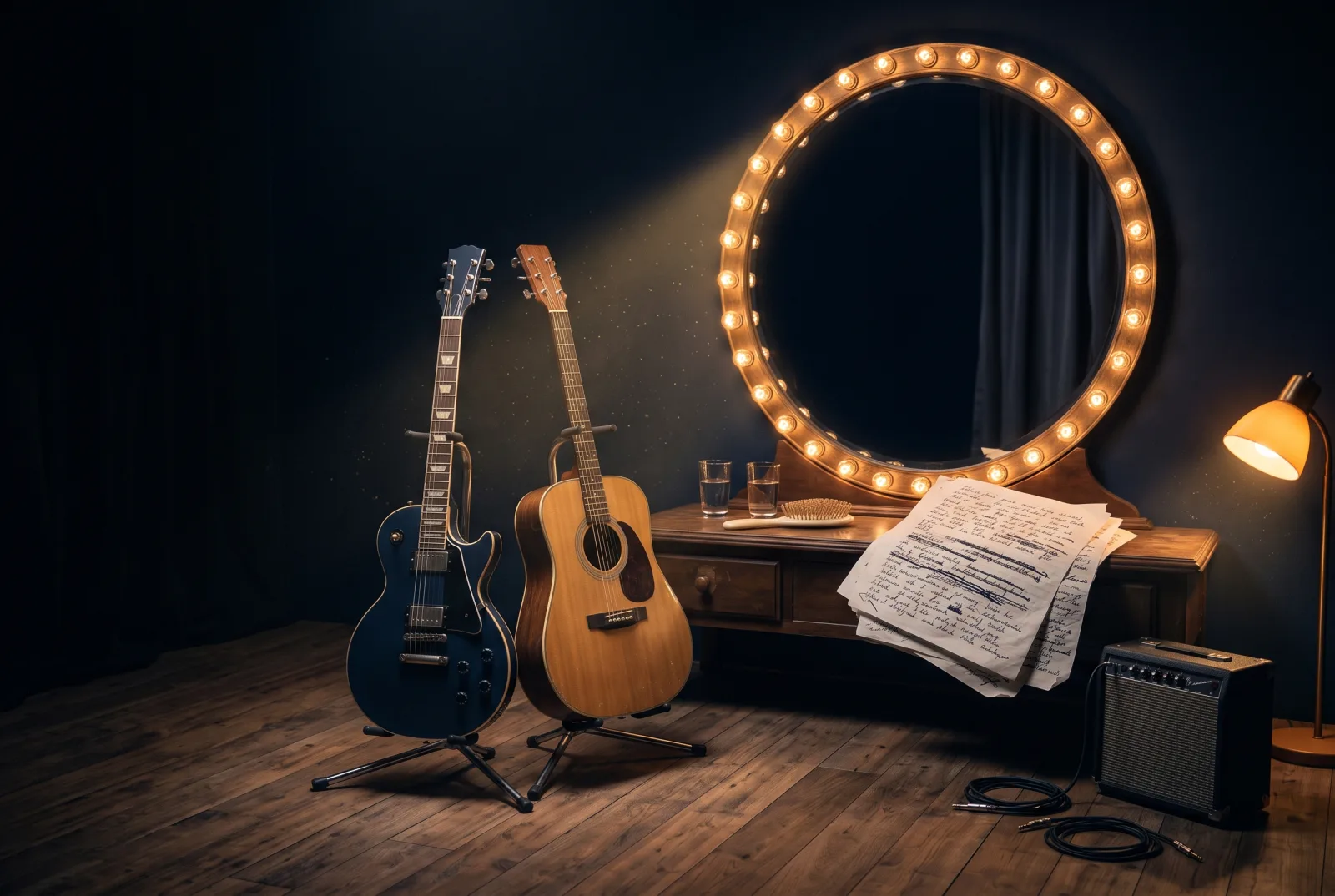
Ilustración: Rebobinados
Heart is, above all, a voice and a guitar.
The voice is Ann Wilson's, one of the most colossal rock has ever produced: powerful, high, able to roar like a lioness and to break in a ballad, a voice that turns up on the lists of the greatest singers in history with no distinction of gender.
And the guitar is her younger sister Nancy's, a virtuoso able to move from the most delicate acoustic picking to the sharpest electric riff.
Two sisters who set out to play proper hard rock in the seventies, when that world was almost exclusively male, and proved they could stamp as hard as anyone.
The voice, the guitar and the songs
They were born in California — Ann in San Diego in 1950, Nancy in San Francisco in 1954 — daughters of a Marine, and the family moved around Panama and Taiwan before settling in Bellevue, on the outskirts of Seattle. That is where they grew up, and that is where the band is from, although their first steps and their debut album happened on the other side of the border, in Vancouver.
"Dreamboat Annie" came out in Canada in September 1975 and in the United States in February 1976, and put them on the map with "Magic Man" and "Crazy on You", the latter with that acoustic guitar intro by Nancy that is one of the most recognisable in rock.
The following year came "Barracuda", with a furious, unstoppable riff that became their calling card and one of the great hard rock anthems.
Their sound was a powerful mixture: the electric hardness of bands like Led Zeppelin — whom they openly admired — crossed with the folk and the vocal harmonies of two sisters who had grown up singing together.
In the eighties they reinvented themselves towards a more pop, stadium-sized rock, and conquered a second enormous peak with ballads such as "These Dreams", their first number one, "Alone" and "What About Love".
They have sold more than fifty million records, and placed albums in the top ten of the American chart in four different decades: the seventies, the eighties, the nineties and the twenty-tens.
Where "Barracuda" came from
And here is a nuance that explains who they were, and why their story matters beyond the music.
"Barracuda", that furious anthem, did not come out of nowhere: it came out of Ann's rage at the sexism of the industry.
In late 1976, her own label paid for a full-page advertisement in a magazine, imitating the front page of a sensationalist tabloid, which publicly insinuated that Ann and Nancy, the two sisters, were lovers. Ann later wrote that what outraged them most was that it came from their own record company.
The trigger for the song arrived shortly afterwards. In the meet-and-greet after a concert, a promoter came up to Ann and asked her, perfectly casually, how her lover was. She thought he was talking about her partner. When she realised he meant her sister, she went back to the hotel seething and wrote the lyrics that same night. Nancy, just as furious, contributed the melody and the bridge.
The barracuda, the predatory fish, was all of that: the industry of sharks that wanted to devour them and sell them. The album's producer put it better: it could be anyone, from the local promoter to the president of the label.
One of the most powerful rock songs in history is, in fact, the cry of two women artists against a business that only wanted to look at their bodies.
That is Heart in a single song: turning mistreatment into an unstoppable riff.
Kicking the door open
Because that is the underlying meaning of their whole story.
In the seventies, a heavy rock band led by women was almost unthinkable. Hard rock was male territory, and women were wanted as sweet singers or as decoration, not gripping an electric guitar and howling in front of a stadium.
Ann and Nancy Wilson kicked that door open. They did not ask permission, they did not dress up as anything: they simply played better than most, and forced the world to take them seriously.
They faced the constant sexism they would later describe in their memoirs, and carried on.
Every woman who today fronts a rock band, who wields a heavy guitar without anyone thinking it odd, walks on ground that these two sisters, among others, opened up.
The perfect tribute
There is one moment that crowns their career and that says everything.
In December 2012, at the Kennedy Center Honors, Led Zeppelin were honoured, the band Heart had admired and covered all their lives.
Who did they choose to close the ceremony performing "Stairway to Heaven", no less, in front of Led Zeppelin themselves and President Obama?
Heart. Ann sang that sacred song accompanied by a string section, a youth choir in top hats — a nod to John Bonham — and, on drums, Jason Bonham, Bonham's son. The cameras caught Robert Plant moved to tears.
The two girls who as teenagers played along to Zeppelin in the living room of their house ended up making them cry with their own song.
There is no better closing of a circle possible. The following year they entered the Rock and Roll Hall of Fame.
What to remember
Heart is the proof that talent has no gender, and that it took two sisters with a colossal voice and a colossal guitar to demonstrate it when nobody took it for granted.
If you put on "Barracuda", "Crazy on You", "Alone" or "These Dreams", you will hear hard rock of the very highest order, sung by one of the best voices there is and played on a guitar that owes nothing to anyone.
And you will hear, if you know the story, something more: the sound of two women forcing their way through on sheer talent in a world that was not expecting them, and winning.
Ann and Nancy Wilson did not just make great songs; they changed rock's rules about who was allowed on stage to shake the walls.
And they did it, what is more, playing incredibly.
Sources
Heart, an American rock band led by the sisters Ann Wilson (vocals; San Diego, California, 19 June 1950) and Nancy Wilson (guitar and vocals; San Francisco, California, 16 March 1954), daughters of a Marine Corps officer; the family lived in Panama and Taiwan before settling in Bellevue, Washington, on the outskirts of Seattle, the city with which the band is identified, although their beginnings and the recording of their first album took place in Vancouver, Canada. They are considered one of the first hard rock bands led by women to achieve broad commercial success. "Dreamboat Annie" was released in Canada in September 1975 and in the United States on 14 February 1976, and reached number 7 on the Billboard 200, with "Magic Man" and "Crazy on You"; "Barracuda", from the album "Little Queen", was released as a single on 20 May 1977 and reached number 11 on the Hot 100. In the 1980s they achieved a second period of great success with "Heart" (1985), "Bad Animals" (1987) and "Brigade" (1990), and singles such as "These Dreams" — their first number one, reached on 22 March 1986, for one week — "Alone" and "What About Love". They have sold more than 50 million records worldwide and placed albums in the top ten of the Billboard 200 in four decades: the 1970s, 1980s, 1990s and 2010s. The origin of "Barracuda" involves two linked events: in late December 1976, their label, Mushroom Records, ran a full-page advertisement in Rolling Stone that imitated a sensationalist tabloid and insinuated that the sisters were lovers; shortly afterwards, following a concert, a promoter asked Ann about her "lover", meaning Nancy, an episode that triggered the writing of the lyrics that same night, as Ann recounts in the memoir "Kicking & Dreaming" (2012). The producer Mike Flicker has specified that the song's "barracuda" could be anyone, "from the local promoter to the president of the record company". Ann Wilson regularly features among the greatest vocalists in rock. At the Kennedy Center Honors gala of 2 December 2012, broadcast on 26 December, Heart performed "Stairway to Heaven" in the tribute to Led Zeppelin, with Jason Bonham on drums, a string section and the Joyce Garrett Youth Choir, in front of the members of Led Zeppelin and President Barack Obama. Heart entered the Rock and Roll Hall of Fame on 18 April 2013. Externally authored text, edited and verified for Rebobinados. Interpretations of the meaning of their work are offered as the author's reading. No song lyrics are reproduced, for copyright reasons. Information drawn from Wikipedia, Billboard, Songfacts, American Songwriter, Louder and other press coverage.
Keep rewinding
90s
hard rock
Lenny Kravitz
He doesn't play that guitar
The riff of "Are You Gonna Go My Way" (9 March 1993) is not played by him: the guitar is Craig Ross's, the song is co-written with him and the Academy nominated them both for Best Rock Song in 1994. "Always on the Run" was written by Slash for Guns N' Roses. And one of his four straight male rock Grammys, the one of 23 February 2000, he won with "American Woman", by The Guess Who, from which he removed the guitar solo.
60s
hard rock
Steppenwolf
The motorcycle was a Ford Falcon
The century's biker anthem was not written by the band that sings it, and it was not about a motorcycle: Mars Bonfire wrote "Born to Be Wild" as a folk ballad about his battered Ford Falcon, and he had left the group in June 1967, before the name Steppenwolf existed. "The Pusher" is Hoyt Axton's, Easy Rider dropped it in as a temporary track, and the single stalled at no. 2 on the Hot 100 in 1968.
00s
hard rock
Thirty Seconds to Mars
The seven-year law
In August 2008, EMI sued them for thirty million dollars for breaching a 1999 contract they had signed before releasing a single record. They defended themselves with a Californian employment law that voids contracts of more than seven years, closed a settlement on 28 April 2009 and signed with the same label again. The Guinness record they ended up with is not a box-office one: it is three hundred and nine concerts on a single tour.
Rewind with us
Comments · 0
No one has commented yet. Open the conversation.