
James Brown
The night Boston didn't burn
By Rebobinados · Published on September 22, 2026
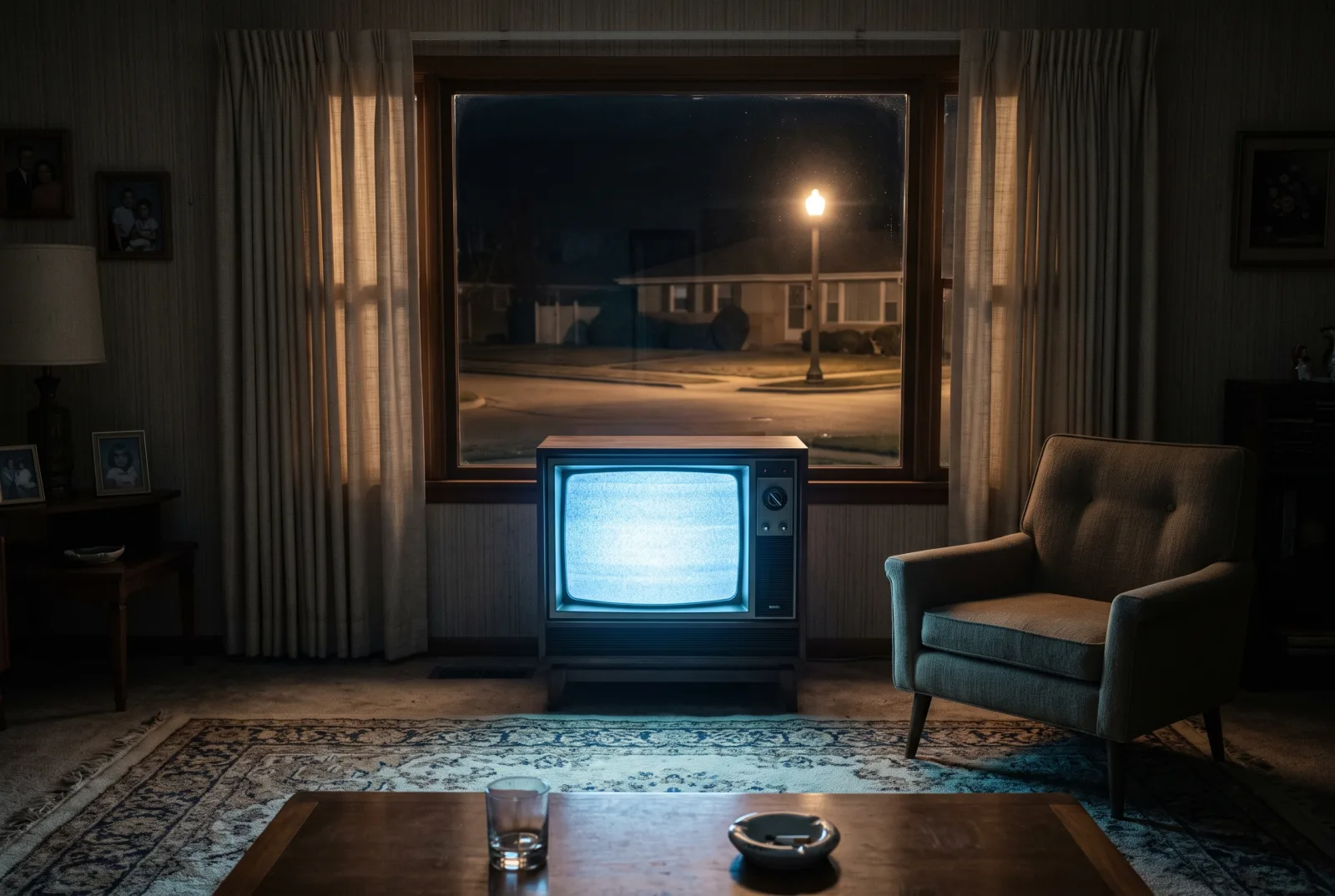
Ilustración: Rebobinados
James Brown, the Godfather of Soul, was one of the most influential and most electric artists ever to set foot on a stage.
His music changed history twice. First he gave soul a church-like intensity nobody had reached before. And then, in the mid-sixties, he invented a new genre.
With "Papa's Got a Brand New Bag" and "Cold Sweat" he did something revolutionary: he pushed the melody into the background and put the rhythm out front. Every instrument — the bass, the guitar, the horns, the drums — became percussion, a part in a hypnotic rhythmic machine.
That was called funk, and it is the foundation from which disco, rap and the whole of hip-hop came.
Three cents, five, six
His story starts from as far down as you can go.
He was born in 1933 in a one-room wooden shack, with no running water, no electricity and no windows, in the woods of South Carolina. His parents were sixteen and twenty-one, and they separated when he was very small.
At four or five he was sent to Augusta, to live in a brothel run by his aunt Honey. He grew up in the absolute poverty of the Depression, dancing for coins for the soldiers from the nearby base, picking cotton, washing cars and shining shoes.
And here is a detail he always told, and it is worth the whole article on its own.
He shined shoes on the steps outside a radio station in Augusta. He started out charging three cents; then five; in time he got to six.
Years later he bought that station.
He summed it up like this: now I own that radio station, do you know what that is? That's Black power.
At sixteen he was convicted of theft and sent to a juvenile correctional facility. He was released on parole in 1952. From there, from absolutely nothing, he went up and never stopped.
His nickname says it all: "the hardest working man in show business". His shows were a physical feat, and he gave hundreds a year. Working hard was not a phrase for him; it was his religion.
The night of 5 April 1968
And here is the story that does him the most honour.
On 4 April 1968 Martin Luther King was murdered. The rage and the grief exploded: there were riots in more than a hundred cities in the United States, with forty-three dead, more than three thousand injured and more than twenty thousand arrested.
James Brown had a concert booked for the very next day at the Boston Garden, and the authorities panicked: they feared that gathering a grieving, furious crowd would end in tragedy. The mayor, Kevin White, went as far as considering cancelling it.
The idea that changed everything came from Tom Atkins, the first Black city councillor in Boston: broadcast the concert live on television, free, so that people would stay at home watching instead of going out into the streets.
White persuaded the public station WGBH to air it with only hours of notice, and they repeated it several times that same night to keep people in front of the television.
It worked. Boston was the only large city that came through almost untouched — there had been fires in Roxbury the night before, ahead of the concert, but nothing comparable to what happened in the rest of the country.
And in the middle of the show there was a decisive moment. Some fans climbed up onto the stage and the police moved in to intervene. Brown ordered the officers back and appealed directly to the audience's sense of respect. The crowd obeyed and the concert ended without incident.
It is worth saying too what does not usually get told: when the broadcast emptied the arena, Brown demanded sixty thousand dollars from the city as a box-office guarantee, and threatened to make the arrangement public if they did not pay him.
Both things are true at once. He calmed a city, and he charged for doing it.
Say it loud
That same year, 1968, James Brown recorded another bombshell, this time of conscience.
At a time when being Black in the United States was a source of imposed shame, he released "Say It Loud — I'm Black and I'm Proud".
The song became an anthem of African American pride, and it gave millions of people a phrase to stand up straight with.
Brown also used his fame to fight against school dropout: he recorded "Don't Be a Drop-Out" in 1966, donated the royalties to prevention programmes and was received by President Lyndon B. Johnson. The man who had come from nothing wanted others to be able to get out too.
What to remember
His life was neither simple nor perfect. He had a difficult temper, a turbulent personal life and a spell in prison when he was already famous, for aggravated assault, of which he served two and a half years.
Rebobinados does not hide it, but it is not what defines his legacy either.
He died on Christmas Day 2006.
Put on "I Got You (I Feel Good)", "Sex Machine" or "Papa's Got a Brand New Bag", and you are going to hear the man who invented the rhythm half the planet has been dancing to for sixty years. He is, to this day, the most sampled artist in history: his pulse beats underneath thousands of songs you may not even know are his.
They called him the Godfather of Soul, but he was more than that.
He was the father of funk, the man who helped keep a city from burning, and the man who taught a generation to say out loud who they were.
Sources
James Joseph Brown (Barnwell, South Carolina, 3 May 1933 – Atlanta, 25 December 2006), singer, songwriter and bandleader known as "the Godfather of Soul" and "the hardest working man in show business". He was born in a one-room wooden dwelling with no plumbing, electricity or windows; his parents were 16 and 21. At around four or five he was sent to Augusta, Georgia, to live in a brothel run by his aunt Handsome "Honey" Washington. He danced for coins for the soldiers of Camp Gordon, picked cotton, washed cars and shined shoes outside the WRDW station in Augusta, charging three cents at first, then five and finally six; years later he bought that same station, something he described as "Black power". At 16 he was convicted of theft and sent to a juvenile correctional facility in Toccoa, Georgia; he was released on parole on 14 June 1952. He is credited as the inventor of funk on the strength of tracks such as "Papa's Got a Brand New Bag" (1965) and "Cold Sweat" (1967), by displacing melody in favour of rhythm, and he is the most sampled artist in history according to Guinness World Records, with more than 3,000 samples. His Boston Garden concert of 5 April 1968, a day after the assassination of Martin Luther King, was broadcast live and free by the public station WGBH and repeated several times that night; the idea came from councillor Tom Atkins, the city's first Black councillor, and it was arranged by Mayor Kevin White. The riots after King's assassination affected more than a hundred cities, with 43 dead, more than 3,000 injured and more than 20,000 arrested; Boston was the large city that came through least damaged, although on the night of 4 April there were indeed fires and disturbances in neighbourhoods such as Roxbury. During the concert some of those present climbed onto the stage and Brown ordered the police back and appealed to the audience, so that the show ended without incident. Brown also demanded 60,000 dollars from the city as a box-office guarantee once the arena was left empty by the broadcast. That same year he recorded "Say It Loud — I'm Black and I'm Proud"; in 1966 he had recorded "Don't Be a Drop-Out", donating the royalties to programmes against school dropout, and he was received by President Lyndon B. Johnson. He served two and a half years in prison for aggravated assault and was released on parole in February 1991. He died of pneumonia at 73. The concert is released as "Live at the Boston Garden: April 5, 1968". Externally authored text, edited and verified for Rebobinados. Interpretations of the meaning of their work are offered as the author's reading. No song lyrics are reproduced, for copyright reasons. Information drawn from Wikipedia, Britannica, History, WGBH, Guinness World Records, The Washington Post and other press coverage.
Keep rewinding

90s
funk
Jamiroquai
The floor was not moving
In "Virtual Insanity" the floor never moved: it was grey and smooth, and what turned was the whole set on wheels, pushed by stagehands with the camera bolted to one wall. Jonathan Glazer directed it on 12 August 1996 in four takes, for half the 280,000 pounds that moving the floor for real would have cost. It won four VMAs out of ten nominations, including Video of the Year.
80s
funk
Rick James
The Grammy came out of a lawsuit
The only Grammy of his life he won for a song he did not record: Best R&B Song on 20 February 1991 for "U Can't Touch This", after suing MC Hammer over the riff of "Super Freak" and settling out of court. Before all that he had a band in Toronto with Neil Young and Bruce Palmer, and Motown cancelled their single in 1966 on discovering that its singer was a fugitive from the Naval Reserve.

90s
funk
Red Hot Chili Peppers
The four from Fairfax High
Red Hot Chili Peppers formed in Los Angeles in 1982 with four classmates from Fairfax High: Kiedis, Flea, Hillel Slovak and Jack Irons. Slovak died of a heroin overdose on 25 June 1988, Irons left because of it and John Frusciante joined that same year, aged eighteen, to replace him. Then came his three spells, two departures and Josh Klinghoffer's ten years.
Rewind with us
Comments · 0
No one has commented yet. Open the conversation.