
Motörhead
A pity prize and a fruit machine
By Rebobinados · Published on September 15, 2026
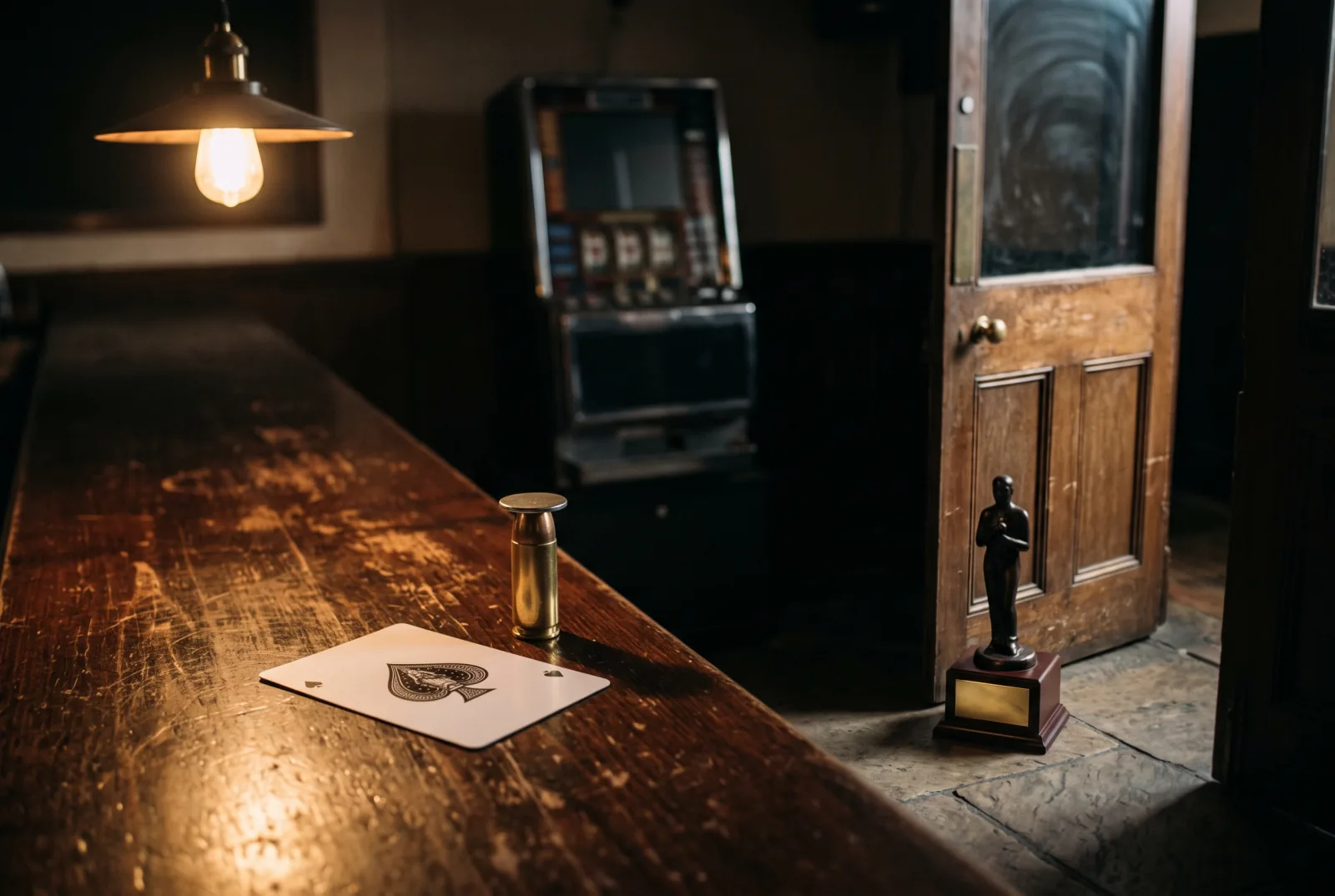
Ilustración: Rebobinados
Motörhead won one Grammy in a forty-year career. One. And not even for a song of their own: it came in 2005, for a cover of "Whiplash", by Metallica, recorded for a Metallica tribute album. Lemmy dispatched it the only way he could: that it was a pity prize for their thirtieth anniversary, and that if they had given it to him for something of his own it would have meant something.
That is the key to understanding this band: the industry never knew what yardstick to measure them by, and Motörhead could not have cared less. They were playing a different game, with a different scoreboard, and they won it hands down.
Everything they "never achieved"
The numbers, seen through the industry's eyes, are a disaster. Motörhead released twenty-two studio albums and not one of them entered the United States albums chart. Not one. Their best result over there was "Ace of Spades" —the album with the song everybody recognises in three notes— and it stalled at number 201: one place outside a chart that stops at 200, like a cosmic joke.
At home they did better: "Ace of Spades" reached number four, and they had one number one, just the one, and it is the funniest thing in the world. It was "No Sleep 'til Hammersmith", from 1981, a live album. The only thing Motörhead ever put at the top was a recording of concerts, because up there on a stage, sweating, was where they really existed. The studio was paperwork. The stage was their home ground, and on their home ground nobody could beat them.
Read it backwards and it stops being a failure: a band that filled stadiums for forty years without the charts ever registering it is a band whose power the charts could not measure.
The song he hated playing
People repeat that "Ace of Spades" was Lemmy's favourite. In his autobiography he wrote the opposite: that he was sick to death of that song. To the press he put it even better: that the audience wants to hear it, so they play it every night, but that he had had enough, and that when he wrote it he did not think much of it.
Forty years playing every night a song that did not move him, for people who had come to hear exactly that. There is an enormous lesson in humility in there: he gave the audience what the audience loved, every night, whatever he felt about it. That is greatness too — the greatness of serving the song even when it no longer moves you.
From Hendrix's roadie to founder
The origin of Motörhead is a chain of links that Lemmy told better than anyone. He was a roadie on Jimi Hendrix's tour —he hauled amplifiers, he did not play—, and he himself told the part that paints him whole: that he got Hendrix his acid, that out of every ten tabs Hendrix kept seven and gave him three, and that this struck him as perfectly reasonable.
Then Hawkwind threw him out. The story is perfect: in 1975, crossing into Canada, border police stopped him with a white powder they took for cocaine. The charges fell apart when it turned out to be amphetamine. The band sacked him anyway, and his summing-up is one of the best lines in the history of rock: that he was sacked for doing the wrong drugs. He left wearing the title of the last song he had written for them: "Motörhead". With that stolen name he founded one of the most influential bands there has ever been. The most elegant revenge available.
The end, and the end of the end
Lemmy died on 28 December 2015, at seventy, four days after his birthday and two after being diagnosed with cancer. The next day the other two announced that Motörhead had ceased to exist. No farewell tour, no elaborate statement: the band was him, and without him there was no band. A brutal honesty, very much theirs.
The years that followed took the rest. Phil Taylor, the classic drummer, had died that same November. "Fast" Eddie Clarke, the guitarist, in 2018. And on 13 March 2026 Phil Campbell died, at sixty-four, after an operation: he had spent thirty-one years in Motörhead, longer than anyone except Lemmy. Mikkey Dee, the drummer, said it without any dressing up: that they are all gone, and that it is really strange. A whole generation of one band, going out together.
What they did with the ashes
And here the story turns, unexpectedly, beautiful. Lemmy's ashes are not all in one place: they are spread around. Some of them went inside bullets that were handed out to his friends. James Hetfield, of Metallica, had an ace of spades tattooed with ash mixed into the ink, so he could carry it stuck to his skin for ever.
And the rest travels. Since 2016, in small urns, they have been going up in places that mattered to him: festivals, a bar in Los Angeles, a club in London, his home town. In June 2026, at the Download festival, they did the seventh. That urn ended up built into a fruit machine, for reasons anyone who knows "Ace of Spades" understands without being told. The ceremony was led by Duff McKagan, of Guns N' Roses, because Phil Campbell had died three months earlier. His manager explained it like this: that not everybody can make the pilgrimage to visit Lemmy in Hollywood, so they are taking Lemmy to the people.
Few musicians manage to make their death look so much like their life.
What to remember
Motörhead never entered the United States albums chart. Their only British number one was a live album. Their only Grammy was for another band's song. And their most famous track was the one its author was sick of playing. Not one of those four things would have bothered Lemmy in the slightest, because he was never playing that game.
Remember it this way: the industry gave Motörhead a single award, and not even for anything of their own. In exchange, Lemmy is spread across half of Europe, inside a bullet, a tattoo and a fruit machine, which is more or less the only monument he would have accepted.
Sources
Motörhead, a British band formed in London in 1975 by Ian "Lemmy" Kilmister after his expulsion from Hawkwind; the name comes from the last song he wrote for that group. Their classic line-up (1976-1982) was Lemmy, "Fast" Eddie Clarke and Phil "Philthy Animal" Taylor, and the longest-lasting one (1992-2015) Lemmy, Phil Campbell and Mikkey Dee. Lemmy worked as a roadie on the Jimi Hendrix Experience's tour in 1967. In May 1975 he was arrested at the Canadian border, in Windsor, Ontario, when the amphetamine he was carrying was mistaken for cocaine; the charges were dropped, but Hawkwind let him go. No Motörhead album entered the Billboard 200: their best American placing is number 201 for "Ace of Spades" (1980), which reached number four in the United Kingdom. Their only British number one was the live album "No Sleep 'til Hammersmith" (1981). The group won a single Grammy, for best metal performance, at the 47th ceremony held on 13 February 2005, for their cover of Metallica's "Whiplash" included on the tribute album "Metallic Attack"; Lemmy publicly played the award down. In his autobiography and in interviews he said he was tired of performing "Ace of Spades", although he kept it in the set. Lemmy Kilmister, born on 24 December 1945, died on 28 December 2015 in Los Angeles from prostate cancer, cardiac arrhythmia and congestive heart failure; the band announced its dissolution the following day. Phil Taylor died in November 2015; "Fast" Eddie Clarke, on 10 January 2018 in London, while being treated for pneumonia; Michael "Würzel" Burston, on 9 July 2011; and Phil Campbell, on 13 March 2026, at sixty-four, after a complex operation, following thirty-one years in the group. Mikkey Dee, drummer of Scorpions since 2016, has publicly voiced his bewilderment at these successive deaths. Part of Lemmy's ashes was distributed in bullets given to those close to him —James Hetfield worked ash into the ink of a tattoo— and the "Lemmy Forever" project has installed memorial urns in different places linked to his life; the seventh ceremony was held on 12 June 2026 at the Download festival, with Duff McKagan officiating, and the urn was built into a fruit machine. His grave is in the Hollywood Forever cemetery in Los Angeles. Metallica and Guns N' Roses have their own profiles in this series. A Rebobinados rewrite of previously verified research; interpretations are offered as the author's reading. No song lyrics are reproduced, for copyright reasons. Information drawn from Wikipedia, Billboard, Official Charts, Louder, Blabbermouth, NME, ITV News, Grammy.com, Dangerous Minds and other coverage.
Keep rewinding

10s
metal
Bring Me the Horizon
Twenty years to get back to the scream
Bring Me the Horizon started in 2006 with a deathcore record and their turn did not happen in 2013: the leap to metalcore was in September 2008 and the synthesisers and clean vocals arrived in October 2010. Jordan Fish, eleven years in the band, was the one who put in the electronics. On 10 July 2026 they re-recorded that first record for its twentieth anniversary, with Oli Sykes back on the guttural scream.
00s
metal
Staind
The sleeve that nearly cost them everything
In October 1997, Fred Durst tried to pull Staind off the bill at the Webster Theatre in Hartford over the sleeve of their home-made record; then he listened to them and signed them. In 2001, Break the Cycle debuted at number one on the Billboard 200 and "It's Been Awhile" spent sixteen weeks at number one on the Modern Rock. Jon Wysocki, founding drummer, died on 18 May 2024.

90s
metal
Marilyn Manson
The lawsuit he withdrew while paying
The triad of Antichrist Superstar, Mechanical Animals and Holy Wood, and a file that is still open: two out-of-court settlements, one sworn retraction, the prosecutor's office that ruled out charges in January 2025 on statute-of-limitations grounds, the defamation suit he withdrew while paying 327,000 dollars and a jury trial set for November 2027.
Rewind with us
Comments · 0
No one has commented yet. Open the conversation.