
Roy Orbison
The glasses he left behind
By Rebobinados · Published on September 22, 2026
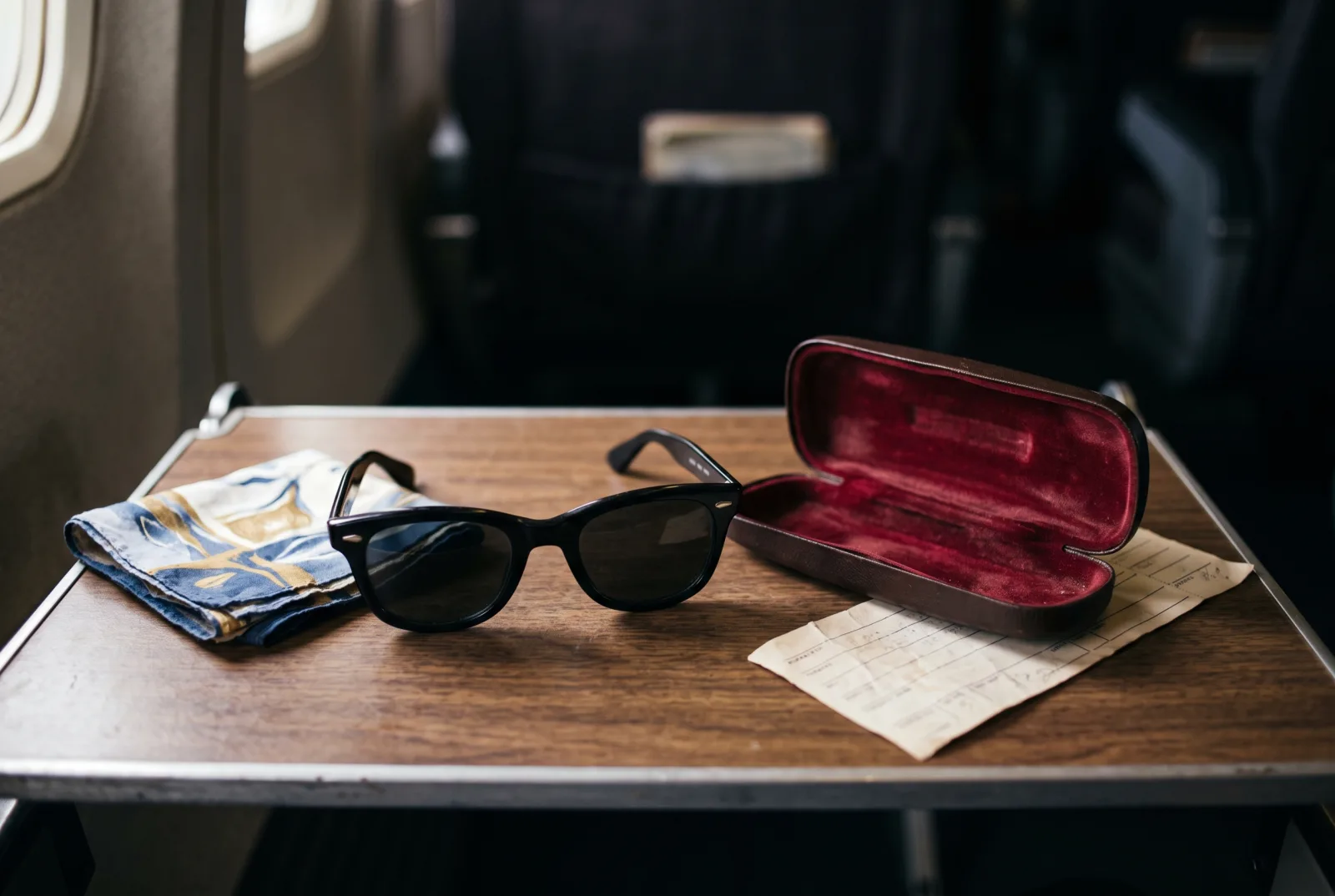
Ilustración: Rebobinados
Roy Orbison owned one of the most astonishing voices popular music has ever produced.
While the rock and roll of the fifties and sixties was pure energy and partying, Orbison was doing something else: songs that started quietly, almost whispered, and grew and grew until they burst into a soaring, dramatic, almost operatic finale.
His range, which scholars have described as between three and four octaves, carried him from baritone to tenor without a seam, and he used it to sing about loneliness, heartbreak and fear with an emotion that raised goosebumps.
The Beatles admired him. When they toured the United Kingdom together in 1963, the one who opened the show was Orbison, and on the first night they brought him back onstage fourteen times. When the audience kept calling for him, Lennon and McCartney had to hold him back physically so they could go on.
Why he wore dark glasses
Roy Orbison's black sunglasses are as famous as his voice, and there are two myths about them worth clearing up: he was not blind, and he was not an albino.
The albino story came from his naturally near-white hair, which he had been dyeing black since he was young. The blindness story came from the glasses themselves.
The truth is simpler and more accidental. In 1963, just before that tour with the Beatles, Orbison realised he had left his regular glasses—the ones he needed to see, because his eyesight had been very poor since he was four—behind on the plane.
The only thing he had to hand was a pair of prescription sunglasses. So he walked onstage in those, with no other option.
And he discovered that he preferred them. They suited him so well, they gave such an air of mystery to that quiet, still man who sang like an angel, that he kept them for good.
Something forgotten turned into the image of a whole life.
Forty minutes
His most famous song, "Oh, Pretty Woman", with that guitar riff everyone recognises, came out of an offhand remark.
Orbison was writing with his partner Bill Dees when his wife, Claudette, came in to say she was going out. Roy asked her if she needed money for the trip.
And it was Dees who dropped the line, looking at them: a pretty woman never needs any money. And he immediately asked whether that would not make a great song title.
By the time Claudette got back, some forty minutes later, the song was finished.
It came out in August 1964, spent three weeks at number one in the United States and another three in the United Kingdom, and sold seven million copies.
A phrase tossed off in passing, on the way to the door, became one of the biggest anthems in rock.
A life marked by tragedy
And here is what makes Orbison's story unlike any other, and it has to be told with respect, because the pain in it is hard to imagine.
On 6 June 1966, Roy and Claudette were riding back from Bristol on motorcycles, each on their own, something they both loved. In Gallatin, Tennessee, a pickup truck pulled out in front of her.
Roy saw it all. Claudette died that same day, at twenty-five.
Two years later, on 14 September 1968, while Roy was on tour in England, his house in Hendersonville caught fire. Two of his three sons died in the blaze, the two eldest: Roy DeWayne, ten, and Tony, six. The youngest, Wesley, three, was rescued by his grandparents.
Losing your wife and then two children, within two years, is a misfortune that would break anyone. His career, which was already sliding as tastes shifted towards a harder rock, sank, and he carried that double grief for years, in silence, as he did everything.
That a man who sang sadness like nobody else should live it in such a brutal way is something that shakes you. His songs about loneliness and loss stopped being only poetry.
The comeback, and the goodbye just in time
But in the end, the story took a kind turn.
In the eighties a new generation rediscovered his voice. In January 1987 he entered the Rock and Roll Hall of Fame, inducted by Bruce Springsteen. That same year he recorded a live special, surrounded by famous admirers, which captured that voice in its finest late form.
And in 1988 he joined a group of legends—Bob Dylan, George Harrison, Tom Petty and Jeff Lynne—in a band called the Traveling Wilburys, a game between giant friends that turned into an enormous success.
Roy was back, more loved than ever, and recording an album of his own.
And right then, on 6 December 1988, a heart attack took him, at fifty-two.
That album, "Mystery Girl", came out two months after his death. It carried "You Got It", his first top ten in the United States in twenty-five years. He did not live to see it released, but he did live to know that the world wanted him again.
What to remember
Put on "Crying", "Only the Lonely" or "Oh, Pretty Woman", and you will hear one of the purest and most moving voices there is.
The voice of a shy man, standing still behind his black glasses, who sang pain with a beauty that seemed to come from another world.
He knew what he was singing about.
That is why it hurt so much, and why it still hurts so beautifully.
Sources
Roy Kelton Orbison (Vernon, Texas, 23 April 1936 – Hendersonville, Tennessee, 6 December 1988), singer and songwriter of wide vocal range and an almost operatic style, celebrated for dramatic ballads such as "Crying", "Only the Lonely" and "Oh, Pretty Woman". Estimates of his vocal range vary between three and four octaves depending on the measurement method and whether falsetto is included; there is no authoritative measurement, and Bruce Springsteen referred in 2012 to a three-octave range. His eyesight had been very poor since he was four. He adopted his trademark dark glasses in 1963, after leaving his usual spectacles on a plane before the British tour with the Beatles, which began on 18 May 1963 at the Adelphi Cinema in Slough; he kept the prescription sunglasses once he found he preferred that look. He was neither blind nor an albino: the albino myth comes from his naturally near-white hair, which he dyed black. On that tour, Orbison opened the show, and on the first night he came back onstage fourteen times; Lennon and McCartney went as far as holding him back to prevent a fifteenth. "Oh, Pretty Woman" (August 1964) was written in some forty minutes: the line "a pretty woman never needs any money" was spoken by his co-writer Bill Dees, not by his wife Claudette, when she came in to say she was going out and Roy asked her if she needed money. The single spent three weeks at number one on the Billboard Hot 100 from 26 September 1964 and another three at number one in the United Kingdom, selling seven million copies in total. Claudette Orbison died on 6 June 1966 in Gallatin, Tennessee, at the age of 25: they were riding back from Bristol on their own motorcycles when a pickup truck struck her. On 14 September 1968 a fire destroyed the family home in Hendersonville and two of his three sons died, Roy DeWayne and Anthony King "Tony"; the youngest, Wesley, was rescued by his grandparents. Orbison was on tour in Birmingham, England. He was inducted into the Rock and Roll Hall of Fame in January 1987, presented by Bruce Springsteen, almost two years before his death, and that same year he recorded the special "Roy Orbison and Friends: A Black and White Night". In 1988 he joined the Traveling Wilburys alongside Bob Dylan, George Harrison, Tom Petty and Jeff Lynne. He died of a heart attack at 52; his album "Mystery Girl", with "You Got It", was released posthumously in February 1989. Externally authored text, edited and verified for Rebobinados. Interpretations of the meaning of his work are offered as the author's reading. No song lyrics are reproduced, for copyright reasons. Information drawn from Wikipedia, Britannica, Rolling Stone, Ultimate Classic Rock, the Library of Congress of the United States and other press coverage.
Keep rewinding

10s
pop
Bruno Mars
Eleven names in the credits
"Uptown Funk" came out on 10 November 2014 with six writers and today it has eleven. In February 2015 The Gap Band's publisher filed a claim over "Oops Up Side Your Head" in YouTube's copyright system —there was never a lawsuit— and on 28 April five names were added, with 17 % of the publishing. It happened weeks after the "Blurred Lines" verdict, and the song had been fourteen weeks at number one.

00s
pop
André Rieu
It was not from the jazz suite
The waltz with which André Rieu reached half the world is not from Shostakovich's Suite for Jazz Orchestra No. 2: it is from the Suite for Variety Orchestra, which the composer did not assemble, and it was born in 1956 as music for a Soviet film about settlers in Kazakhstan. The error comes from a misprint in volume 10 of the complete works (Muzyka, Moscow, 1984), corrected only in 2001. And the title "The Second Waltz" was invented by his wife, because the real one did not sell.

90s
pop
Daniela Mercury
She took the neighbourhood out of the song
"O Canto da Cidade" was written by Tote Gira, a composer from Nordeste de Amaralina who recorded the demo on a borrowed cassette, marking the beat on the door of a refrigerator; Mercury's team almost threw the tape away. She shares the credit because she deleted the references to the Pelourinho so that the song would serve all of Brazil. The album, from 20 September 1992, sold more than 2 million copies and nationalised axé. But she did not invent it: the name was a journalist's insult in 1987.
Rewind with us
Comments · 0
No one has commented yet. Open the conversation.