
Decade 70s · Rhythm blues rock
Santana
They played before they had a record
By Rebobinados · Published on September 27, 2026
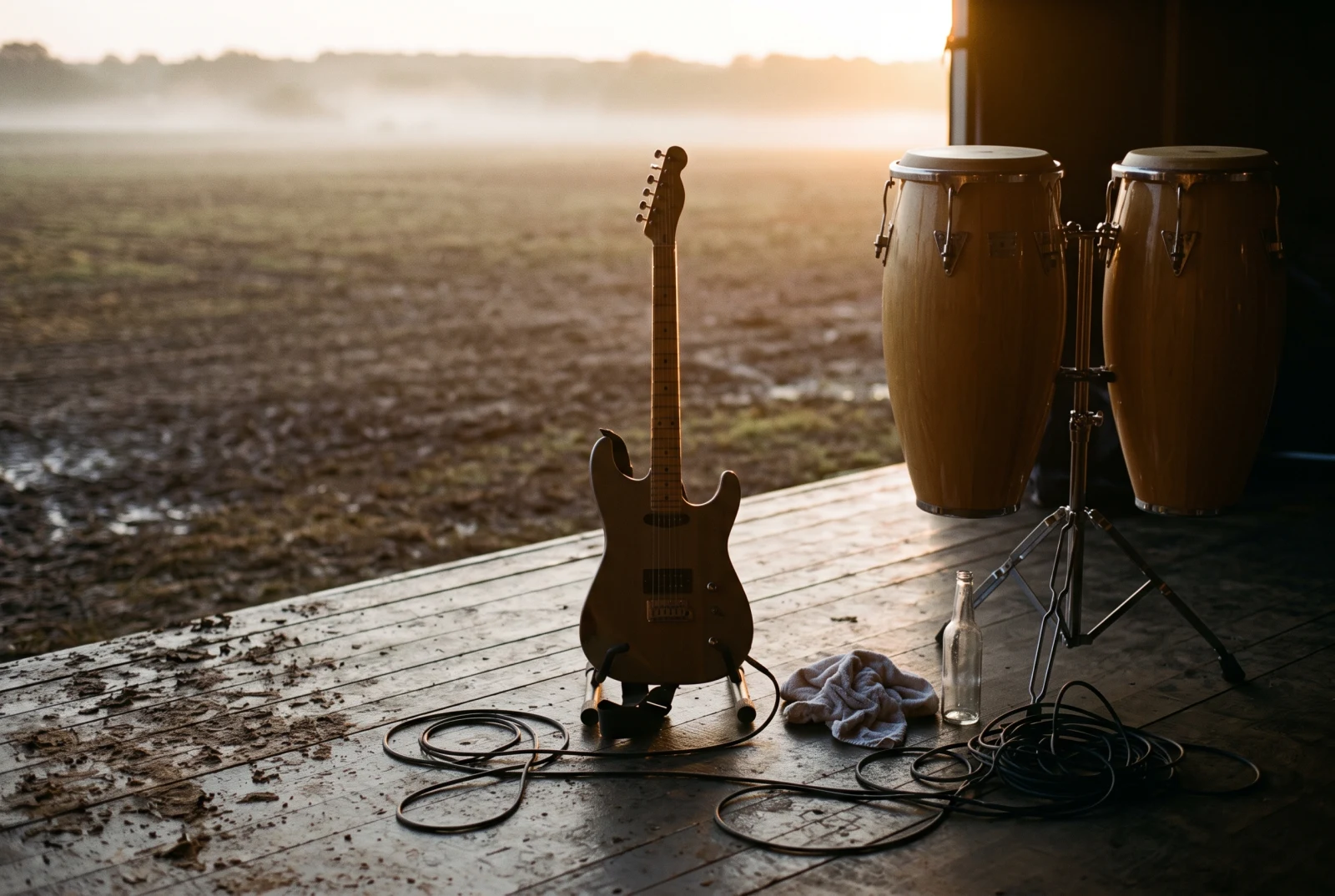
Ilustración: Rebobinados
On 16 August 1969, Santana played at Woodstock. Their first record came out on the 30th of that same month. Half a million people saw them live before there existed an album to go and buy the next day, and the festival film then took them to every cinema in the world. Almost no career starts in that order. And this band's also started with another oddity that nobody remembers today: it was not one man's group, even if it carried one man's surname.
The name was a union formality
Carlos Santana was born on 20 July 1947 in Autlán de Navarro, Jalisco, the son of a mariachi, and grew up between Tijuana and San Francisco. The group came together in San Francisco in the late sixties and worked as a collective: decisions shared out, prominence shared out, a singing organist and a percussion section that did not accompany but led. It was called Santana because of a formality. The musicians' union required a registered name and a designated leader, and that was the name they put on the paper.
From that comes a confusion that has lasted more than half a century. When the original line-up broke up, in 1972, Carlos kept the rights to the name and carried on; Gregg Rolie and the guitarist Neal Schon left and founded Journey. Over time, "Santana" came to mean a guitarist. At the start it meant six or seven people in a room.
Woodstock, two weeks before the record
What they played that afternoon was, above all, "Soul Sacrifice": nine minutes of percussion, organ and guitar that sounded like nothing else on the bill. The band had no record out and almost nobody in the audience knew who they were. They came out of there with a career made, and the film amplified it all a year later. The acid anecdote is best told as what it is: something he has told. Carlos Santana has recounted that he took LSD shortly before going on, convinced they would play much later, and that Jerry Garcia gave it to him. Hence the look of effort that ended up on film. It is his version, and nobody has denied it, but it is his version.
Abraxas, and who really sings
Abraxas, from 1970, is the record where the invention is sealed. On it are "Black Magic Woman", which is by Peter Green and was recorded earlier by Fleetwood Mac, "Oye Como Va", which is by Tito Puente, and "Samba Pa Ti", the instrumental where the guitar does all the work of a voice. One note that is almost always written wrong: "Oye Como Va" is not a mambo. It is a cha-cha-chá that Puente recorded in 1962.
And another that changes how the whole band reads: on those two versions it is not Carlos who sings. It is Gregg Rolie, the organist. The guy people identify with the voice of "Black Magic Woman" and "Oye Como Va" is the same one who two years later went off to found Journey. Carlos plays the guitar, and only the guitar, on the two songs that defined the group to the world.
In the seventies he turned towards spiritual searching, and that too has a proper name and dates. He followed the Indian master Sri Chinmoy, who gave him the name Devadip, and broke with him in 1982. During those years he recorded albums of electric, mystical jazz that sold far less and that he always defended. The idea of music as prayer was not an interview line: it cost him real audience.
Nine Grammys and eight Grammys
In 1999 he released Supernatural, a record of collaborations with much younger artists. Out of it came "Smooth", with Rob Thomas, which spent twelve weeks at number one on the Hot 100, and "María María". The record sold tens of millions of copies and returned a fifty-two-year-old man to teenagers' radios.
The Grammy figure is almost always told wrong, and told right it is better. Supernatural won nine, and with that it beat the record held by Thriller, which had eight. Carlos, personally, took home eight, and with those he equalled Michael Jackson's record in a single night. The ninth, Song of the Year for "Smooth", went to its writers, Itaal Shur and Rob Thomas, not to him. Saying "he won nine, equalling the record" is impossible: with nine, the record is broken.
What to remember
Santana played at Woodstock two weeks before releasing their first record, and that is the literal part of the legend. What usually gets lost is the rest: it was a collective band named that way because of a union requirement, and on "Black Magic Woman" and "Oye Como Va" the one singing is Gregg Rolie, who later founded Journey. Carlos kept the name in 1972 and with it built fifty more years of career.
And the finish, with the numbers in their place: Supernatural beat Thriller's record with nine Grammys, and Carlos equalled Michael Jackson's with eight in one night. Both things at once, and both are true because they are different awards. The story told better is more impressive than the myth, which is what usually happens when somebody takes the trouble to look at the record.
Sources
Carlos Santana was born on 20 July 1947 in Autlán de Navarro, Jalisco, Mexico, the son of a mariachi musician, and grew up between Tijuana and San Francisco. The band Santana formed in San Francisco in the late nineteen-sixties and worked as a collective; it adopted that name because the musicians' union required a registered name and a designated leader. It performed at the Woodstock Festival on 16 August 1969, with "Soul Sacrifice", two weeks before the release of its first album, on 30 August 1969. Carlos Santana has recounted that he had taken LSD shortly before the performance and that Jerry Garcia provided it. "Abraxas" (1970) included "Black Magic Woman", a composition by Peter Green originally recorded by Fleetwood Mac, "Oye Como Va", a cha-cha-chá composed by Tito Puente and recorded by him in 1962, and "Samba Pa Ti"; the lead vocal on "Black Magic Woman" and "Oye Como Va" belongs to the organist Gregg Rolie. After the original line-up broke up in 1972, Carlos Santana retained the rights to the name; Gregg Rolie and Neal Schon founded Journey. In the nineteen-seventies, Santana followed the teachings of the spiritual master Sri Chinmoy, who gave him the name Devadip; he broke with him in 1982. The album "Supernatural" (1999) included "Smooth", with Rob Thomas, which remained twelve weeks at number one on the Billboard Hot 100, and "María María". "Supernatural" won nine Grammy Awards, beating the record of eight held by "Thriller"; Carlos Santana received eight of them personally, equalling Michael Jackson's record at a single ceremony, while the ninth, Song of the Year for "Smooth", went to its writers, Itaal Shur and Rob Thomas. Santana was inducted into the Rock and Roll Hall of Fame in 1998. Profile compiled for Rebobinados with fact-checking; interpretations of the meaning of the work are offered as the author's reading. No song lyrics are reproduced, for copyright reasons. Information drawn from Billboard, Rolling Stone, the Recording Academy, Wikipedia and other coverage.
Keep rewinding
50s
blues rock
Jerry Lee Lewis
He married his bass player's daughter
He married on 12 December 1957 in Hernando, Mississippi, Myra Gale Brown, aged 13, the daughter of J.W. Brown, his first cousin and bass player; he was 22 and still married to another woman, and the ceremony had to be repeated on 4 June 1958. The scandal did not break then, but on 22 May 1958 at Heathrow. And his two anthems are not his: "Great Balls of Fire" is credited to Otis Blackwell and Jack Hammer, and "Whole Lotta Shakin' Goin' On" was recorded first by Big Maybelle in 1955.
90s
blues rock
Gary Moore
A German court took his blues away
On 3 December 2008 a Munich court ruled that the solo in "Still Got the Blues" was too close to "Nordrach", a 1974 track by the German group Jud's Gallery. The 1990 album had been his rebirth: no. 13 in the United Kingdom, no. 83 on the Billboard 200 and the only single of his entire career on the Hot 100. Before that he had joined and left Thin Lizzy three times and walked off the tour in Oakland, on 4 July 1979.
70s
blues rock
Keith Richards
The sentence was to play for the blind
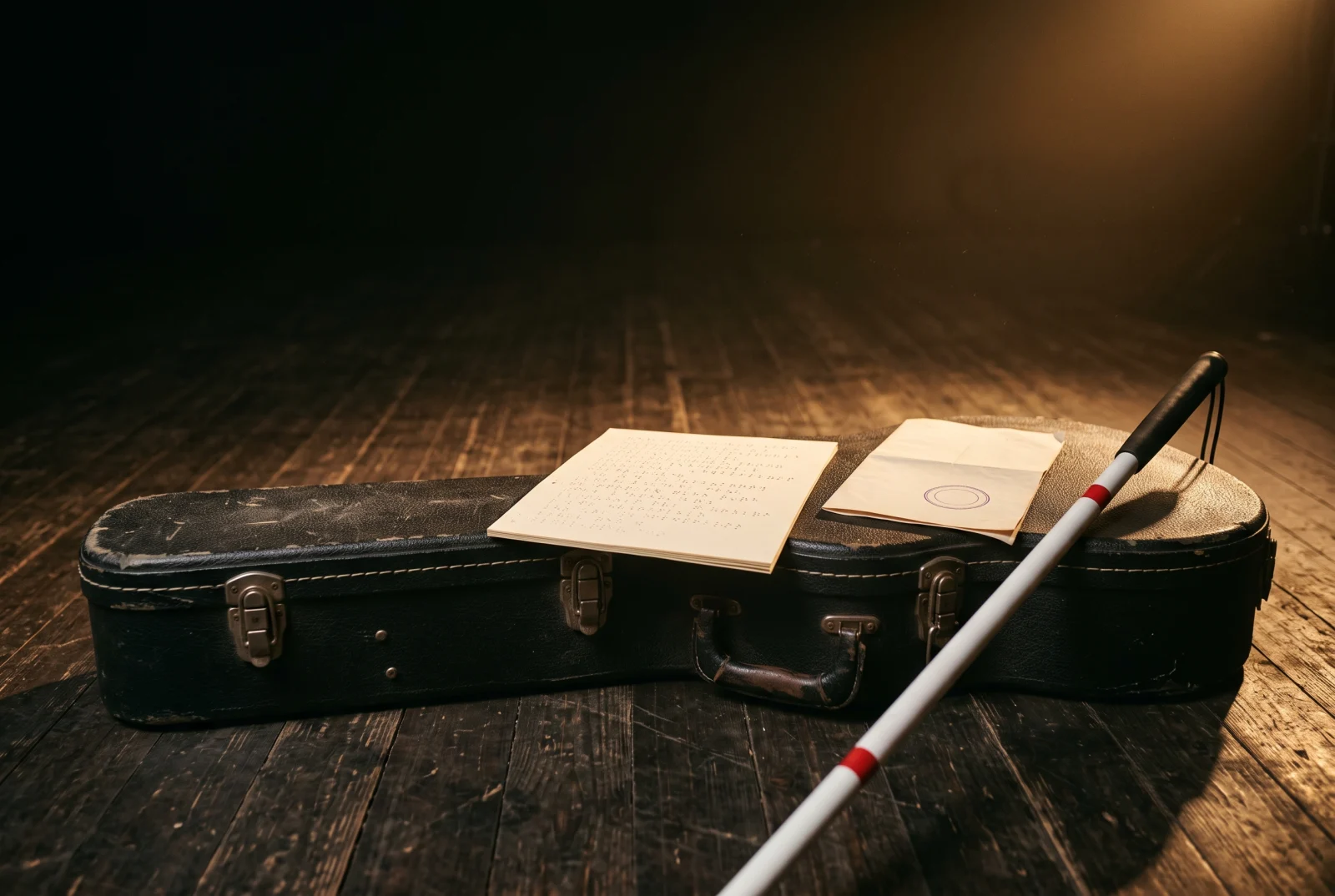
The Royal Canadian Mounted Police found 22 grams of heroin in his Toronto suite on 27 February 1977, on a trafficking charge that carried exposure to a life sentence. On 24 October 1978 Judge Lloyd Graburn kept him out of prison with an extraordinary condition: a benefit concert for the Canadian National Institute for the Blind. He complied on 22 April 1979 in Oshawa, with two shows that some 1,400 blind people got into free.
Rewind with us
Comments · 0
No one has commented yet. Open the conversation.