
Shakira
Eight minutes in a Barcelona court
By Rebobinados · Published on October 1, 2026

Ilustración: Rebobinados
Shakira is the best-selling female Latin artist in history: more than ninety-five million records and twenty-two Guinness records, the highest figure for a Latin woman. That half of the story tells itself and is usually told next to Madonna. The other half is less comfortable and is also hers: on 20 November 2023 she walked out of a Barcelona court with a criminal record, after admitting in eight minutes a tax fraud she had denied for five years. And before either of those things, at sixteen, she came third in a competition at Viña del Mar behind an Italian song nobody remembers today. All three things are true at the same time, and telling only the first is telling half of it.
A contract at thirteen
Shakira Isabel Mebarak Ripoll was born on 2 February 1977 in Barranquilla, on Colombia's Caribbean coast, the daughter of a father of Lebanese descent: that is where the family Arabic and the early taste for belly dancing come from. She wrote poems and songs as a child, but the astonishing part is not that she was discovered by chance. At thirteen she signed a three-album contract with Sony Music Colombia, and she delivered on it: Magia came out in 1991 and Peligro in 1993, neither of them worked, and at sixteen she already had two albums out and a label on her back.
The one that changed everything was the third. Pies Descalzos appeared in October 1995, when she was eighteen, and passed five million copies; the international explosion came during 1996. ¿Dónde Están los Ladrones?, from September 1998, went beyond seven million. Those were the same years in which Aterciopelados were making rock in Bogotá and in which Juanes was still playing heavy rock with Ekhymosis in Medellín, but none of those records came out of a scene: they came out of a songwriter who already knew exactly what she wanted to record.
As of October 2026 she has four Grammy awards — for MTV Unplugged in 2001, Fijación Oral Vol. 1 in 2006, El Dorado in 2018 and Las Mujeres Ya No Lloran as best Latin pop album in 2025 — and fifteen Latin Grammys. The figure that should be stated carefully is the one about primacy: she is the best-selling female Latin artist in history. Without the "female" the claim collapses on its own, because there are Latin men ahead of her or in contention.
Third behind an Italian song
The Chilean chapter is almost always told wrong. Shakira competed in the Competencia Internacional of the 34th Festival de Viña del Mar, held between 10 and 15 February 1993, with "Eres", a song from Magia. She came third. The winner was "In questo mondo", by the Italian Claudio Cirimele, and second place went to "Sinceridad", by the Chilean Tatiana Bustos. The reports from those days describe a nervous performance, with notes out of tune. The Gaviota de Plata of that competition is awarded to the winning song: it was not taken away from her, she did not win it.
The version that circulates — a divided jury, a dispute, an award denied — is not documented anywhere: the headlines that suggest it are retrospective and the body of those same pieces contradicts it. Nor were these her first steps, because she arrived at the Quinta Vergara with two albums released and a contract signed since the age of thirteen. The exact fact is better than the myth: third place behind an Italian song that is sung nowhere today. And the punchline is in the festival's own archive, because Shakira went back to Viña in 1996, this time as an international star.
The chorus that came from Cameroon
The crossing into the English-speaking market came with Laundry Service, released on 13 November 2001, which passed fifteen million copies and brought "Whenever, Wherever". Then came "Hips Don't Lie", from 2006, with Wyclef Jean: some sixteen million units and, a surprising detail, her only number one on the Billboard Hot 100 in her entire career. She gets by in Spanish, English and French — she recorded Francis Cabrel's "Je l'aime à mourir" in French and in Spanish for Sale el Sol, from 2010, and premiered it at Bercy — although the list of languages attributed to her is usually more generous than her discography.
"Waka Waka" was the official song of the 2010 World Cup in South Africa and was sung across half the planet, but the chorus is not hers. It comes from "Zangaléwa", recorded in 1986 by the Cameroonian group Golden Sounds, made up of members of the presidential guard. Neither Shakira nor FIFA credited them at first; after public pressure, Sony and her team agreed to give them a composition credit and an out-of-court payment, and the group itself came out to say that there had been no plagiarism but a readaptation by agreement. It is a detail that improves the story instead of soiling it: the song with which half the planet sang a World Cup was, at its core, a Cameroonian barracks melody from the eighties.
Eight minutes in a Barcelona court
In 2016 she recorded "La Bicicleta" with Carlos Vives, a salute to the coast both of them come from. In 2022 she ended her relationship with the footballer Gerard Piqué, with whom she had two children, and turned the break-up into a series of songs that became viral phenomena and, later, into Las Mujeres Ya No Lloran, the album of 22 March 2024 that closed the cycle. That is the fall the usual story names. It is not the most serious one.
The Fiscalía de Barcelona, the city's public prosecutor's office, filed a criminal complaint against her in December 2018. The accusation: having declared herself a resident of the Bahamas between 2012 and 2014 while being tax-resident in Spain, with 14.5 million euros at issue. In June 2019 she testified and denied it, maintained that she had not settled full-time until 2015 and paid the debt claimed plus interest without accepting any guilt. In July 2021 the judge sent the case to trial. In July 2022 she rejected an agreement, and the Fiscalía raised the stakes: it asked for up to eight years in prison and a fine of 23.7 million euros. The formal indictment, the procesamiento, came in September of that year.
The trial began on 20 November 2023 in Barcelona, with more than a hundred witnesses summoned for several weeks of hearings. It lasted eight minutes. Shakira admitted the fraud, accepted a three-year suspended prison sentence and paid a fine of 7.3 million euros plus a further 432,000 so that the prison term would not be carried out. She left the court that same day with a criminal record, after five years of denying exactly what she had just acknowledged.
The honest story has a second half, and it is usually missing. There was a separate file for the 2018 tax year, with 6.6 million euros at stake. She deposited those 6.6 million with the court and testified by videoconference from Miami in February 2024. In May 2024 the judge in Esplugues de Llobregat shelved the case, and she did so at the request of the Fiscalía itself, of the state tax authority, the Agencia Tributaria, and of the Catalan one, having concluded that there was no indication whatsoever that she had withheld information from her adviser knowingly and willingly. She was left with no open criminal cases in Spain: one conviction she admitted and one dismissal that even her accusers asked for.
What to remember
Shakira wrote her songs, chose her producers, decided when to change language and when to come back, and became the best-selling female Latin artist in history without any industry designing it for her. What holds that career up is not talent alone: it is having taken the decisions herself, the bad ones included.
And the bad ones are in the file. The same woman who at sixteen came third in a song competition at Viña del Mar and three years later returned to that city as an international star admitted at forty-six, in eight minutes and before a Spanish court, a fraud of millions. The Chilean irony does not need a denied award in order to work: the real third place is enough for it. And the profile does not need to hide the courtroom in order to stand up either.
Sources
Shakira Isabel Mebarak Ripoll was born on 2 February 1977 in Barranquilla, Colombia, of Lebanese descent on her father's side. At thirteen she signed a three-album contract with Sony Music Colombia: "Magia" (1991), "Peligro" (1993) and "Pies Descalzos" (October 1995, more than five million copies), followed by "¿Dónde Están los Ladrones?" (September 1998, more than seven million). In February 1993 she took part in the Competencia Internacional of the 34th Festival de Viña del Mar, held between the 10th and the 15th of that month, with the song "Eres", and obtained third place; the competition was won by "In questo mondo", by the Italian Claudio Cirimele, and second place went to "Sinceridad", by the Chilean Tatiana Bustos. The Gaviota de Plata of that competition is awarded to the winning song. There is no documentation of a divided jury or of a formal complaint at that edition. She appeared at Viña del Mar again in 1996. "Laundry Service" was released on 13 November 2001 and passed fifteen million copies; "Hips Don't Lie" (2006, with Wyclef Jean) sold around sixteen million units and is her only number one on the Billboard Hot 100. "Waka Waka" was the official song of the 2010 FIFA World Cup in South Africa; its chorus comes from "Zangaléwa", recorded in 1986 by the Cameroonian group Golden Sounds, made up of members of the presidential guard; after the controversy, Sony and Shakira's team agreed to recognise their composition credit and an out-of-court payment. She recorded "Je l'aime à mourir", by Francis Cabrel (1979), in French and in Spanish for "Sale el Sol" (2010). She has won four Grammy awards — "MTV Unplugged" (2001), "Fijación Oral Vol. 1" (2006), "El Dorado" (2018) and "Las Mujeres Ya No Lloran" as best Latin pop album (2025) — and fifteen Latin Grammys, figures current as of October 2026. She is the best-selling female Latin artist in history, with more than ninety-five million records, and holds twenty-two Guinness records. She had a relationship with the footballer Gerard Piqué, with whom she had two children, which ended in 2022; she released "Las Mujeres Ya No Lloran" on 22 March 2024. She recorded "La Bicicleta" with Carlos Vives in 2016. In December 2018 the Fiscalía de Barcelona, the public prosecutor's office, filed a criminal complaint for her having declared herself a resident of the Bahamas between 2012 and 2014 while being tax-resident in Spain, with 14.5 million euros at issue; she testified and denied the facts in June 2019, paying the debt claimed plus interest without accepting guilt; the case was sent to trial in July 2021; in July 2022 she rejected an agreement and the Fiscalía requested up to eight years in prison and a fine of 23.7 million euros, with formal indictment in September. The trial began on 20 November 2023 in Barcelona with more than a hundred witnesses summoned and was resolved in eight minutes by agreement: she admitted the fraud, accepted a three-year suspended prison sentence and paid a fine of 7.3 million euros plus 432,000 euros to avoid the sentence being carried out, and was left with a criminal record. A second file, for the 2018 tax year and 6.6 million euros, was shelved in May 2024 by the judge in Esplugues de Llobregat, at the request of the Fiscalía, the state tax authority Agencia Estatal de Administración Tributaria and the Catalan Agència Tributària de Catalunya, as no indication was found of conscious and deliberate withholding of information from her adviser; she deposited the 6.6 million and testified by videoconference from Miami in February 2024. Profile compiled for Rebobinados with fact-checking; interpretations of the meaning of the work are offered as the author's reading. No song lyrics are reproduced, for copyright reasons. Information drawn from Wikipedia, Billboard, Spanish and Colombian press coverage and the archives of the Festival de Viña del Mar.
Keep rewinding

10s
pop
Bruno Mars
Eleven names in the credits
"Uptown Funk" came out on 10 November 2014 with six writers and today it has eleven. In February 2015 The Gap Band's publisher filed a claim over "Oops Up Side Your Head" in YouTube's copyright system —there was never a lawsuit— and on 28 April five names were added, with 17 % of the publishing. It happened weeks after the "Blurred Lines" verdict, and the song had been fourteen weeks at number one.

00s
pop
André Rieu
It was not from the jazz suite
The waltz with which André Rieu reached half the world is not from Shostakovich's Suite for Jazz Orchestra No. 2: it is from the Suite for Variety Orchestra, which the composer did not assemble, and it was born in 1956 as music for a Soviet film about settlers in Kazakhstan. The error comes from a misprint in volume 10 of the complete works (Muzyka, Moscow, 1984), corrected only in 2001. And the title "The Second Waltz" was invented by his wife, because the real one did not sell.
90s
pop
Daniela Mercury
She took the neighbourhood out of the song
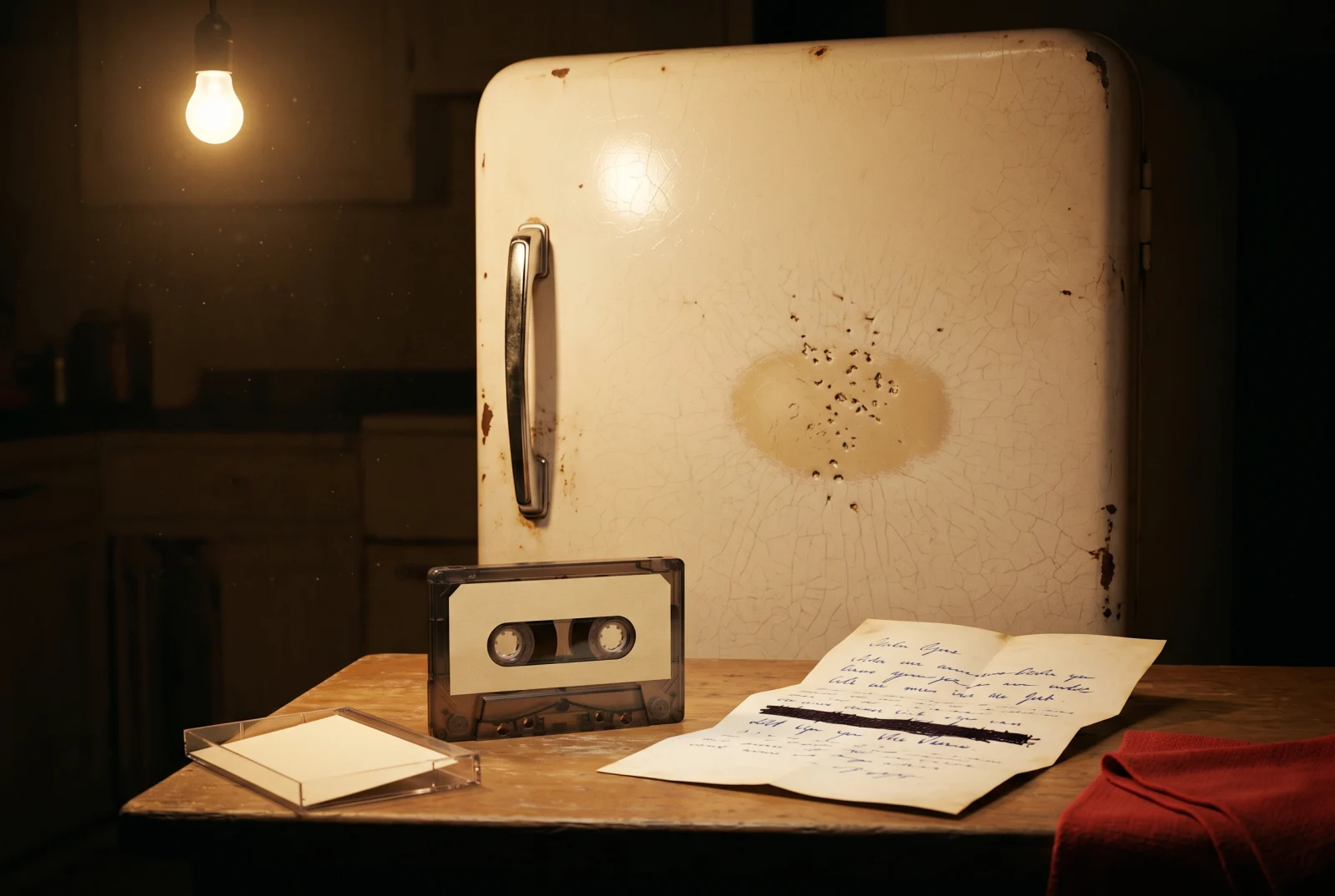
"O Canto da Cidade" was written by Tote Gira, a composer from Nordeste de Amaralina who recorded the demo on a borrowed cassette, marking the beat on the door of a refrigerator; Mercury's team almost threw the tape away. She shares the credit because she deleted the references to the Pelourinho so that the song would serve all of Brazil. The album, from 20 September 1992, sold more than 2 million copies and nationalised axé. But she did not invent it: the name was a journalist's insult in 1987.
Rewind with us
Comments · 0
No one has commented yet. Open the conversation.