
Spandau Ballet
The perfect song and the lawsuit
By Rebobinados · Published on October 1, 2026
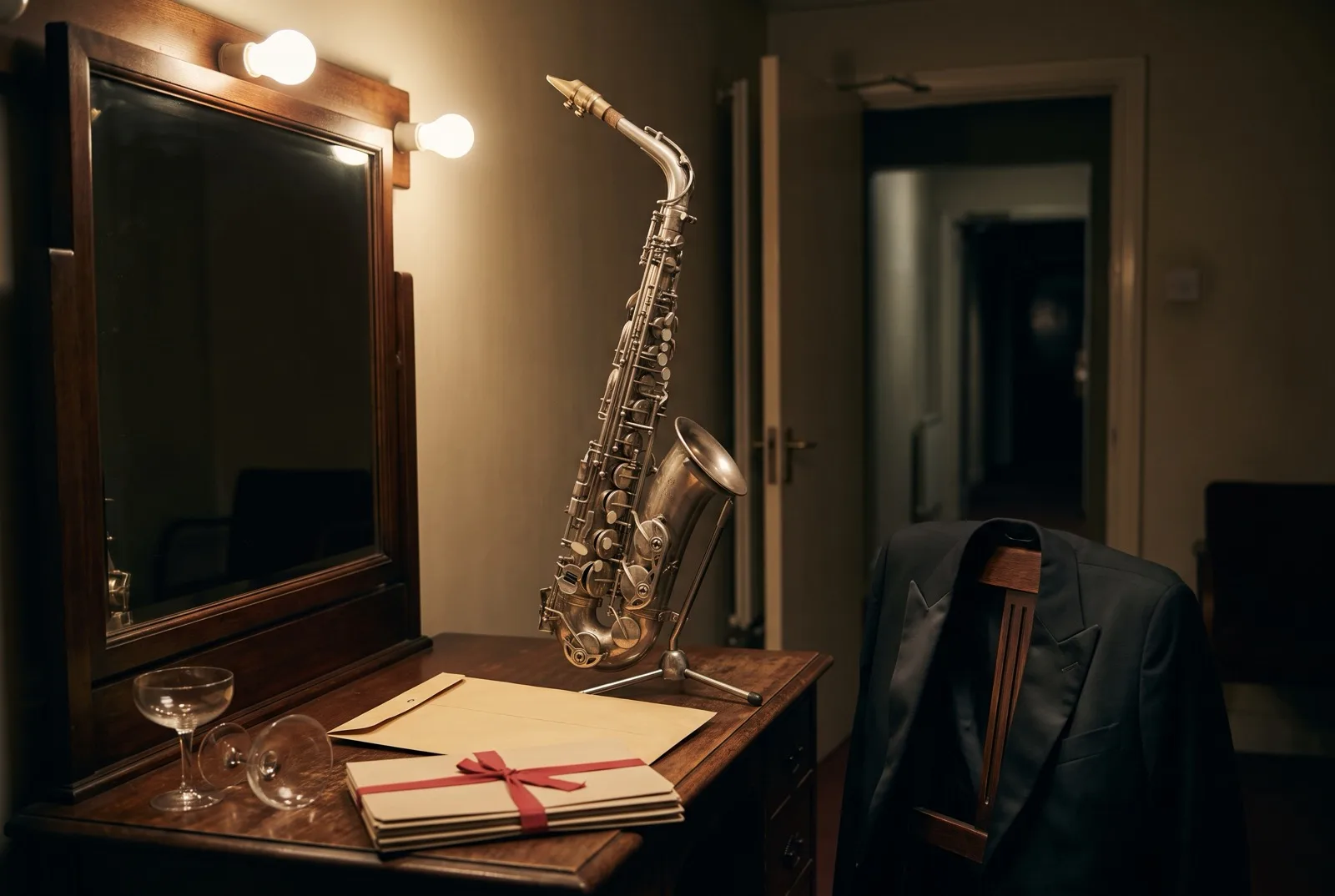
Ilustración: Rebobinados
Spandau Ballet had it all: the elegance, the immaculate suits, eighties glamour turned into a band, and above all one of the most perfect love songs pop ever produced. They were the princes of the New Romantic movement, that fashion of made-up dandies that turned dressing well into an art form. But behind the shine, their story hides one of the bitterest fights in the industry, a conflict over money that ended up in court and destroyed lifelong friendships. Beauty and shipwreck, in equal parts.
From the club to the cutting edge of fashion
Spandau Ballet formed in Islington, London, in 1979, at the heart of a nightlife scene where a group of young people decided to rebel against the rawness of punk by dressing in the most exaggerated and elegant way possible. It was the birth of the New Romantics, around the Blitz club, and Spandau Ballet was one of its flagship bands: shiny suits, impossible haircuts, the aesthetic of an exclusive club.
Out front was Tony Hadley, with a big, powerful, almost crooner voice. The musical brain was Gary Kemp, guitarist and songwriter, alongside his brother Martin Kemp on bass, John Keeble on drums and Steve Norman, who in those early years played guitar and percussion. They started out making elegant electronic pop, with tracks like "To Cut a Long Story Short", and quickly became one of the most fashionable bands in England, in full rivalry with Duran Duran for the throne of glamorous pop.
True, and the saxophone that arrived later
In 1983 came the moment that turned them into legend: "True". A soft, enveloping soul ballad, with a saxophone floating above it and Hadley's voice delivering the line that stayed forever.
And there is a detail there that explains the band's turn: that saxophone is played by Steve Norman, who was not a saxophonist. He had only just taken it up for that third album, after years playing guitar and percussion. The sound that defines Spandau Ballet for the whole world came from a musician switching instruments mid-career.
"True" was number one in the United Kingdom for four weeks and reached number four in the United States, their best mark there. It became one of those songs that outgrow their band: it is still played at weddings, in films and on radio, and in 1991 P.M. Dawn sampled it on "Set Adrift on Memory Bliss", which did reach number one in the United States. The echo ended up climbing higher than the original.
Alongside it came "Gold", a triumphal anthem, and later "Through the Barricades". The Kemp brothers even made the leap to cinema, starring together in The Krays in 1990, about the famous London gangsters.
The trial that broke it all
But the Spandau Ballet story has a sour ending that became famous, and is now studied in the textbooks. Because Gary Kemp was the songwriter, he took the publishing royalties, while his bandmates — who had played and given life to those songs — got considerably less. For years Kemp passed them a share of that money by verbal agreement; in 1987 he stopped.
Tony Hadley, Steve Norman and John Keeble took him to court along with his publishing company. Martin Kemp, Gary's brother, did not join the claim. They argued two things: that they were co-authors of the songs and that the verbal agreement was enforceable. On 30 April 1999, the judge ruled in Gary Kemp's favour on both points.
The result was devastating and goes beyond losing. Not only did they collect nothing: they left court with costs the British press put at around two hundred thousand pounds each. They announced an appeal and then dropped it. The band was broken and the friendships were in pieces.
Years later they managed to reconcile: in 2009 they announced the comeback aboard HMS Belfast and toured together. But the tensions had not gone away: Hadley left again in 2017, citing circumstances outside his control, and the band tried another singer and gave it up. The elegance on the outside concealed, inside, a fracture that was hard to heal.
What to remember
Spandau Ballet was much more than shiny suits and impossible haircuts: they were protagonists of an era and authors of one of the most enduring love songs in pop. They gave the eighties class and left behind anthems that still play at the important moments in people's lives.
Their story also leaves a bitter lesson about friendship, art and money, and about how the third can destroy the other two. That whoever holds the pen takes the lion's share is the rule of the business, and that rule can run straight over five friends from the neighbourhood. But above the conflict the music remains. When "True" plays and the saxophone rises, there is the best of them: proof that they were, beyond everything, capable of touching eternity.
Sources
Spandau Ballet was a British band formed in Islington, London, in 1979, a central figure in the New Romantic movement that emerged around the Blitz club. Its members were Tony Hadley (vocals), Gary Kemp (guitar and principal songwriter), Martin Kemp (bass), Steve Norman (guitar and percussion, and saxophone from the album "True") and John Keeble (drums). After starting out in synth-pop, including "To Cut a Long Story Short" (no. 5 in the United Kingdom, 1980), they reached their peak with "True" (1983), number one in the United Kingdom for four weeks and number four on the Billboard Hot 100 in the United States; it was also number one in Ireland, Canada and Luxembourg. P.M. Dawn sampled the song on "Set Adrift on Memory Bliss" (1991), which reached number one in the United States. Other hits: "Gold" (no. 2 in the United Kingdom) and "Through the Barricades" (no. 6, 1986). They maintained a well-known rivalry with Duran Duran. The Kemp brothers starred in the film "The Krays" (1990). In the case Hadley v Kemp [1999], Tony Hadley, Steve Norman and John Keeble sued Gary Kemp and his publishing company Reformation Publishing, alleging co-authorship of the songs and the existence of a verbal agreement to share publishing royalties that Kemp honoured until 1987; Martin Kemp did not take part in the claim. On 30 April 1999 the judge ruled in Kemp's favour on both points; the claimants announced an appeal and then dropped it, and the British press put the costs at around 200,000 pounds per claimant. The band reunited in 2009; Tony Hadley left the group again in July 2017. Profile compiled for Rebobinados with fact-checking; interpretations of the meaning of the work are offered as the author's reading. No song lyrics are reproduced, for copyright reasons. Information drawn from ICLR, Smooth Radio, Wikipedia and other coverage.
Keep rewinding

10s
pop
Bruno Mars
Eleven names in the credits
"Uptown Funk" came out on 10 November 2014 with six writers and today it has eleven. In February 2015 The Gap Band's publisher filed a claim over "Oops Up Side Your Head" in YouTube's copyright system —there was never a lawsuit— and on 28 April five names were added, with 17 % of the publishing. It happened weeks after the "Blurred Lines" verdict, and the song had been fourteen weeks at number one.

00s
pop
André Rieu
It was not from the jazz suite
The waltz with which André Rieu reached half the world is not from Shostakovich's Suite for Jazz Orchestra No. 2: it is from the Suite for Variety Orchestra, which the composer did not assemble, and it was born in 1956 as music for a Soviet film about settlers in Kazakhstan. The error comes from a misprint in volume 10 of the complete works (Muzyka, Moscow, 1984), corrected only in 2001. And the title "The Second Waltz" was invented by his wife, because the real one did not sell.

90s
pop
Daniela Mercury
She took the neighbourhood out of the song
"O Canto da Cidade" was written by Tote Gira, a composer from Nordeste de Amaralina who recorded the demo on a borrowed cassette, marking the beat on the door of a refrigerator; Mercury's team almost threw the tape away. She shares the credit because she deleted the references to the Pelourinho so that the song would serve all of Brazil. The album, from 20 September 1992, sold more than 2 million copies and nationalised axé. But she did not invent it: the name was a journalist's insult in 1987.
Rewind with us
Comments · 0
No one has commented yet. Open the conversation.