
Decade 60s · Rhythm blues rock
B.B. King
One single note
By Rebobinados · Published on September 22, 2026
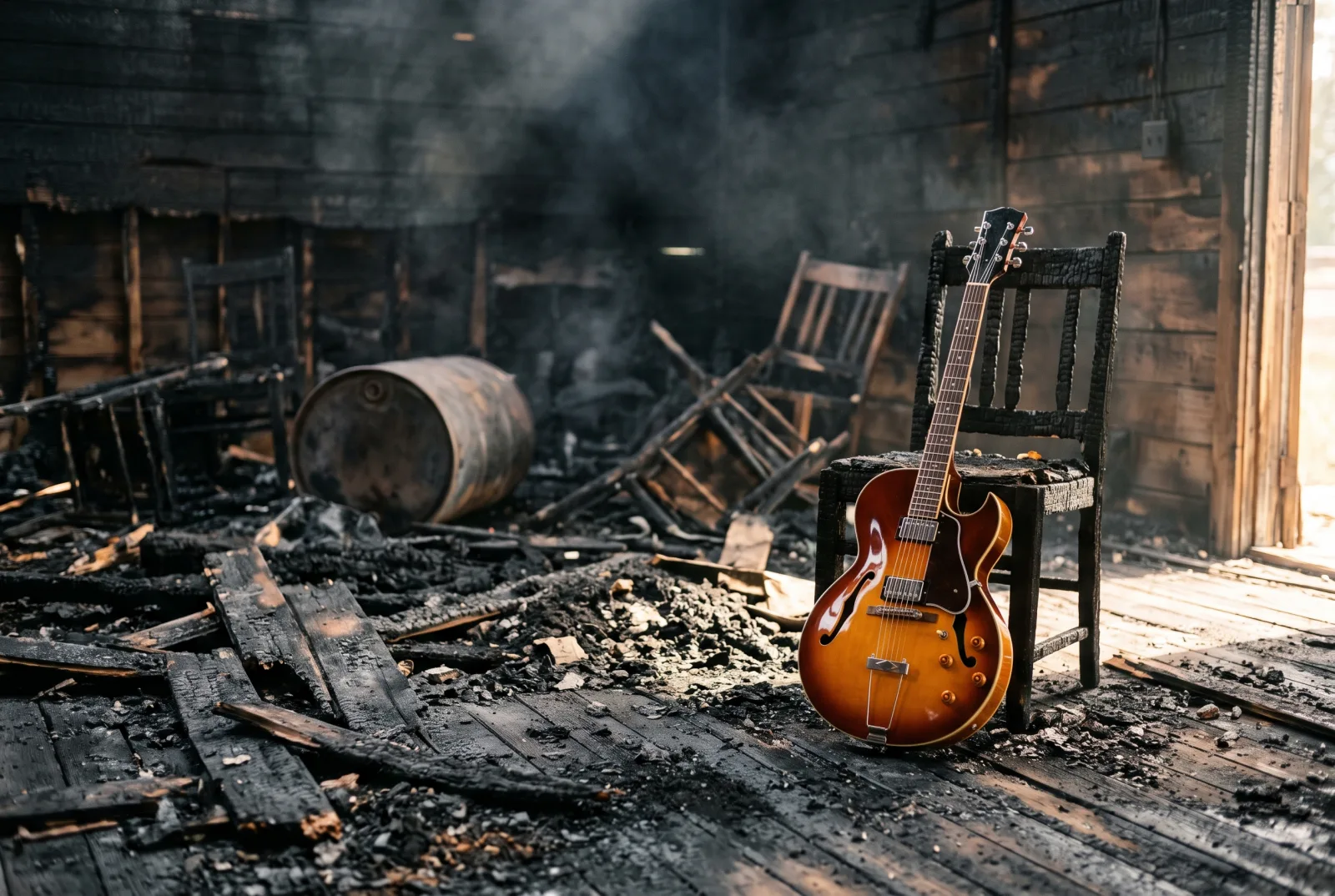
Ilustración: Rebobinados
B.B. King was the king of the blues, the man who taught the world that a single note, played well, can say more than a whole speech.
His guitar did not run up and down the scale filling the silence with notes. It did the opposite: it left space, and into that space it put one note that vibrated, trembled, bent, and split your chest open.
That vibrato is one of the most recognisable signatures in all of music. Three seconds are enough to know it is him.
From the cotton fields to Beale Street
Riley B. King was born in 1925 on a cotton plantation near Itta Bena, in the Mississippi delta, the son of sharecroppers, in the hardest kind of poverty.
His mother died when he was nine. His grandmother, who had raised him, died a few years later, and he was left living alone, picking cotton.
As a young man he sang gospel in church and blues on street corners, and he noticed something that marked him: when he sang gospel they gave him a pat on the head, but when he sang blues they gave him a coin. The coin made the difference when you had nothing.
From there he headed to Memphis, became a radio announcer — they called him "the Beale Street blues boy", which got shortened until it was just "B.B." — and from there to the world.
How Lucille got her name
Every guitar B.B. King played, over sixty years, had the same name: Lucille. And the story of the name is one of the best in the blues, although it is almost always told half-way.
One winter night in 1949, King was playing at a dance hall in Twist, Arkansas, a place heated by a barrel of kerosene burning in the middle of the dance floor.
A fight broke out between two men, the barrel went over, and the fire spread in seconds. Everyone ran out into the street, King included. But outside he remembered that he had left his guitar inside — a thirty-dollar Gibson acoustic, everything he owned — and he went back in, through the flames, to rescue it.
It almost cost him his life.
And here is the part that usually gets left out, the part that gives the ending its weight: two people died in that fire.
The next day King learned two things at once. That those two men had died, and that they had been fighting over a woman named Lucille.
So he gave the guitar that name, as a reminder never to do anything that foolish again: never to risk his life for an object, or to fight over what is not worth it.
The lesson stayed in the name, and the name stayed forever.
He didn't sing and play at the same time
And here is the fact that explains his whole style.
B.B. King did not sing and play the guitar at the same time. He couldn't do it, he said. And instead of forcing it, he made that limitation his trademark: he turned his songs into a conversation between his voice and Lucille.
He would sing a line, and the guitar would answer. Voice, guitar, voice, guitar. A question and an answer, like two people talking.
He explained it in full like this: that when he sings, he plays in his head, and that the minute he stops singing with his mouth he starts singing by playing Lucille.
Listen to "The Thrill Is Gone" with that in mind and you will hear it perfectly clearly: it is not a singer with accompaniment. It is two voices, his and the guitar's, telling each other the same sorrow.
There is another detail that paints him whole. In November 1987, rehearsing "When Love Comes to Town" with U2 in Fort Worth, the band tried to show him the chord changes. King turned them down with perfect courtesy and a perfect line: "Gentlemen, I don't do chords".
In sixty years of playing he almost never played one. Only those single notes, piercing, loaded with feeling. He needed nothing more.
The tireless worker
King was not a genius of one album or one good period. He was, above all, a tireless worker.
He played three hundred and forty-two concerts in 1956 alone, and he was still playing close to a hundred a year past the age of eighty-five.
He lived off the blues, he breathed blues, and he carried it from the street corners of the delta to concert halls all over the world. He was the first bluesman to play in the Soviet Union, in 1979. In December 1997 he played at the Vatican Christmas concert and gave a Lucille to John Paul II.
And he was the bridge by which generations of rockers — Eric Clapton, Keith Richards — discovered where everything they played had come from.
He died in 2015, at eighty-nine, and he was buried in Indianola, the delta town where he had worked in the cotton gin and where his museum stands today.
The lining of the coffin lid carried an image of Lucille embroidered into the fabric.
What to remember
B.B. King believed something simple and profound, and he kept repeating it: as long as people have troubles, the blues will never die.
Put on "The Thrill Is Gone" or "Sweet Little Angel", and you are going to hear a man who came from nothing, who learned to make a guitar cry, and who spent his life proving that pain, sung well, consoles.
Listen to the silence between his notes. Everything he knew is in there.
Sources
Riley B. King (Berclair, near Itta Bena, Mississippi, 16 September 1925 – Las Vegas, 14 May 2015), guitarist and singer, a central figure of electric blues and one of the greatest guitar influences in popular music, celebrated for his vibrato and his phrasing of sustained notes. Son of the sharecroppers Albert and Nora Ella King; his mother died when he was nine and his maternal grandmother, Elnora Farr, a few years later. He was known as "Beale Street Blues Boy", then "Blues Boy" and finally "B.B.", a nickname earned as a singer and announcer at the WDIA station in Memphis. His guitar, always called "Lucille", got that name after a fire at a dance hall in Twist, Arkansas, in 1949: two men fought and knocked over a burning kerosene barrel used as a stove in the middle of the dance floor; King, who had already got out, went back into the burning hall to rescue his 30-dollar Gibson acoustic. Two people died in the fire, and the next day King learned that the fight had been over a woman named Lucille. King did not sing and play simultaneously, and alternated voice and guitar in a call-and-response style; his full formulation was: "When I sing, I play in my mind; the minute I stop singing orally, I start to sing by playing Lucille". The line "Gentlemen, I don't do chords" is documented by Bono in the documentary "B.B. King: The Life of Riley" (2012), at the rehearsal of "When Love Comes to Town" in Fort Worth, Texas, on 24 November 1987; the studio recording was released on "Rattle and Hum" (1988). Among his best-known songs: "The Thrill Is Gone", "Sweet Little Angel" and "Every Day I Have the Blues". He played 342 concerts in 1956, close to 300 a year through the seventies and eighties, and around a hundred a year at 88. He was the first bluesman to play in the Soviet Union, in 1979, and he gave a Lucille to Pope John Paul II in December 1997. He died of vascular dementia arising from a series of small strokes associated with his type 2 diabetes. He is buried at the B.B. King Museum in Indianola; the inner lining of his coffin lid carried an embroidered image of Lucille. Contrary to what is sometimes claimed, no guitar was buried with him: the museum keeps several of his Lucilles and one of them was auctioned for 280,000 dollars in 2019. Externally authored text, edited and verified for Rebobinados. Interpretations of the meaning of their work are offered as the author's reading. No song lyrics are reproduced, for copyright reasons. Information drawn from Wikipedia, Britannica, Rolling Stone, Guitar World, Billboard and other press coverage.
Keep rewinding
50s
blues rock
Jerry Lee Lewis
He married his bass player's daughter
He married on 12 December 1957 in Hernando, Mississippi, Myra Gale Brown, aged 13, the daughter of J.W. Brown, his first cousin and bass player; he was 22 and still married to another woman, and the ceremony had to be repeated on 4 June 1958. The scandal did not break then, but on 22 May 1958 at Heathrow. And his two anthems are not his: "Great Balls of Fire" is credited to Otis Blackwell and Jack Hammer, and "Whole Lotta Shakin' Goin' On" was recorded first by Big Maybelle in 1955.
90s
blues rock
Gary Moore
A German court took his blues away
On 3 December 2008 a Munich court ruled that the solo in "Still Got the Blues" was too close to "Nordrach", a 1974 track by the German group Jud's Gallery. The 1990 album had been his rebirth: no. 13 in the United Kingdom, no. 83 on the Billboard 200 and the only single of his entire career on the Hot 100. Before that he had joined and left Thin Lizzy three times and walked off the tour in Oakland, on 4 July 1979.
70s
blues rock
Keith Richards
The sentence was to play for the blind
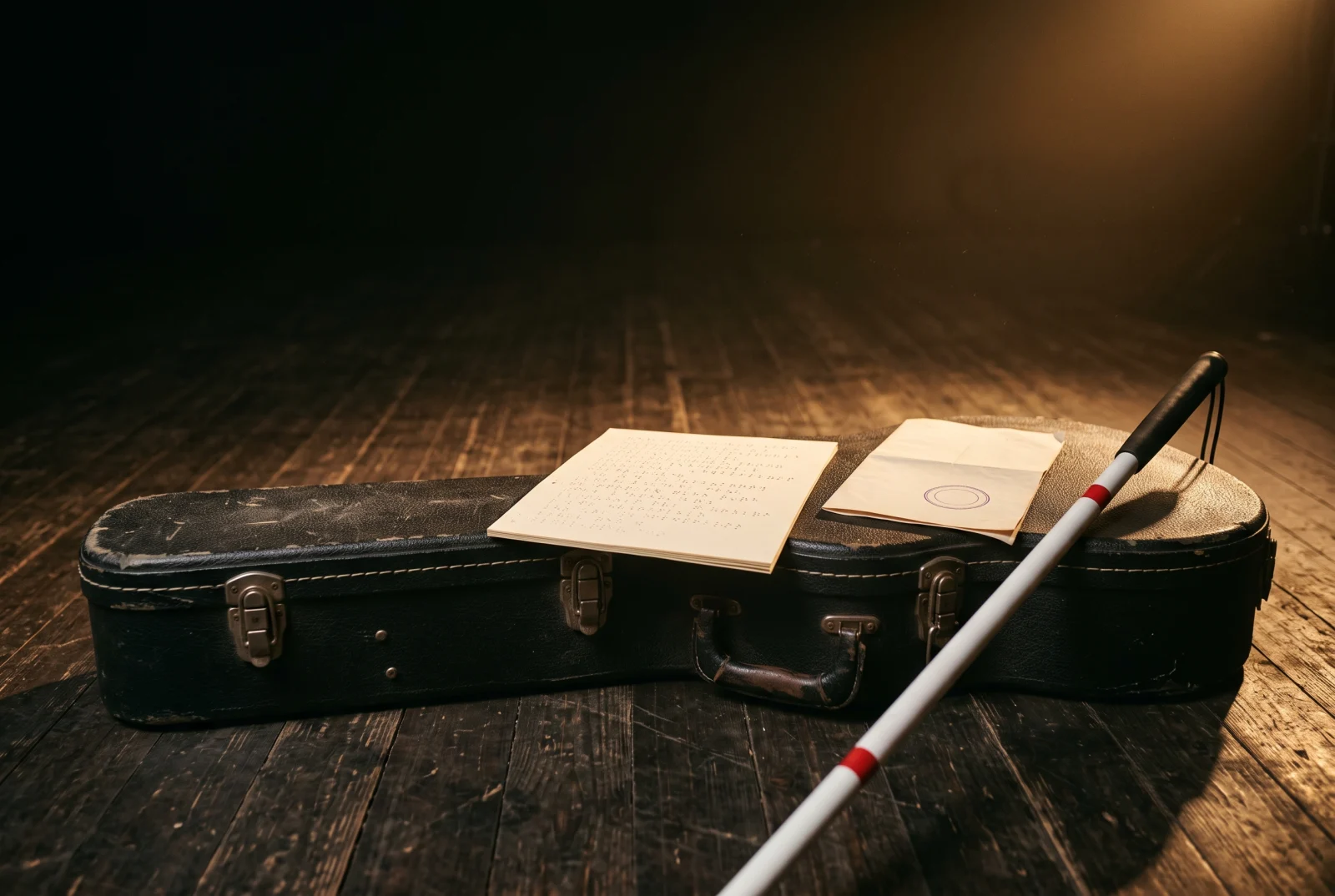
The Royal Canadian Mounted Police found 22 grams of heroin in his Toronto suite on 27 February 1977, on a trafficking charge that carried exposure to a life sentence. On 24 October 1978 Judge Lloyd Graburn kept him out of prison with an extraordinary condition: a benefit concert for the Canadian National Institute for the Blind. He complied on 22 April 1979 in Oshawa, with two shows that some 1,400 blind people got into free.
Rewind with us
Comments · 0
No one has commented yet. Open the conversation.