
Europe
The song they did not want to release
By Rebobinados · Published on September 13, 2026
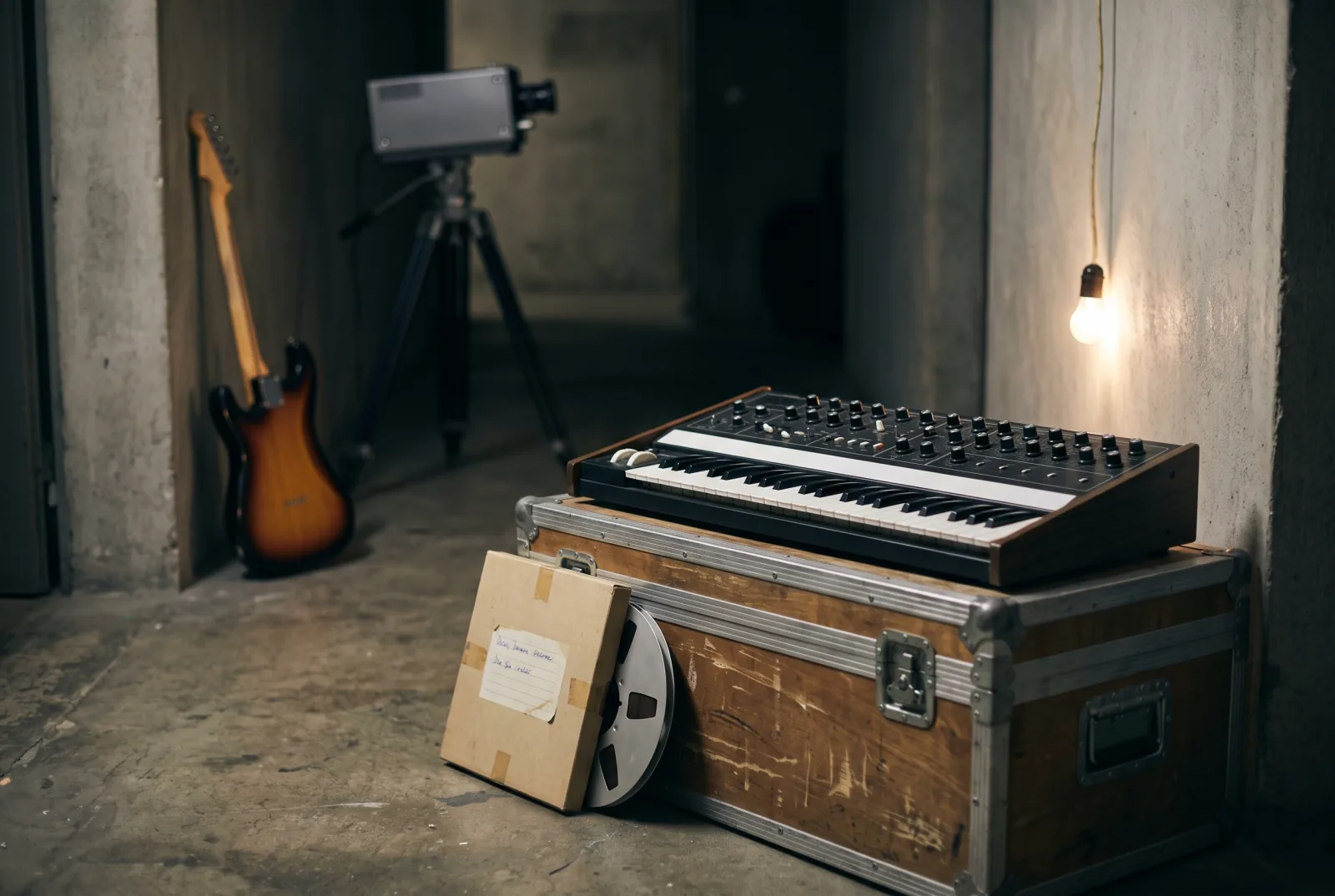
Ilustración: Rebobinados
When John Norum, Europe's guitarist, first heard that keyboard, he said it was madness and that there was no way they were going to use it. Today it is probably the most recognisable synth riff ever written. Few notes in the history of popular music pull a cry of recognition as immediate as those four. And the story of how they got there is the story of a masterpiece almost nobody in the band wanted.
Five years in a drawer
Joey Tempest wrote that melody in the early eighties, on a borrowed Korg. Mic Michaeli had lent it to him; he was playing in another group back then and was not yet Europe's keyboard player. Tempest put it away and never used it. They made two albums without it. The reason? They were a guitar band and that thing sounded nothing like what they did. Norum agreed, enthusiastically.
What got the riff out of the drawer was not an artistic idea. It was the manager, who suggested using that minute of keyboard for a laser show during the gigs. And the one who insisted on turning it into a song was the bass player, John Levén, talking to Tempest at a club bar. In other words: the anthem was written by someone who left it sitting for five years, on a keyboard lent to him by an outsider; the manager rescued it for the lights; and the bass player pushed it into being a song, in a bar. It is hard to find a worldwide hit in which the author made fewer decisions. Greatness, sometimes, slips in through the back door.
It wasn't even a song
It helps to understand what they were doing, because it explains what people notice about it without knowing why. "The Final Countdown" was not written for an album. It was written as the intro tape for the concerts: the noise that plays while the band walks on stage, before the important part begins. That is why it opens with that fanfare and not with a verse. That is why it sounds like a ceremony, like a coronation, like something about to start. It is entrance music, and that is why it works in every stadium, every ring, every end of the world. It was designed, without meaning to be, for the instant before everything.
Tempest has explained where he got the pieces: from Iron Maiden's "Run to the Hills" and a UFO track for the music, and from Bowie's "Space Oddity" for the idea of the lyric, which is about leaving Earth and never coming back. Good thieves, the ones who make the best songs.
The single the label forced through
When it came time to pick the album's first single, Europe chose another one: "Rock the Night". The record company said no. They released "The Final Countdown" against the band's wishes, and it went to number one in the United Kingdom and in a good twenty-odd countries. Sometimes the one looking in from outside sees what the one inside cannot.
The number one that arrived twenty-nine years late
There is a beautiful twist. In the United States the song was not number one at the time: it got to eight. Its first number one on a Billboard chart came in 2015, almost three decades later, when an insurance company used it in an advert where the band plays in somebody's kitchen while the microwave countdown reaches zero. The joke landed, the downloads exploded, and the song climbed to number one on hard rock digital song sales. A melody from 1986, finally crowned thanks to a microwave. The joke is perfect, and the band laughed along with it.
What they do not laugh about is politics: when a British party played it at full volume at its campaign headquarters, the group publicly asked them to stop using it, pointing out that it was written in 1986 as a rock song to have a good time to. They know exactly what their song is, and what it is not.
What to remember
Europe split up in 1992, when the world changed its music, and came back in 2003 to make seven albums that sound nothing like that one. The latest came out this week, and they are starting a fortieth anniversary tour playing "The Final Countdown" in full every night. But the story that counts is the earlier one: a riff their own guitarist wanted to throw in the bin, a borrowed keyboard, a tape for walking on stage, and a record company that forced the single through against the band.
Remember it like this: Europe's most famous song is the one Europe did not want to release. Four notes nobody in the group stood up for ended up being the universal sound of the second before something big begins. Not even they knew what they had in their hands.
Sources
Europe, Swedish band formed in Upplands Väsby in 1979 and made up since 1984 of Joey Tempest (vocals), John Norum (guitar), John Levén (bass), Mic Michaeli (keyboards) and Ian Haugland (drums), with Norum absent between 1986 and 2003; all five are alive. Joey Tempest wrote the melody of "The Final Countdown" in the early eighties on a Korg Polysix synthesiser lent to him by Mic Michaeli, who was not then part of the group, and left it unused for years. Norum has stated that his initial reaction to the synth intro was one of rejection. The piece was conceived as opening music for the concerts and its development into a song began with a conversation between Tempest and John Levén; Tempest has cited "Run to the Hills" by Iron Maiden, "Lights Out" by UFO and "Space Oddity" by David Bowie as references. The group preferred to release "Rock the Night" as the first single and it was Epic Records that imposed "The Final Countdown", issued in February 1986, three months before the album of the same name (26 May 1986). The single reached number one in the United Kingdom and in numerous European countries, and number eight on the Billboard Hot 100; "Carrie", written by Tempest and Michaeli, reached number three on that chart in 1987 and is the group's highest position in the United States. The RIAA has certified only two Europe albums —"The Final Countdown" (3× platinum) and "Out of This World" (platinum)— and there is no record of a certification for the single. An advert for the insurer GEICO first shown on 31 July 2015 boosted the track's digital sales, taking it to number one on Billboard's Hard Rock Digital Song Sales chart, the group's first number one on any chart of that publication. In November 2019 the group publicly asked the British Conservative Party to stop using the song. Europe disbanded after a concert in Portsmouth on 15 March 1992 and reunited in 2003; their twelfth album, "Come This Madness", was released on 25 September 2026, and the fortieth anniversary tour for "The Final Countdown" begins on 30 September 2026 in Glasgow. Iron Maiden and David Bowie have their own profiles in this series. A Rebobinados rewrite of previously verified research; interpretations are offered as the author's reading. No song lyrics are reproduced, for copyright reasons. Information drawn from Wikipedia, Billboard, Official Charts, MusicRadar, Louder, Ultimate Classic Rock, Songfacts, Music Business Worldwide and other coverage.
Keep rewinding
90s
hard rock
Lenny Kravitz
He doesn't play that guitar
The riff of "Are You Gonna Go My Way" (9 March 1993) is not played by him: the guitar is Craig Ross's, the song is co-written with him and the Academy nominated them both for Best Rock Song in 1994. "Always on the Run" was written by Slash for Guns N' Roses. And one of his four straight male rock Grammys, the one of 23 February 2000, he won with "American Woman", by The Guess Who, from which he removed the guitar solo.
60s
hard rock
Steppenwolf
The motorcycle was a Ford Falcon
The century's biker anthem was not written by the band that sings it, and it was not about a motorcycle: Mars Bonfire wrote "Born to Be Wild" as a folk ballad about his battered Ford Falcon, and he had left the group in June 1967, before the name Steppenwolf existed. "The Pusher" is Hoyt Axton's, Easy Rider dropped it in as a temporary track, and the single stalled at no. 2 on the Hot 100 in 1968.
00s
hard rock
Thirty Seconds to Mars
The seven-year law
In August 2008, EMI sued them for thirty million dollars for breaching a 1999 contract they had signed before releasing a single record. They defended themselves with a Californian employment law that voids contracts of more than seven years, closed a settlement on 28 April 2009 and signed with the same label again. The Guinness record they ended up with is not a box-office one: it is three hundred and nine concerts on a single tour.
Rewind with us
Comments · 0
No one has commented yet. Open the conversation.