
Goo Goo Dolls
Eighteen weeks and no number one
By Rebobinados · Published on October 1, 2026
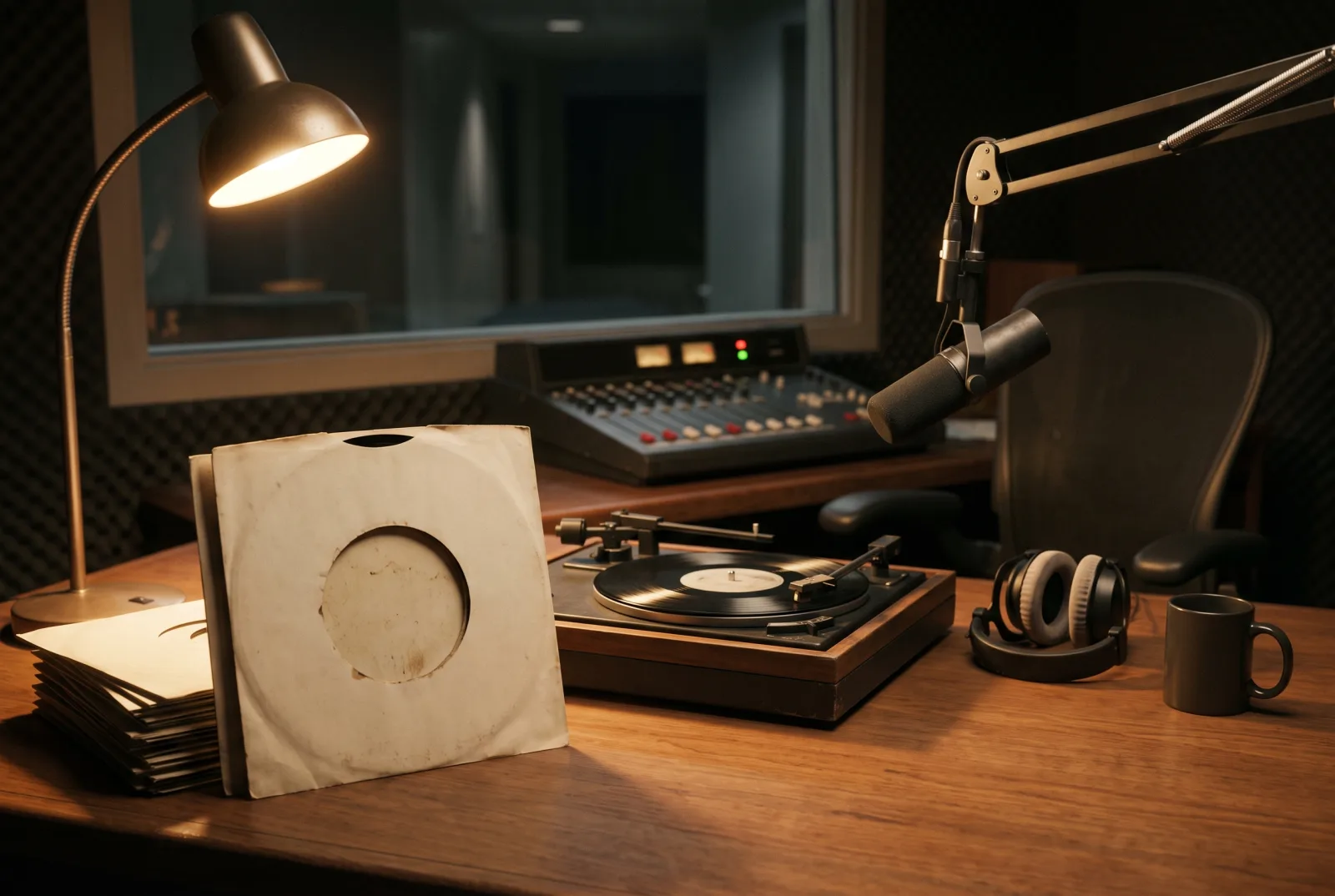
Ilustración: Rebobinados
In 1998, the song that played most on United States radio was "Iris". Eighteen straight weeks at number one on Billboard's Hot 100 Airplay, the chart that measures what radio actually puts on the air. And at the same time "Iris" was never number one on the Billboard Hot 100, the chart everybody quotes: it reached number 9 and stopped there. This is not an accounting curiosity, it is the exact portrait of a moment when the chart rules no longer knew how to measure what was happening. The band that signed that song came out of the scruffiest punk in Buffalo, with a noise inherited from the Ramones and ten years of playing to nobody. They ended up writing the most played ballad in the country without the system knowing where to put it.
A name the newspaper would not print
John Rzeznik and Robby Takac put the band together in Buffalo, New York, with drummer George Tutuska, and christened it Sex Maggots. The name did not last: when a venue owner hired them, he asked them to change it because the city newspaper could not print it. The three took the replacement from an advert in True Detective magazine promoting a toy called a Goo Goo Doll. They adopted that name in 1986 and kept it for forty years.
For almost a decade they were a band of raw punk and alternative rock, fast and dirty, signed to a metal label. A Boy Named Goo, from 1995, was the first double platinum record in the history of Metal Blade Records, and even so it ended up in court: the band sued the label over royalties, reached a settlement and left for Warner Bros.
That same record carried "Name", which reached number 5 on the Hot 100 and changed the direction. It was a slow song, with open guitars and a melody with nothing punk about it. Rzeznik discovered there that his best instrument was the chorus, and Tutuska left the band in 1995, replaced by Mike Malinin.
Eighteen weeks on one chart and none on the other
"Iris" was released on 1 April 1998 as a preview of the City of Angels soundtrack. Rzeznik wrote it after seeing the film and being left thinking about a character willing to give up immortality in order to feel something human; the title has nothing to do with that — he took it from the name of the singer Iris DeMent, which he saw on the concert listings in LA Weekly.
What happened next has few precedents. The song settled at number one on the Hot 100 Airplay and did not move for eighteen weeks. It also spent seventeen weeks at the top of the Adult Top 40, breaking the record of fifteen held by No Doubt. But the Billboard Hot 100, in 1998, was calculated from physical single sales plus airplay, and Warner never issued "Iris" as a commercial single: the strategy was to sell the album, not the song. With no physical sale, the most played song in the country was not eligible for the main chart.
Billboard changed the rule on 5 December 1998, right in the eighteenth and last week of "Iris" at the head of the airplay chart. From that issue on, radio-only tracks were admitted. "Iris" then debuted on the Hot 100 and stopped at number 9, when its moment of greatest push had already gone. It added up eleven consecutive months on that chart. At the 1999 Grammys it had three nominations, among them Record of the Year and Song of the Year, and won none. It is worth saying without decoration: the most listened-to song on American radio in its year does not appear on any list of number ones, and the number 9 that stands as its ceiling describes nothing of what really happened.
The rest of the album worked too
Dizzy Up the Girl came out on 22 September 1998 and was not a one-song record. It reached number 15 on the Billboard 200 — a modest position that turned out to be misleading, because the album went on selling for years, all the way to quintuple platinum — and out of it came "Slide", which reached number 8 on the Hot 100, "Black Balloon" at number 16 and "Broadway" at number 24.
It was the same year as Smash Mouth and of bright, radio-friendly rock, but the Goo Goo Dolls brought something the other bands in that pigeonhole did not have: a decade of playing loud in basements. The energy was still there underneath the melodies, only now it was in order.
Twenty-two years until somebody beat it
The record of eighteen weeks at the top of the airplay chart held for almost twenty-two years. It was broken by The Weeknd in 2020, when "Blinding Lights" reached its nineteenth week at number one on Radio Songs — the same count, under a different name — and carried on to twenty-six.
By then "Iris" had been playing non-stop for two decades. The RIAA certified it diamond on 15 November 2024, ten million units. The band turned forty in 2026 and celebrated with an anniversary tour; Malinin had left in 2013, but Rzeznik and Takac are still there, playing the song the charts did not know how to count.
What to remember
The Goo Goo Dolls have a story that tends to be told as a tale of transformation: the punks who discovered tenderness. That is true, but the most interesting part lies elsewhere. For eighteen weeks of 1998 they were the most listened-to band on United States radio and Billboard's rulebook had no box for that, because it measured plastic cases sold in shops and not songs heard by people.
The rule changed in the last week of the reign, and it changed for everyone who came afterwards. That number 9 on the Hot 100 is, in the end, the number of a chart that fell short. When the arpeggio of "Iris" comes in and a whole room recognises it in two seconds, there is the real measure: forty years and a song that stands on its own, with or without a number one.
Sources
Goo Goo Dolls are an American band formed in Buffalo, New York, by John Rzeznik (vocals and guitar), Robby Takac (bass and vocals) and George Tutuska (drums). They were initially called Sex Maggots and adopted the name Goo Goo Dolls in 1986, taken from a toy advert published in True Detective magazine, after a venue owner asked them for a printable name. Tutuska left the band in 1995 and was replaced by Mike Malinin, who stayed until 2013. "A Boy Named Goo" (1995) was Metal Blade Records' first double platinum album; the band litigated with the label over royalties, reached a settlement and moved to Warner Bros. "Name" (1995) reached number 5 on the United States Billboard Hot 100. "Iris" was released on 1 April 1998 for the soundtrack of the film "City of Angels"; Rzeznik wrote it after seeing the film and took the title from the name of the singer Iris DeMent, which he saw on the concert listings of LA Weekly. "Iris" spent eighteen weeks at number one on Billboard's Hot 100 Airplay chart, a record at the time, and seventeen weeks at number one on the Adult Top 40, beating No Doubt's fifteen. It could not enter the Billboard Hot 100 because it was not issued as a commercial single and the chart's rules then required physical sales; on 5 December 1998, in its eighteenth and final week at the head of the airplay chart, Billboard amended the rule to admit radio-only tracks, and "Iris" debuted and peaked at number 9 on the Hot 100, where it added up eleven consecutive months. It received three Grammy nominations at the 1999 ceremony, including Record of the Year and Song of the Year, without winning any. Its record of eighteen weeks on the airplay chart was beaten in 2020 by "Blinding Lights" by The Weeknd, which reached twenty-six weeks at number one on Radio Songs. The RIAA certified "Iris" diamond on 15 November 2024. The album "Dizzy Up the Girl" was released on 22 September 1998, reached number 15 on the Billboard 200 and is quintuple platinum in the United States; its singles "Slide" (number 8), "Black Balloon" (number 16) and "Broadway" (number 24) entered the Hot 100. The band turned forty in 2026 and played an anniversary tour. Profile compiled for Rebobinados with fact-checking; interpretations of the meaning of the work are offered as the author's reading. No song lyrics are reproduced, for copyright reasons. Information drawn from Billboard, Wikipedia, RIAA and other coverage.
Keep rewinding

10s
pop
Bruno Mars
Eleven names in the credits
"Uptown Funk" came out on 10 November 2014 with six writers and today it has eleven. In February 2015 The Gap Band's publisher filed a claim over "Oops Up Side Your Head" in YouTube's copyright system —there was never a lawsuit— and on 28 April five names were added, with 17 % of the publishing. It happened weeks after the "Blurred Lines" verdict, and the song had been fourteen weeks at number one.

00s
pop
André Rieu
It was not from the jazz suite
The waltz with which André Rieu reached half the world is not from Shostakovich's Suite for Jazz Orchestra No. 2: it is from the Suite for Variety Orchestra, which the composer did not assemble, and it was born in 1956 as music for a Soviet film about settlers in Kazakhstan. The error comes from a misprint in volume 10 of the complete works (Muzyka, Moscow, 1984), corrected only in 2001. And the title "The Second Waltz" was invented by his wife, because the real one did not sell.

90s
pop
Daniela Mercury
She took the neighbourhood out of the song
"O Canto da Cidade" was written by Tote Gira, a composer from Nordeste de Amaralina who recorded the demo on a borrowed cassette, marking the beat on the door of a refrigerator; Mercury's team almost threw the tape away. She shares the credit because she deleted the references to the Pelourinho so that the song would serve all of Brazil. The album, from 20 September 1992, sold more than 2 million copies and nationalised axé. But she did not invent it: the name was a journalist's insult in 1987.
Rewind with us
Comments · 0
No one has commented yet. Open the conversation.