
The Ramones
The brothers who weren't
By Rebobinados · Published on September 16, 2026
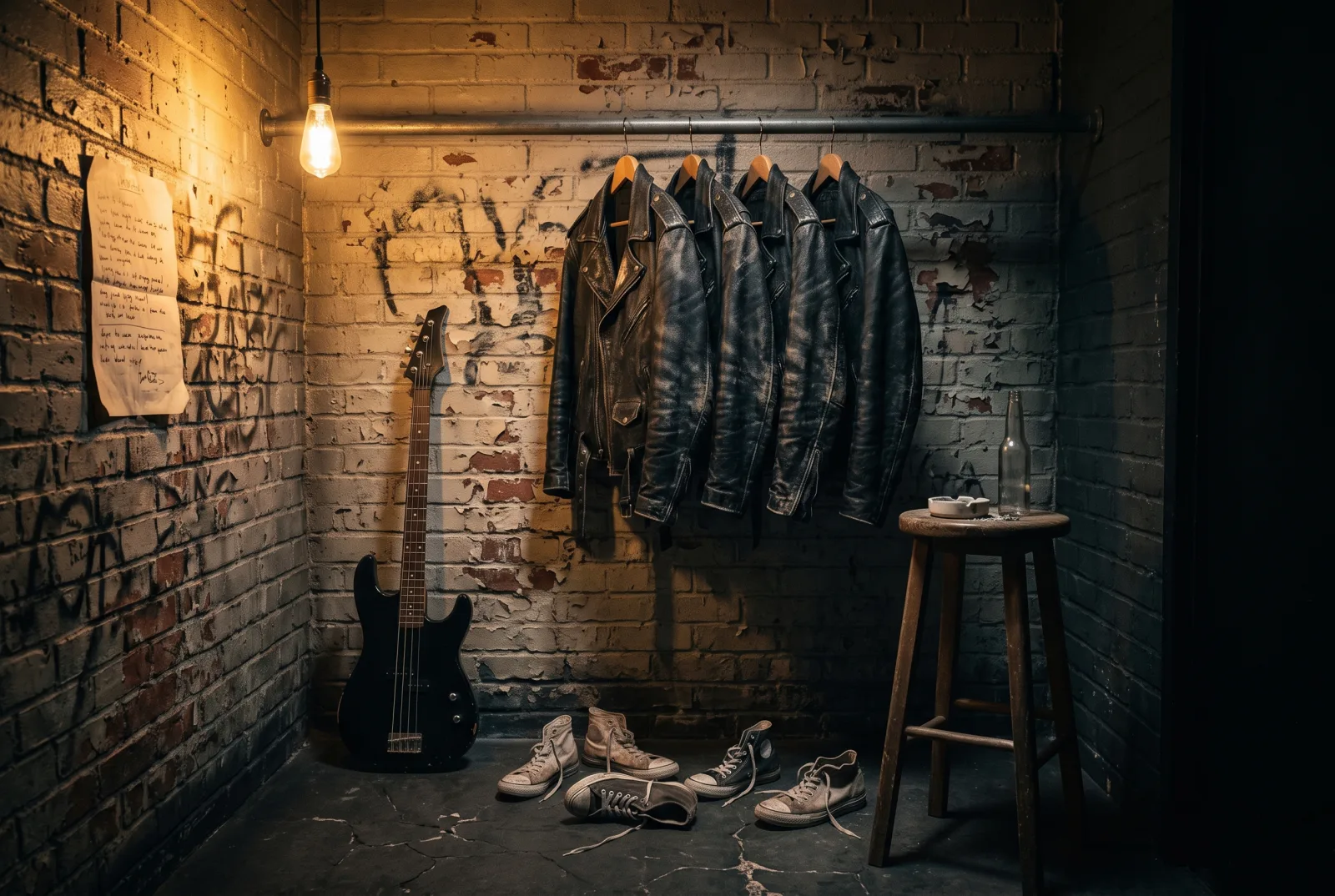
Ilustración: Rebobinados
Four guys from Queens, in New York, who were not even brothers, all took the same fake surname, played very fast and very short, and changed music forever.
The Ramones are, probably, the most influential band almost nobody bought.
They never had a single big chart hit, they made little money, and yet they lit the fuse of punk and of a good part of the rock that came afterwards.
A borrowed surname
They came together in the Forest Hills neighbourhood, in Queens, in 1974.
Joey, the tall, gangly singer in dark glasses. Johnny, the guitarist with the chainsaw. Dee Dee, the bassist and main songwriter. And Tommy, the drummer, who also produced them.
Their real names were something else — Jeffrey, John, Douglas, Thomas — but they decided to adopt the surname "Ramone" as a symbol of unity, taking it from a pseudonym Paul McCartney used to check into hotels: "Paul Ramon".
Four strangers turned, by an invented surname, into a family.
A revolution by subtraction
What they did was a revolution by subtraction: they took rock and roll and stripped it to the bone.
Out with the solos, out with the ornaments, out with the long songs. Three chords, fast, loud, short — two-minute tracks that started with the war cry "Hey! Ho! Let's Go!" — and all of them in the same uniform: leather jacket, ripped jeans, sneakers and long hair covering their faces.
Their first album, from 1976, is a classic today and one of the most influential records in history: "Blitzkrieg Bop", "Judy Is a Punk", and later on "I Wanna Be Sedated", "Sheena Is a Punk Rocker", "Rockaway Beach".
They turned a small, filthy Manhattan club, CBGB, into the epicentre of punk worldwide.
The paradox
And here is the great Ramones paradox.
They are one of the most influential bands in the history of rock — they invented American punk and inspired everyone, from the Sex Pistols and the Clash to Nirvana, Green Day and Metallica — and yet they never once entered the top 40 in their own country. The highest they got was number sixty-six, with "Rockaway Beach".
Their logo, that parody of the presidential seal of the United States, ended up more famous than their music: there are millions of people wearing the T-shirt who never heard one of their songs.
They toured non-stop for twenty-two years, two thousand two hundred and sixty-three concerts, for a modest reward.
Influence and money, as we know, hardly ever travel together.
The family that wasn't
And there was another crack, a more human one: they were not brothers, and a lot of the time they could not stand each other.
The most famous case is Joey and Johnny, who stopped speaking for years because Johnny started going out with Joey's ex-girlfriend, and ended up marrying her.
On top of that they were polar opposites in everything: Joey, Jewish, liberal, left-wing; Johnny, conservative and Republican.
For decades it has been said that "The KKK Took My Baby Away", written by Joey, was a direct dig at Johnny over that business. It is the most repeated reading, but it is not proven: Johnny always denied it, and among those close to the band there are at least three different versions of when and why it was written.
What is not in dispute is the other thing: two men who loathed each other, trapped in the same band for two decades, playing together night after night.
Joey, on top of that, lived with obsessive compulsive disorder. Dee Dee, with heroin. In real life they were anything but a happy family.
They all went
The band broke up in 1996. And then, with a very swift cruelty, they all started to go.
Joey died of lymphoma in 2001, aged forty-nine. Dee Dee, of an overdose, in 2002. Johnny, of prostate cancer, in 2004. And Tommy, the last one left, in July 2014, aged sixty-five, of a cancer of the bile ducts.
In March 2002 they had been inducted into the Rock and Roll Hall of Fame, in their first year of eligibility, but Joey was no longer around to see it.
The four fake brothers came together, in the end, only in absence.
The permission
The Ramones are the definitive proof that influence and commercial success are two different things.
Four misfits from Queens who could not stand one another, who never had a hit, and who still set punk alight and changed the face of rock.
Their greatest gift, perhaps, was a democratic one: they gave every odd, outcast kid a uniform, a war cry, and the permission to pick up a guitar even if they only knew three chords.
"Anyone can do this", they said without saying it, and millions believed them.
None of the four are left, but their leather-jacket silhouette and their two-minute anthems are everywhere.
Put on "Blitzkrieg Bop", "I Wanna Be Sedated" or "Sheena Is a Punk Rocker", and you will hear the sound of rock being born again — fast, loud and simple —, invented by four guys who pretended to be brothers and who, in the music at least, became the family of everyone who never fitted in.
Sources
The Ramones, American punk rock band formed in Forest Hills, Queens (New York), in 1974; pioneers and founders of punk. Their original line-up — who were not actual brothers — was Joey Ramone (Jeffrey Hyman, vocals), Johnny Ramone (John Cummings, guitar), Dee Dee Ramone (Douglas Colvin, bass and main songwriter) and Tommy Ramone (Thomas Erdelyi, drums and producer); they all adopted the surname "Ramone" as a symbol of unity, inspired by the pseudonym "Paul Ramon" used by Paul McCartney. They defined the punk sound: fast, short, minimalist songs, with a uniform of leather jackets and jeans. Their debut album "Ramones" (1976) is considered one of the most influential in history; their songs include "Blitzkrieg Bop", "Judy Is a Punk", "I Wanna Be Sedated", "Sheena Is a Punk Rocker" and "Rockaway Beach". They were central to the club CBGB. Despite their enormous influence — on the Sex Pistols, The Clash, Nirvana, Green Day, Metallica and many more —, they never had a single in the US top 40: their highest was number 66 with "Rockaway Beach" (1978). They played 2,263 concerts in 22 years of activity. Joey and Johnny kept up a personal estrangement made worse when Johnny married a former partner of Joey's, and their political differences were well known; attributing "The KKK Took My Baby Away" to that episode is a widespread but disputed reading: Johnny denied it in his autobiography and people from the band's circle — Monte Melnick, Mickey Leigh and Marky Ramone — offer different versions. The band broke up in 1996. Deaths: Joey (lymphoma, April 2001, aged 49), Dee Dee (overdose, June 2002), Johnny (prostate cancer, September 2004) and Tommy (cholangiocarcinoma, 11 July 2014, aged 65). They were inducted into the Rock and Roll Hall of Fame on 18 March 2002, in their first year of eligibility. Externally authored text, edited and verified for Rebobinados. Interpretations of the meaning of their work are offered as the author's reading. No song lyrics are reproduced, for copyright reasons. Data gathered from Wikipedia, Billboard, rockhall.com, Songfacts and other press coverage.
Keep rewinding
80s
punk
Billy Idol
His two anthems failed when they came out
"Rebel Yell" came out on 12 January 1984 and reached no. 46 on the Hot 100 and no. 62 in the United Kingdom; "White Wedding" got no further than no. 36 and did not chart in the United Kingdom in 1982. The two of them only reached no. 6 in Britain in the 1985 reissues, and "Dancing with Myself" never entered the Hot 100. His only no. 1 was a live "Mony Mony" from 1987 that knocked off Tiffany, whose hit was another Tommy James cover.
90s
punk
Fiskales Ad-Hok
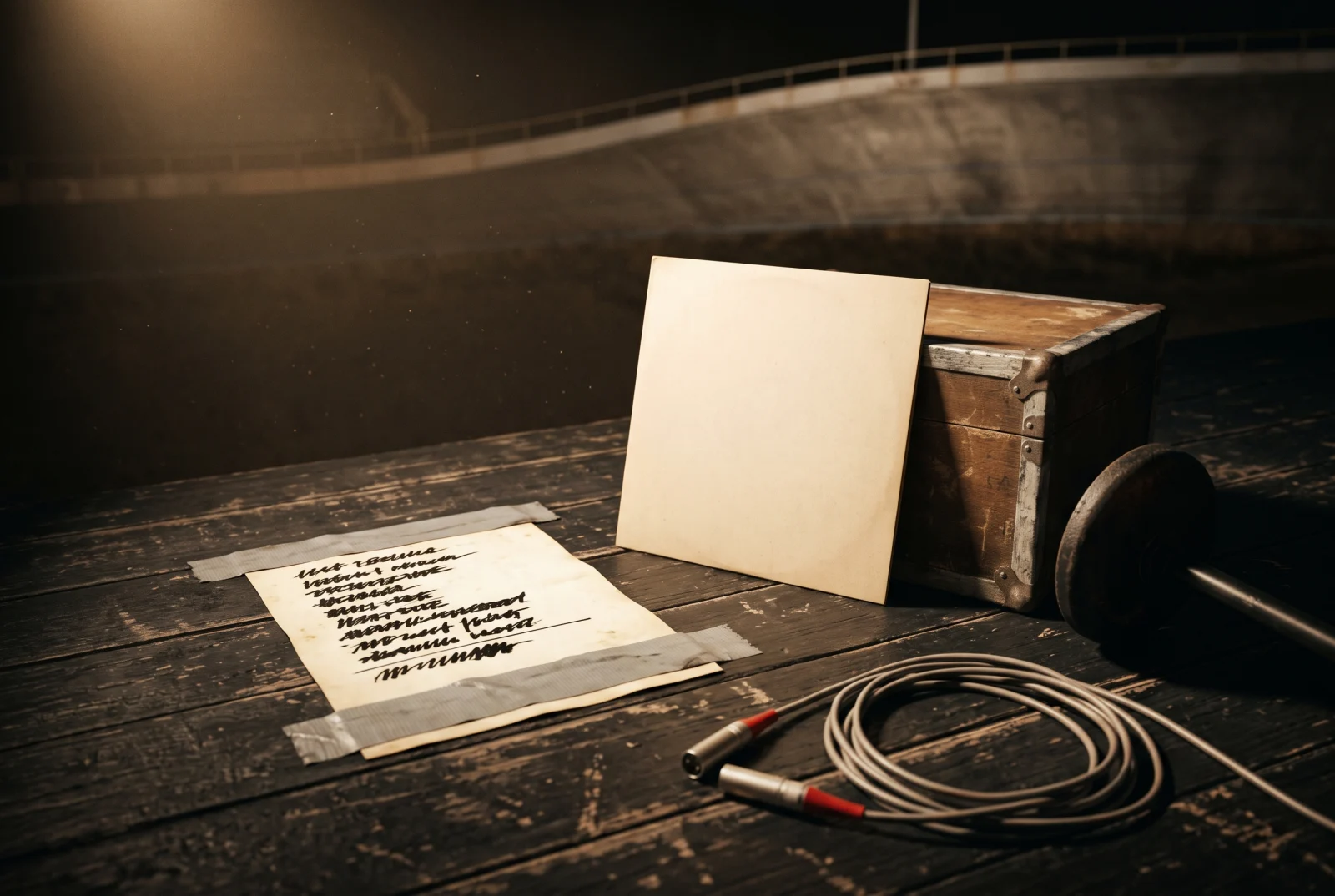
The world tour started with them
On 13 September 1992 the Ramones made their debut in Chile, at the Velódromo, the cycling arena inside the Estadio Nacional grounds, and that date was not just another stop: it was the first night of the Mondo Bizarro world tour. It was opened by Fiskales Ad-Hok, a band from the Santiago underground born in 1986 and still without a record. Then came their own label C.F.A. in 1997, "Fiesta" (November 1998) at number 42 in Rolling Stone Chile, and the indefinite hiatus of February 2025.
00s
punk
Avril Lavigne
Six years with no album
Between her 2013 album and Head Above Water, of 15 February 2019, Avril Lavigne released no records because she was seriously ill with Lyme disease: diagnosed in December 2014, she told it on the cover of People in April 2015. The comeback album is about that, and Love Sux (2022) returned her to pop-punk on Travis Barker's label.
Rewind with us
Comments · 0
No one has commented yet. Open the conversation.