
Mötley Crüe
The names rock stopped naming
By Rebobinados · Published on September 14, 2026
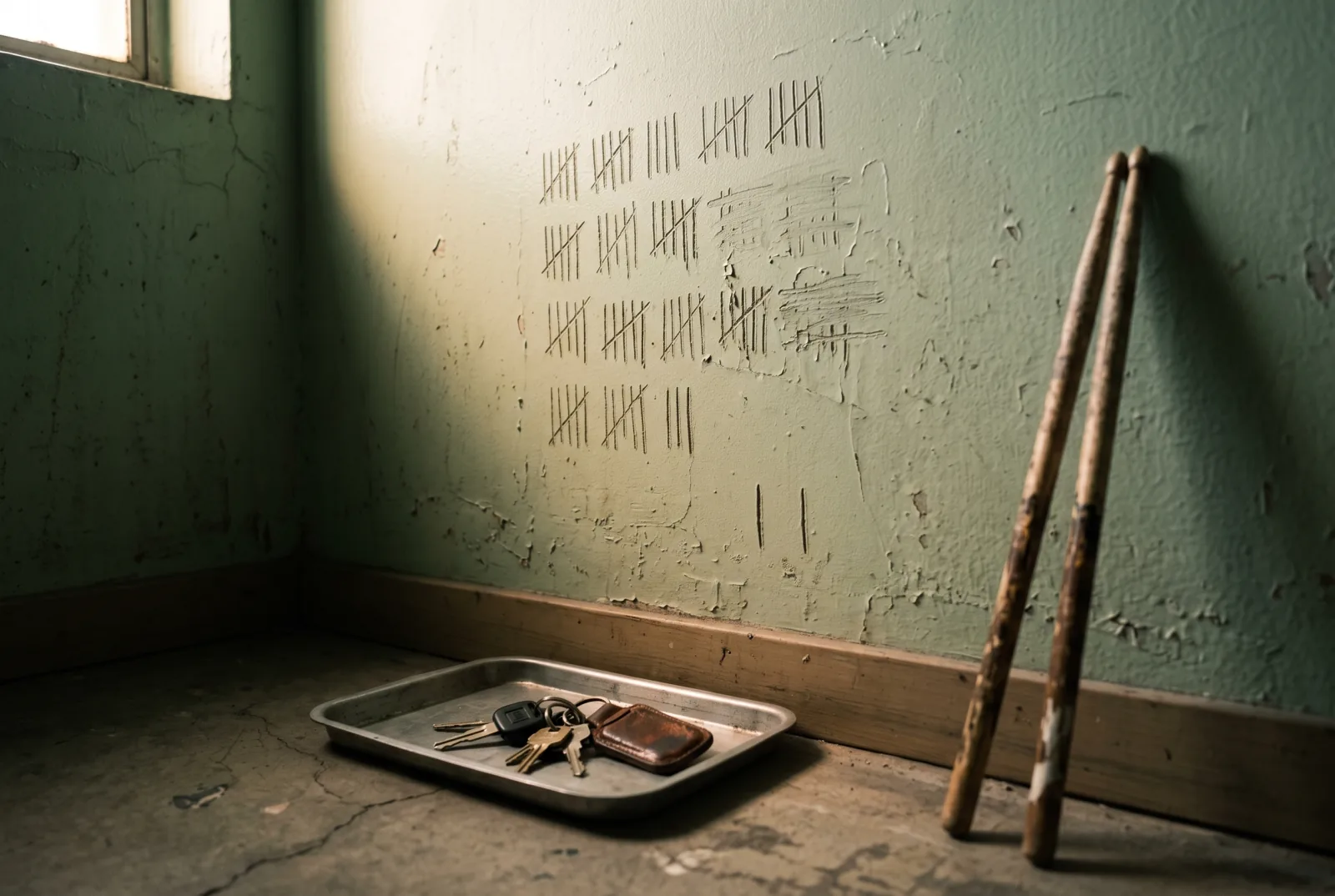
Ilustración: Rebobinados
There is one figure nobody can agree on. Some sources say fifteen days. Others eighteen, which is the number Vince Neil himself gives. Others nineteen, others twenty. The sentence was thirty days in jail, he got out early for good behaviour, and to this day there is no agreement on how many nights he slept inside.
The rest is not in doubt. That night a person died, two young people were left with permanent brain damage, and he was driving drunk. This is not a rock story. It is the story of one dead man and two broken lives, and of the names the legend decided to forget. It has to be told in full, and from the side that almost never gets told.
That night
8 December 1984, Redondo Beach, California. Vince Neil, singer of Mötley Crüe, went out to buy more drink. He was driving a sports car. In the passenger seat was Nicholas Dingley, a twenty-four-year-old British drummer everyone called Razzle, from Hanoi Rocks, a band that at that moment was about to break wide open in the United States.
Neil crossed into the oncoming lane and hit another car head-on. Razzle died that afternoon. In the other car were Lisa Hogan, eighteen, and Daniel Smithers, twenty. Both survived with permanent brain damage. When they tested him, Neil had almost twice the legal limit of alcohol in his blood.
A pat on the back
He pleaded guilty. In 1985 he was sentenced to thirty days in jail, five years of probation, two hundred hours of community service and 2.6 million dollars in compensation.
Here is the detail that changes the story and almost never gets told: he did not pay those 2.6 million. The band's insurance paid them. He said so himself years later, and he said it well: that he found it hard to accept he had caused so much damage in so many people's lives and that, basically, all he got was a pat on the back. Meanwhile, Mötley Crüe carried on. They released an album three months before the sentencing, with a dedication to Razzle's memory.
The other band that fell
Hanoi Rocks never recovered. They were Finnish, they had spent years fighting to break into the United States and they had just signed the deal that was going to let them. Five months after the crash, they split up. Everything they had built died that afternoon in Redondo Beach, in the passenger seat.
What he never did
In 2022, almost forty years later, Hanoi Rocks guitarist Andy McCoy said publicly that Neil never apologised to them. And he added something worse: that every time they run into each other, Neil runs away. Michael Monroe, the singer, confirmed it with a line that puts everything in place: that Neil never apologised, that the other members of Mötley Crüe did, and that the others had done nothing wrong.
Let's be fair: Neil has spoken publicly about his guilt more than once, and he has said harsh things about himself. What is documented is not that he felt nothing. It is that he never said it to them, to the people who needed to hear it.
The names that disappeared
And here is the part that weighs most. A great deal has been written about Razzle: he was the drummer of a much-loved band, there are books, documentaries, tributes. He is mourned, and rightly so.
About Lisa Hogan and Daniel Smithers practically nothing has been written again in more than forty years. They were eighteen and twenty, they were in the other car, they survived with permanent brain damage, and they vanished from the story. Their names appear in the accident reports and never appear again. They were not musicians, they were not famous, they had no album to dedicate to them. They were two kids driving through Redondo Beach one December night, and rock, which mourns its own, never knew what to do with them.
This piece names them on purpose. Lisa Hogan. Daniel Smithers. Let them be here, if only once more.
What to remember
The story is always told as the tragedy of two bands: the one that lost its drummer and the one that nearly lost its singer. But the court file says something else. It says a man drove with almost twice the legal alcohol limit, killed his passenger, left two strangers with brain damage, paid the compensation with somebody else's insurance and served less than three weeks.
Remember it like this: the only figure in this story you can count on the fingers of one hand is the number of days he spent in prison, and it is also the only one nobody can agree on. The names that really ought to be remembered are three, and two of them were not musicians.
This piece deals with a fatal crash caused by driving under the influence of alcohol. If you or someone you know is struggling with alcohol or drug use, in Chile SENDA's Drugs and Alcohol helpline answers free of charge 24 hours a day on 1412.
Sources
Mötley Crüe, American band formed in Los Angeles in 1981. On 8 December 1984, in Redondo Beach, California, singer Vince Neil was driving a De Tomaso Pantera when he crossed into the oncoming lane and collided head-on with another vehicle. His passenger, Nicholas "Razzle" Dingley, drummer of the Finnish band Hanoi Rocks, born on 2 December 1960, died as a result of the impact at the age of twenty-four. The occupants of the other vehicle, Lisa Hogan, eighteen, and Daniel Smithers, twenty, suffered permanent brain damage. Neil's blood alcohol level was 0.17, against the 0.10 legal limit then in force in California. Neil pleaded guilty and in September 1985 was sentenced to thirty days in prison, five years of probation, two hundred hours of community service and 2.6 million dollars in compensation, paid by the band's liability insurance; he served less than three weeks, although sources disagree on the exact number of days —between fifteen and twenty— and Neil himself has stated it was eighteen. "Theatre of Pain", released on 21 June 1985, is dedicated to Razzle's memory. Hanoi Rocks brought in Terry Chimes to cover their outstanding commitments; Michael Monroe left the group in early 1985 and the band split up in May of that year. In July 2022 guitarist Andy McCoy stated publicly that Neil never apologised to them, and Michael Monroe has said the same, noting that the other members of Mötley Crüe did apologise and criticising the group's later use of traffic accident footage in their videos. Vince Neil has publicly acknowledged his responsibility for the events on several occasions. There is no publicly available later information about Lisa Hogan and Daniel Smithers. Mötley Crüe has another profile in this series. A Rebobinados rewrite of previously verified research; interpretations are offered as the author's reading. No song lyrics are reproduced, for copyright reasons. Information drawn from Wikipedia, Louder, Ultimate Classic Rock, Loudwire, NME, Consequence and other coverage.
Keep rewinding
90s
hard rock
Lenny Kravitz
He doesn't play that guitar
The riff of "Are You Gonna Go My Way" (9 March 1993) is not played by him: the guitar is Craig Ross's, the song is co-written with him and the Academy nominated them both for Best Rock Song in 1994. "Always on the Run" was written by Slash for Guns N' Roses. And one of his four straight male rock Grammys, the one of 23 February 2000, he won with "American Woman", by The Guess Who, from which he removed the guitar solo.
60s
hard rock
Steppenwolf
The motorcycle was a Ford Falcon
The century's biker anthem was not written by the band that sings it, and it was not about a motorcycle: Mars Bonfire wrote "Born to Be Wild" as a folk ballad about his battered Ford Falcon, and he had left the group in June 1967, before the name Steppenwolf existed. "The Pusher" is Hoyt Axton's, Easy Rider dropped it in as a temporary track, and the single stalled at no. 2 on the Hot 100 in 1968.
00s
hard rock
Thirty Seconds to Mars
The seven-year law
In August 2008, EMI sued them for thirty million dollars for breaching a 1999 contract they had signed before releasing a single record. They defended themselves with a Californian employment law that voids contracts of more than seven years, closed a settlement on 28 April 2009 and signed with the same label again. The Guinness record they ended up with is not a box-office one: it is three hundred and nine concerts on a single tour.
Rewind with us
Comments · 0
No one has commented yet. Open the conversation.