
Paul Anka
Writing another man's life
By Rebobinados · Published on September 6, 2026
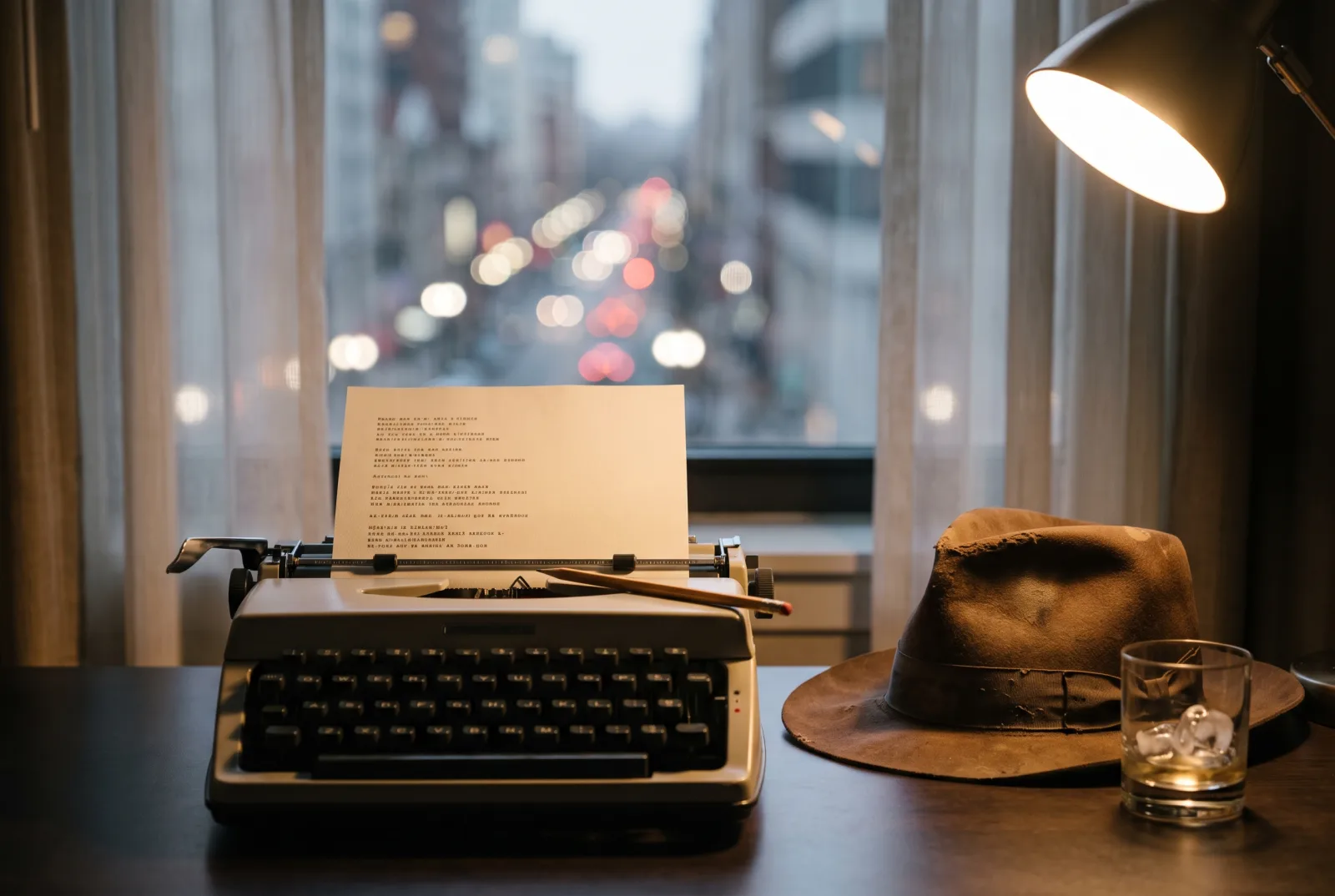
Ilustración: Rebobinados
There is a strange gesture in music: writing the masterpiece of another man's life, and letting it be his.
Paul Anka did exactly that one night in 1968.
The night he wrote "My Way"
He had been having dinner with Frank Sinatra in Florida, and Sinatra had told him he was fed up, that he was done, that he was retiring.
Some time earlier, in France, Anka had heard a song called "Comme d'habitude", composed by Jacques Revaux with lyrics by Claude François and Gilles Thibaut. He bought the adaptation rights for a symbolic dollar, leaving the authors their royalties.
That night he sat down to write a new lyric in English. Not his own: Sinatra's. He got inside the old lion's skin and wrote what a man would say at the end of the road, looking back at everything he had done and everything he had suffered, and concluding that, mistakes and all, he had lived it his way.
Sinatra recorded it on 30 December 1968, in a single take.
It is worth saying precisely, because it gets repeated wrong: Anka wrote the English lyric, not the music. The melody is Revaux's. And it was not a runaway number one in the United States: Sinatra's version reached number twenty-seven. Its monumental career was in the United Kingdom, where it spent seventy-five weeks in the top forty.
The extraordinary thing is not the charts. It is that millions of people around the world believe they are listening to Sinatra talk about his own life, and they are listening to a twenty-seven-year-old Canadian imagining how that would sound.
The boy who started at fifteen
Before all of that, Anka was a teenage star.
He was born in Ottawa in 1941 and wrote "Diana" at fifteen. It came out on 2 July 1957, barely a month before he turned sixteen, and sold around nine million copies.
Then came "Lonely Boy", "Put Your Head on My Shoulder" and "Puppy Love": the complete repertoire of the late-fifties teen idol.
Most teen idols last three years and vanish. He did something different: he moved to the other side of the table and became the one who writes.
What he wrote for other people
"She's a Lady" is his, and he gave it to Tom Jones.
So is the music for the theme of "The Tonight Show", derived from an instrumental of his from 1959. Johnny Carson is credited as co-author and collected half the royalties for thirty years, because Anka offered it to him.
And in 1980 he co-wrote with Michael Jackson a song then called "I Never Heard", conceived as a duet for an album of his own. Almost thirty years later, after Jackson's death, that recording was released as "This Is It". Anka had to claim authorship publicly — he said it was exactly the same song — and he obtained half the copyright.
Another attribution in circulation needs clearing up: "Can't Help Falling in Love", the Elvis one, is not his. It was written by Hugo Peretti, Luigi Creatore and George David Weiss over an eighteenth-century French melody.
What to remember
Paul Anka is the proof that you can be an author without needing the stage.
Put on "Diana", "Put Your Head on My Shoulder" or "Lonely Boy" and you will hear a fifteen-year-old boy with an astonishing ear for popular melody.
And then put on "My Way", sung by somebody else, and remember that every English word in it came out of him, imagining a life that was not his own, to give it away to a man who wanted to retire.
It is one of the most generous things anyone has done in this music: writing another man's last will, and not signing it where it shows.
He is still alive and still touring, with more than six decades of career behind him.
Remember him this way: not as the teen idol of "Diana", but as the man who understood that sometimes the best song you will write in your life is for somebody else to sing.
Sources
Paul Albert Anka, born in Ottawa, Canada, on 30 July 1941; he is still alive and active, with dates announced for 2026. He wrote "Diana" at fifteen; the single was released on 2 July 1957 and has sold around nine million copies. Other hits of his own: "Lonely Boy", "Put Your Head on My Shoulder" and "Puppy Love". "My Way" is his English lyric over the melody of "Comme d'habitude", composed by Jacques Revaux with French lyrics by Claude François and Gilles Thibaut; Anka acquired the adaptation rights for a symbolic dollar, with the original authors keeping their royalties, and wrote the lyric after a dinner with Frank Sinatra at which Sinatra told him he intended to retire. Sinatra recorded the song on 30 December 1968 in a single take; his version reached number twenty-seven on the Billboard Hot 100 in the United States and had a far longer run in the United Kingdom, with seventy-five weeks in the top forty. It should be specified that Anka contributed the lyric and not the music. He wrote "She's a Lady" for Tom Jones and the music for the theme of "The Tonight Show", derived from his instrumental "Toot Sweet" (1959); Johnny Carson was credited as co-author and received half the royalties, at Anka's own offer, throughout the thirty years he hosted the programme (1962-1992). In 1980 he co-wrote with Michael Jackson the song "I Never Heard", released posthumously in October 2009 as "This Is It"; Anka claimed authorship publicly and obtained fifty per cent of the copyright. A frequent attribution should be corrected: "Can't Help Falling in Love" is not his, but the work of Hugo Peretti, Luigi Creatore and George David Weiss, written for Elvis Presley in "Blue Hawaii" (1961) over the melody of "Plaisir d'amour" (1784). Frank Sinatra and Michael Jackson have profiles of their own in this series. Externally authored text, edited and verified for Rebobinados. Interpretations of the meaning of his work are offered as the author's reading. No song lyrics are reproduced, for copyright reasons. Information drawn from Wikipedia, Billboard, American Songwriter and other coverage.
Keep rewinding
10s
pop
Bruno Mars
Eleven names in the credits
"Uptown Funk" came out on 10 November 2014 with six writers and today it has eleven. In February 2015 The Gap Band's publisher filed a claim over "Oops Up Side Your Head" in YouTube's copyright system —there was never a lawsuit— and on 28 April five names were added, with 17 % of the publishing. It happened weeks after the "Blurred Lines" verdict, and the song had been fourteen weeks at number one.
00s
pop
André Rieu
It was not from the jazz suite
The waltz with which André Rieu reached half the world is not from Shostakovich's Suite for Jazz Orchestra No. 2: it is from the Suite for Variety Orchestra, which the composer did not assemble, and it was born in 1956 as music for a Soviet film about settlers in Kazakhstan. The error comes from a misprint in volume 10 of the complete works (Muzyka, Moscow, 1984), corrected only in 2001. And the title "The Second Waltz" was invented by his wife, because the real one did not sell.
90s
pop
Daniela Mercury
She took the neighbourhood out of the song
"O Canto da Cidade" was written by Tote Gira, a composer from Nordeste de Amaralina who recorded the demo on a borrowed cassette, marking the beat on the door of a refrigerator; Mercury's team almost threw the tape away. She shares the credit because she deleted the references to the Pelourinho so that the song would serve all of Brazil. The album, from 20 September 1992, sold more than 2 million copies and nationalised axé. But she did not invent it: the name was a journalist's insult in 1987.
Rewind with us
Comments · 0
No one has commented yet. Open the conversation.