
Blind Melon
It was about not being able to get out of bed
By Rebobinados · Published on October 11, 2026
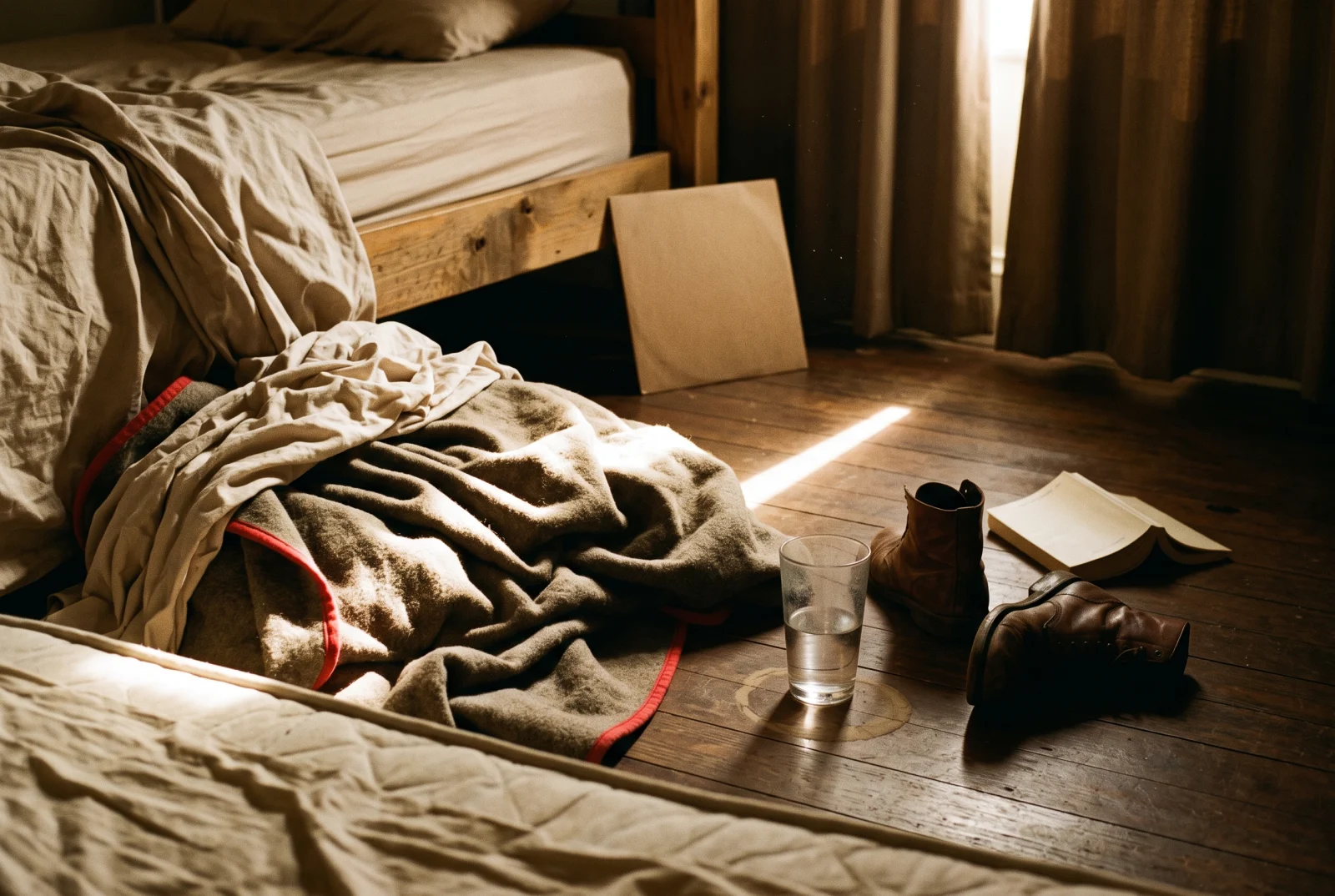
Ilustración: Rebobinados
The story everybody remembers is the one in the video: a girl in a bee costume who is laughed at everywhere she goes until she finds a field full of people dressed like her. Out of that came the reading that has accompanied "No Rain" since 1993, the one about a song about not fitting in and about finally finding your own people. The song does not say that. It was written by the bassist Brad Smith in Los Angeles, before Blind Melon existed, about a girlfriend with depression who spent sunny days asleep and complained when it was not raining. It is about not being able to get out of bed. The belonging was laid on top by Samuel Bayer's video, and the whole world heard the video instead of the lyric.
March 1990, Los Angeles, and five names
Blind Melon formed in March 1990 in Los Angeles, and not "in the late eighties": the date is documented. Two emigrants from West Point, Mississippi —the lead guitarist Rogers Stevens and the bassist Brad Smith— met Shannon Hoon there, a singer from Lafayette, Indiana; the rhythm guitarist Christopher Thorn, who came from Pennsylvania, joined, and since they could not find a drummer in Los Angeles they talked Glen Graham into moving out from Mississippi. Those are the five. The name came from a nickname Brad Smith's father used for hippies.
They signed with Capitol in 1991, brought in by the A&R man Tim Devine, after a four-song demo called The Goodfoot Workshop. The first thing they recorded for the label was an EP with the producer David Briggs —Neil Young's man— that was going to be called The Sippin' Time Sessions and that the band itself threw out for sounding too polished. They made the debut far away from everything: between February and June 1992, in a rented house in Durham, North Carolina, Graham's idea for escaping distractions, and at London Bridge Studio in Seattle, with Rick Parashar in charge. It is recorded almost live and with the fewest possible overdubs.
Hoon also had a door the band did not have: he was a friend of Axl Rose, of Guns N' Roses, because the two were from Lafayette and because Axl had been a high school classmate of Anna, his older half-sister. On Use Your Illusion I, released on the seventeenth of September 1991, Hoon sings backing vocals on "Live and Let Die", "November Rain", "You Ain't the First" and "The Garden", and co-lead vocals on "Don't Cry", where he also appears in the video. That is quite a bit more specific than saying he sang with them at some point.
What Brad Smith wrote
Smith had written "No Rain" before all of this, newly arrived from Mississippi, broke and playing for coins in Venice Beach. He was going out at the time with a depressed girl who slept through sunny days and complained when it was not raining, and that is where the title comes from. For a while he said he was writing from her point of view, and later admitted that he was also writing about himself. His own description of the song leaves no room for doubt: it is about not being able to get out of bed and about looking for excuses to face the day when, deep down, you have nothing.
The cheerful melody is deliberate, and it is what made the misunderstanding possible. Pitchfork described it as a sweet, aching lyric about watching the world go by that does not sound depressed even though it is literally describing depression. There is an authorship nuance worth stating: in the record's credits all the songs are listed under the name Blind Melon, collectively, so that Smith's name does not appear anywhere. He wrote it, Hoon sang it, and Smith ended up leaving the band in 2016.
Two bee girls, not one
The popular account melts two different girls into one. The one on the album cover is Georgia Graham, the drummer's younger sister: a photograph from a school dance recital in the mid-seventies, in Columbus, Mississippi, with her in a bee costume among kids of four to six. Nobody went looking for her. Christopher Thorn found her while leafing through the family album at the Graham parents' house, and proposed using it as the cover.
The one in the video is Heather DeLoach, who was ten years old and came from Orange County, California. The director Samuel Bayer —the same man who had filmed Kurt Cobain in "Smells Like Teen Spirit"— chose her precisely because she looked like the girl on the cover, and she was the first to turn up to the casting: she was told that Bayer never watched another tape. The thick glasses were not wardrobe either. Her mother and she bought them at a shopping mall on the way to the audition, because they had been asked for something "nerdy", and the director liked them so much that those are the ones that appear in the video.
So MTV's most beloved image of the nineties is the recreation of a childhood photograph of the drummer's sister, performed by a girl who had nothing to do with the band and who was hired for the resemblance. DeLoach closed the 1993 MTV Video Music Awards with her bee number, appeared that same year in the video for "Weird Al" Yankovic's "Bedrock Anthem" and went on acting for fifteen years, until Reno 911! in 2008. She married in 2017, has three children and is today a full-time mother. The video came in at number twenty-two in the count of the greatest of all time that MTV made in 1999.
The first single flopped
The album's first single was "Tones of Home", in 1992, and nothing happened: it reached number twenty on the Modern Rock chart and left the album where it was. Blind Melon had come out on the twenty-second of September 1992 and took thirteen months to get into the top forty of the Billboard 200, which happened on the ninth of October 1993, when "No Rain" —the second single, from 1993— was already on the radio.
And that success is worth measuring, because it was not the one that gets told. "No Rain" reached number one on Modern Rock Tracks on the eighteenth of September 1993, number one on Album Rock Tracks on the ninth of October, number four on Top 40 and number one in Canada on the thirteenth of November. On the Hot 100 its ceiling was number twenty, in the week of the twentieth of November 1993, and in the United Kingdom number seventeen. The album did reach number three on the Billboard 200. Behind it came "I Wonder", "Change" and a reissue of "Tones of Home" with a new video that continued the bee girl's story, and a diary that took them to open for Neil Young, for Lenny Kravitz and for The Rolling Stones on the Voodoo Lounge Tour, and to Woodstock in 1994, where Hoon went on stage in a white dress belonging to his girlfriend and with his make-up running.
Sixty-seven days
For the second record the band moved to New Orleans. Soup was recorded between November 1994 and January 1995 at the Kingsway and Ultrasonic studios, with Andy Wallace producing, and the city's jazz got into it, along with horns, mandolin and banjo. It came out on the fifteenth of August 1995: number twenty-eight on the Billboard 200, two hundred and seventeen thousand copies in the United States as of October 1996 against the debut's four platinum discs, one and a half out of five in Rolling Stone, a D in Entertainment Weekly and a two out of ten in Spin. Hoon saw it come out and saw it fail: he died sixty-seven days later, on tour promoting it.
The band blames Capitol, and says so with names. Thorn sums up the label's reaction to the record like this: "The company was like: hey, we thought you guys were just pot-smoking hippies, what happened?". There was a change of management at Capitol while it was being recorded, and the new bosses did not want to carry a difficult second album: they found it too dark and put up no serious radio or television support. The hardest thing Thorn says comes afterwards: "After Shannon died, not one person from that record company ever called me to offer their sympathies", and that they did not even contribute to the fund the band set up for his daughter. They also acknowledge their own share: they refused to let the new A&R man into the studio because they wanted the previous one, Simon Potts, and Thorn admits that this was especially short-sighted, because it is the A&R man who goes back to the company to generate enthusiasm.
The lyrics of Soup were in front of everyone and nobody read them. "St. Andrew's Fall" is about someone throwing themselves off a building, "Skinned" is about the murderer Ed Gein and "New Life" is about the pregnancy of Lisa Crouse, Hoon's partner. Thorn said it years later: he regrets not having looked at those lyrics and not having asked him whether he was all right. Glen Graham went further and called the record a kind of farewell to the world, but that is his reading and not a fact.
What is on the record is the addiction. Hoon went into rehabilitation twice, in May 1994 and in June 1995; on the eleventh of July 1995 his daughter, Nico Blue, was born. Dallas Taylor, the former Crosby, Stills & Nash drummer turned counsellor, who treated him that spring, told People that he had warned the managers that they had to get serious about Hoon or he was going to die. For the Soup tour they hired a counsellor to travel with him and fired him within a week: Rogers Stevens explained that they found it counterproductive because Hoon did things purely to annoy him. On the twentieth of October 1995, at the club Numbers in Houston, the band played its last concert with him.
The following day, at around half past one in the afternoon, the sound engineer Lyle Eaves got onto the tour bus, parked in the Uptown neighbourhood of New Orleans, to wake Hoon for the sound check and found him unconscious in his bunk. He was pronounced dead at the scene. He was twenty-eight and his daughter was three months old. That night they were due to play at Tipitina's, in the same city where they had recorded the album. The police said on the first day that there were no signs of violence and that the cause remained unclassified pending the autopsy, and the first autopsy did not determine it; the cause of death was established as an accidental cocaine overdose, which brought on heart failure. About the last night there are two versions on the record that contradict each other: Rolling Stone wrote that he spent the whole of it using, and Rogers Stevens denied it in 1997, saying that it was an accident and that his bandmate expected to wake up the next morning as always.
What to remember
Blind Melon lasted five years with its singer and left behind a four-times-platinum debut, a second record that the label let fall and a song that almost everybody understood backwards. The rest happened without Hoon: the RIAA certified the debut four times platinum on the thirteenth of November 1995, twenty-three days after his death, so the record reached its commercial ceiling with the singer already buried; the band spent four years looking for someone to sing, broke up formally on the fourth of March 1999 and came back on the fifteenth of September 2006 with Travis Warren, with whom it released For My Friends in April 2008.
Two documents remain that tell the rest better than any summary. Nico, the 1996 album of outtakes and demos —named after Hoon's daughter, who in turn is named after a flower and not after the Velvet Underground singer, and which brings covers of Steppenwolf and of John Lennon and an acoustic "No Rain"—, ends with a message Hoon left on Christopher Thorn's answering machine. And the two hundred hours of tape he filmed of himself between 1990 and 1995, including the hours before his death, are today the documentary All I Can Say, premiered in 2019, in which he appears credited as co-director. When that acoustic riff sounds and the bee girl appears dancing in her field, there is the whole distance between what a song says and what the world decides to hear. If you or someone you know is facing problem drug or alcohol use, in Chile you can call SENDA's Fono Drogas y Alcohol free of charge and in confidence on 1412, twenty-four hours a day.
Sources
Blind Melon is an American band formed in March 1990 in Los Angeles by Shannon Hoon (vocals), Rogers Stevens (lead guitar), Christopher Thorn (rhythm guitar), Brad Smith (bass) and Glen Graham (drums). It signed with Capitol Records in 1991, brought in by the A&R man Tim Devine, and discarded an EP recorded with the producer David Briggs. Its debut album, "Blind Melon", was recorded between February and June 1992 in a house in Durham (North Carolina) and at London Bridge Studio (Seattle) with the producer Rick Parashar, and was released on 22 September 1992; it reached no. 3 on the Billboard 200 and was certified 4× platinum by the RIAA on 13 November 1995. The first single was "Tones of Home" (1992), no. 20 on Modern Rock Tracks. The second, "No Rain" (1993), reached no. 1 on Modern Rock Tracks on 18 September 1993, no. 1 on Album Rock Tracks on 9 October 1993, no. 4 on Top 40/Mainstream, no. 1 in Canada (RPM) on 13 November 1993, no. 8 in Australia and no. 17 in the United Kingdom; its peak on the Billboard Hot 100 was no. 20, in the week of 20 November 1993. "No Rain" is credited to Blind Melon, but it was written by the bassist Brad Smith before the group formed, about a partner with depression; Smith left the band in 2016. The video was directed by Samuel Bayer with Heather DeLoach, aged 10, as the bee girl; the girl on the album cover is Georgia Graham, younger sister of the drummer Glen Graham, in a photograph of a school dance recital in the mid-nineteen-seventies in Columbus (Mississippi) that was found by Christopher Thorn. DeLoach closed the 1993 MTV Video Music Awards, acted until 2008, married in 2017 and has three children. Shannon Hoon, born Richard Shannon Hoon on 26 September 1967 in Lafayette (Indiana) and raised in Dayton (Indiana), sang backing vocals on "Live and Let Die", "November Rain", "You Ain't the First" and "The Garden" and co-lead vocals on "Don't Cry", from Guns N' Roses' album "Use Your Illusion I", released on 17 September 1991. He went through rehabilitation in May 1994 and in June 1995; his daughter Nico Blue Hoon was born on 11 July 1995. The second album, "Soup", was recorded between November 1994 and January 1995 at the Kingsway and Ultrasonic studios in New Orleans with the producer Andy Wallace and was released on 15 August 1995: no. 28 on the Billboard 200, 217,000 copies in the United States as of October 1996, 1.5 out of 5 in Rolling Stone, a "D" in Entertainment Weekly and 2 out of 10 in Spin. Hoon died 67 days after that release: on 21 October 1995, at around 13:30, in the bunk of the tour bus parked in Uptown, New Orleans, aged 28; he was found by the sound engineer Lyle Eaves and was pronounced dead at the scene. The previous day the band had played at the club Numbers in Houston, and that night it had a date at Tipitina's. The New Orleans police reported that there were no signs of violence and left the cause unclassified pending the autopsy; the first autopsy, of 22 October 1995, did not determine the cause of death, and the cause was later established as an accidental cocaine overdose that brought on heart failure. He was buried on 25 October 1995 at Dayton Cemetery in Dayton (Indiana). About his last night there are two contradictory versions: Rolling Stone (30 November 1995) wrote that he spent it using, and Rogers Stevens denied it in an interview published on 5 January 1997. Before the tour the band had hired an addiction counsellor for Hoon and fired him within a week; the counsellor Dallas Taylor, who treated him in the spring of 1995, told People that he had warned his managers. The band stayed active for four years looking for a singer and broke up formally on 4 March 1999. It released "Nico" on 12 November 1996 (no. 161 on the Billboard 200), an album of outtakes and demos recorded between 1991 and 7 March 1995 that includes an acoustic "No Rain", covers of Steppenwolf and of John Lennon and, as its closing track, a message Hoon left on Christopher Thorn's answering machine. It reunited on 15 September 2006 with Travis Warren on vocals and released "For My Friends" on 22 April 2008 (Adrenaline Music Group, no. 133 on the Billboard 200). It has four Grammy nominations. The Hi8 tapes Hoon filmed of himself between 1990 and 1995, some 200 hours, are the basis of the documentary "All I Can Say", premiered on 26 April 2019 at the Tribeca Film Festival, directed by Danny Clinch, Taryn Gould and Colleen Hennessy and with Shannon Hoon credited as co-director. Profile compiled for Rebobinados with fact-checking; interpretations of the meaning of the work are offered as the author's reading. No song lyrics are reproduced, for copyright reasons. Information drawn from Billboard, the RIAA, the Seattle Times and AP, The Spokesman-Review, People, Entertainment Weekly, Rolling Stone, GRAMMY.com, AV Club, Ultimate Classic Rock, Songfacts, Diffuser, Pitchfork and the encyclopaedic entries in Wikipedia on the band, its records and Shannon Hoon.
Keep rewinding
90s
grunge
Eddie Vedder
His dead father sings on his record
He grew up in San Diego called Edward Mueller and learned at 17 that his father was the lounge musician he had been introduced to as a friend of the family, dead of multiple sclerosis in January 1981. Out of that came "Alive", "Once" and "Footsteps", written in a single day on 13 September 1990. Thirty-one years later, the credits of *Earthling* include one line: "Edward Severson Jr. – vocals (13)".
90s
grunge
Pearl Jam
They testified and they lost
On 6 May 1994 Pearl Jam filed a memorandum with the Antitrust Division of the Department of Justice and on 30 June Stone Gossard and Jeff Ament testified in the House of Representatives. On 5 July 1995 the DOJ closed the investigation without acting: the boycott lasted until 1998, cost them some nine million dollars and three years almost without playing in their own country. And *Ten* never reached number one: Billy Ray Cyrus blocked it.
90s
grunge
Candlebox
The farewell that wasn't
In 2023 they released a farewell record and a final tour that ended up fraying out at Club Chocolate in Santiago. As of October 2026 they are still on the road: 32 dates, 8 new songs and an album for 2027. Kevin Martin explains it without embarrassment: "I was done. And the minute you say that, your value goes up tenfold". Before that came a 4× platinum debut, no. 7 on the Billboard 200 and a "C" from Robert Christgau.
Rewind with us
Comments · 0
No one has commented yet. Open the conversation.