
Series
A History of Chilean Rock · Chapter 11: The Sound of the Machine
By Rebobinados · Published on August 25, 2026
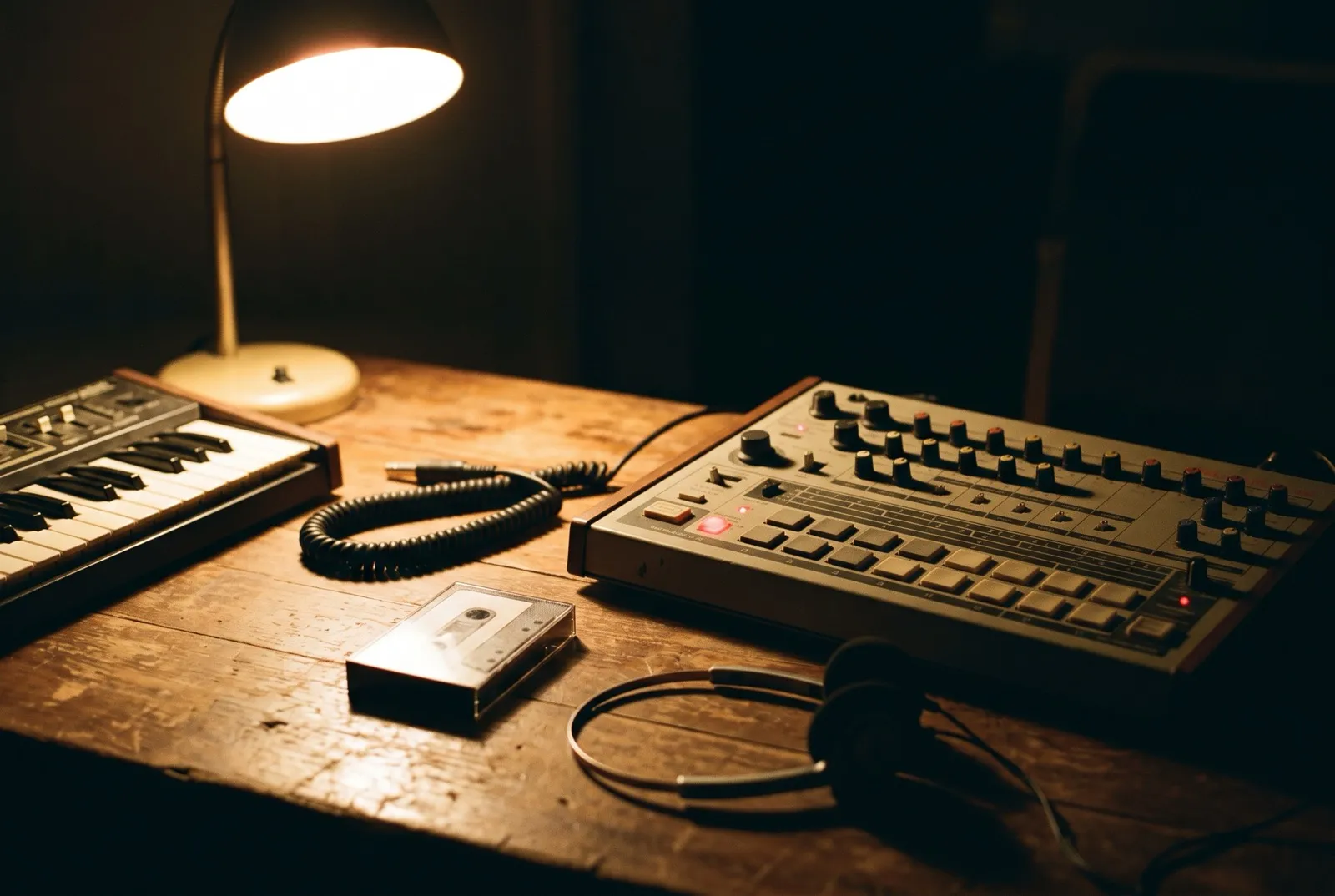
Ilustración: Rebobinados
In the mid-eighties, music around the world changed hands: it moved from guitars to machines. The synthesiser and the drum machine began to replace the guitarist and the drummer. Depeche Mode, New Order and Human League were making a new sound — cold, electronic, futuristic — built from keys and circuits instead of strings and sticks. New Order's "Blue Monday", from 1983, made almost entirely with machines, became the best-selling twelve-inch single in history. That was what the future sounded like: metallic, danceable, and coming out of a box.
A box was cheaper than a band
That sound crossed over to Chile, and a generation with no money grabbed it with both hands, because the machine was a door before it was a fashion. To play rock with guitars you needed a band, expensive instruments, somewhere you could rehearse loud. With a synthesiser and a drum machine, on the other hand, a single kid shut in his bedroom could build something that sounded like tomorrow. For poor teenagers raised in the grey of the dictatorship, that box was cheap, futuristic, and it ran on its own. It was a way of escaping the present without leaving the room.
The anthem beats with a borrowed machine
Even Los Prisioneros, who had been born out of pure guitar and rage, took up the machine. On their second album, "Pateando piedras", from 1986, the sound turned electronic, with synthesisers that came straight from Depeche Mode and Heaven 17. And there is one detail that says everything: the drum machine that makes "El baile de los que sobran" — the biggest song of the decade — beat was lent to them by Miguel Conejeros of Pinochet Boys, an underground punk band with a deliberately provocative name, the kind that could get you arrested for less. Which means the anthem of the eighties beats, quite literally, with a machine that came from the harshest corner of the underground. The most popular pop and the toughest basement were, underneath, the same scene, passing gear back and forth.
Los Electrodomésticos, the avant-garde nobody names
And while Los Prisioneros were pushing electronics towards straightforward pop, another band took it somewhere far stranger. They were called Los Electrodomésticos, they formed in 1984, they were led by Carlos Cabezas, and they were the most daring, experimental edge of all Chilean rock in those years. Theirs was not easy songwriting, nor did it try to be: it was sound art, electronics, provocation, noise with intent, close to Dadaism, cold and sharp. Their album "¡Viva Chile!", from 1986, stands as a landmark of the independent scene. Los Electrodomésticos proved that Chilean rock had no single way of sounding, and that out on the margins, with machines, you could resist symbolically without shouting a single slogan. They were the vanguard of the underground, and even today few people give them the place they deserve.
A bloodless sound for a time without warmth
The machine caught on so hard here for reasons that were neither coincidence nor mere copying. Its coldness rhymed with the era: a bloodless sound for a time without warmth. Its futurism gave a trapped generation a taste of another tomorrow, one unlike the present they had been handed. And its price made it a democratic weapon: someone with nothing could, with a single box, make the sound of the future. Electronic music here was not a luxury for stars; it was the tool of those who had nothing to work with. Pop, art and the underground crossed paths, swapped machines and ideas, and between them built the other sound of the eighties — the one that did not shout, but hummed.
So rewind to those years when Chile learned to sound like a machine. The eighties were not only the guitar howl of Los Prisioneros; there was also the electric hum, the synthesiser and the drum machine in the hands of young people who used the sound of the future to endure the present. And that present was about to change all at once. Because the decade was moving towards its decisive moment: the year the country would finally get to vote, and the stadium would fill up again. That is what the next chapter is about.
Sources
In the mid-eighties, synth-pop and new wave brought the synthesiser and the drum machine to the centre of global pop music: Depeche Mode, New Order — whose "Blue Monday", released in March 1983, is the best-selling twelve-inch single in history — Human League and Heaven 17, among others. In Chile, Los Prisioneros adopted a more electronic sound on their second album, "Pateando piedras" (1 November 1986, EMI), with a declared debt to Depeche Mode and Heaven 17; the drum machine used on "El baile de los que sobran" was lent to Jorge González by the musician Miguel Conejeros of the underground punk band Pinochet Boys. Los Electrodomésticos — a trio formed in Santiago in 1984 by Carlos Cabezas, Silvio Paredes and Ernesto Medina — were among the most acclaimed avant-garde acts of the underground scene during the dictatorship; their debut album "¡Viva Chile!" was released on cassette on 7 September 1986 by EMI Odeon, and in 2008 the Chilean edition of Rolling Stone placed it among the fifty greatest Chilean albums of all time. The "nuevo pop chileno" generation (Aparato Raro, Upa!, Cinema, Banda 69, Fulano, among others) emerged in the same context. No song lyrics are reproduced, for copyright reasons. Sourced from Wikipedia, MusicaPopular.cl, Memoria Chilena, Discogs and press coverage.
Keep rewinding
Series
A History of Chilean Rock · Chapter 16: Music Loses Its Weight
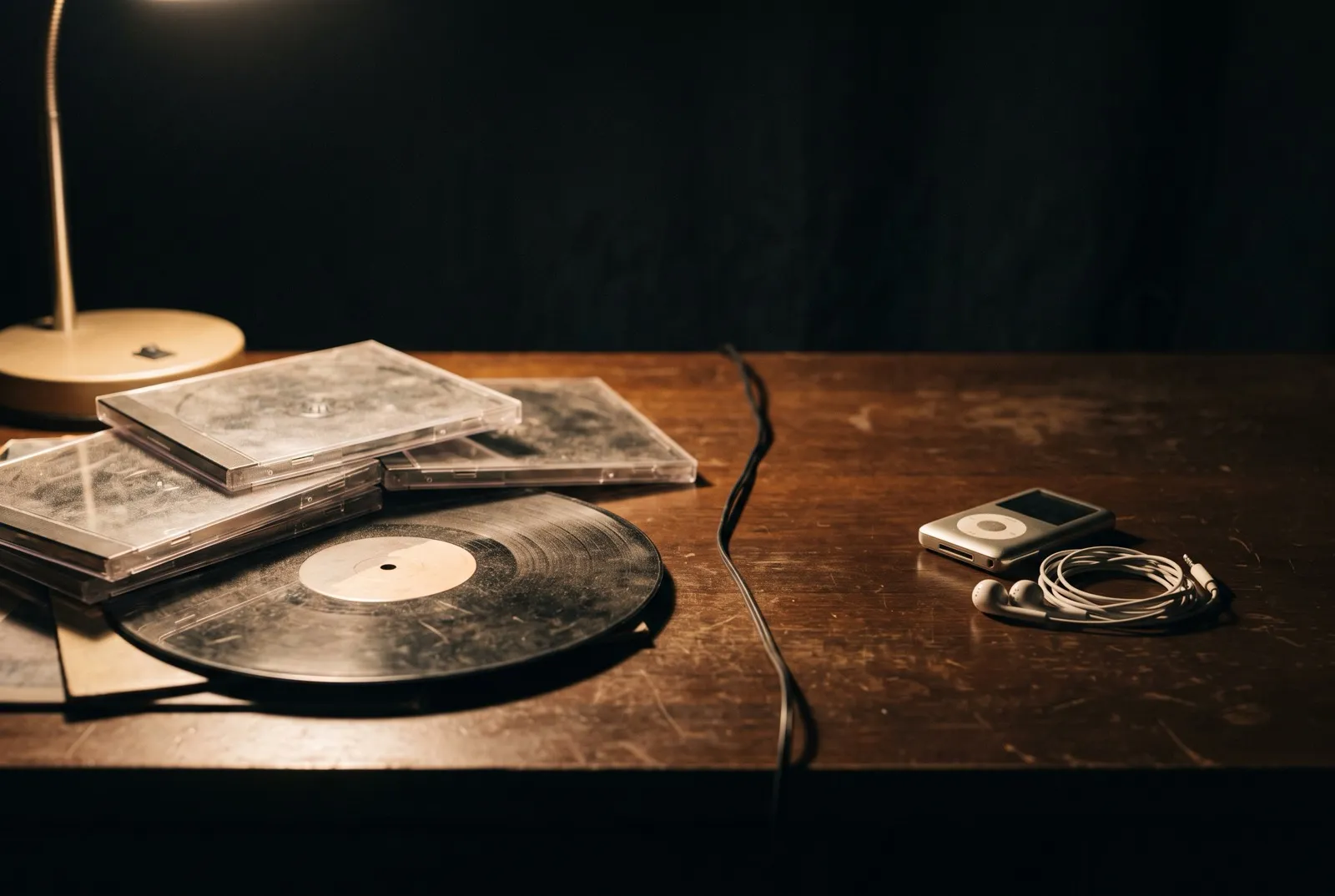
Napster and the mp3 strip music of its weight, and with it goes the distance this series opened with: you cannot arrive late to something that arrives instantly. The door opens both ways, but the same freedom that released the musician destroyed the economy that sustained them.
Series
A History of Chilean Rock · Chapter 15: The Golden Age and the End of the Millennium
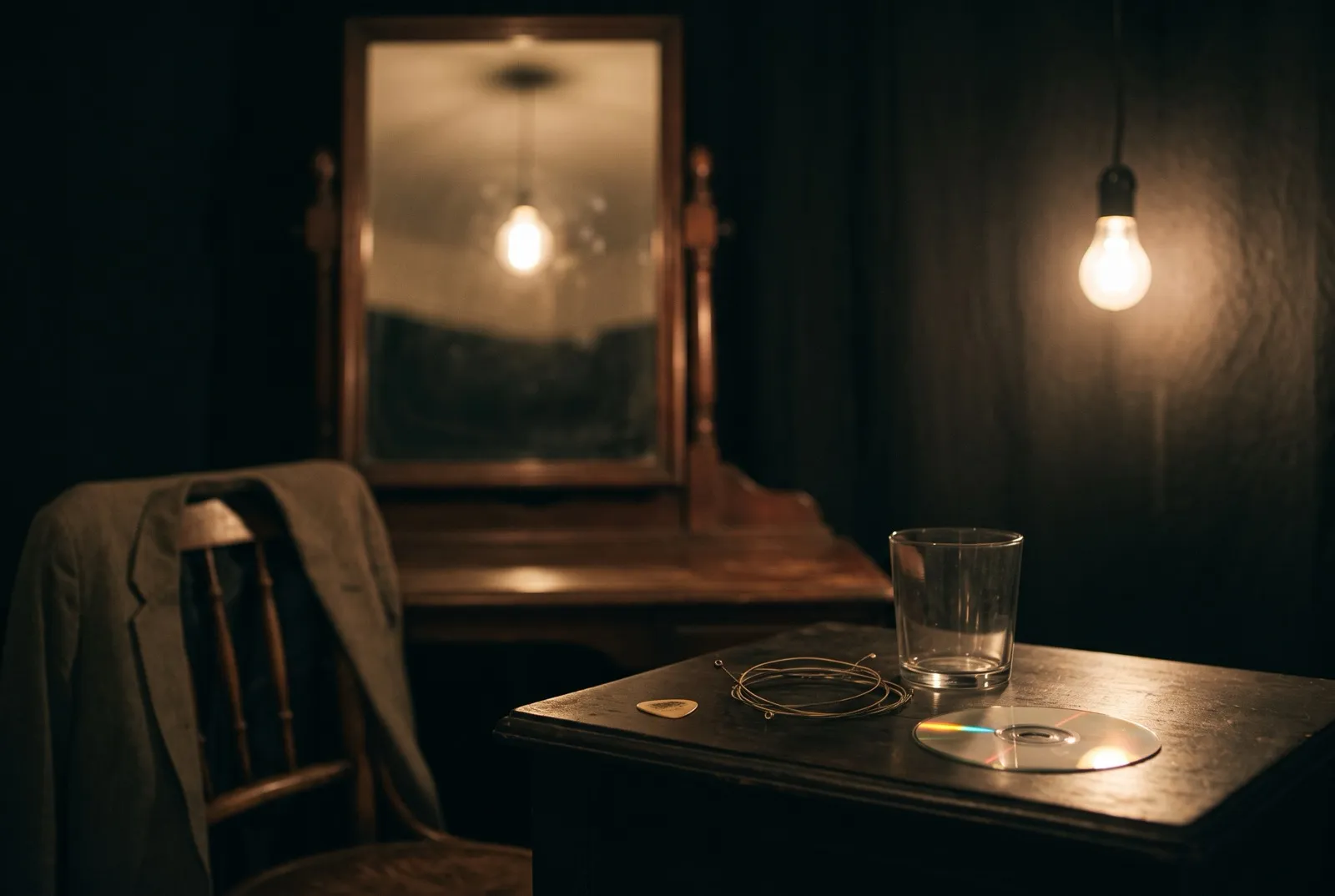
As the world crosses into the year 2000, Chilean rock reaches its peak and loses its last inhibition: it stops measuring itself against a distant "real thing". Los Tres say goodbye in Concepción just as the new century begins, and in that same city Los Bunkers had already existed for months.

Series
A History of Chilean Rock · Chapter 14: Joy and Rage
While the world surrenders to Britpop, the echo reverses: through MTV Latino, Chilean rock finally goes out to be heard. And Los Tres, from Concepción, conquer the screen not by copying the north but by taking Roberto Parra's cueca. Yet beneath the joy lay real losses and a rage that would not go away.
Rewind with us
Comments · 0
No one has commented yet. Open the conversation.