
Series
A History of Chilean Rock · Chapter 12: The Stadium Comes Back
By Rebobinados · Published on August 26, 2026
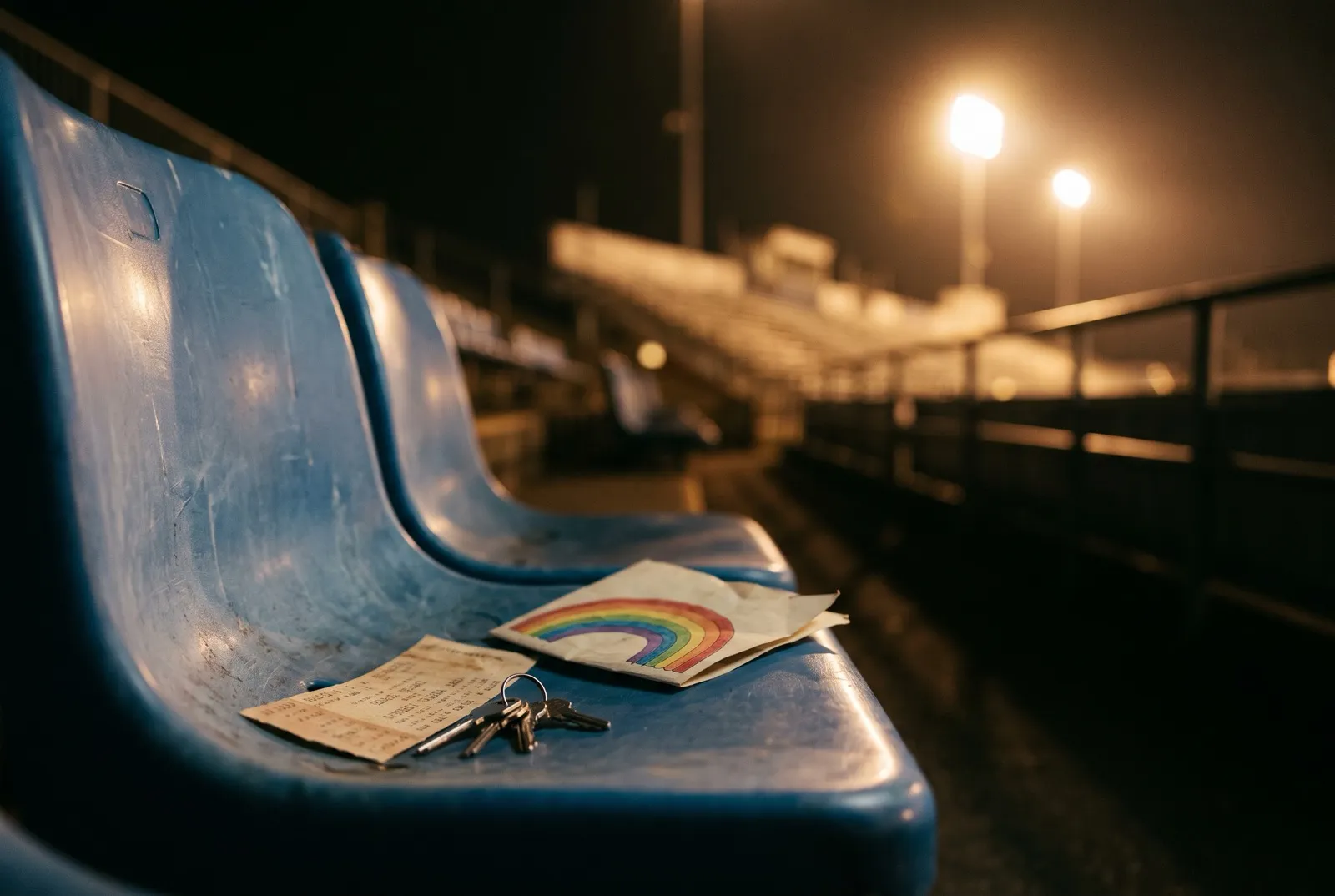
Ilustración: Rebobinados
The end of the eighties was, around the world, the time of walls coming down. The Cold War was thawing, and in November 1989 the Berlin Wall would fall — the concrete barrier that had split a city and a whole world in two. It was an era when walls that had seemed eternal suddenly began to crack. And in Chile, the generation that had spent the decade making the sound of the future out of a drum machine to endure the present was about to watch that present move: there was a wall of its own about to be tested, not concrete, but fear.
Joy as a weapon
The 1980 Constitution, the mould we looked at, had scheduled a plebiscite for 1988. The question was simple and enormous: Yes, and Pinochet stayed eight more years; No, and the road to elections opened. And something changed in how that vote was fought. The No campaign decided not to fight with rage alone — and there was plenty of rage, all of it justified — but with joy. "La alegría ya viene", it said: joy is coming. A rainbow, a catchy song, a television slot that instead of showing the horror showed a possible future. They turned hope into a weapon. On 5 October 1988, the No won. By its own rules, the dictatorship had to begin leaving. The exiles were coming home — Inti-Illimani had returned that September — and Chile's voice was on its way back, this time able to speak out loud.
The first stadium show
And five months later, with the country opening up for the first time in sixteen years, something happened that closes a circle this series has been drawing from the very beginning. On 7 March 1989 Chile got the first stadium-sized concert in its history: Rod Stewart, at the Estadio Nacional, before some seventy thousand people. It was the first mass music event that venue had ever seen.
The stadium's three faces
That venue. Stop and consider which one it was. The Estadio Nacional that in 1962 had filled with football and celebration during the World Cup. The same one that in 1973, after the coup, had been turned into a detention and torture centre, with thousands of prisoners in its stands. The stadium we told you, chapters ago, to hold in your mind, because it would come back. It came back that night. After sixteen years of dictatorship, seventy thousand people — old, young, children — gathered in that same place, finally without fear of being hunted, to sing at the top of their lungs under the lights, in the stands where people had been locked up and killed. The place of celebration that had become the place of terror was a place of celebration again. The stadium's three faces, complete: joy, horror, and joy once more. Music gave that space back what had been torn out of it.
It was not a fairy tale
Now, you tell a child the whole story, so let us not paint this as a fairy-tale ending, because it was not one. The exit from dictatorship was negotiated, half-finished: Pinochet stayed on as commander of the army for years, the 1980 Constitution remained in force, the crimes went unpunished for a long time, and the wounds did not close with one vote or one concert. And the Rod Stewart show was not a political act: it was a British rocker in a yellow jacket singing "Hot Legs", pure imported entertainment. But that is precisely where its force lay. What healed that night was not the songs: it was that seventy thousand people could be together, packed in, in the dark, in that stadium, without looking over their shoulders. An ordinary joy, a normal concert, in a country and a place where ordinary joy had been impossible. Sometimes freedom is not felt while singing an anthem, but while doing, without fear, something as simple as going to a gig.
So rewind to that decade, which opened with a mould imposed by force and a shout from three kids in San Miguel, and closed with a vote and a concert. The country that had learned to sing in code, in dimly lit peñas; that had then sung from exile, on the other side of the sea; that later had shouted in the streets among the banging pots, could finally sing out loud, in full light, seventy thousand at once, in the very stadium where they had tried to silence its voice forever. Chile's voice had made the whole journey home. What came next — democracy, its promises and its debts, and a music that would learn to sound in freedom — is the story of the next chapter.
Sources
The national plebiscite of 5 October 1988, provided for in the 1980 Constitution, pitted "Yes" (continuity for Augusto Pinochet) against "No"; the "No" won with 55.99% of valid votes against 44.01%, opening the way to the 1989 elections and the return of democracy in March 1990. The "No" campaign was marked by a hopeful tone ("La alegría ya viene") and by its television slot. Inti-Illimani returned from exile in September 1988. On 7 March 1989 the British musician Rod Stewart performed at the Estadio Nacional as part of the "Out of Order" tour, in what is considered the first stadium-scale concert and the first mass music event in that venue's history; most sources put attendance at around 70,000, though some cite 80,000. The press described it as the first time in sixteen years of dictatorship that a crowd could gather without fear of being hunted. The Estadio Nacional had hosted the final stage of the 1962 World Cup and, after the 1973 coup, operated as a detention and torture centre. On the world clock: the fall of the Berlin Wall in November 1989 and the end of the Cold War. Chile's transition was negotiated and gradual; the 1980 Constitution remained in force, with reforms, and various outstanding human rights matters stayed open for years. No song lyrics are reproduced, for copyright reasons. Sourced from Memoria Chilena, the Archivo Nacional, Wikipedia, La Tercera, Radio Concierto and other press coverage.
Keep rewinding

Series
A History of Chilean Rock · Chapter 16: Music Loses Its Weight
Napster and the mp3 strip music of its weight, and with it goes the distance this series opened with: you cannot arrive late to something that arrives instantly. The door opens both ways, but the same freedom that released the musician destroyed the economy that sustained them.
Series
A History of Chilean Rock · Chapter 15: The Golden Age and the End of the Millennium
As the world crosses into the year 2000, Chilean rock reaches its peak and loses its last inhibition: it stops measuring itself against a distant "real thing". Los Tres say goodbye in Concepción just as the new century begins, and in that same city Los Bunkers had already existed for months.
Series
A History of Chilean Rock · Chapter 14: Joy and Rage
While the world surrenders to Britpop, the echo reverses: through MTV Latino, Chilean rock finally goes out to be heard. And Los Tres, from Concepción, conquer the screen not by copying the north but by taking Roberto Parra's cueca. Yet beneath the joy lay real losses and a rage that would not go away.
Rewind with us
Comments · 0
No one has commented yet. Open the conversation.