
Series
A History of Chilean Rock · Chapter 13: The Avalanche
By Rebobinados · Published on August 27, 2026
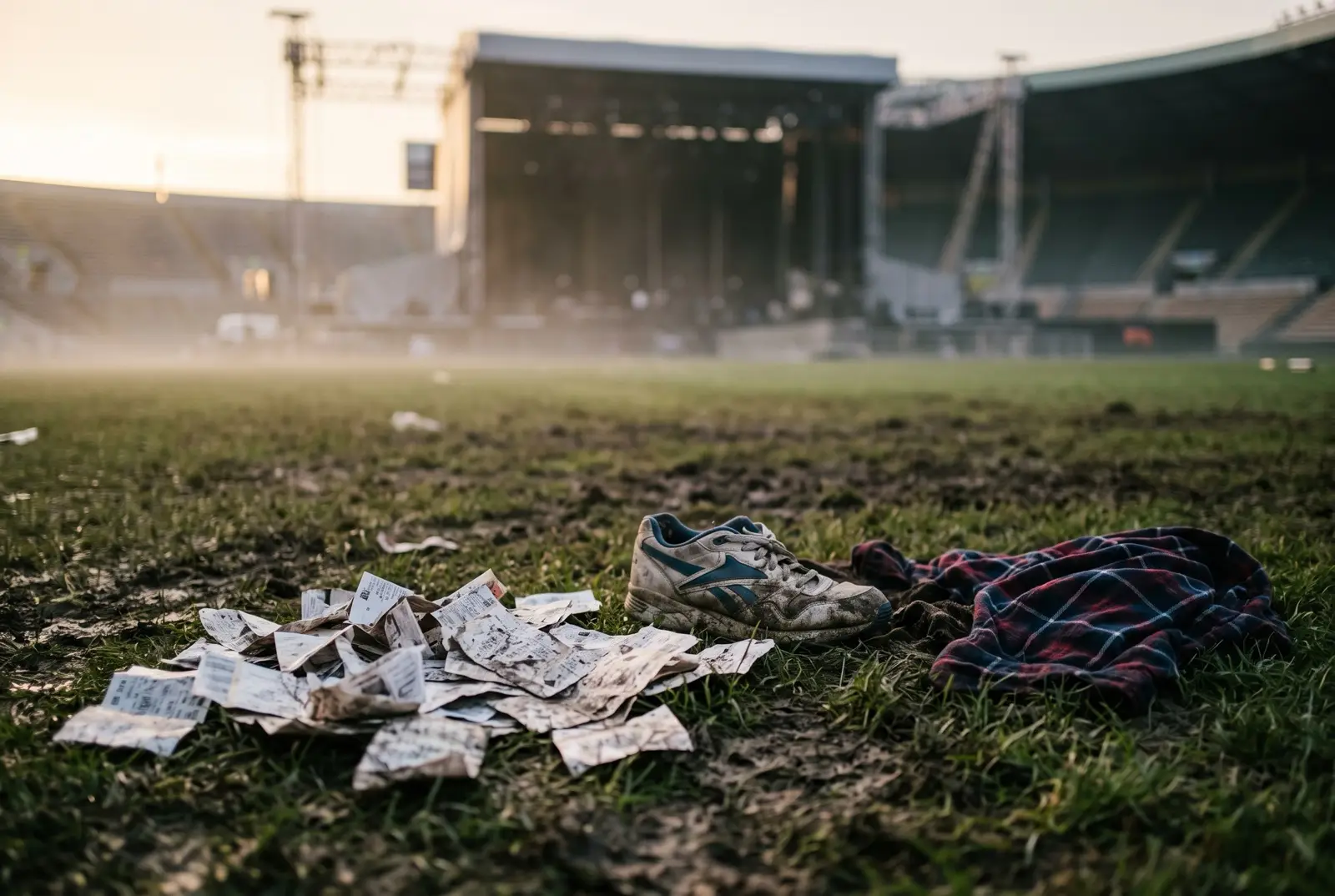
Ilustración: Rebobinados
In the early nineties, on the other side of the planet, a handful of young people from Seattle invented the sound of the decade. They called it grunge: dirty guitars, rage without posturing, lumberjack shirts, the music of a generation uncomfortable with itself. Nirvana released "Nevermind" in 1991, Pearl Jam released "Ten" the same year, and the whole world identified with that mix of fury and helplessness. The king of it all, Kurt Cobain, a man who hated being king, would take his own life in 1994. That was the world's new sound. And Chile, for the first time in a long while, did not hear it years late: it heard it almost at the same moment.
The whole world came through the open door
Because something else was happening here, different but enormous. Rod Stewart, in 1989, had opened a door that had been shut for sixteen years. And through that door the entire world began to pour in, all at once, in an avalanche. Bon Jovi came in 1990. That same year, the Rock in Chile festival brought David Bowie and Eric Clapton to the same stage.
An embrace of hope
And in October 1990 something happened that gathers this whole history into a single image: the Amnesty International concerts, "Desde Chile… un abrazo a la esperanza" — from Chile, an embrace of hope — drew more than a hundred thousand people over two nights at the Estadio Nacional, with Sting, Peter Gabriel, Sinéad O'Connor and, alongside them, Chileans like Congreso and Inti-Illimani. A human rights concert, in the same stadium that had been a detention centre after the coup. That year the Nacional was also filled by Silvio Rodríguez, the Cuban singer the military had banned for years. Music was coming back, and coming back big.
And then it never stopped
Guns N' Roses, in December 1992, at the peak of their fame, broke the stadium's attendance record. Michael Jackson arrived in October 1993. And behind them, everyone: U2, Metallica, the Rolling Stones, Paul McCartney, Madonna. The country the dictatorship had kept off the world circuit for sixteen years became, from one year to the next, a compulsory stop on the planet's tours.
The echo becomes synchrony
For thirty years, since the first chapter, Chile had listened to the world's music from far away, with an echo and a delay: the record that crossed the ocean and arrived months, or years, late; the kid who put a cassette on in his bedroom dreaming of seeing that band one day, knowing he might never be able to. Now, for the first time, that same kid could stand in a stadium and see Guns N' Roses, or Michael Jackson, live, the same year the rest of the world saw them. The echo was turning into synchrony. The distance this series opened with — Chile listening from afar — finally began to close.
What the party cost
It has to be said that the avalanche was not all happiness. It was also a market opening up, and an opening that was partly superficial: Chile was becoming a point of sale on the touring map. And there was chaos and tragedy while the country learned, the hard way, how to stage a stadium show. The 1992 Guns N' Roses concert saw around two hundred arrests, disturbances and several people seriously hurt; Axl Rose played drunk. Among the injured was Myriam Henríquez, fifteen years old, crushed against a barrier by the weight of the crowd during the show. She died a week later, in hospital. Reconnecting with the world had a price, and that night it was paid in the worst possible way.
Synchrony included the grief
And the very sound Chile was finally plugging into in real time carried a wound of its own. Grunge, the music of a whole generation's discomfort, lost its king when Kurt Cobain took his own life in April 1994. The world Chile was syncing up with was itself a world in pain. Synchrony included the grief.
So rewind to those early nineties, if you can remember them. What were you doing? Amid the noise of a door shut for sixteen years swinging wide open all at once, the two clocks of this series — the world's and Chile's, which had told different times since the first page — began, concert by concert, to tell the same one. The harder half of the story was still missing: whether Chile would only receive the world, or whether the world would ever listen to Chile. That is what the next chapter is about.
This piece discusses suicide and depression. If you are going through a difficult time or having thoughts of harming yourself, you are not alone and help is available. In Chile you can call *4141 free of charge, the Ministry of Health's suicide-prevention line, available 24 hours a day.
Sources
After the Rod Stewart concert (1989), Chile saw a wave of international stadium concerts as democracy returned. In 1990 came Bon Jovi and the Rock in Chile festival (with David Bowie, Eric Clapton, Bryan Adams and Mick Taylor). On 12 and 13 October 1990, the Amnesty International concerts "Desde Chile… un abrazo a la esperanza" were held at the Estadio Nacional with Sting, Peter Gabriel, Sinéad O'Connor, Rubén Blades, Wynton Marsalis, Luz Casal and the Chilean acts Congreso and Inti-Illimani; attendance figures vary by source, with more than 70,000 on the first night and a total usually placed above one hundred thousand. That year Silvio Rodríguez, banned by the military for years, also performed. Guns N' Roses played on 2 December 1992 before a crowd that broke the stadium record (sources give between 85,000 and more than 95,000); the show was marked by incidents, around two hundred arrests and several serious injuries. Myriam Henríquez, aged 15, was crushed against a barrier by the weight of the crowd during the concert and died a week later. Michael Jackson made his Chilean debut on 23 October 1993. U2, Metallica, Madonna, Paul McCartney, The Rolling Stones and Roger Waters followed, among many others. On the world clock: the rise of grunge (Nirvana, "Nevermind", 1991; Pearl Jam, "Ten", 1991) and the death of Kurt Cobain on 5 April 1994. No song lyrics are reproduced, for copyright reasons. Sourced from Memoria Chilena, Amnistía Internacional Chile, Wikipedia, La Tercera and other press coverage.
Keep rewinding
Series
A History of Chilean Rock · Chapter 16: Music Loses Its Weight
Napster and the mp3 strip music of its weight, and with it goes the distance this series opened with: you cannot arrive late to something that arrives instantly. The door opens both ways, but the same freedom that released the musician destroyed the economy that sustained them.
Series
A History of Chilean Rock · Chapter 15: The Golden Age and the End of the Millennium
As the world crosses into the year 2000, Chilean rock reaches its peak and loses its last inhibition: it stops measuring itself against a distant "real thing". Los Tres say goodbye in Concepción just as the new century begins, and in that same city Los Bunkers had already existed for months.
Series
A History of Chilean Rock · Chapter 14: Joy and Rage
While the world surrenders to Britpop, the echo reverses: through MTV Latino, Chilean rock finally goes out to be heard. And Los Tres, from Concepción, conquer the screen not by copying the north but by taking Roberto Parra's cueca. Yet beneath the joy lay real losses and a rage that would not go away.
Rewind with us
Comments · 0
No one has commented yet. Open the conversation.