
Series
A History of Chilean Rock · Chapter 7: Exile and Silence
By Rebobinados · Published on August 24, 2026
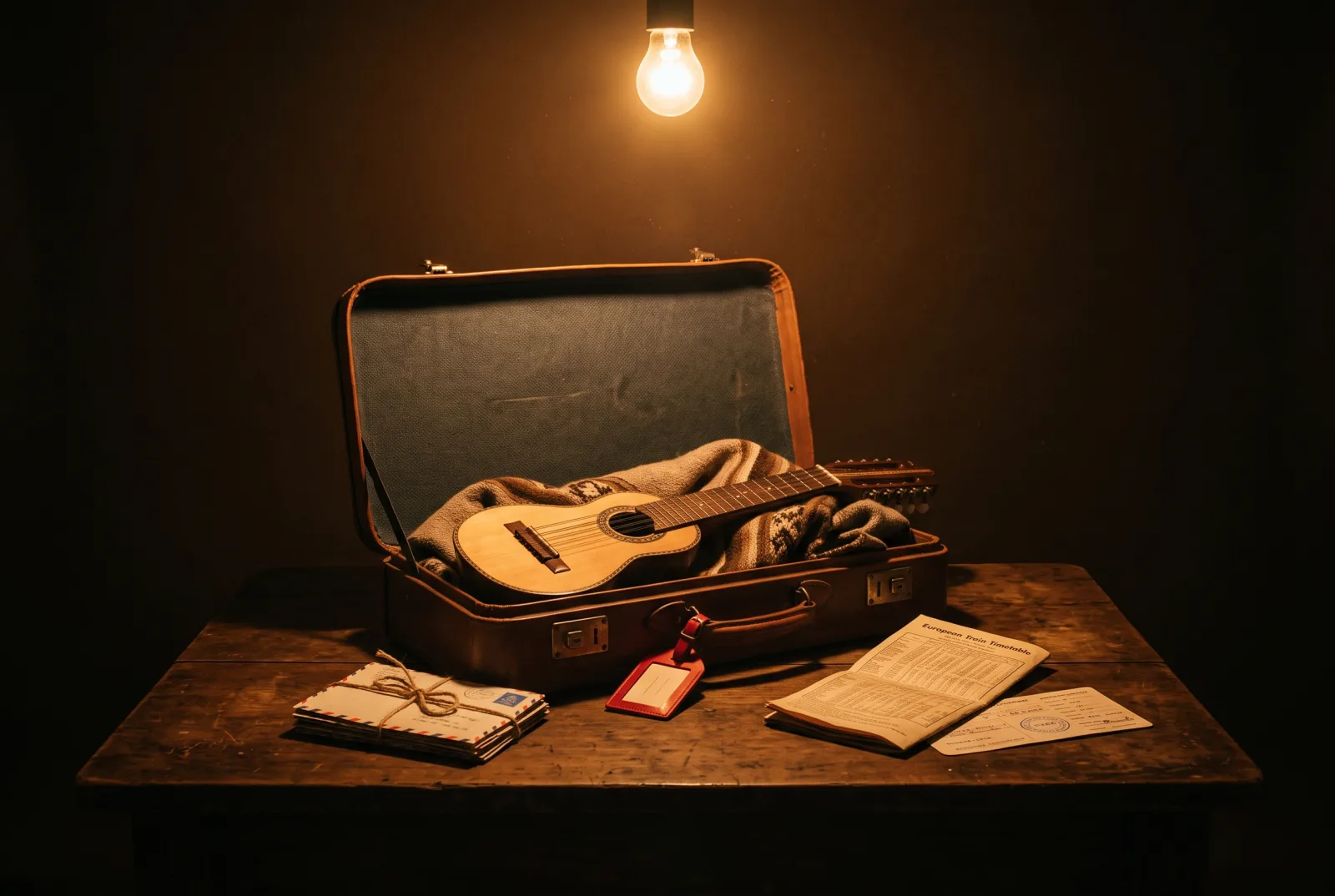
Ilustración: Rebobinados
In those years, in London and New York, young people discovered they could scream. Punk exploded: the Sex Pistols, The Clash, the Ramones, furious kids with their guitars at full volume, spitting at the system, at the queen, at the future. "No future", they said. It was young rage, loud, and above all free. They could stand on a London street corner insulting those in power, and the worst that happened was a dirty look. The north shouted its rebellion in the street, in broad daylight.
Down here, that same rage had nowhere to go. The country that had woken up mute three years earlier was living under curfew, censorship, fear. You could not shout against those in power on a street corner, because on that corner they could make you disappear. The young rage existed —of course it did— but it was covered up, swallowed, with no way out. The difference between London's punk and Santiago's silence was not talent or appetite: up there shouting was allowed, and down here you paid for it with your body. The freedom to shout, the one the north used without thinking about it, was exactly what did not exist here.
The cultural blackout
Inside, the country was living through what came to be called the cultural blackout. The Nueva Canción was banned, wiped off the radio. Dangerous records were hidden or burned. A whole generation grew up without their older siblings' music, in a grey, watched culture, afraid to sing out loud. The country that a few years earlier had been singing in the street with its fist in the air was now lowering its voice to a whisper. Inside, there was silence.
The voice went off to sing abroad
But Chile's voice did not go quiet: it went off to sing abroad. And one of the harshest paradoxes of this story took place. Inti-Illimani and Quilapayún, the two biggest groups of the Nueva Canción, were on tour in Europe on 11 September 1973 —Inti in Italy, Quila in France— and they could not come back. A one-month tour turned into fifteen years of exile. Fifteen years. They stayed out there, barred from entering their own country, and from there they did the only thing they could: sing about Chile to the world. They broke the wall of silence the dictatorship had built —the one keeping news from getting in and out— by taking the Nueva Canción to the stages of Europe, denouncing what was happening, keeping alive a music that was banned in its own land. Something extraordinary happened: Chilean music sounded freer in Rome and Paris than in Santiago. Chile's voice was singing loud. It just wasn't singing in Chile.
Concerts pressed against the border
There is one image from those years that says it all. The exiles were not allowed in, so they got as close as they could: Inti-Illimani played in Tacna, in Peru, right up against the border, and in Mendoza, on the other side of the mountains. And thousands of Chileans crossed the border to those concerts, leaving their own country to hear their own people, because their own people could not come in. The voice knocking on the door of its own house, with no permission to enter, and people going out to meet it on the threshold. That is how broken things were.
Machu Picchu, recorded in France
And in that banishment, a very long way from home, one of the greatest works of Chilean music was born. Los Jaivas, also outside the country, took a poem by Pablo Neruda, "Alturas de Machu Picchu", and turned it into music: a monumental 1981 record that sings to the Inca ruins and, underneath, to an entire continent. They recorded it in France, thousands of kilometres from the mountains they were singing about. Chile's voice reached one of its peaks precisely when it was furthest from its own land. Home, made into art from a distance.
Shouting without punishment, shouting with punishment
The contrast between the two clocks is the key to this chapter. The north's punk shouted "no future" as a pose, in free countries where the future was, for better or worse, still there. In Chile there was no need to fake the absence of a future: for thousands of exiles, for those who stayed behind in silence, the future had genuinely been broken. One rebellion was a permitted scream; the other, a punished one. And that difference —who gets to shout without consequences and who pays for it— is one of the things a country should not forget when it remembers where it came from.
But the silence inside was not as total as it looked. In the shadows, hidden by fear, something was starting to move: in the peñas that survived, among those who sang quietly what could not be sung out loud, a new resistance was gathering. The voice, inside, was not dead: it was crouching, waiting for its moment to stand up. That is what the next chapter is about.
Rewind, then, to that Chile split into two halves of one same voice: the one singing free but far away, in Rome, in Paris, on the border; and the one that stayed home, silent, waiting. For fifteen years, Chile's voice was an exiled voice, singing to its country from a distance, unable to touch it. It would come back —those who left returned in 1988, with democracy— but that was still a long way off. For now it sang from the other side of the sea, and at home, someone listened in secret, on a radio turned down low, and knew they were not alone.
Sources
Inti-Illimani (exiled in Italy, based in Rome) and Quilapayún (exiled in France) were on tour in Europe at the time of the coup of 11 September 1973; both, cultural ambassadors of the Allende government, were barred from returning and lived fifteen years in exile, until September 1988, when — with the entry ban lifted — Inti-Illimani returned to Chile. From exile they spread the Nueva Canción around the world and supported the solidarity campaigns and the push for a return to democracy, breaking the dictatorship's information blockade. Inti-Illimani played near the border —Tacna (Peru, 1982) and Mendoza (Argentina, 1985 and 1986)— concerts that many Chileans crossed the border to attend. Los Jaivas, also in exile and based in France, recorded "Alturas de Machu Picchu" in 1981, based on the poem by Pablo Neruda. In Chile, the dictatorship imposed censorship, curfew and the banning of the Nueva Canción, in what became known as the "cultural blackout". On the world clock: the explosion of punk (Sex Pistols, The Clash, Ramones) in 1976-1977. Information drawn from Wikipedia, MusicaPopular.cl and press coverage.
Keep rewinding
Series
A History of Chilean Rock · Chapter 16: Music Loses Its Weight
Napster and the mp3 strip music of its weight, and with it goes the distance this series opened with: you cannot arrive late to something that arrives instantly. The door opens both ways, but the same freedom that released the musician destroyed the economy that sustained them.
Series
A History of Chilean Rock · Chapter 15: The Golden Age and the End of the Millennium
As the world crosses into the year 2000, Chilean rock reaches its peak and loses its last inhibition: it stops measuring itself against a distant "real thing". Los Tres say goodbye in Concepción just as the new century begins, and in that same city Los Bunkers had already existed for months.
Series
A History of Chilean Rock · Chapter 14: Joy and Rage
While the world surrenders to Britpop, the echo reverses: through MTV Latino, Chilean rock finally goes out to be heard. And Los Tres, from Concepción, conquer the screen not by copying the north but by taking Roberto Parra's cueca. Yet beneath the joy lay real losses and a rage that would not go away.
Rewind with us
Comments · 0
No one has commented yet. Open the conversation.