
Series
A History of Chilean Rock · Chapter 8: The Underground Resistance
By Rebobinados · Published on August 24, 2026

Ilustración: Rebobinados
In those years, the world started dancing. It was the disco era: "Saturday Night Fever", the mirror ball, the lit-up floors, bodies moving under coloured lights. Music made for escape, for Saturday night, for forgetting the week and the world. The north turned up the volume and gave itself over to the party. Dancing to forget.
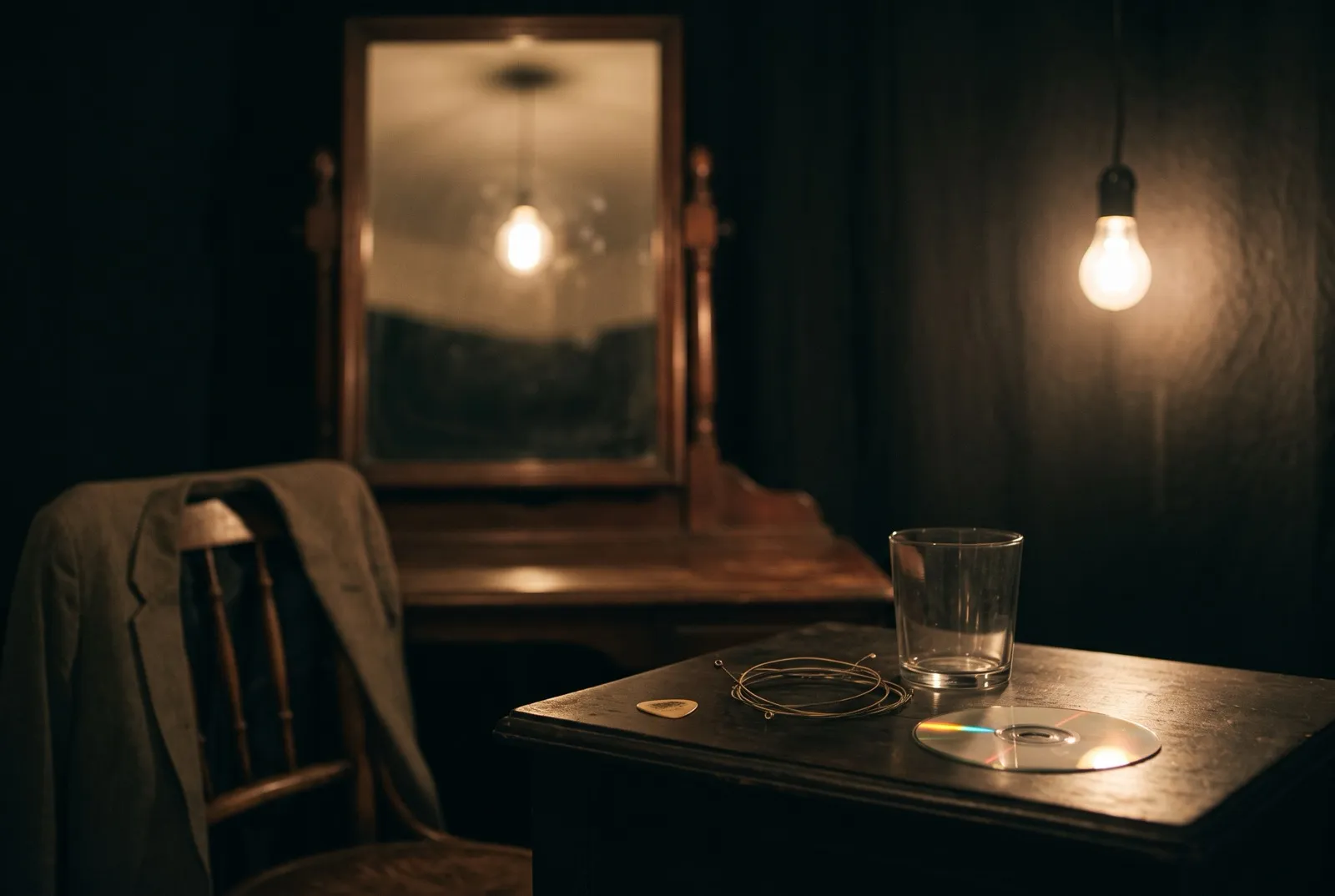
Down here, at that very same moment, music was heading in exactly the opposite direction. No mirror balls, no volume: a candle, a guitar, a low voice in a hidden room. While outside people danced to forget, inside people sang to remember, and they sang quietly, because singing the wrong thing loudly could cost you your disappearance. That is the sentence of this chapter, and it is not a pretty metaphor: you had to sing quietly so as not to disappear.
Singing in code
With the Nueva Canción beheaded —its greats dead or in exile— you would think music had gone dark inside the country. It did not. A new generation, kids fresh out of secondary school, university students, picked up the baton. They gave it a name: Canto Nuevo, coined in 1976 by Ricardo García, the same man who years earlier had named the Nueva Canción. But these ones could not sing the way their elders had, head-on, because head-on got you killed. So they learned to sing in code. Their lyrics were metaphor, poetry, hidden meanings: songs that on the outside were about a horse, the rain, a river, and on the inside were about the ones who were gone, about lost democracy, about fear. What could not be said was sung in disguise. And whoever was listening understood. It was a secret language among those who knew.
The peñas, the last place left to gather
That language had its temples: the peñas. From the mid-seventies onwards they kept appearing, semi-clandestine, small places where people gathered to hear this singing in a low voice. The most remembered was the Café del Cerro, in Bellavista, a kind of cathedral of music against the dictatorship. There, and in other peñas, played Santiago del Nuevo Extremo, Schwenke y Nilo, Sol y Lluvia, Isabel Aldunate, Eduardo Peralta, so many others. And people did not come only for the music. They came for something else, something deeper: to know they were not alone. In a country where fear isolated you, where you did not know who to trust, walking into a peña and quietly singing the same thing as the person beside you meant discovering, without saying a word, that you were not on your own. That there were more like you. Music became the last place where a gagged country could gather and be a community.
Whispering took more courage than shouting
And this had a price, because these were not quiet parties. The dictatorship's secret police watched those spaces, carried out raids, arrested people. Singing in a peña was nothing like London's punk, shouting rage without consequence. Here, the metaphor was not shyness: it was the only way to keep singing without being taken away. Every disguised song was an act of nerve, a challenge in a low voice. It took more courage to whisper in the Chile of 1978 than to shout on any free street corner in the world. The Church, through the Vicaría de la Solidaridad, protected part of this network; the rest was held up by the sheer stubbornness of people who refused to go completely quiet.
What also has to be said
We should be honest about what it was: something small, fragile, frightened, watched. Not a triumphant resistance, but a flame cupped in the dark, always at risk of being put out. It was tied to one political sector, the battered left, and by the mid-eighties it faded away. But it did the most important thing that could be done at that moment: it kept music alive inside the country, it did not let the silence be total. It kept the fire lit.
And that same room connects this chapter to everything that comes next. The Café del Cerro, which sheltered the whisper of the Canto Nuevo, was also the first stage for others pushing their way up: Los Prisioneros, La Ley, the early Los Tres. In the very place where people sang in code, with a candle and a guitar, some very different kids were standing up. Kids who had grown up knowing nothing but the dictatorship, raised not on the quena and the charango but on the rock and pop coming from the north, and who had no intention whatsoever of singing in metaphor. They were going to plug in the electric guitar and say it head-on. The whisper was about to become a shout. The same room that guarded the flame was going to watch the fire start. That is what the eighties are about.
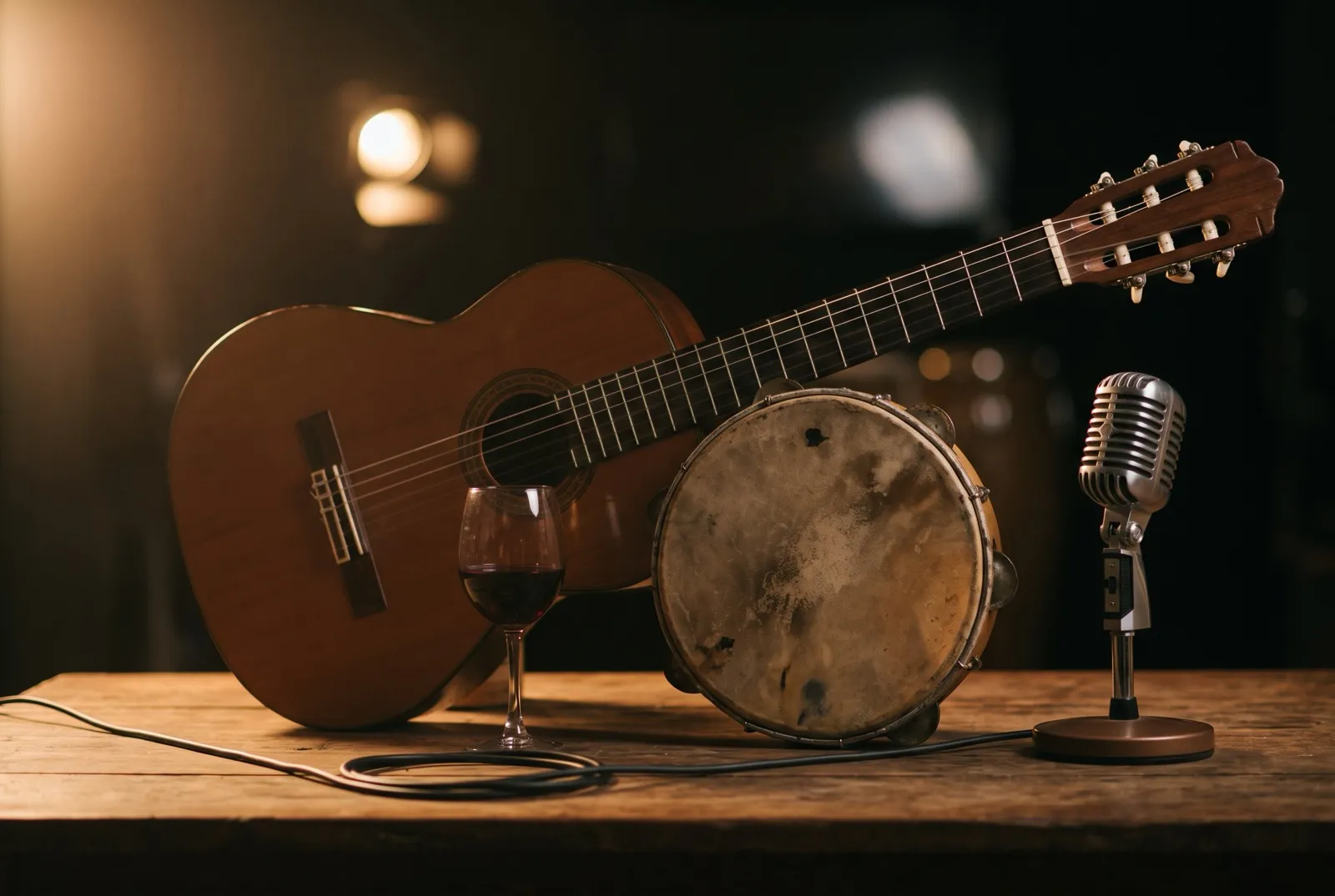
Rewind, then, to those peñas that smelled of candle wax, where a country that could not speak sang under its breath so as not to forget itself. Chile's voice, inside, in those years, was a whisper in a dark room. But a whisper is not silence. It was the sound of a country refusing to be completely silenced, singing quietly so as not to disappear, and in that same dark room passing the flame, hand to hand, to a new generation that would very soon sing it at full volume. The resistance started in a low voice. It was about to raise it.
Sources
The Canto Nuevo was the first musical response to emerge inside Chile against the dictatorship's cultural repression; the name was coined in 1976 by the broadcaster and producer Ricardo García, who years earlier had named the Nueva Canción. Faced with censorship, its lyrics were symbolic and metaphorical, because singing explicitly political texts was extremely dangerous. It developed in semi-clandestine peñas —the Café del Cerro, in Bellavista, run by Mario Navarro Andrade, was its emblematic venue; also the Peña Doña Javiera, the Café Ulm and university and religious premises— under surveillance by the secret police (DINA and later CNI) and with the protection of the Vicaría de la Solidaridad (1976-1992). Among its figures: Santiago del Nuevo Extremo, the duo Schwenke y Nilo, Sol y Lluvia, Ortiga, Aquelarre, Isabel Aldunate, Eduardo Peralta, Hugo Moraga and Nano Acevedo, among many; the radio programme "Nuestro Canto" (Miguel Davagnino, Radio Chilena, 1976) helped spread it. The Café del Cerro was also the first stage for Los Prisioneros, La Ley and the early phase of Los Tres. The movement faded as the eighties went on. On the world clock: the rise of disco at the end of the seventies ("Saturday Night Fever", 1977). Information drawn from Memoria Chilena, MusicaPopular.cl, the journal Resonancias (UC) and press coverage.
Keep rewinding

Series
A History of Chilean Rock · Chapter 16: Music Loses Its Weight
Napster and the mp3 strip music of its weight, and with it goes the distance this series opened with: you cannot arrive late to something that arrives instantly. The door opens both ways, but the same freedom that released the musician destroyed the economy that sustained them.
Series
A History of Chilean Rock · Chapter 15: The Golden Age and the End of the Millennium
As the world crosses into the year 2000, Chilean rock reaches its peak and loses its last inhibition: it stops measuring itself against a distant "real thing". Los Tres say goodbye in Concepción just as the new century begins, and in that same city Los Bunkers had already existed for months.
Series
A History of Chilean Rock · Chapter 14: Joy and Rage
While the world surrenders to Britpop, the echo reverses: through MTV Latino, Chilean rock finally goes out to be heard. And Los Tres, from Concepción, conquer the screen not by copying the north but by taking Roberto Parra's cueca. Yet beneath the joy lay real losses and a rage that would not go away.
Rewind with us
Comments · 0
No one has commented yet. Open the conversation.