
Incubus
Twenty-two years later they recorded it again
By Rebobinados · Published on October 1, 2026
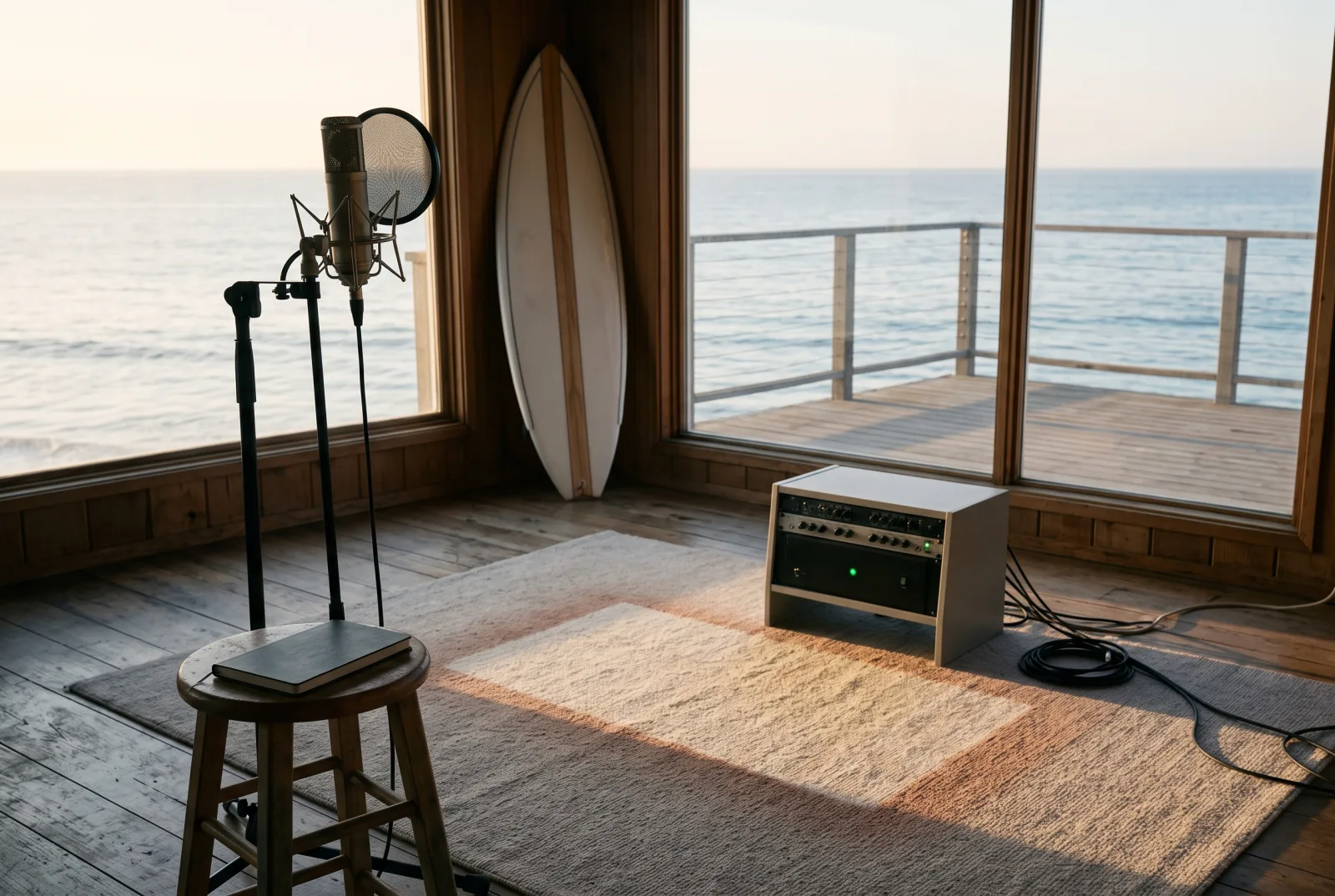
Ilustración: Rebobinados
In 1999, when American rock radio was taken over by the scream, Incubus released an album whose most successful single was an acoustic song. "Drive" reached number one on the Modern Rock chart on 3 March 2001 and number nine on the Billboard Hot 100 in July of that same year, with no distortion, no shouted chorus and none of what was considered compulsory at the time. It was a band that had started out playing funk-metal, that had a DJ in the line-up and that shared festival bills with Korn and Limp Bizkit without sounding like either of them. Twenty-two years later they did something almost nobody does: they went back into the studio to record again, song by song, the album that came immediately after.
Calabasas and a DJ in the line-up
Incubus was formed in 1991 in Calabasas, California, with Brandon Boyd on vocals, Mike Einziger on guitar and José Pasillas on drums. Then came bassist Alex Katunich, who signed himself Dirk Lance, and Gavin Koppell on the decks, under the alias DJ Lyfe. They were still teenagers.
Having a DJ in a rock band was, in those years, what defined nu-metal, but Incubus used it for something else. It was not after the scratch as a percussion effect: it was after textures, layers and background noises that would widen the space of the song. Koppell was thrown out in 1998 and replaced by Chris Kilmore, who stayed in the post.
The first two albums, Fungus Amongus from 1995 and S.C.I.E.N.C.E. from 1997, are frankly funk-metal: energetic, restless, with plenty of ideas per minute and little patience to develop them. It is the stage some followers champion as the freest, and the one the band itself abandoned when it discovered it could write whole songs instead of collections of ideas.
An acoustic song on the radio of the scream
Make Yourself came out on 26 October 1999 and is the album on which Incubus stops being a circuit band and becomes a radio band. It is certified double platinum in the United States and placed three singles in the top three of the alternative chart: "Pardon Me", "Stellar" and "Drive".
"Drive" was released as the third single on 14 November 2000, a year after the album, and it was the one that changed the scale of everything. Two acoustic guitars, a calm pulse and a lyric about stopping letting fear carry you along and taking control of your own life. It reached number one on the Modern Rock chart on 3 March 2001 and number nine on the Hot 100 on 28 July that year, and it won Modern Rock Single of the Year at the 2001 Billboard Music Awards.
What is interesting is not that a ballad worked —they worked all the time— but who it came from. The bands in that pigeonhole used the soft song as a truce between two blasts. Incubus put it at the centre and built the rest around it, just as Tool had done with length: treating the format as something flexible instead of a contract.
A house in Malibu
Morning View was recorded in 2001 in a beachfront mansion in Malibu, rented for the occasion and turned into a studio. The album takes its name from the street where the house stood. It debuted at number two on the Billboard 200 and out of it came "Wish You Were Here" —a song of their own, which shares its title with the Pink Floyd one and has no connection to it— and "Nice to Know You".
You can hear where it came from. There is air in the mixes, space between the instruments and a calm that was not in the earlier albums. That way of recording, with the band living where it worked, is probably the most influential decision they made: it defines the sound they are recognised by.
Twenty-two years later, again
Then came A Crow Left of the Murder..., from 2004, the last album on which they can still be called alternative metal, and Light Grenades, from 2006, their first debut at number one on the Billboard 200. Along the way the bass changed twice: Katunich left in 2003 over irreconcilable creative differences, Ben Kenney held the post until 2024 and Nicole Row became a full member in February of that year.
And in 2024 they released Morning View XXIII, a complete re-recording of the 2001 album made with the arrangements they had arrived at after twenty-three years of playing those songs live. It is a riskier idea than it looks, because it invites direct comparison and the attempt almost always comes off worse. They did it anyway, and it is consistent with everything else: a band that was always more interested in the version than in the relic.
What to remember
Incubus is the rare case of a band that arrived with the nu-metal wave, sold millions, and today barely sounds like that period. The reason is concrete and can be pointed at with a finger: their biggest hit is an acoustic song about stopping being afraid, their best-remembered album was recorded in a beach house and their most eye-catching tool, the DJ, was used to put air in rather than to hit.
The choice came at a cost. They were never the hardest of their generation nor the biggest sellers, and the press took a while to take them seriously because they arrived in the same van as everyone else. But the music held up, and there is a proof that is not a matter of opinion: in 2024 they re-recorded the whole of Morning View because those songs still had enough in them to be played. Few bands from 2001 could do the same without the filler showing.
Sources
Incubus is an American rock band formed in 1991 in Calabasas, California, by Brandon Boyd (vocals), Mike Einziger (guitar) and José Pasillas (drums), joined by bassist Alex Katunich, known as Dirk Lance, and Gavin Koppell on the decks, known as DJ Lyfe. Koppell was sacked in 1998 and replaced by Chris Kilmore. Their first albums were "Fungus Amongus" (1995) and "S.C.I.E.N.C.E." (1997), funk-metal in base. "Make Yourself" was released on 26 October 1999 through Epic and Immortal Records, is certified double platinum by the RIAA and placed its three singles —"Pardon Me", "Stellar" and "Drive"— in the top three of Billboard's Alternative Songs chart. "Drive" was released as the third single on 14 November 2000, reached number one on Billboard's Modern Rock Tracks chart on 3 March 2001 and number nine on the Billboard Hot 100 on 28 July 2001, and received the Modern Rock Single of the Year award at the 2001 Billboard Music Awards. "Morning View" (2001) was recorded in a beachfront mansion in Malibu, California, whose street name gives the album its title; it debuted at number two on the Billboard 200 and included "Wish You Were Here" —the band's own composition, unrelated to the Pink Floyd song of the same name— and "Nice to Know You". "A Crow Left of the Murder..." (2004) and "Light Grenades" (2006) followed, the latter their first debut at number one on the Billboard 200. Alex Katunich left the band in 2003 over irreconcilable creative differences; Ben Kenney held the bass until 2024 and Nicole Row, who had joined the touring line-up in March 2023, became a full member in February 2024. In May 2024 the band released "Morning View XXIII", a complete re-recording of the 2001 album with the arrangements developed over twenty-three years of live performances, and it is the first work with Nicole Row on bass. Profile compiled for Rebobinados with fact-checking; interpretations of the meaning of the work are offered as the author's reading. No song lyrics are reproduced, for copyright reasons. Information drawn from Billboard, Wikipedia, AllMusic and other coverage.
Keep rewinding
90s
hard rock
Lenny Kravitz
He doesn't play that guitar
The riff of "Are You Gonna Go My Way" (9 March 1993) is not played by him: the guitar is Craig Ross's, the song is co-written with him and the Academy nominated them both for Best Rock Song in 1994. "Always on the Run" was written by Slash for Guns N' Roses. And one of his four straight male rock Grammys, the one of 23 February 2000, he won with "American Woman", by The Guess Who, from which he removed the guitar solo.
60s
hard rock
Steppenwolf
The motorcycle was a Ford Falcon
The century's biker anthem was not written by the band that sings it, and it was not about a motorcycle: Mars Bonfire wrote "Born to Be Wild" as a folk ballad about his battered Ford Falcon, and he had left the group in June 1967, before the name Steppenwolf existed. "The Pusher" is Hoyt Axton's, Easy Rider dropped it in as a temporary track, and the single stalled at no. 2 on the Hot 100 in 1968.
00s
hard rock
Thirty Seconds to Mars
The seven-year law
In August 2008, EMI sued them for thirty million dollars for breaching a 1999 contract they had signed before releasing a single record. They defended themselves with a Californian employment law that voids contracts of more than seven years, closed a settlement on 28 April 2009 and signed with the same label again. The Guinness record they ended up with is not a box-office one: it is three hundred and nine concerts on a single tour.
Rewind with us
Comments · 0
No one has commented yet. Open the conversation.