
Series
A History of Chilean Rock · Chapter 5: The Chilean Road
By Rebobinados · Published on August 21, 2026
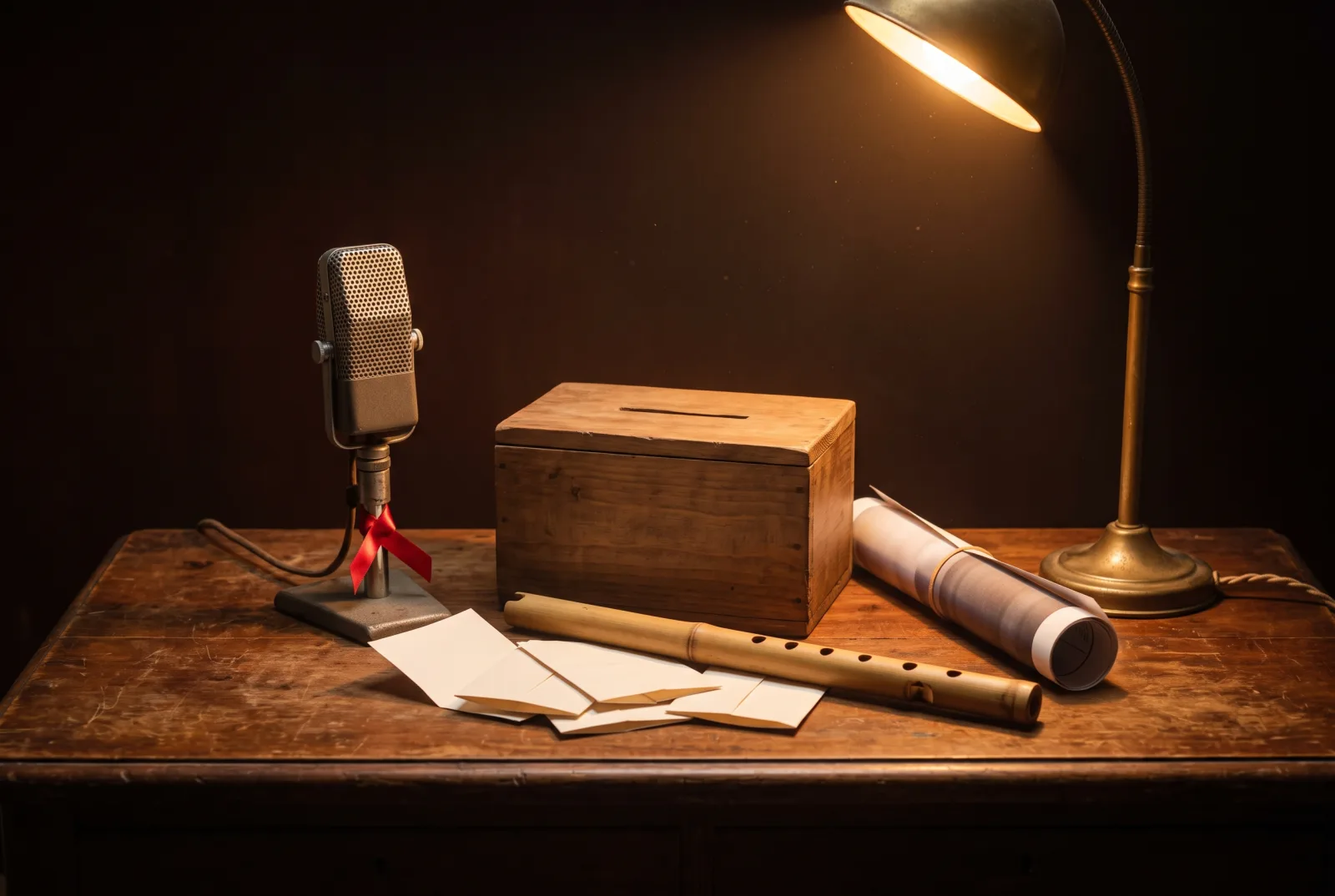
Ilustración: Rebobinados
There was a time when an entire country dared to dream out loud. It was a little over half a century ago, and all of us who are here come from what happened then. It begins, like this whole story, with two clocks showing different hours.
In 1970, the dream of the sixties was dying out in the world. The Beatles, who had been the soundtrack of a decade of hope, announced their break-up that year: the band that had made the planet dream was over. And that wasn't all. That same year Jimi Hendrix and Janis Joplin died, two of the greatest voices in rock, young, burnt out by their own excesses. The hippie party, the party of Woodstock and flowers, was fading into a hangover. The world, which had promised to change everything with love and music, woke up with a headache and the feeling that utopia had not arrived. Abroad, the dream was ending.
The Chilean road
And just then, in the southern corner of the map, Chile was beginning its own. In September 1970 a man won the presidential election, and in November he took office, a man who would change the destiny of the country: Salvador Allende. He was the first Marxist in the world to reach government through the vote, in a free election, and the first to attempt something nobody had done: to build socialism without a war, by way of the ballot box and the law. They called it the Chilean road to socialism, and that word, "road", said everything. Not Cuba's armed path, with rifles in the mountains; a road of its own, in peace, voted for. A small country set out to change everything without firing a shot, and the world looked this way not quite believing it. While the north was coming down from its utopia, Chile was climbing into its own. The dream that was fading up there had only just been lit down here.
The dream was sung while it was being built
And that dream had a soundtrack, because down here the clocks are touched by what is ours. The root Violeta had unearthed, and which the groups had made bloom, became in those years the banner of an era. The Nueva Canción stopped being only music: it became part of the project. Víctor Jara, Inti-Illimani and Quilapayún sang at rallies, in factories, in shantytowns, and their songs —"Venceremos", "El pueblo unido jamás será vencido"— were at once political anthems and music people genuinely sang, in the street, with a raised fist. The whole cultural world —musicians, filmmakers, painters, writers— took the project's side. The dream was sung while it was being built. Music and hope were, for a while, the same thing.
Rock, under suspicion
There is an angle to those years that isn't always told. In the middle of all that, rock —electric rock, guitar rock, the rock that came from the north— was pointed at. For much of the left of those years, rock was suspect: the gringos' music, the empire's music, the music of the very thing being fought against. The banner was the quena and the charango, not the electric guitar. Los Jaivas, who had married the two, could carry on; but rock on its own was left in the background, waiting for its moment, because the country was busy with something else. There was a time when loving rock, here, was almost going against the grain of the dream. Keep hold of that, because it explains several silences in this story: Chilean rock would still have to wait for its place.
The crack
But it wasn't a fairy tale. The dream was real, and the country was splitting in two while it dreamed. There was hope, yes, but also queues for food, prices shooting up, lorry drivers on strike, an economy running out of air. Underneath it beat an old conflict: the owners of Chile —of the land, of the copper, of the media— defending their privileges against a project that wanted to share out what for centuries had been in very few hands. But it would be a lie to say it was only that, the rich against the poor: fear also caught on in the middle class, in the small shopkeeper, in the housewife standing in the queue, people who were not the elite and who still felt the ground going from under them. There was a class fight, and there was also a humble country split by fright. Both things at the same time.
And there was enormous pressure from outside. The United States did not want this experiment in its back yard, and it didn't just stand and watch: it is documented, in its own declassified archives, that Washington financed the boycott, the propaganda and the destabilisation so that Allende's government would fail. Nobody voted for that. The crisis choking the country was partly real and Chilean —the shortages, the strikes, the cracked economy— and partly manufactured from outside by a power that put its hand in to sink a project it didn't like. Both things, at once: a country genuinely divided, and a foreign intervention that pushed that division towards the abyss. Families divided at the dinner table; the one who dreamed and the one who feared stopped speaking to each other. The same song that for some was an anthem was, for others, a threat. There was no happily dreaming Chile: there was an intensely alive and dangerously divided Chile, with its soul on the line. You can think whatever you like about how it was done —many people, to this day, think opposite things, and that too is memory—; but that a country tried it, with all its soul and singing, nobody disputes.
The last breath
All of this —the dream, the music, the hope, the crack— had its days numbered. This moment was a last breath, though those living it didn't know that. They sang, marched, argued, dreamed, without knowing that very little time was left before everything broke in the worst possible way. But let's not run ahead. Before what came next, we have to stay here a while, in the country that was still dreaming out loud, because to understand what was lost, you first have to feel what there was. What follows is the hardest chapter in this whole story. This one, still, is the chapter of the whole dream.
Rewind, then, to that Chile of the early seventies. A small country that dared to do something the whole world had given up trying: to change its destiny with votes and with songs, in peace. Keep it like that, complete, with its light and its crack, without shrinking it down to good or bad, because real memory doesn't fit in that box. There was a moment when this country sang its future out loud, with all its heart, believing it was within reach. In the next breath, that voice is going to fall silent all at once. But that is tomorrow. Today, still, Chile sings.
Sources
Salvador Allende won the presidential election of 4 September 1970 and took office on 3 November of that year at the head of the Unidad Popular, becoming the first Marxist to reach a country's presidency through free elections. His programme, known as "the Chilean road to socialism", proposed structural transformation by institutional and peaceful means, in contrast with the model of the Cuban Revolution. The Nueva Canción Chilena accompanied the process: Víctor Jara, Inti-Illimani and Quilapayún played at rallies, factories and working-class neighbourhoods, and pieces such as "Venceremos" (Sergio Ortega and Claudio Iturra) and "El pueblo unido jamás será vencido" (Sergio Ortega and Quilapayún, 1973) became anthems of the period. The government faced an acute economic crisis, with shortages, inflation and strikes —among them the lorry drivers' strike of 1972— and severe social polarisation. Declassified United States government documents attest to covert operations and funding aimed at destabilising the Allende government. On the world clock: the break-up of the Beatles in 1970 and the deaths of Jimi Hendrix and Janis Joplin that same year. Assessment of the period remains a matter of open debate. Information drawn from Memoria Chilena, the Library of the National Congress, Wikipedia and press coverage.
Keep rewinding
Series
A History of Chilean Rock · Chapter 16: Music Loses Its Weight
Napster and the mp3 strip music of its weight, and with it goes the distance this series opened with: you cannot arrive late to something that arrives instantly. The door opens both ways, but the same freedom that released the musician destroyed the economy that sustained them.
Series
A History of Chilean Rock · Chapter 15: The Golden Age and the End of the Millennium
As the world crosses into the year 2000, Chilean rock reaches its peak and loses its last inhibition: it stops measuring itself against a distant "real thing". Los Tres say goodbye in Concepción just as the new century begins, and in that same city Los Bunkers had already existed for months.
Series
A History of Chilean Rock · Chapter 14: Joy and Rage
While the world surrenders to Britpop, the echo reverses: through MTV Latino, Chilean rock finally goes out to be heard. And Los Tres, from Concepción, conquer the screen not by copying the north but by taking Roberto Parra's cueca. Yet beneath the joy lay real losses and a rage that would not go away.
Rewind with us
Comments · 0
No one has commented yet. Open the conversation.