
The Mamas and the Papas
The lie in the obituary
By Rebobinados · Published on September 10, 2026
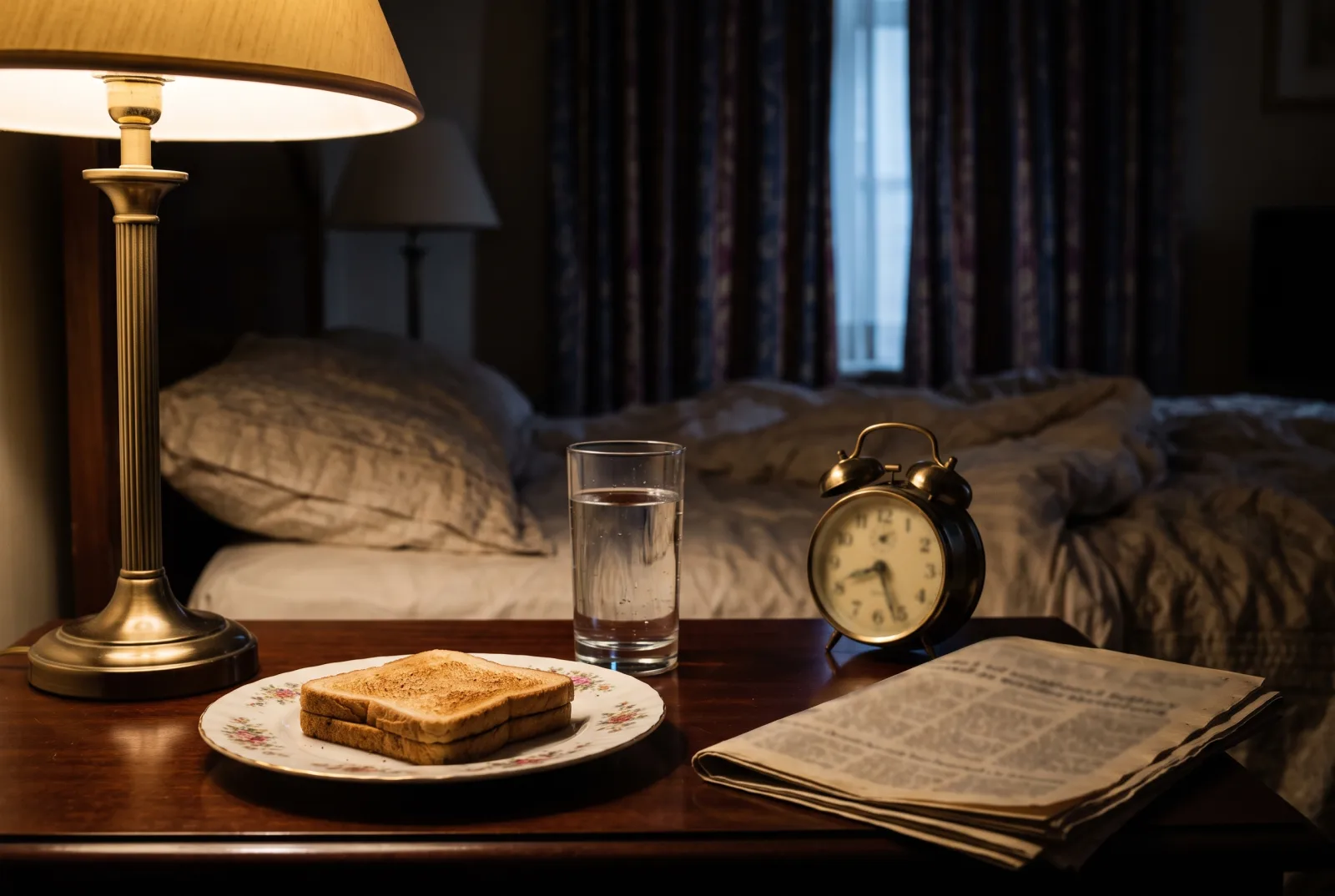
Ilustración: Rebobinados
The ham sandwich joke did not spread on its own. Cass Elliot's manager made it up.
For nearly fifty years people said Mama Cass had choked to death, and millions repeated it without knowing they were repeating a line written on purpose by someone on her own team.
In 2020 the journalist who published it explained how it happened.
July 1974
Cass Elliot had just had the best week of her life.
Two weeks of sold-out shows at the London Palladium, on her own, without the group, singing to an audience that rose to its feet. She had spent years trying to be taken seriously as a solo act and had finally managed it.
She went to sleep in a borrowed Mayfair flat that belonged to Harry Nilsson. She died in her sleep on 29 July, aged thirty-two.
The autopsy was clear: heart failure. There were no drugs in her system. There was nothing obstructing anything.
There was a sandwich on the bedside table. Whole, untouched.
Where the line came from
Her manager was Allan Carr. He knew that any sudden death of a musician in 1974 was going to be read as an overdose, and he decided to get ahead of it.
He called Sue Cameron, a journalist at the Hollywood Reporter, and gave her the sandwich version to publish. She published it.
In 2020, by then an older woman, Cameron confessed: Carr dictated it, she printed it, and the lie walked off on its own.
The intention was to protect her. The result was a joke that lasted her half a century, because a story like that, about a fat woman who had already been publicly bullied throughout her career, was never going to die.
It is worth being precise about who is guilty of what. Prejudice explains why the story stuck so well. It does not explain why it was born. It was born of a press decision taken by her own representative, the day after her death.
Four years later, in that same Curzon Place flat, Keith Moon of The Who died.
The harmonies and the knot
The other thing to tell about the band is shorter, and also less pleasant than it sounds.
They were four voices that fitted together extraordinarily well: Cass Elliot, Michelle Phillips, Denny Doherty and John Phillips, who was also the one who wrote the songs and stacked the voices.
And they were, at the same time, a complete tangle. Michelle was married to John and having a relationship with Denny. Cass had been in love with Denny since before the group existed.
On 4 June 1966, John and the others threw Michelle out of the group. It was her birthday. They handed her a letter signed by all three.
She came back months later, because without her the sound was not the same. But the group as a whole lasted barely three years.
A small correction worth making
"California Dreamin'" was not number one. It reached number four.
The one that did go number one, in 1966, was "Monday, Monday".
I mention it because it is the sort of figure that gets rounded up every time someone rewrites the history, and there is no need: a song still playing everywhere sixty years later does not need us to invent a chart position for it.
What to remember
The Mamas and the Papas are proof that the sunniest sound in the world can come out of a group that was at war inside.
Put on "California Dreamin'", "Monday, Monday" or "Dream a Little Dream of Me" and you will hear four voices building something none of the four could do alone, and which is still the exact sound of an era.
And when somebody tells you the sandwich story, cut it off there. That is not how she died. She died of a heart attack, at thirty-two, the week she had finally been given a standing ovation.
Remember her this way: not for how she died, and much less for how they said she died.
Sources
The Mamas and the Papas, an American folk-rock and pop group formed in 1965 by John Phillips (leader, songwriter and vocal arranger), Cass Elliot, Michelle Phillips and Denny Doherty. "California Dreamin'" reached number four on the Billboard Hot 100 and "Monday, Monday" number one in 1966. The group was marked by overlapping relationships among its members: Michelle Phillips, married to John Phillips, had a relationship with Denny Doherty, and was expelled from the group on 4 June 1966 — her birthday — by means of a letter signed by the other three, rejoining months later. The band broke up within a few years. Cass Elliot died on 29 July 1974 in London, aged 32, in a flat on Curzon Place, in Mayfair, lent to her by Harry Nilsson, days after a successful solo run at the London Palladium; the autopsy determined heart failure and found no drugs in her system. The account that she choked to death on a ham sandwich is false and did not arise spontaneously: her manager, Allan Carr, supplied it to the journalist Sue Cameron, of the Hollywood Reporter, to deflect any suspicion of drug use; Cameron acknowledged this publicly in 2020. There was an uneaten sandwich in the room. Keith Moon, drummer of The Who, died in that same Curzon Place flat in September 1978. John Phillips died in 2001 and Denny Doherty in 2007; Michelle Phillips is still alive. The group entered the Rock and Roll Hall of Fame in 1998. The Who has its own profile in this series. Externally authored text, edited and verified for Rebobinados. Interpretations of the meaning of their work are offered as the author's reading. No song lyrics are reproduced, for copyright reasons. Information drawn from The Hollywood Reporter, Wikipedia, Billboard, Rolling Stone and other coverage.
Keep rewinding

70s
folk
Florcita Motuda
Forty-nine years without a reissue
With "Brevemente… geeente" he won the best Chilean performer prize at Viña 1977, and he won it in the international competition because the folk one was not held that year. The album that contains it, released in 1977 on APRI —Antonio Prieto's label—, spent 49 years without a reissue: never on CD or streaming until it came back on vinyl in April 2026 and on digital on 11 July, the day he returned to the stage. The record for the longest title at the OTI is his, but it is from 1978 and not 1998.
00s
folk
Natalia Lafourcade
Where it said pumpkin she put flowers
The story says she rescued the son jarocho with reverence on *Un Canto por México*, but "La Bruja" is not on that record: she recorded it on *Cancionera*, on 24 April 2025, and rewrote the lyric. Where the son turns the man into a pumpkin, she sings that she filled him with flowers: "a cancionera is a kind of sorceress". Twenty Latin Grammys, a house rebuilt in Jáltipan and a harpsichordist father who left Chile two days after the coup.

70s
folk
Piero
The old man wasn't his
Piero sang "Mi viejo" in 1969, but the words are José Tcherkaski's and the father it portrays was his own: Mario Tcherkaski, a Russian street hawker who died at 52, eight years before the song. CBS released it with Father's Day in mind after several labels turned it down, and the first pressing passed 600,000 copies. Piero died on 7 October 2026, aged 81.
Rewind with us
Comments · 0
No one has commented yet. Open the conversation.