
León Gieco
The sheet that was saved
By Rebobinados · Published on September 7, 2026
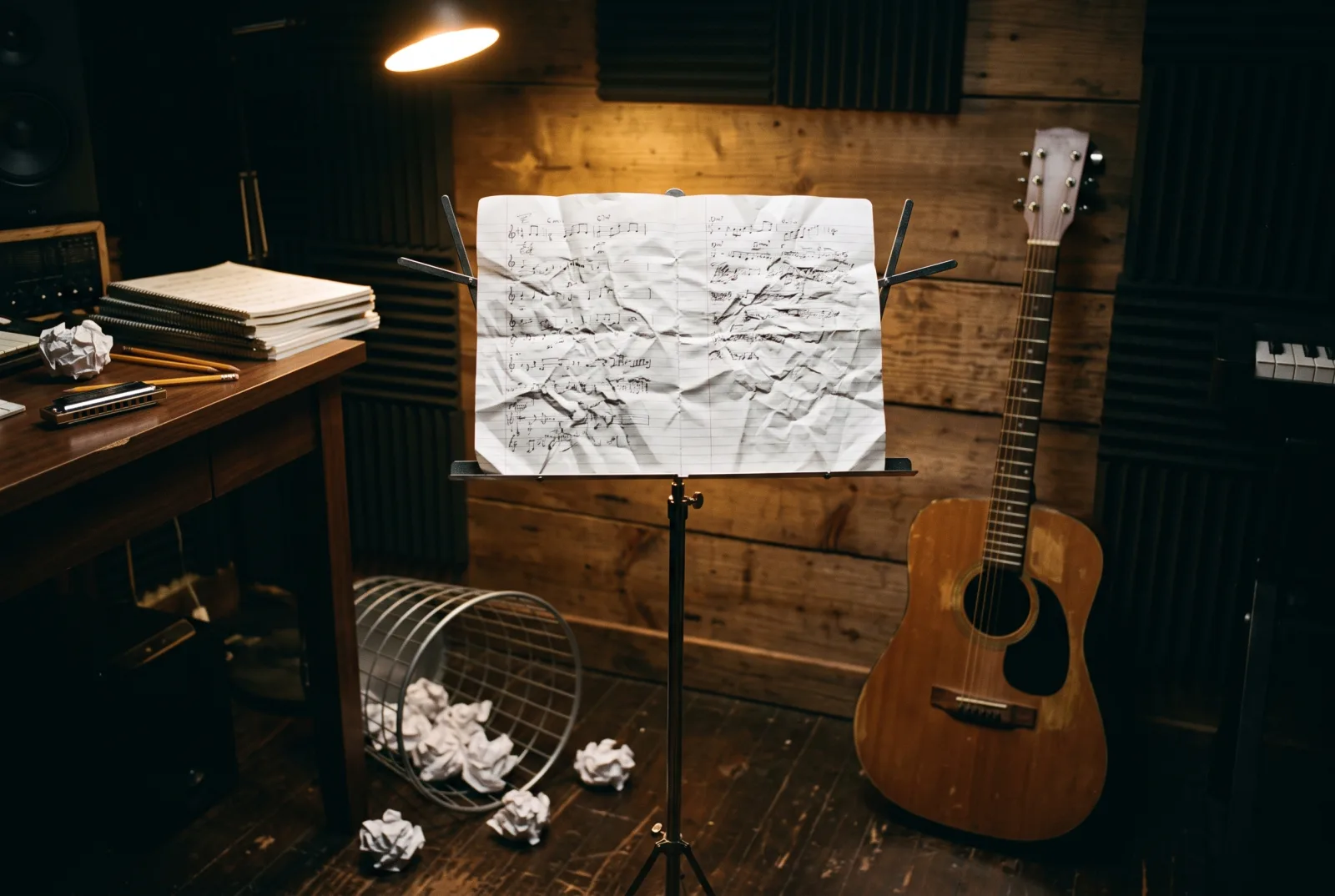
Ilustración: Rebobinados
León Gieco's most sung song had been discarded.
It was not that he had doubts about it while he was putting the record together. The record was finished and the song had been left out. He found it boring and monotonous.
What saved it was a chain of coincidences that begins with a man who walked into the wrong studio.
The bandoneon player who arrived by mistake
Dino Saluzzi turned up one night at the Ion Studios in Buenos Aires looking for Litto Nebbia. There was a garbled message, an address given wrong, and he ended up where he was not supposed to be.
Gieco had him right there, with his bandoneon, so he asked him to play something over that rejected track.
The first improvisation transformed the song. That is the exact point at which "Sólo le pido a Dios" stopped being an offcut.
Then they recorded too many takes and the thing fell apart, as it always does. Saluzzi already wanted to leave. It was the engineer, Amílcar, who suggested listening back to an earlier rehearsal take.
And right then, at two in the morning, Charly García walked into the studio, drawn in by the sound of the bandoneon. He said to leave it that way, that it was perfect.
Néstor Celasco, from the record company, decided it should open the album.
It is worth saying where all this comes from: from Gieco himself, who has told it many times in interviews. There is no independent documentation, and the lines attributed to Charly vary depending on who is recording them. That is why they are not in quotation marks here.
What the song says
He wrote it in 1978. The album, "4º LP", came out in 1979.
It is a prayer, and it is disarmingly simple: it asks God that pain, injustice, war and deceit never leave him indifferent. That he not be taken before he has done enough.
There are no slogans. It names nobody, accuses nobody, proposes nothing. It only asks not to grow used to things.
And that is why it works anywhere. In 1978 Argentina was under dictatorship and the Beagle conflict with Chile came close to ending in war that December. A song with proper names would have aged along with those events. One that only asks not to become indifferent serves for any horror.
How it came to belong to everyone
Mercedes Sosa made it her own; she was back from exile and sang it again at the Teatro Ópera in February 1982, with Gieco playing guitar and harmonica beside her.
From then on it stopped belonging to anyone. It is sung on marches, at wakes, at human rights events, in stadiums. Serrat and many others have covered it.
Bruce Springsteen learned it from Mercedes Sosa's version. When he went to Argentina in 2013 he did not feel entitled to sing it on stage, so he recorded a bilingual version on video and released it. It is a detail that says a fair amount: the man who fills stadiums did not dare sing it in front of Argentines.
The rest of a long life
Gieco was born in 1951 in Cañada Rosquín, a town in Santa Fe, and he has been singing since 1973.
They call him the Argentine Bob Dylan, and the nickname stuck for obvious reasons: the harmonica, the guitar, the songs that look at the country.
He knew censorship up close. On "El fantasma de Canterville", from 1976, he had to alter the lyrics of six songs and withdraw three.
Between 1981 and 1985 he travelled the whole country recording popular musicians in every corner of it, with Gustavo Santaolalla as musical director. Out of that came "De Ushuaia a La Quiaca", three records in 1985 and a fourth volume in 2000. It is probably the most important documentary work ever done on Argentine popular music.
Then came "Cinco siglos igual", "Los salieris de Charly" and "La memoria". He is still singing: in September 2026 he played a festival for public health, and he has a Chilean tour in November.
What to remember
León Gieco is proof that an author can be the worst judge of what he has written.
Put on "Sólo le pido a Dios", "La memoria" or "Cinco siglos igual" and you will hear songs that look you in the eye and do not shout.
But remember the other thing above all. The song that half a continent sings was off the record, and it was saved because a bandoneon player walked into the wrong studio, an engineer remembered an old take, and someone came in at dawn and said it was fine as it was.
Remember him this way: not as the man who wrote an anthem, but as the man who nearly threw it in the bin and had the luck to be surrounded by people who listened better than he did.
Sources
León Gieco, born in Cañada Rosquín, province of Santa Fe, on 20 November 1951; he is alive and active, with performances in September 2026 and a tour of Chile announced for November of that year. "Sólo le pido a Dios" was composed in 1978 and released on the album "4º LP" (1979). According to Gieco's own account, repeated in interviews over the years, the song had been discarded and the record was finished when bandoneon player Dino Saluzzi arrived by mistake at the Ion Studios looking for Litto Nebbia; his improvisation transformed the track. After numerous takes, the recording engineer suggested going back to an earlier rehearsal take, and Charly García, who came into the studio in the small hours, endorsed that version; Néstor Celasco, of Music Hall, decided it should open the album. It should be noted that this anecdote rests exclusively on Gieco's testimony, with no independent documentation, and that the lines attributed to Charly García vary from source to source. The context of the composition includes the Argentine military dictatorship and the Beagle conflict with Chile, which came close to ending in war in December 1978. The best-known version is by Mercedes Sosa, who has her own profile in this series, recorded on the live double album from the Teatro Ópera (February 1982), with Gieco on guitar, harmonica and backing vocals. Bruce Springsteen learned the song from Sosa's version and, during his visit to Argentina in September 2013, released a bilingual version on video without ever performing it on stage. Gieco suffered censorship during the dictatorship: on "El fantasma de Canterville" (1976) he had to alter the lyrics of six songs and withdraw three. The "De Ushuaia a La Quiaca" project, with musical direction and production by Gustavo Santaolalla, was recorded on trips made between 1981 and 1985; three records were released in 1985, a fourth volume in 2000 and a remastered edition in 2005. "La memoria" belongs to "Bandidos rurales" (2001); "Cinco siglos igual" and "Los salieris de Charly" belong to "Mensajes del alma" (1992). Externally authored text, edited and verified for Rebobinados. Interpretations of the meaning of his work are offered as the author's reading. No song lyrics are reproduced, for copyright reasons. Information drawn from Perfil, El Tiempo, Wikipedia and other coverage.
Keep rewinding
70s
folk
Florcita Motuda
Forty-nine years without a reissue
With "Brevemente… geeente" he won the best Chilean performer prize at Viña 1977, and he won it in the international competition because the folk one was not held that year. The album that contains it, released in 1977 on APRI —Antonio Prieto's label—, spent 49 years without a reissue: never on CD or streaming until it came back on vinyl in April 2026 and on digital on 11 July, the day he returned to the stage. The record for the longest title at the OTI is his, but it is from 1978 and not 1998.
00s
folk
Natalia Lafourcade
Where it said pumpkin she put flowers
The story says she rescued the son jarocho with reverence on *Un Canto por México*, but "La Bruja" is not on that record: she recorded it on *Cancionera*, on 24 April 2025, and rewrote the lyric. Where the son turns the man into a pumpkin, she sings that she filled him with flowers: "a cancionera is a kind of sorceress". Twenty Latin Grammys, a house rebuilt in Jáltipan and a harpsichordist father who left Chile two days after the coup.
70s
folk
Piero
The old man wasn't his
Piero sang "Mi viejo" in 1969, but the words are José Tcherkaski's and the father it portrays was his own: Mario Tcherkaski, a Russian street hawker who died at 52, eight years before the song. CBS released it with Father's Day in mind after several labels turned it down, and the first pressing passed 600,000 copies. Piero died on 7 October 2026, aged 81.
Rewind with us
Comments · 0
No one has commented yet. Open the conversation.